This week on the show: Myke has a friend, Federico is dreaming of emulation, and I got stuck in traffic.
Kbase Article of the Week: iMac (Mid 2007): Memory Specifications →
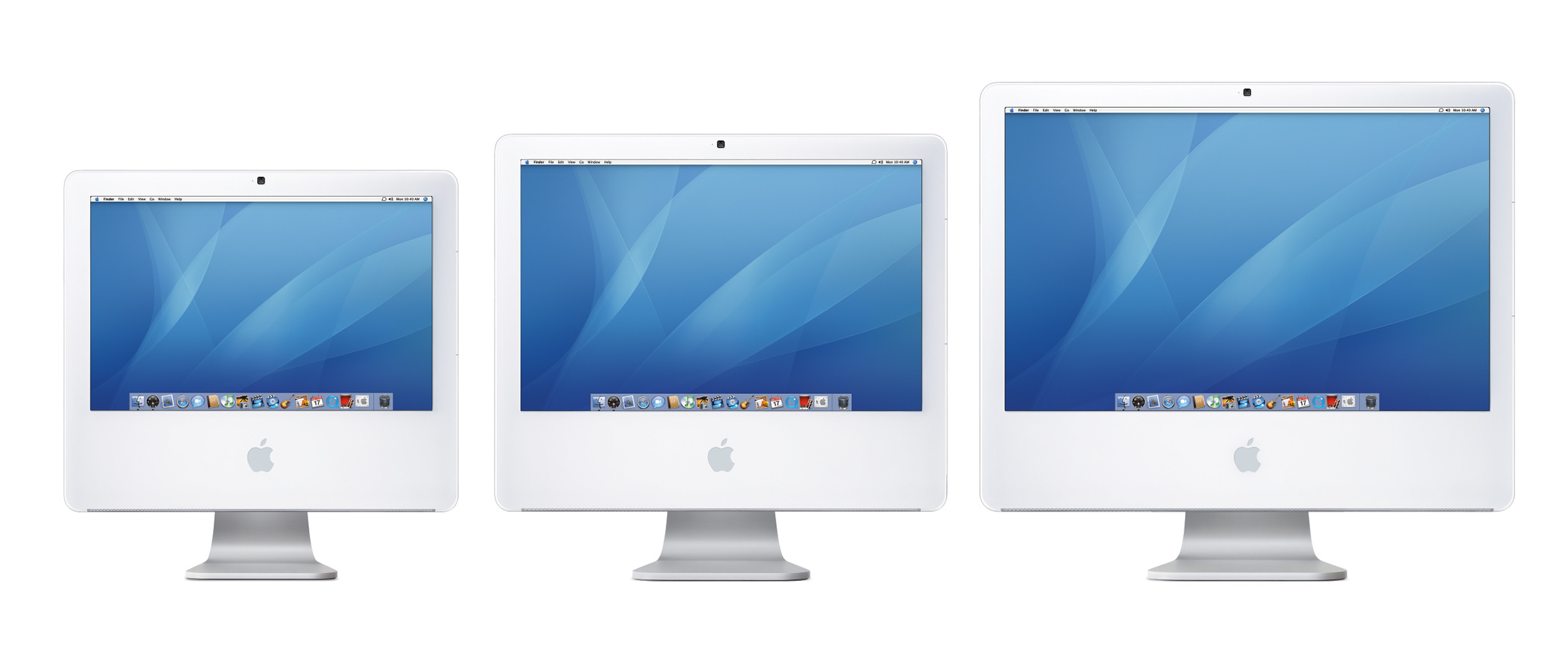
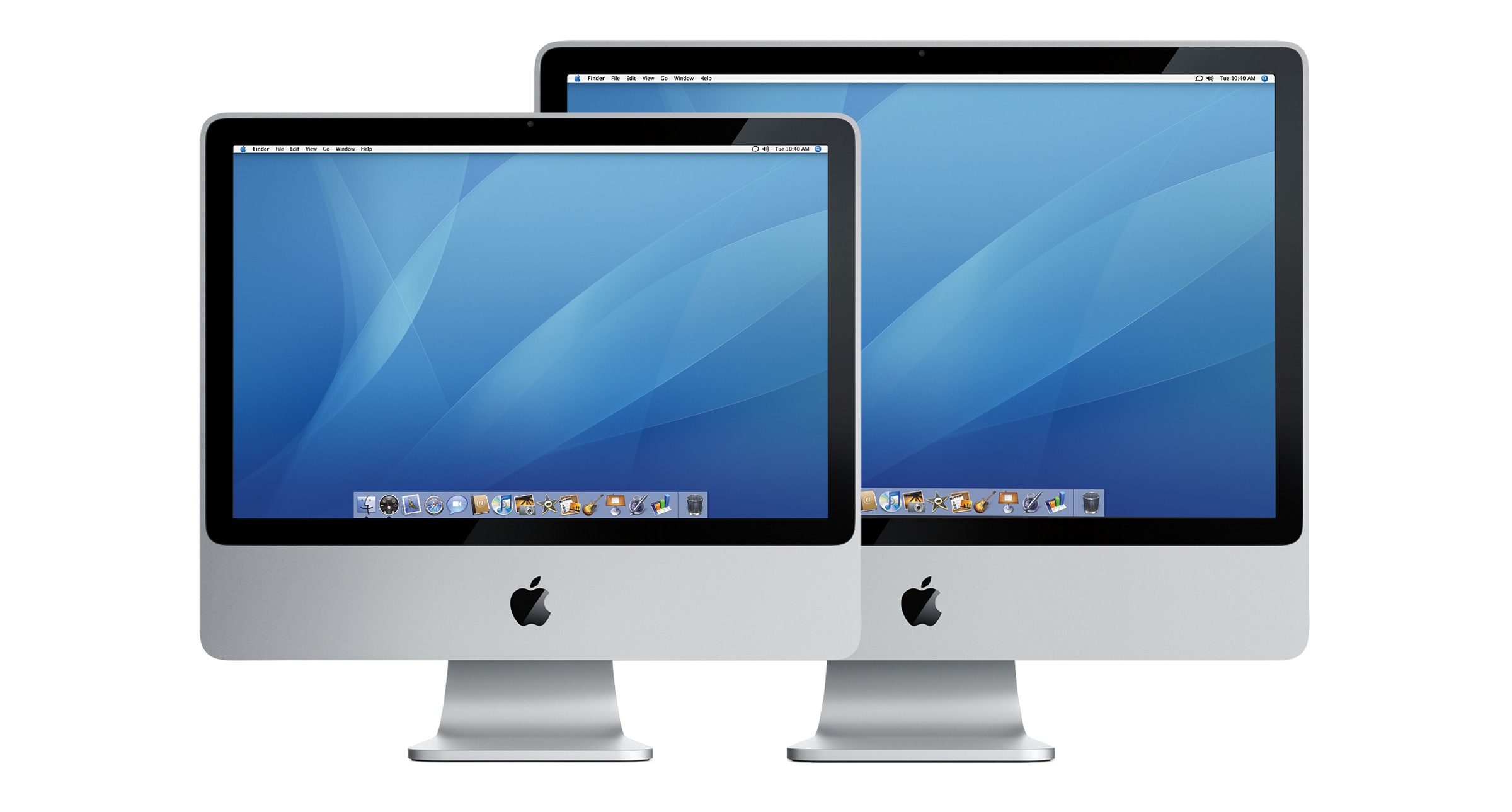
The iMac (Mid 2007) computer has two Synchronous Dynamic Random-Access Memory (SDRAM) slots in the bottom of the computer. It comes with at least 1 GB Double Data Rate (DDR2) SDRAM installed in a single slot. The maximum amount of random-access memory (RAM) you can install in the machine is 4 GB: 2 GB Small Outline Dual Inline Memory Module (SO-DIMM) in each slot.
I loved the Mid 2007 iMac when I first came out. Its aluminum and glass design made the older white plastic iMacs look like toys.
Sponsor: Magic Lasso Adblock: YouTube Ad Blocker for Safari →
Do you want to block all YouTube ads in Safari on your iPhone, iPad and Mac?
Then download Magic Lasso Adblock – the ad blocker designed for you.
It’s easy to set up, doubles the speed at which Safari loads and now blocks all YouTube ads.
Magic Lasso is an efficient, high performance and native Safari ad blocker. With over 4,000 five star reviews; it’s simply the best ad blocker for your iPhone, iPad and Mac.

It blocks all intrusive ads, trackers, and annoyances – letting you experience a faster, cleaner, and more secure web browsing experience.
The app also blocks over 10 types of YouTube ads, including all:
- video ads
- pop-up banner ads.
- search ads
- plus many more
Unlike some other ad blockers, Magic Lasso Adblock respects your privacy, doesn’t accept payment from advertisers, and is 100% supported by its community of users.
Join over 300,000 users and download Magic Lasso Adblock from the App Store, Mac App Store or via the Magic Lasso website.
Mac Power Users #739: Checking in on Freeform →
This week on Mac Power Users, David and I revisit Freeform and discuss how it’s improved since its launch and what Apple could do next with the application. We also share how they use the app and how it shines in visionOS.
Connected #496: I Tried to Put My Finger in Myke’s Mouth →
This week on the world’s greatest podcast:
While waiting for new iPads and Apple’s AI efforts to materialize, Stephen, Myke, and Federico have been changed by spatial Personas.
Seven Years of APFS →
Seven years ago, on 27 March 2017, Apple introduced one of the most fundamental changes in its operating systems since Mac OS X 10.0 Cheetah was released 16 years earlier. On that day, those who updated iOS to version 10.3 had their iPhone’s storage silently converted to the first release of Apple File System, APFS. Six months later, with the release of macOS 10.13 High Sierra on 25 September, Mac users followed suit.
At the time, these were huge gambles. The potential for disaster was significant, and at the last minute, Apple decided that those Macs with Fusion Drives had to stay with its old Mac OS Extended File System (HFS+) for another year before they too could start up from APFS. In some markets, notably South Korea, even Apple’s own software failed to cope with changes in the way that file names were handled by the new file system.
Although APFS has certainly had its moments over the last seven years, Apple’s gambles have paid off, and proved key to the success of Apple silicon Macs. Had there been no APFS, many of the fundamental technologies like Secure Boot and the Signed System Volume (SSV) would have been far tougher if not impossible to implement. Macs and Apple’s devices had been in dire need of a modern file system for years; while there was a time when it looked as if that could have been ZFS, in 2014 Apple decided to write its own file system from scratch, with Dominic Giampaolo and Mike Mackovitch as lead engineers.
My Spatial Persona Impressions (Updated)
I just spent some time playing with spatial Personas with Jason Snell, and I have to say, having Personas free from their floating boxes makes the whole thing much more personal.
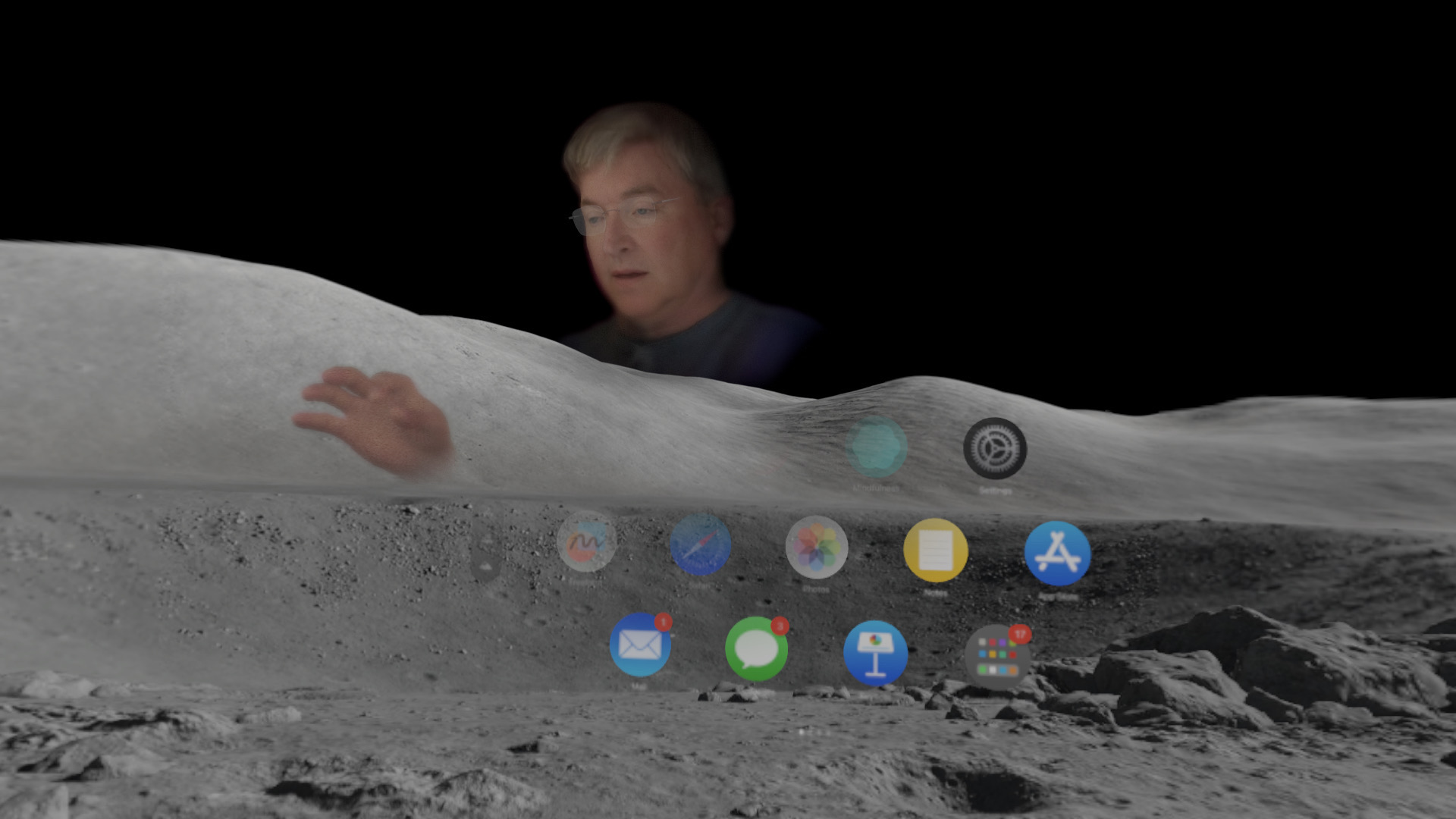
When you join a call, the other person is directly in front of you. You can see their Personas and hands, floating in your room. If you’re in an Environment, they appear there as well. It really felt like Jason was in the PodCabin with me.
Sometimes things gets a bit weird, as they can come crashing through your Home View:
The real magic comes when sharing content or an app experience with SharePlay.
Jason sent over a link to a Freeform document, and when I opened it, his Persona suddenly appeared next to me, with our document out in front of us. Combined with the Vision Pro’s excellent spatial audio, I had the distinct feeling that we were working together on our document in a way that sharing a document on a Mac or iPad just doesn’t deliver.
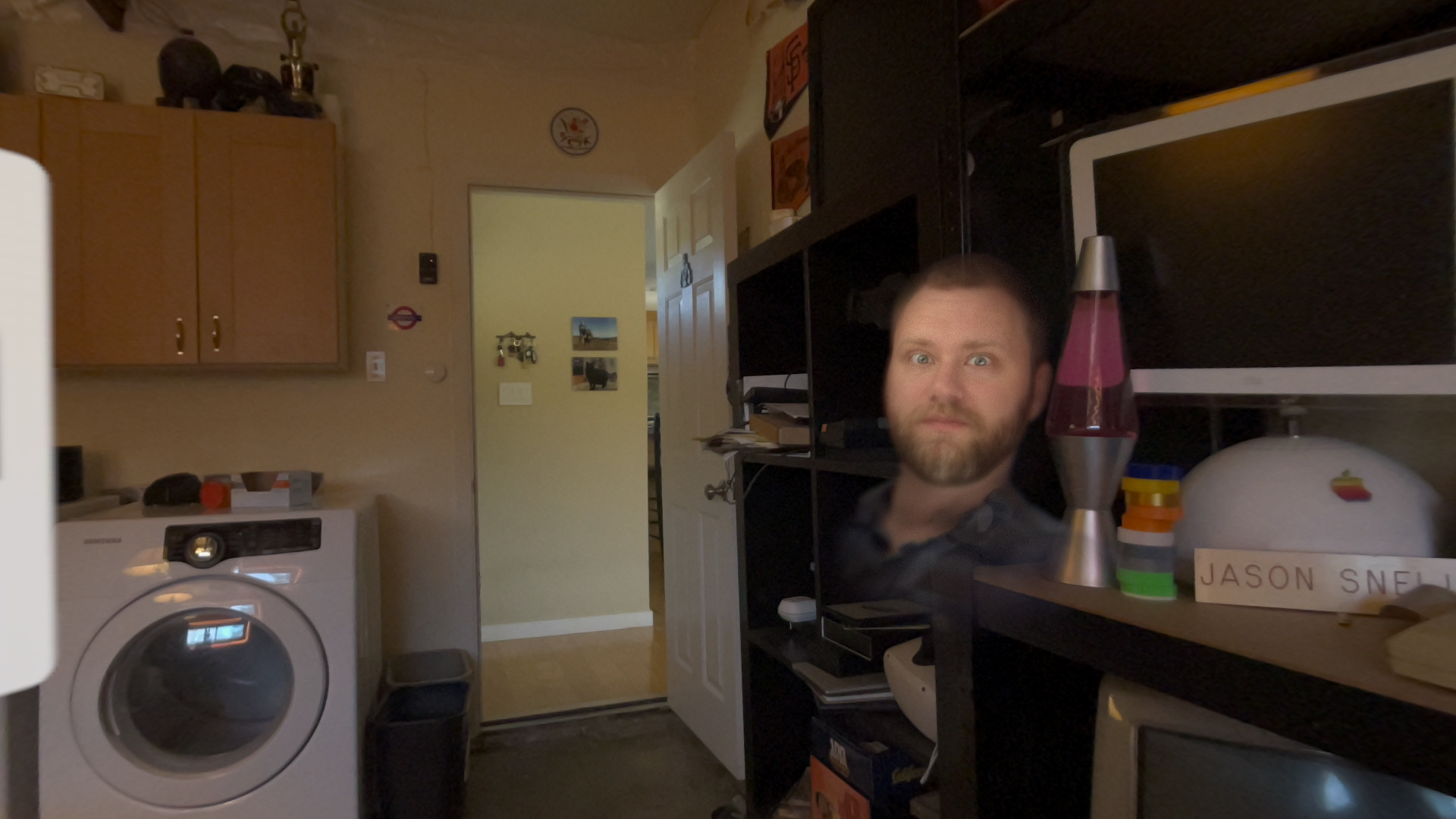
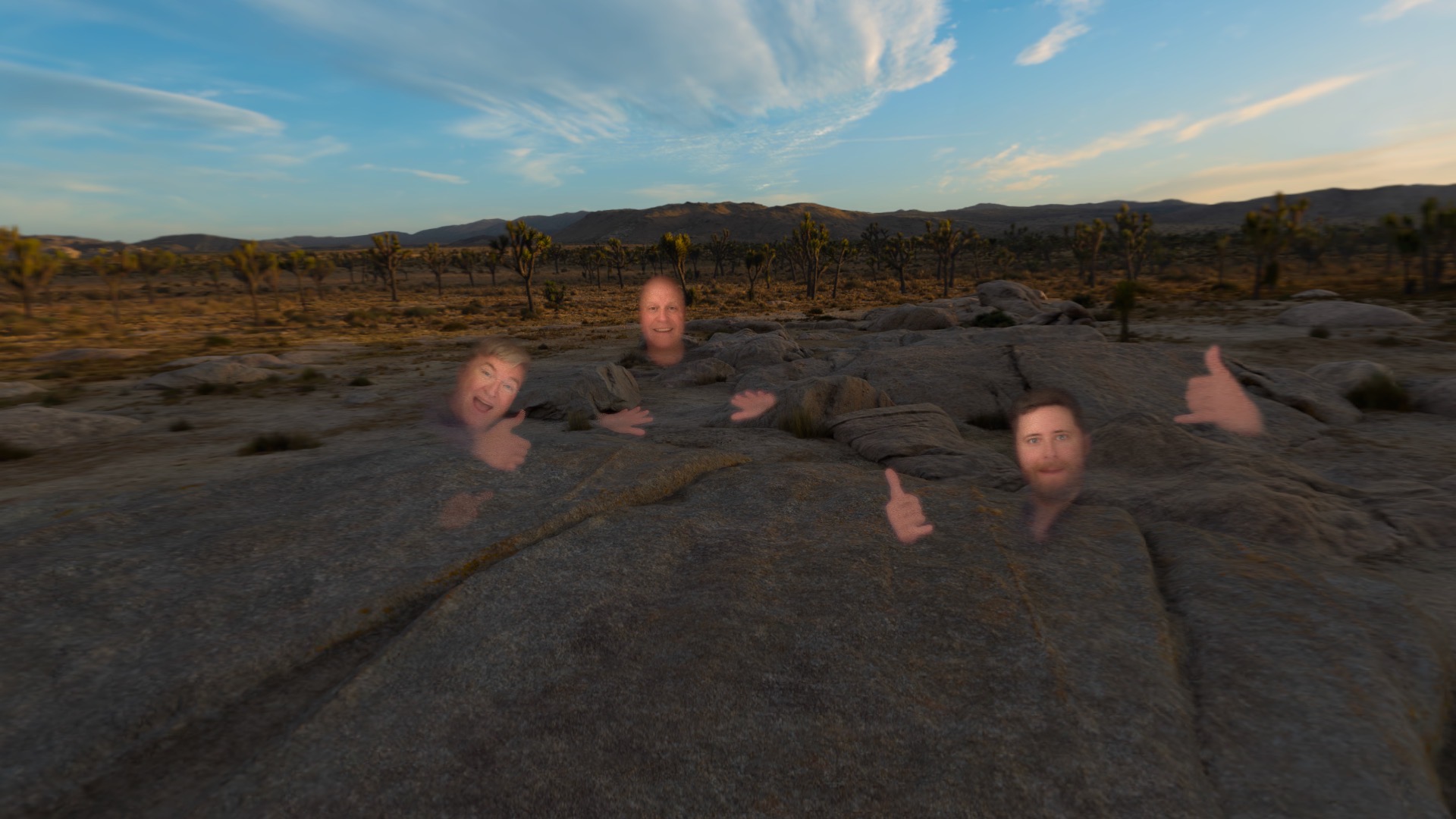
Here I am, stuffed in a Kallax inside Jason’s office while we were working:
After our ideation session, we played a round of Battleship in the excellent Game Room on Apple Arcade. After I sunk all of his ships, we watched a few minutes of For All Mankind in a couple of immersive environments.
Personas are still a bit weird, but I think freeing them from their boxes makes them feel totally different and much better. If you have a Vision Pro, it’s worth checking this out, especially with SharePlay in the mix.
When you’re done, give each other a high-five!
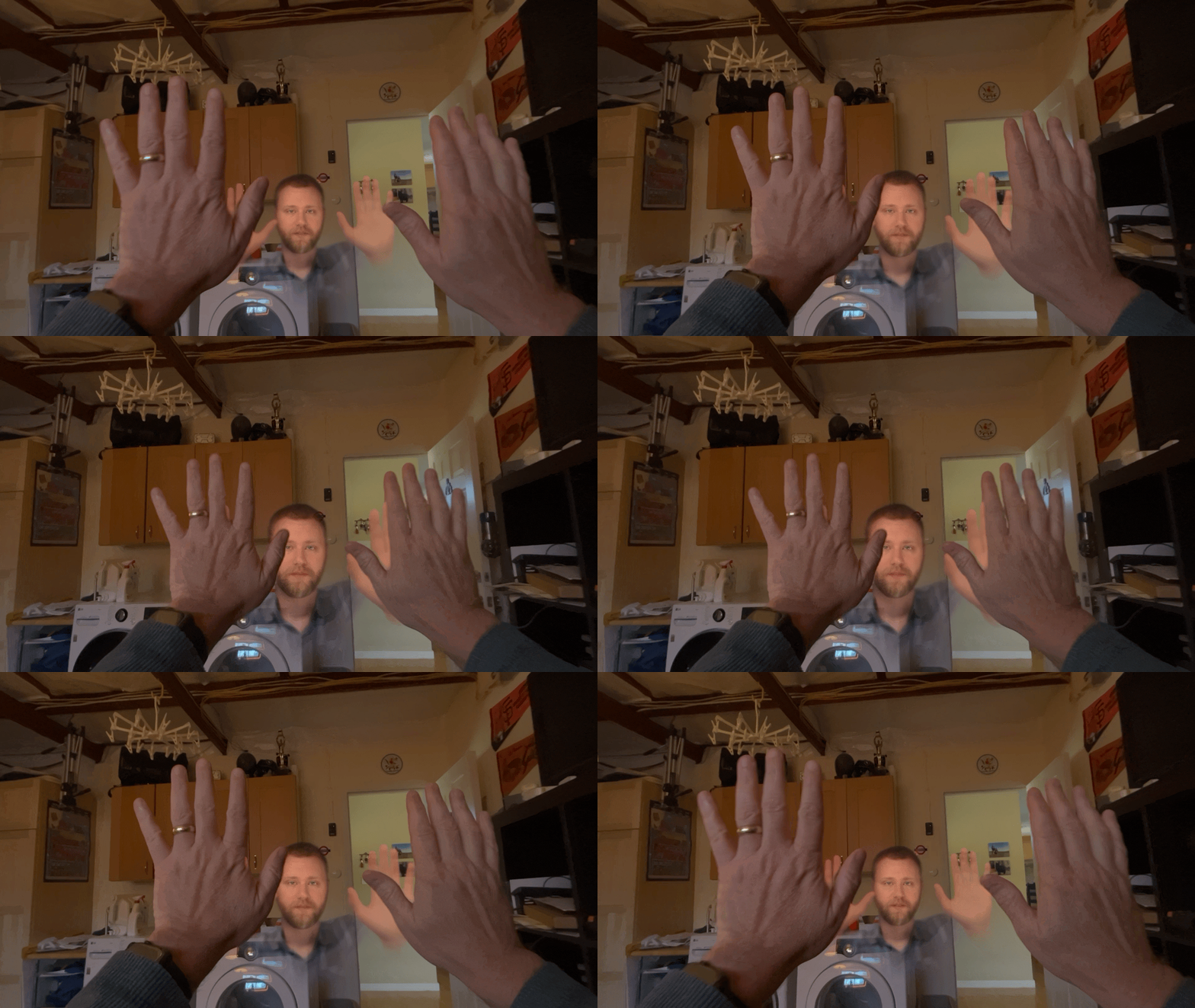
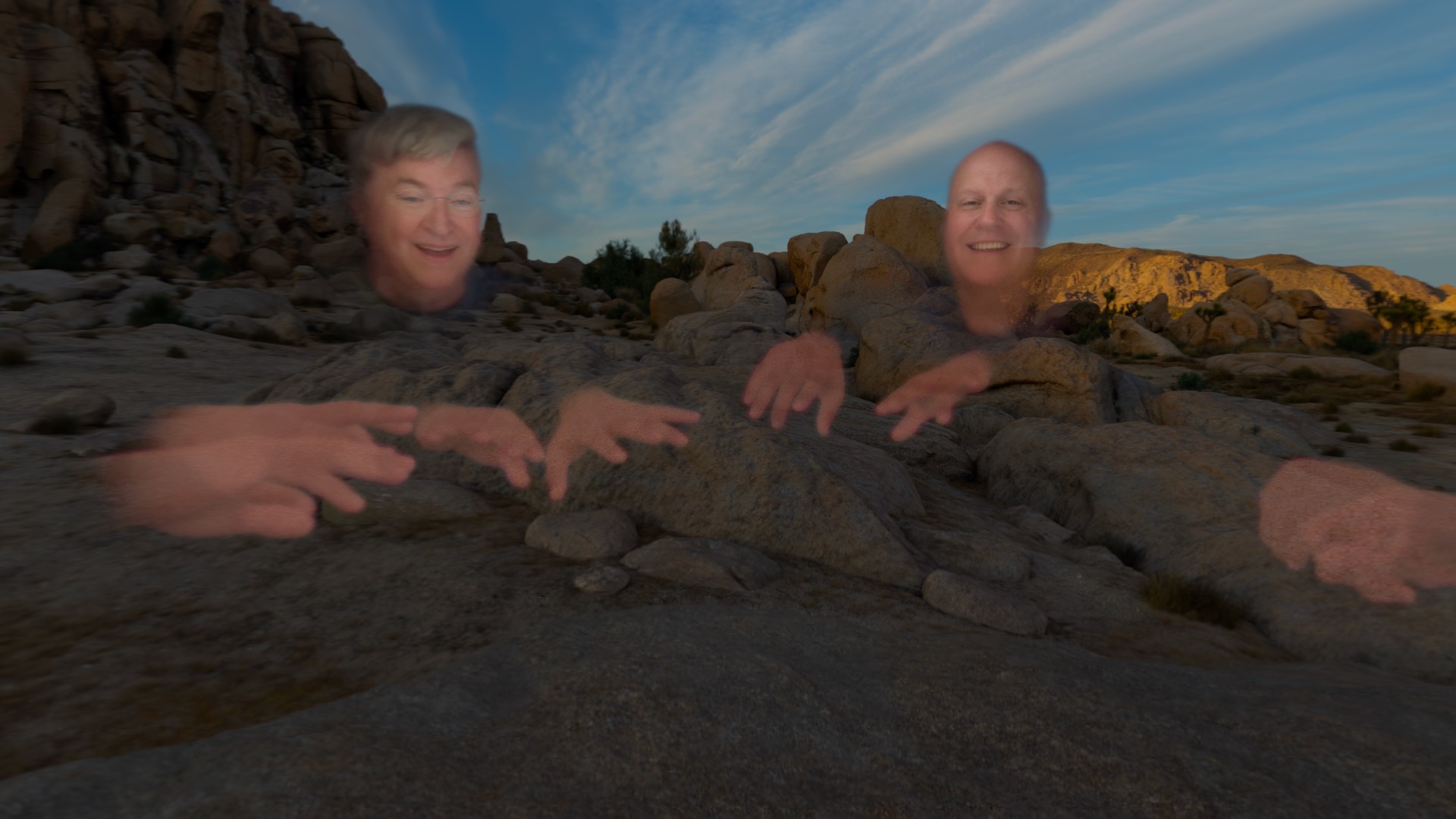
2024-04-03 Update: I was on a group call with Jason Snell, Myke Hurley, James Thomson, and John Voorhees and it was a true blast:
Myke’s head and hands hovering near my cardboard cutout of Casey Liss:
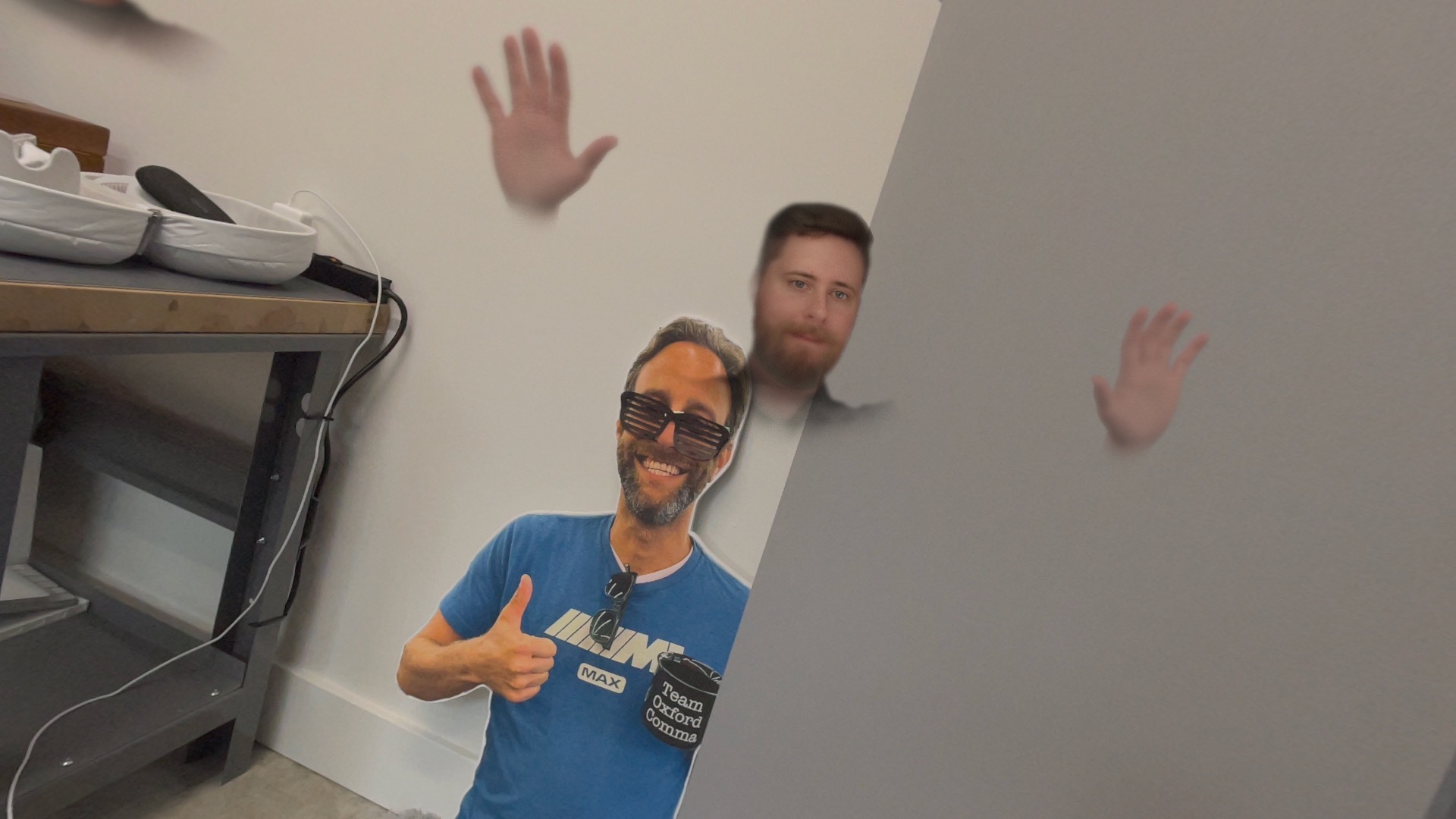
Jason, John, and Myke being cool dudes:
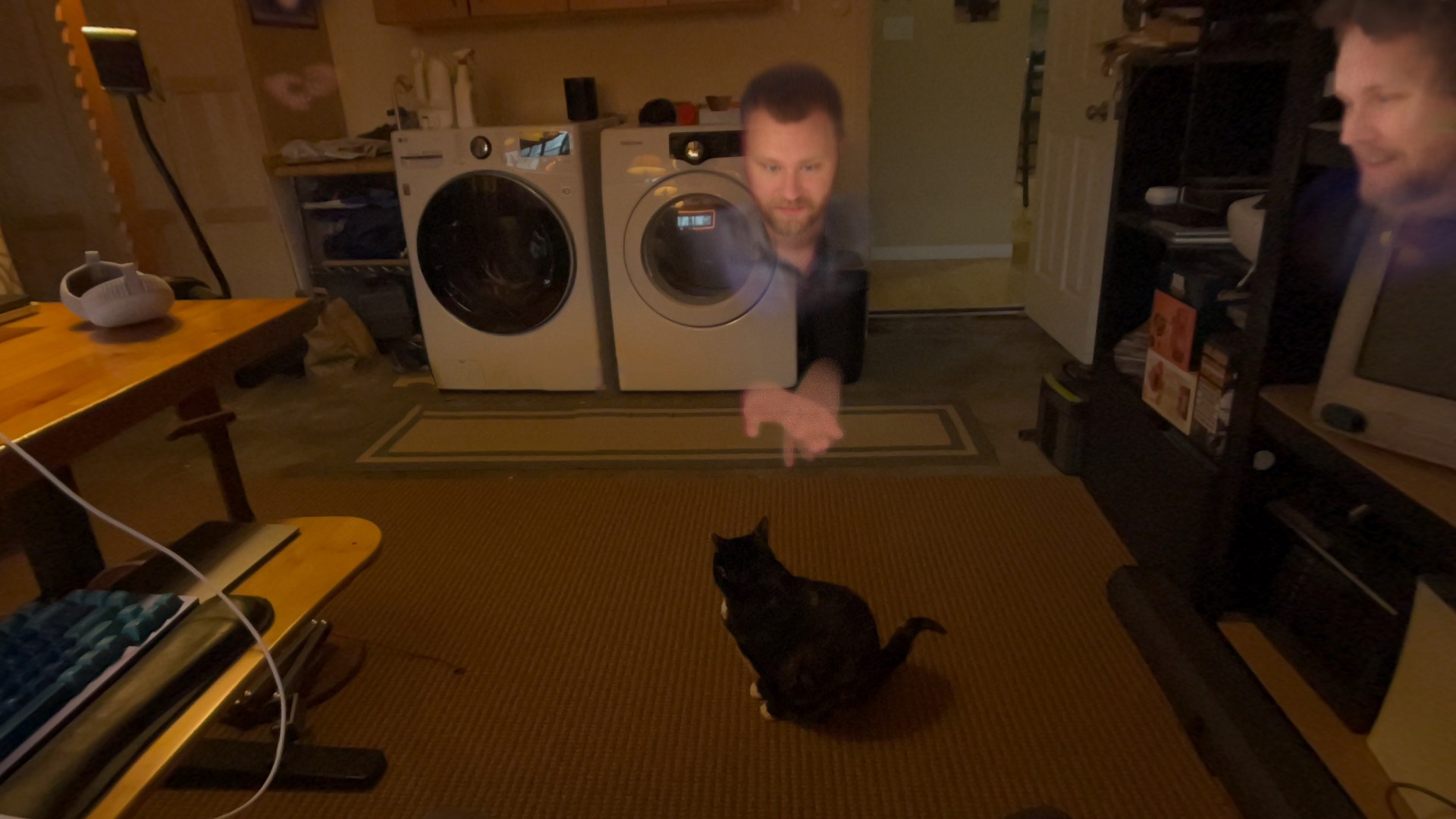
I tried petting Jason’s cat:
It’s great for the Hokey Pokey:
Being able to show the guys some recent additions to my Apple collection was pretty cool:
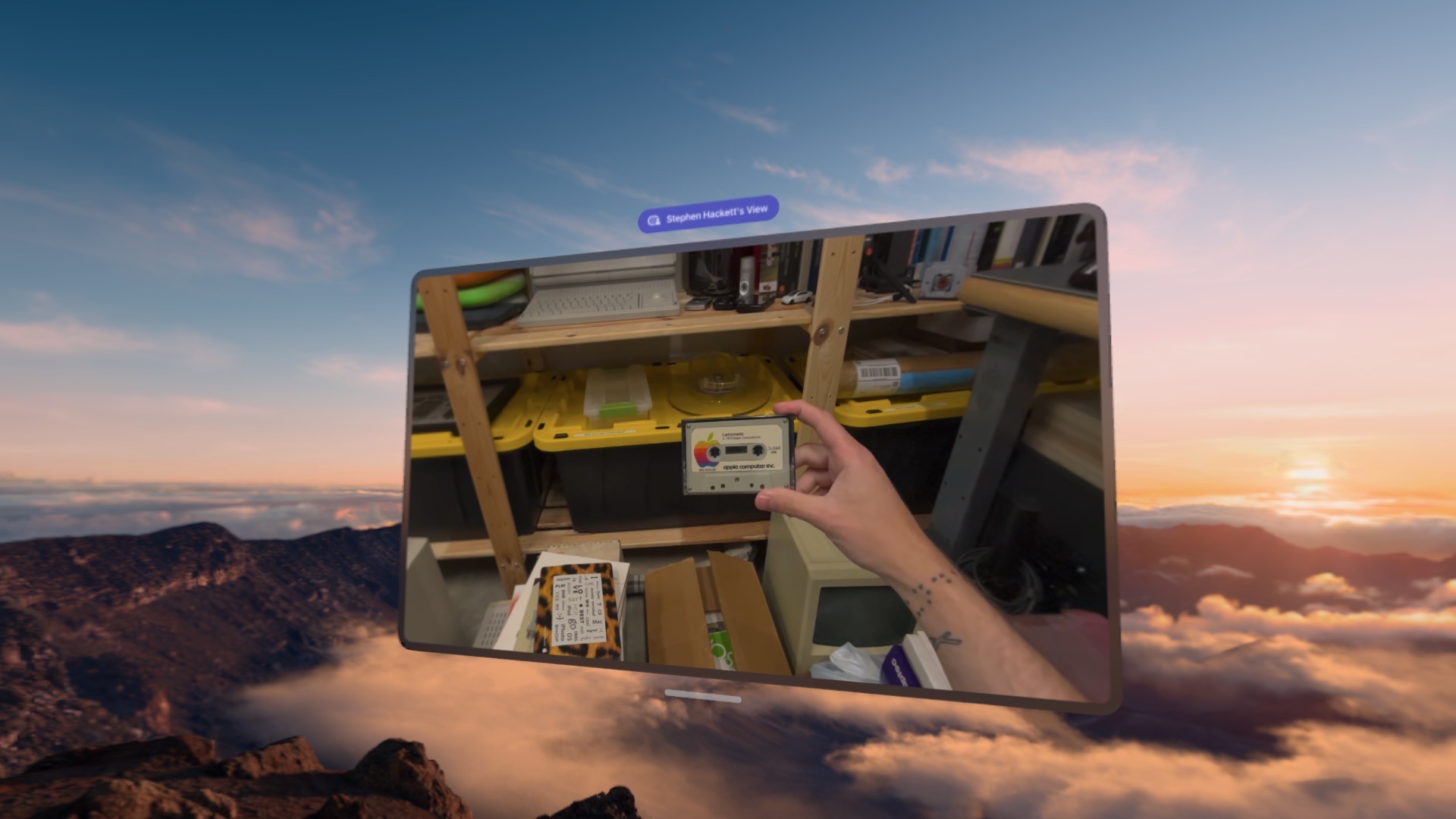
They used to ship software on cassette!
Spatial Personas Launching on Vision Pro Today
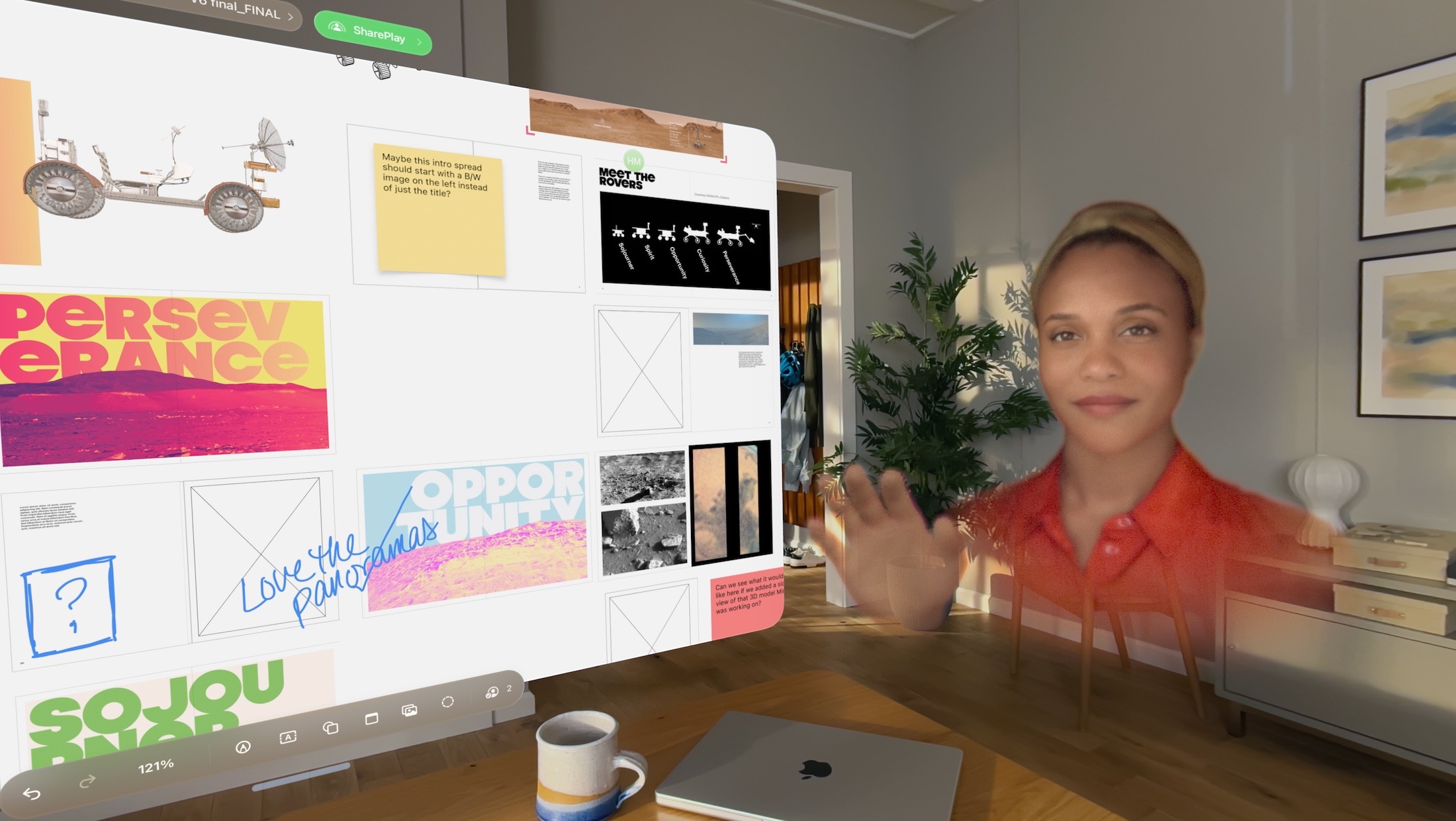
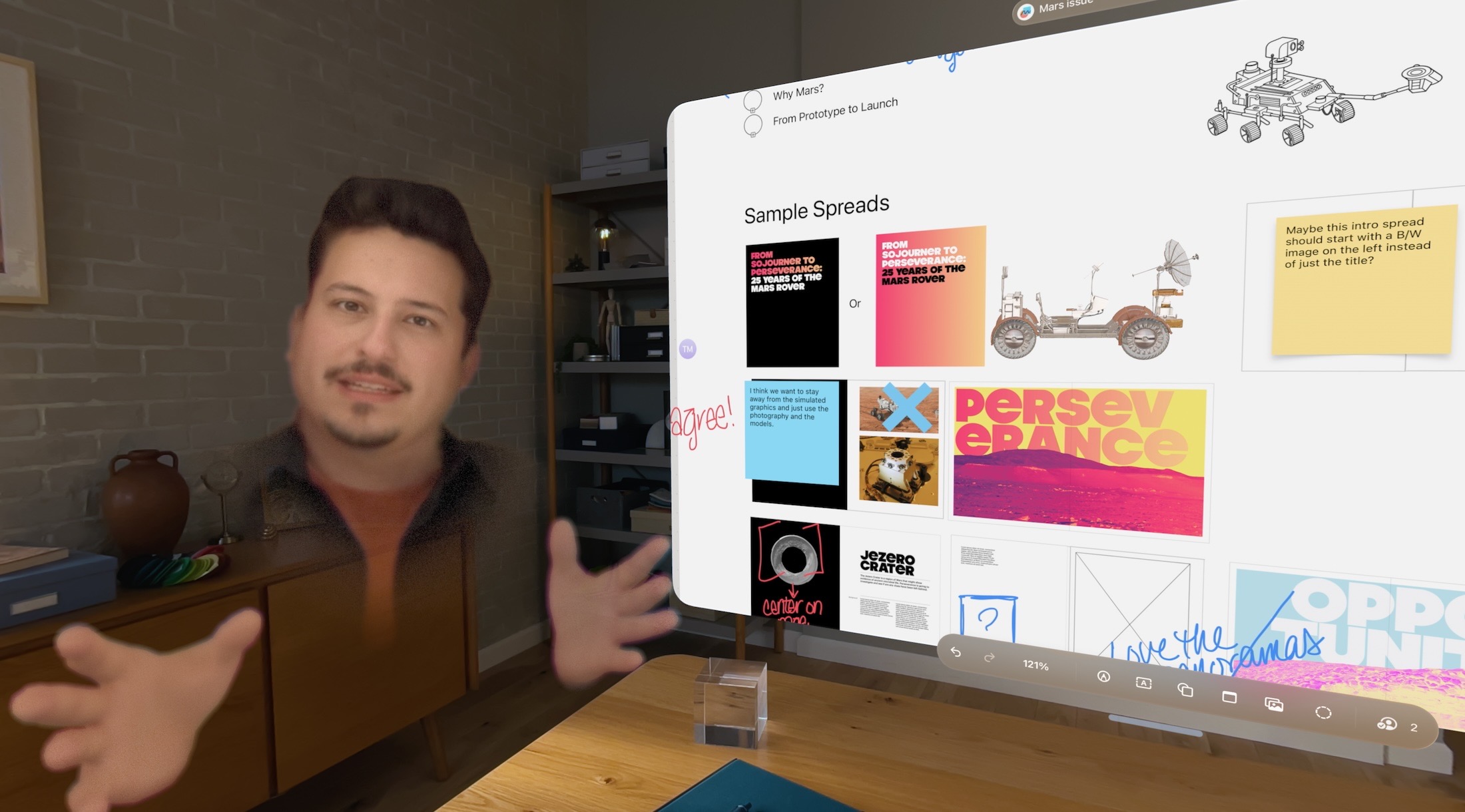
Today, Apple is launching spatial Personas to users of the Vision Pro. In short, this allows a caller’s Persona to break free of a singular box during a FaceTime call and puts them directly into the space of the person on the other end of the call.
This should give a much better sense of presence when on a call with another Vision Pro user, and allows people who are not in the same place to share content more easily and naturally, especially when using SharePlay.
Spatial Personas are rolling out to all users whose devices are running visionOS 1.1 or later, and requires a reboot for the feature to show up as an option while on a FaceTime call. You do not have to be running a visionOS beta to use spatial Personas, but as of this writing, it was not available to me on a test call. However, these images from Apple show what we can expect:
NASA’s Solar Eclipse Explorer →
A week from today, a large portion of the United States will be witness to a solar eclipse. Here in Memphis, we’ll see 97.7% coverage at 1:56 PM CDT. I’ll be traveling with my family to Arkansas, to experience 100% coverage. NASA has published a website that will tell you what to expect at your location.
I just hope the forecasts for clouds turn out to be wrong.
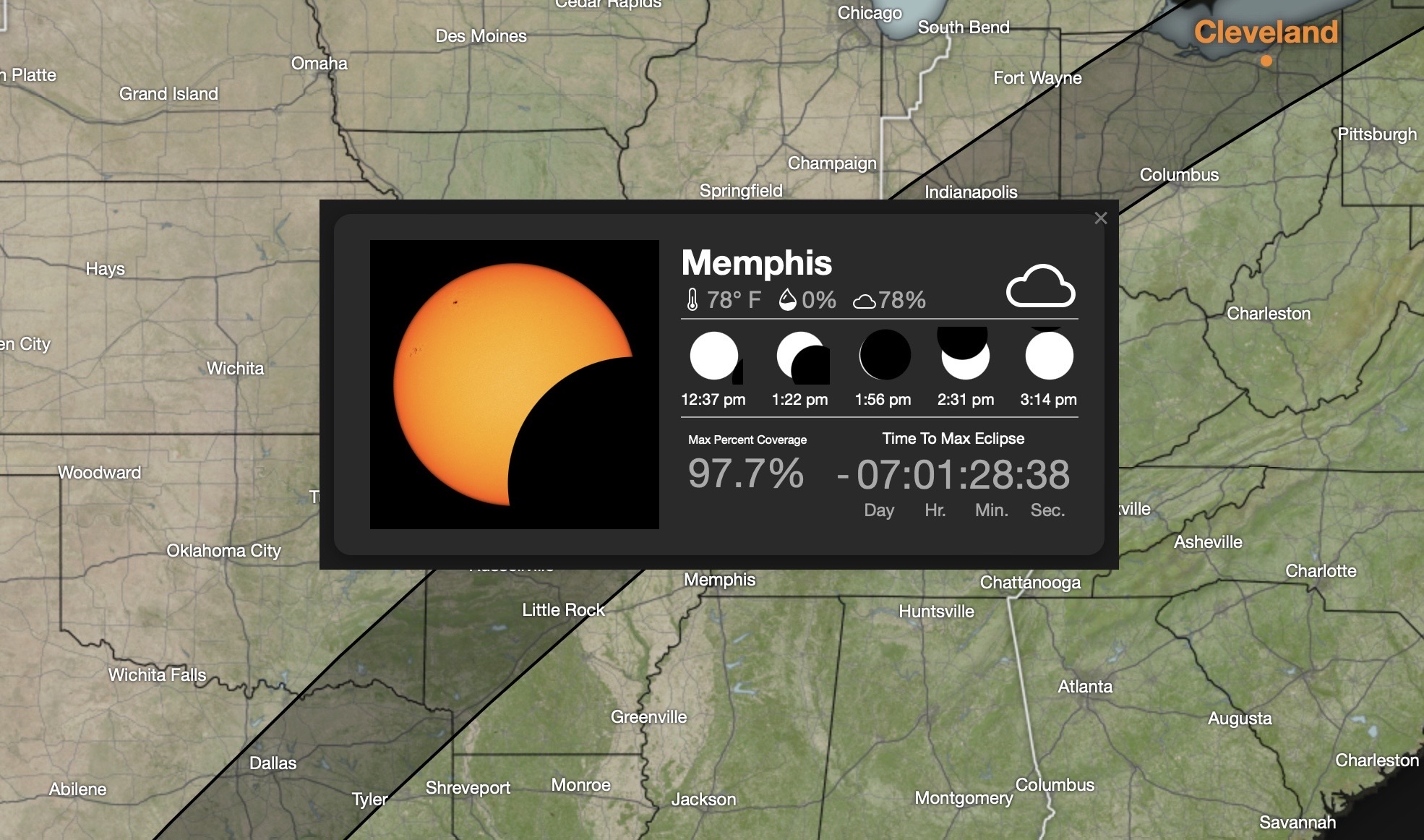
We also traveled for the 2017 eclipse, and it was incredible. Jason Snell and I spoke about our experiences on episode 54 of Liftoff.
I have two pieces of advice:
- Don’t try to photograph it unless you’re an expert. Soak it in, and then download some sick wallpapers from NASA the next day.
- Buy and use eclipse-ready glasses, and make sure your kids do, too.
Brushed & Linen
We’re very excited to launch TWO new tech history podcasts today over at Relay. Welcome to the network, Brushed and Linen!
Sponsor: Unite 5 Turns Web Apps Into Supercharged macOS Apps →
Unite 5 for macOS takes your web experience to the next level, transforming websites into feature-rich Mac apps. Powered by a completely redesigned WebKit browser, Unite 5 offers a more immersive and customizable browsing experience.
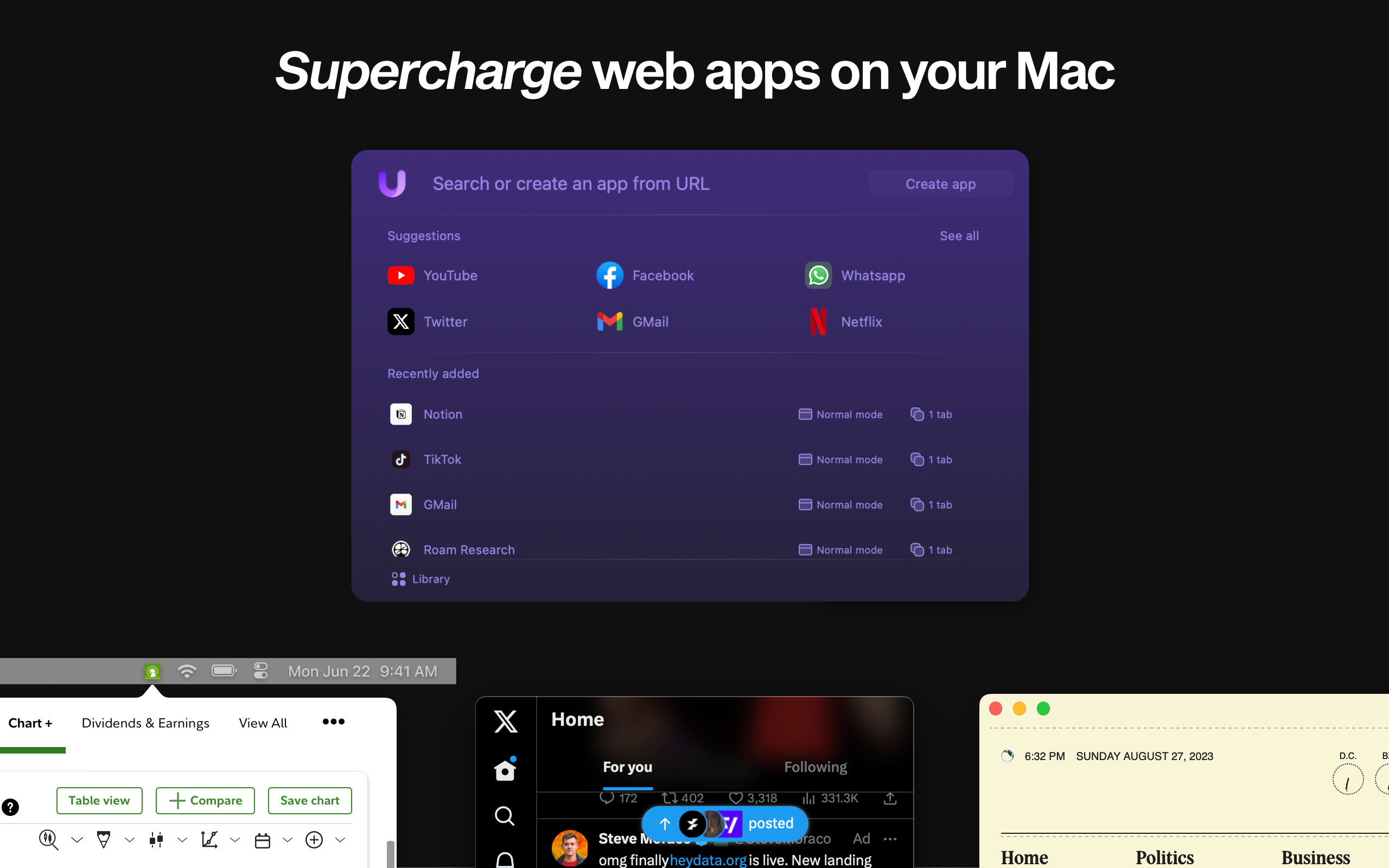
What sets Unite 5 apart? We’ve gone beyond just app conversion. Our new intricate link-forwarding rules give you unparalleled control over web interactions, making your web apps smarter and more integrated than ever before.
Some highlights of Unite 5:
- Advanced Link-Forwarding: Navigate your web apps like a pro.
- Revamped Browser Engine: Faster, more reliable, and tailored for macOS.
- Enhanced Customization: More ways to make your web apps truly yours.
Create powerful web apps in seconds, such as:
- A Gmail client that integrates seamlessly with macOS.
- A resource-efficient Slack or Discord app with full notification support.
- A dedicated AI app for ChatGPT or Claude.AI
- A Robinhood or Figma app that feels native on your desktop.
512 Pixels readers get an exclusive 20% off this week! Use the promo code 512Pixels at checkout or visit bzgapps.com/unite512.
Experience Unite 5 for yourself with a 14-day free trial, or access it as part of a Setapp subscription.
Mac Power Users #738: Apple Collecting 101 →
This week on the podcast, I walk David through the ins and outs of collecting old Apple gear, and we take the wraps off an MPU redesign.
This episode was finally enough to get me to finish documenting my collection. You can check out the full inventory via this Google Sheet.
Let’s talk about the MPU redesign. First up is our new artwork, which you can see here, along with its predecessors:
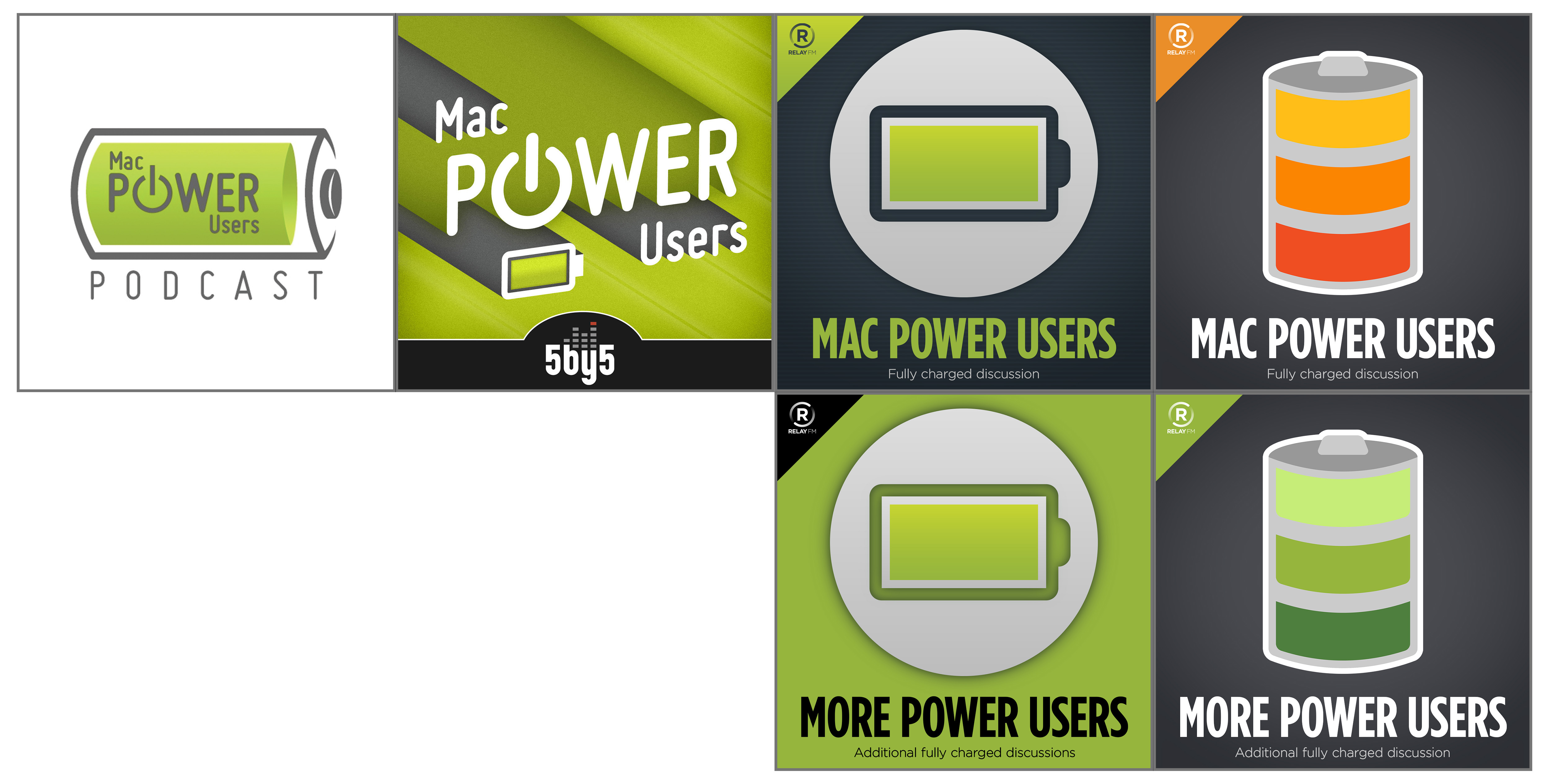
As you can see, we’ve kept the battery, but modernized it, and have changed the main show color to orange, a personal favorite of both of us. The MPU green is still the main color for the longer, ad-free version, however.
To go along with the new look, we have new music, put together by our editor, Jim Metzendorf. I am in love with the new intro music: