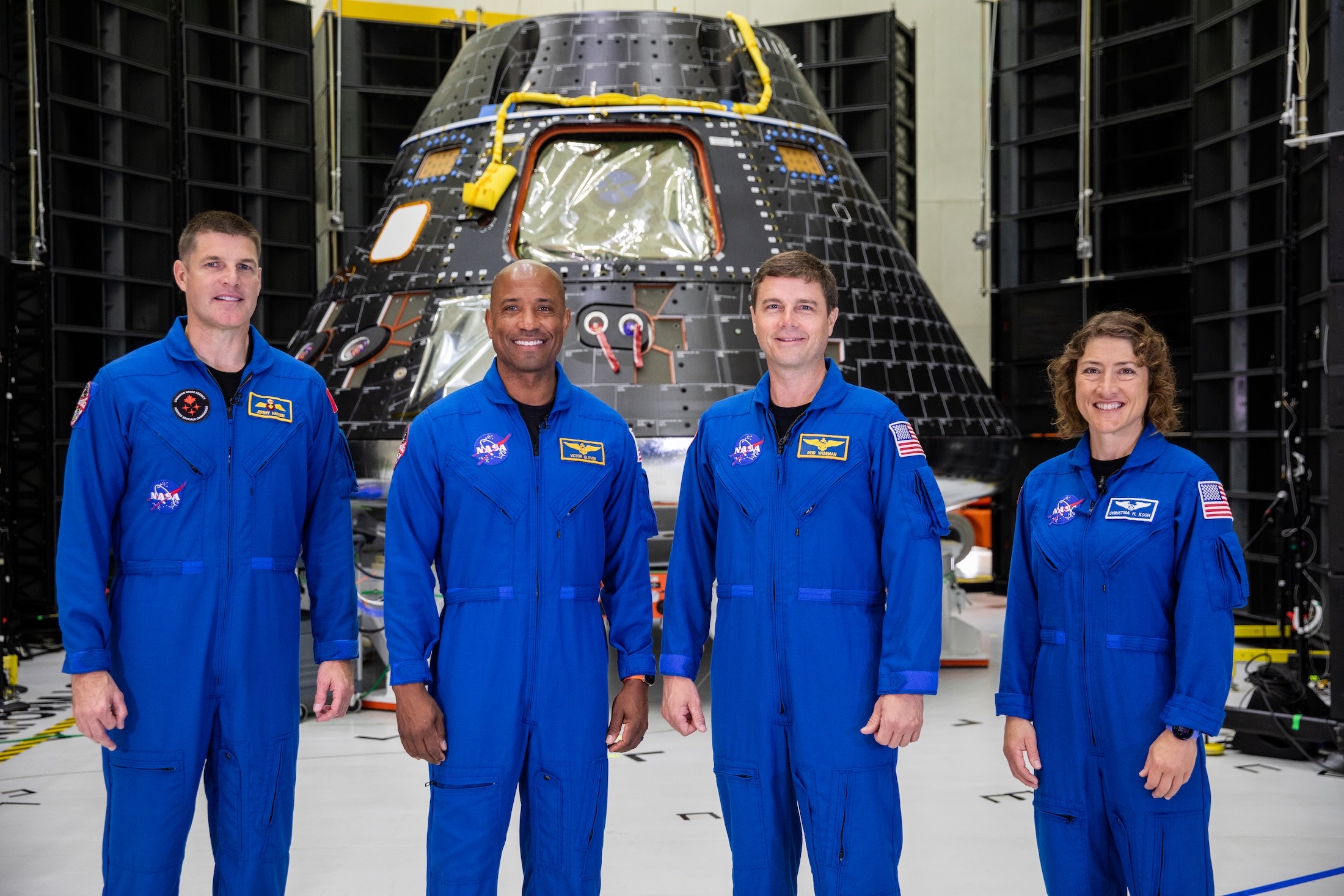
If everything goes to plan, NASA’s giant Space Launch System rocket will launch in early February with four astronauts strapped into the Orion capsule:
- Jeremy Hansen, mission specialist
- Victor Glover, pilot
- Reid Wiseman, commander
- Christina Hammock Koch, mission specialist
This will be the SLS’ second time to launch, after a successful test flight back in 2022. That test included an uncrewed Orion that showed unexpected damage to the capsule’s heat shield. In December 2024, NASA released a report outlining what caused the damage. The good news was that the program was ready to move forward:
While Artemis I was uncrewed, flight data showed that had crew been aboard, they would have been safe. The temperature data from the crew module systems inside the cabin were also well within limits and holding steady in the mid-70s Fahrenheit. Thermal performance of the heat shield exceeded expectations.
Engineers understand both the material phenomenon and the environment the materials interact with during entry. By changing the material or the environment, they can predict how the spacecraft will respond. NASA teams unanimously agreed the agency can develop acceptable flight rationale that will keep crew safe using the current Artemis II heat shield with operational changes to entry.
For Artemis II, the crew will be sent some 4,600 miles beyond the moon on a four-day trip. The mission is designed to confirm that the SLS and Orion operate as expected with a crew onboard in deep space.
Many NASA-watchers have been critical of the SLS program. The rocket is far more expensive to build and launch than something like SpaceX’s Falcon Heavy and Blue Origin’s New Glenn. A single Artemis launch (complete with hardware) is expected to exceed $4.1 billion.
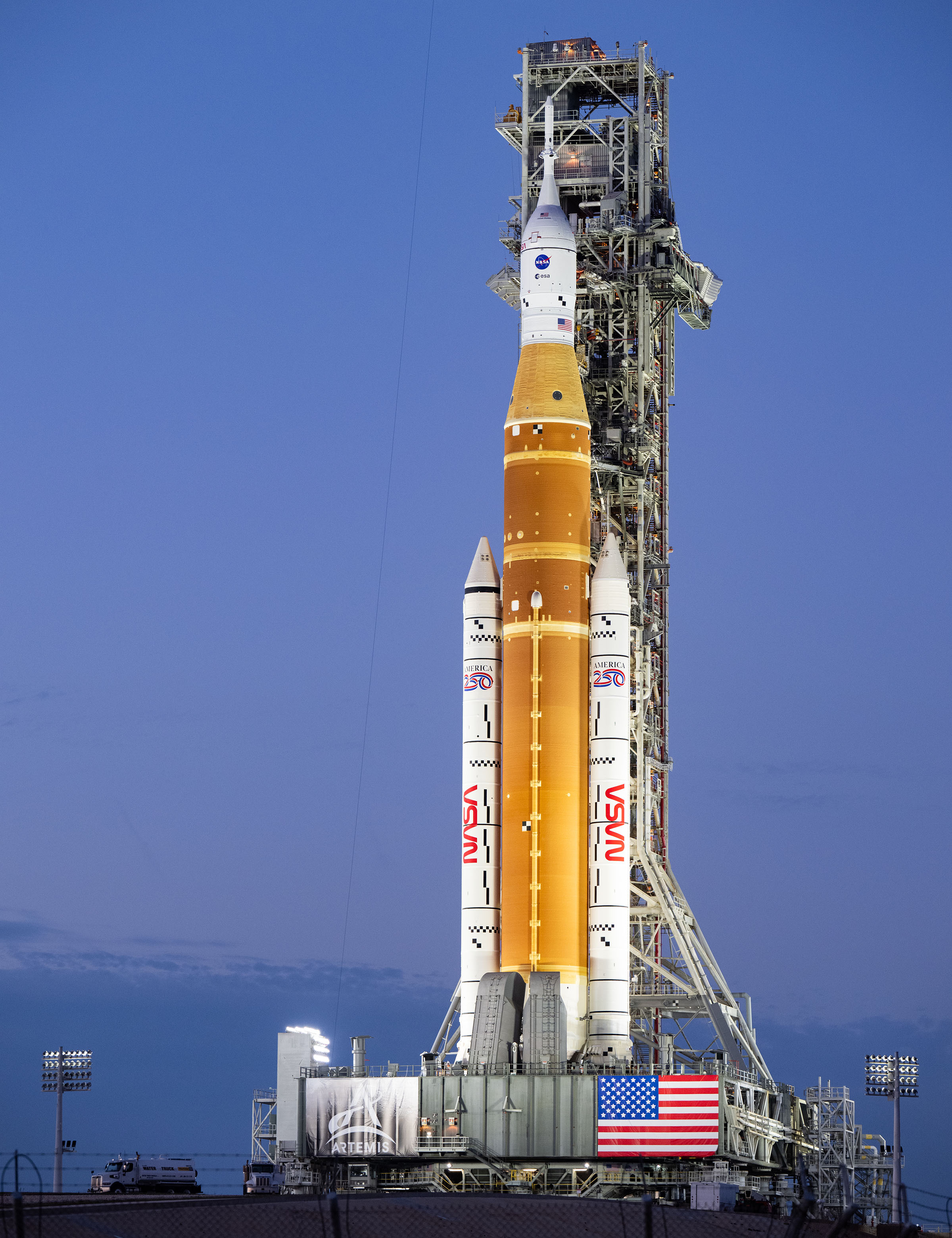
As it stands today, the SLS is the most powerful rocket at NASA’s disposal, and future versions of the SLS will be able to lift more than private vehicles, but those companies have shown they can innovate far faster (and for far less money) than NASA and its partners.
Like previous NASA vehicles, SLS is built by a stunning array of contractors and manufacturers scattered across the country. That makes it a difficult thing to vote against if you’re in Congress with NASA’s budget on your desk.
Concerns over the SLS also extend to the technology it uses, much of which was lifted from the space shuttle program. For example, the solid rocket boosters on the side of the rocket are upgraded versions of what made the shuttle so dangerous to launch. Once the solid rocket boosters are ignited, they cannot be turned off, and jettisoning them while they are burning is not an option.
Another leftover from the shuttle is the bundle of RS-25 engines found at the base of the core stage. The SLS for Artemis II is using all recycled and upgraded engines that flew on shuttle missions. Eventually, new RS-25s will need to be built.
Like the core stage itself, these solid rocket boosters and RS-25s are going on a one-way trip. This is in stark contrast to the space shuttle program, which would refurbish and reuse shuttle engines, while the large white SRB enclosures would be fished out of the ocean and reused.
This is also in stark contrast to the work being done by SpaceX, Blue Origin, and others to make launch hardware easily and safely reusable.
Adding to the expense and complexity is the time it has taken NASA and its partners to bring the Artemis program to this point. They are years late.
It’s easy to look at all of the criticism and think that Artemis II should be written off. I think the SLS should have been canceled a decade ago, but I’m still excited and inspired by what this mission means. The space shuttle and International Space Station should not have come at the cost of leaving the moon behind. Gene Cernan was the last person to walk on the moon, way back in 1972. Hansen, Glover, Wiseman, and Koch won’t be landing on the moon, but having a presence in lunar space is a huge step back to exploring our closest neighbor.
In many, many ways, Artemis II has the same spirit as Apollo 8. Flown in December 1968, it was humanity’s first time around the moon. Frank Borman, Jim Lovell, and William Anders were the first three people to see the far side of the moon with their own eyes.
The mission’s technical goals were critical to a future landing. Apollo 8 was designed to:
- ensure that NASA could pull off a trans-lunar injection, getting crews to the moon safely.
- verify that the hardware and procedures for deep space navigation & communication worked as expected.
- survey potential landing sites for future missions.
- verify flight hardware, including the Apollo capsule, was ready for deep space
That list of to-do items is very similar to that of the Artemis II mission. It’s exciting to imagine what it will feel like to watch the next lunar landing on television, just as my parents did in 1969.
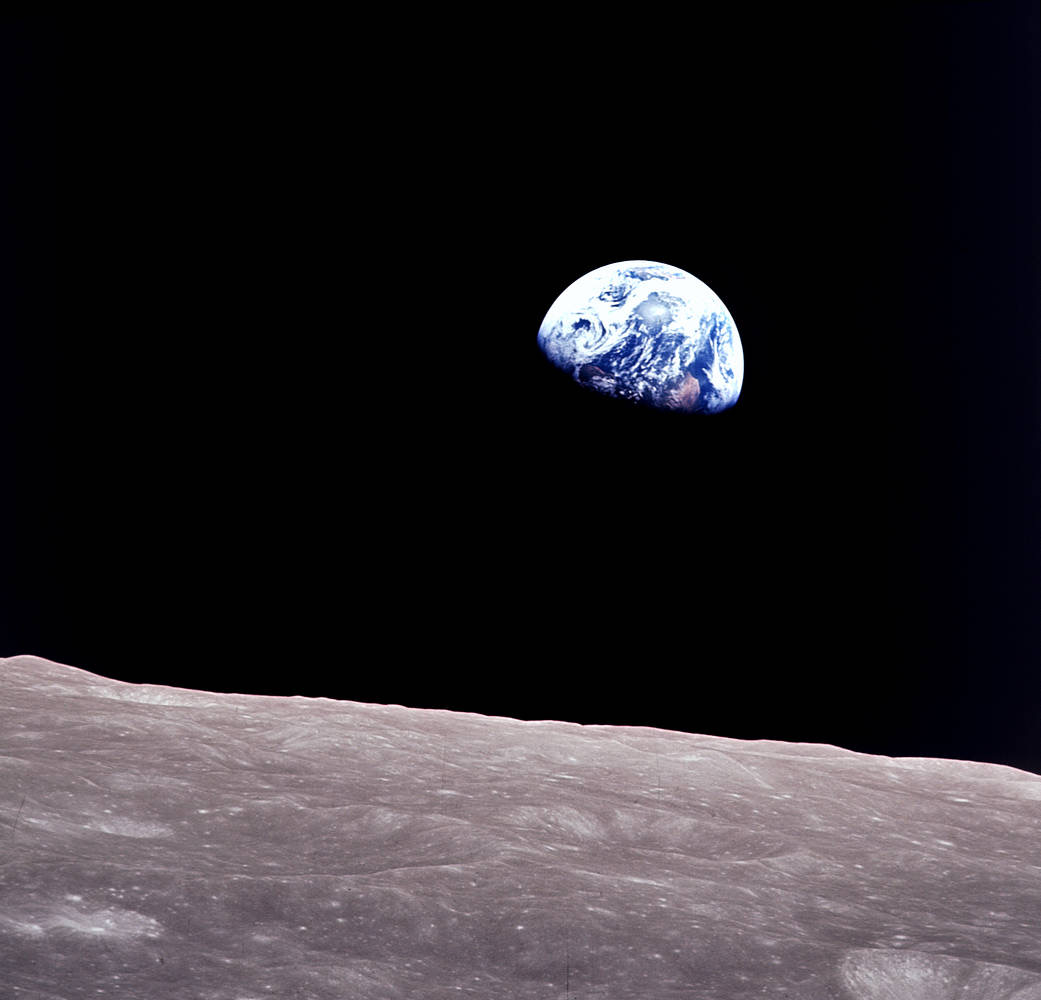
There’s something else about Apollo 8 that I think is relevant today. It’s a photo named named Earthrise that still stuns, over 50 years later:
all images courtesy of NASA
Taken by Bill Anders, it shows our world, hanging in darkness, above the lunar surface. At that distance, the strife of the late 1960s isn’t apparent. Events like the nightmarish Vietnam War and the scourge of Jim Crow weren’t visible to the crew. Surely they carried those events with them, but in that moment, I like to think that the crew felt peace. I think that’s reflected in their reading of Genesis 1:1-10.
The truth is, their world is not entirely dissimilar to our own. Turn on the news, and you don’t have to wait long to see images of war and oppression. Prejudice and hatred are still present today.
That’s why I am excited about Artemis II. It’s not about a rocket or a crew or a future moon landing or even a look outward to Mars and beyond. These moments are a reminder that we can do great things, and that our fellow Earth-dwellers should be treated the way we want to be treated.
We need another Earthrise moment, something only possible by looking at our world from the outside.