For the first time since the Cinema Displays went away in 2005, Apple has more than one display for sale with the same family name. Meet the 2026 Studio Display lineup:
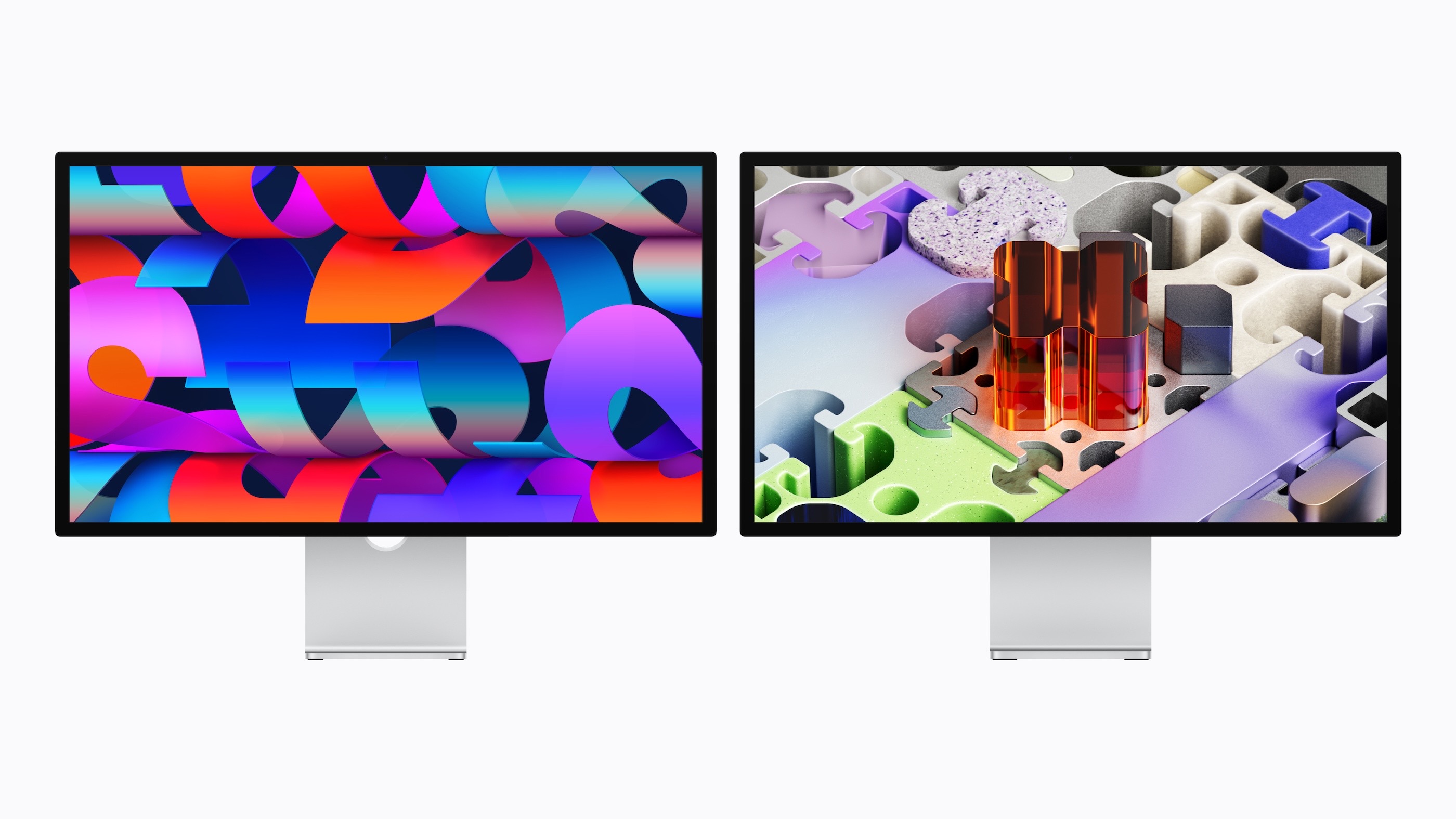
Yes, those are two different products, but they both feature 27-inch, 5K displays in the same enclosure as the previous Studio Display.
Starting at $1599, the new Studio Display is a slight upgrade to the 2022 model. Apple:
The new Studio Display features a 12MP Center Stage camera, now with improved image quality and support for Desk View; a studio-quality three-microphone array; and an immersive six-speaker sound system with Spatial Audio. It also now includes powerful Thunderbolt 5 connectivity, providing more downstream connectivity for high-speed accessories or daisy-chaining displays.
The panel still features a 600-nit LED backlight and still comes on the tilt-adjustable stand by default.
The much more interesting of the pair is the $3299 Studio Display XDR. Back to that press release:
The all-new Studio Display XDR takes the pro display experience to the next level. Its 27-inch 5K Retina XDR display features an advanced mini-LED backlight with over 2,000 local dimming zones, up to 1000 nits of SDR brightness, and 2000 nits of peak HDR brightness, in addition to a wider color gamut, so content jumps off the screen with breathtaking contrast, vibrancy, and accuracy.
With its 120Hz refresh rate, Studio Display XDR is even more responsive to content in motion, and Adaptive Sync dynamically adjusts frame rates for content like video playback or graphically intense games. Studio Display XDR offers the same advanced camera and audio system as Studio Display, as well as Thunderbolt 5 connectivity to simplify pro workflow setups.
This model comes with the tilt- and height-adjustable stand included (please clap), but it replaces the 6K, 32-inch Pro Display XDR. That is a blow to folks who want a larger display,1 but I am hopeful that this new 27-inch XDR display could end up in a larger iMac at some point.
It’s important to note that not all Macs can drive the Studio Display XDR at its full refresh rate, and the display requires an Apple silicon machine running macOS Tahoe. The company says:
Mac models with M1, M1 Pro, M1 Max, M1 Ultra, M2, and M3 support Studio Display XDR at up to 60Hz. All other Studio Display XDR features are supported.
-
I recently returned to the Pro Display XDR. I bought one back in my Intel Mac Pro days, but sold it to move to a pair of Studio Displays. That was later simplified down to just one Studio Display and an open 14-inch MacBook Pro off to the side. However, last year, I picked up a used Pro Display XDR but didn’t tell anyone for fear of being cyberbullied by my podcast cohosts.
I love the extra space and won’t be making any changes at this point. ↩