Hitting the Wall with Vibe Coding

Stephen Robles recently attempted to write an iOS podcast client. By his own admission, he’s not a developer, so turned to a series of AI tools to write the app. It didn’t go well:

At first, it would hang on searching for shows. After I seemingly fixed that, adding a show to the Library didn’t work. I kept going back and forth with GPT-5 and it kept getting worse. Every new build there was an increasing number or errors and unintended changes to UI elements I hadn’t asked for.

Up until this point, I was using the ChatGPT Mac App with “Work with Xcode” turned on, so GPT-5 could make changes to the code itself within the active window. Sometimes it would think it’s changing document X, but I had document Y opened, requiring me to revert, undo, and many times, get lost in the process.

Eventually the app failed to build and I could not fix it with ChatGPT. It felt like we were going in circles.

In my desperation, I turned to a different LLM. Many commenters on YouTube and social media suggested Anthropic’s offerings were better suited. I downloaded Claude and provided the full context of my app. I uploaded every Swift file I had created with screenshots of all the things I didn’t understand. From Core Data to build…files? I repeat, I have no idea what I’m doing.

Eventually, Robles gave up and ended up without a custom podcast app, but an interesting blog post instead.

I have very complicated feelings about vibe coding. I think a seasoned developer using AI to speed up their work can make a lot of sense, but I honestly don’t want to depend on an app that was written by someone who doesn’t know how it works.

Sponsor: Rogue Amoeba: Great Audio Tools for Every Mac User

The team at Rogue Amoeba has spent more than two decades perfecting audio software that just works on the Mac. No matter what your needs are, you can be confident when using their apps.

Rogue  Amoeba

Start with SoundSource, which puts comprehensive audio control right in your menu bar. Adjust individual app volumes, apply real-time effects, and play audio to the exact device you want.

For recording, you have two excellent options: Piezo offers extremely simple one-click recording of any app or input device, while Audio Hijack provides powerful recording options, along with real-time effects, scheduling, and even built-in local transcription capabilities. Use either to capture everything from Zoom calls to streaming audio.

Loopback is essential for live streaming, podcasting, or any situation where you need precise audio routing, all in software. It creates virtual audio devices that let you send audio from one app to another, without external hardware.

Every Rogue Amoeba app offers a fully functional free trial, with instant setup, so get started today.

One more thing: This month, 512 Pixels readers like you can save 20% on any purchase using discount code 512CURE. And that coupon won’t just save you money, it will also help save lives. In support of Childhood Cancer Awareness Month, Rogue Amoeba will donate $10 from every purchase to St. Jude Children’s Research Hospital in support of their mission to treat and defeat childhood cancer.

My thanks to Rogue Amoeba for sponsoring 512 Pixels, making great audio software, and for supporting such an important cause.

Pediatric Brain Tumor Consortium Sees Federal Funding Halted

It’s no secret that the federal government is slashing health initiatives left and right, but this one really got under my skin. Here’s Nina Agrawal for The New York Times:

The Pediatric Brain Tumor Consortium, an association of 16 academic centers and children’s hospitals dedicated to trials of novel treatments for pediatric brain cancer, directed its members last week to stop enrolling new patients because it had been informed that the consortium would not be eligible to apply for funding beyond March 2026, said Dr. Ira Dunkel, a pediatric oncologist who is the chair of the group.

Dr. Dunkel said he had heard about the decision from the program’s liaison at the National Cancer Institute on Aug. 19. He said he had not received written communication from the leadership at the institute — which provides the bulk of funding, about $4 million annually, to the consortium — about the decision.

Agrawal continues:

The only explanation Dr. Dunkel has seen, he said, is a paragraph on the institute’s website, which was updated Aug. 21 and states a rationale of optimizing resources for “maximum impact.” The Trump administration has slashed funding for the National Institutes of Health, of which the National Cancer Institute is a part, though it’s not clear whether this decision was connected to those cuts.

The Pediatric Brain Tumor Consortium, which has conducted dozens of trials since it was established in 1999 by the National Cancer Institute, has six active trials; five are related to treatment. These are early phase trials evaluating the safety and efficacy of novel therapies for pediatric brain cancers — mostly “the very highest-risk types” of these cancers, said Dr. John Prensner, a pediatric neuro-oncologist at the University of Michigan, which is not a member of the consortium.

This is why the work of institutions like St. Jude is so important.

Typepad is Shutting Down

Bad news today for old-school bloggers:

After September 30, 2025, access to Typepad – including account management, blogs, and all associated content – will no longer be available. Your account and all related services will be permanently deactivated.

Please note that after this date, you will no longer be able to access or export any blog content.

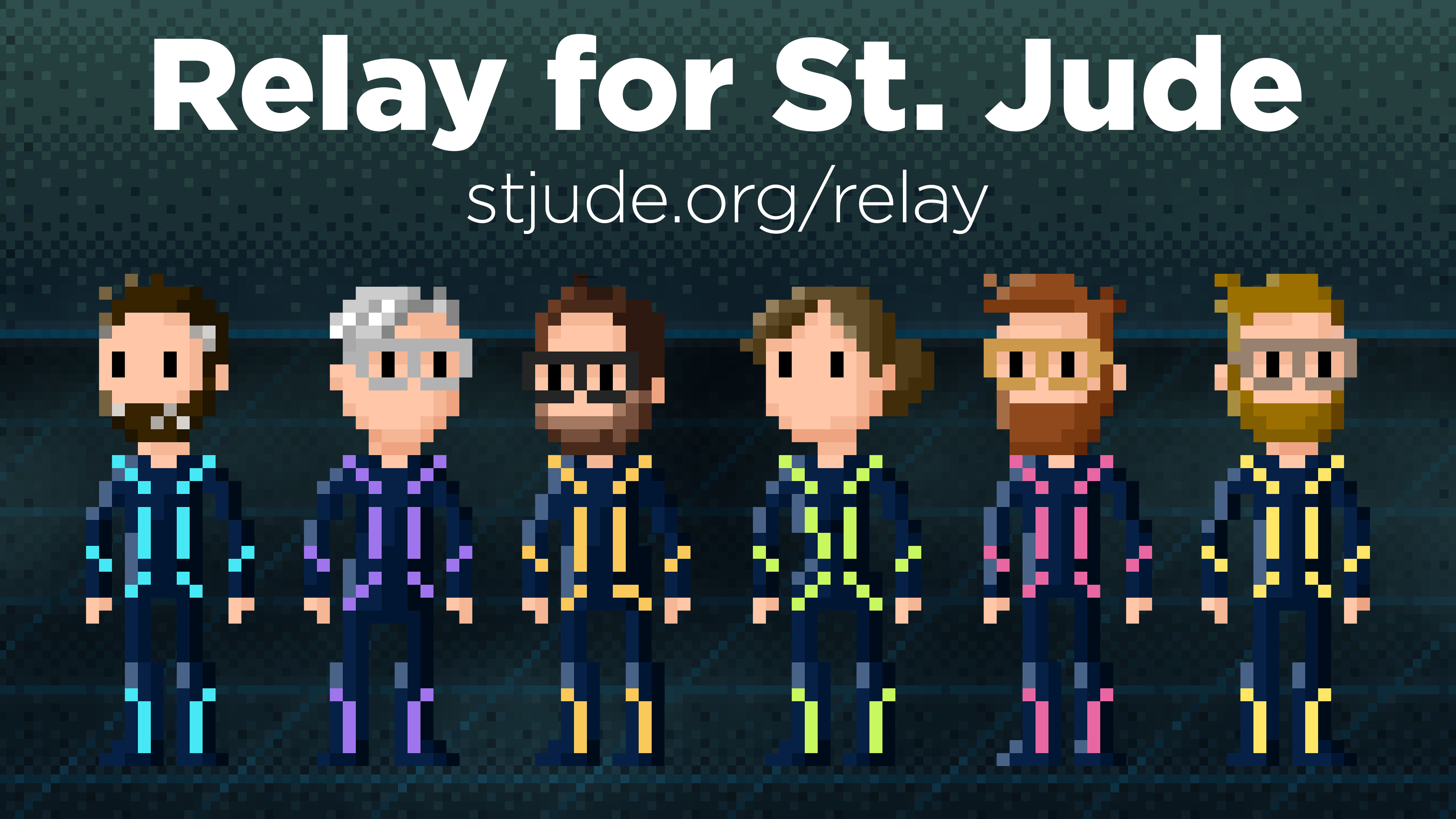
Relay for St. Jude 2025

September is around the corner, and that means our campaign to raise money for St. Jude is back!

Relay for St. Jude 2025

In 2009, our oldest son Josiah began treatment at St. Jude for a brain tumor. He was just six months old. After 18 rounds of chemotherapy and a half-dozen surgeries, the cancer has not returned, but our family is forever changed.

We learned what it meant to suffer, and how it felt to fear the worst. We learned how to operate on very little sleep, and how to rely on our friends and family for not just support, but even for the basics of everyday life. Those 18 rounds of chemo were hard, but they worked, and as our son has grown, so has our response to the entire ordeal. Slowly, anger and despair faded, being replaced with a desire to give back to the place that saved Josiah’s life.

As I’m sure you know, St. Jude is a special place. It is leading the way the world understands, treats and defeats childhood cancer, and other life-threatening diseases. If that sounds expensive, it’s because it is, but the bill isn’t passed to the families of patients. At St. Jude, no child is denied treatment based on race, religion or a family’s ability to pay.

That’s what makes our fundraising campaign so important to me. I want to help give to others what was given to me. I want families facing the unthinkable to do so without the fear that saving their child will mean financial ruin. I want kids who will never step foot on St. Jude’s campus to benefit from the research done there. Most of all, I want the day to come to where no child dies in the dawn of life.

That takes all of us. In our little corner of the world, the Relay community has raised over $4 million for St. Jude since 2019, and I can’t wait to see what this year will bring.

When I stepped foot on St. Jude’s campus with my son in 2009, I had no idea where life was taking us, but I’m thankful it’s here.

Please donate today.

Tot 2

The Iconfactory’s app Tot has been a favorite of mine since it first launched. It’s a great way to have a scratchpad — or seven — that sync across devices.

Here’s what I have in Tot right now:

  • Yellow: Notes from a phone call I had today.
  • Orange: Currently empty.
  • Red: Some text I’m working on for a screen in the iOS 26 version of Pedometer++.
  • Purple: Some text I’m working on for a screen in the iOS 26 version of Widgetsmith.
  • Blue: Currently empty.
  • Teal: A bunch of text that will be sent as announcements when we launch Relay’s annual St. Jude campaign.
  • Green: A bunch of URLs that come in handy when helping folks out with their Relay memberships.

Version 2 of the app is here, and it makes what was great even better. Craig Hockenberry has a blog post outlining the features, and John Voorhees summed it up well on MacStories:

It’s great to see the Tot apps reach version 2.0. The three tentpole features – automatic indenting, custom smart bullets, and text dividers – are all meaningful improvements that don’t compromise the apps’ simplicity. Those features, along with several quality of life improvements and other bug fixes that you can read about in Tot’s version history, add up to an excellent update that should serve users well for a long time.

xAI No Longer a Public Benefit Corporation

Lora Kolodny at CNBC:

When Elon Musk created his artificial intelligence startup xAI in 2023, he incorporated it as a Nevada public benefit corporation, making a formal commitment to positively impact society and to post regular disclosures about progress on its non-financial goals.

The launch of xAI followed Musk’s split with OpenAI, which he helped start eight years earlier as a nonprofit before the AI lab went on to take billions of dollars from Microsoft en route to becoming a massive business.

Musk’s spat with OpenAI took a legal turn early last year, when he sued the AI startup and CEO Sam Altman for breach of contract, alleging they abandoned the company’s founding mission to develop AI “for the benefit of humanity broadly.” As part of his lawsuit, Musk sought to block OpenAI from converting into a for-profit entity.

Meanwhile, xAI changed its own structure, terminating its PBC status, according to records on file with Nevada’s secretary of state.

In related news: Musk is making good on his promise to sue Apple and OpenAI over Grok and X’s ranking on the iOS App Store. 🍿