
I joined Clockwise this week to talk about Siri API integrations, no Overwatch on Mac, Apple missing the AI wave and the MacBook Pro’s rumored OLED touchbar. It was a good time.
512 Pixels
Liftoff #21: The Excitement Has Exploded⇢
Today on everyone’s favorite fortnightly space podcast:
Jason and Stephen catch up some news, talk about some weird ways stars end and are then joined by Loren Grush, science reporter at The Verge to talk about commercial crew, inflatable space hotels and more.
It was really great to talk with Loren. She does killer reporting at The Verge. My thanks to our sponsors for this episode:
- CuriosityStream: The world’s first, ad- free non fiction streaming service. Use promo code RELAYFM to get two months free.
- Luminos: A fantastic astronomy app, 10 years in the making! Now with an Apple Watch app for skygazing!
Connected #92: My Relationship with the Status Bar⇢
New MacBook Pro rumored⇢
MacRumors’ Husain Sumra, quoting KGI Securities analyst Ming-Chi Kuo:
While long overlooked, the MacBook line is the brightest spot for Apple’s 2016 rollouts. This is particularly true of the two new MacBook Pro models, to be introduced in 4Q16, as they will have a thinner and lighter form factor, Touch ID, use OLED display touch bar (to replace physical function keys, located above the keyboard) and adopt USB-C / Thunderbolt 3.
Sumra goes on to write that the new machine will be offered in 13-inch and 15-inch configurations, as they are now. The addition of Touch ID would be a welcome one, but that OLED “display touch bar” is a more interesting tidbit. Several PC vendors ship softkeys for things like volume, screen brightness and media control, but this could prove to be even more flexible. For example, how many keyboard are still out there with a Dashboard button instead of one for Launchpad? If Siri is coming to the Mac, even my new Magic Keyboard would assumedly be out of date.
Additionally, if these buttons are just software, perhaps users could map custom things to certain areas. How great would it be to be able to hit something like Spotlight or ~/Dropbox with a single stroke?
The report also includes this passage:
The 12-inch MacBook will also be joined by a 13-inch MacBook, according to Kuo. The analyst believes that Apple will move forward with all three MacBook lines this year, with the MacBook Pro occupying the high-end slot, the MacBook will replace the Air as the medium-level model and the MacBook Air will serve as an entry-level model with comparatively low prices.
This feels right to me. I wonder if an entry-level Air would still come with both 11.6- and 13-inch displays, or if the larger Air will meet its end this year. Returning to a lineup where the cheapest machine has the smallest screen would be simpler and easier to understand.
Whatever happens, the rumored Q4 date for this MacBook Pro is worrisome. While the current MacBook Pro is still a good machine, Apple still hasn’t been able to get Skylake machines out the door. It’d sure be nice to see that change.
Kbase Article of the Week: TCP and UDP ports used by Apple software products⇢
Learn more about TCP and UDP ports used by Apple products like OS X, OS X Server, Apple Remote Desktop, and iCloud. Many of these are referred to as “well known” industry standard ports.
The iMac Clones
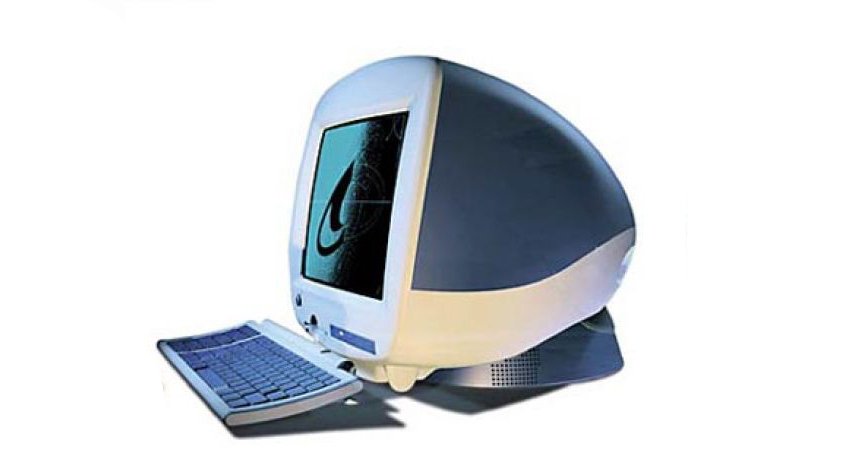
The iMac G3’s design earned praise from many in the industry, with two companies so impressed they attempted to copy it with their own products.
Daewoo and Future Power announced a computer called the ePower. The blue, rounded, all-in-one design would look familiar, as this image shows:
In 1999, eMachines joined the race and released the eOne, a machine that attempted to copy the success of Apple’s iMac by using as much blue plastic as they could find:
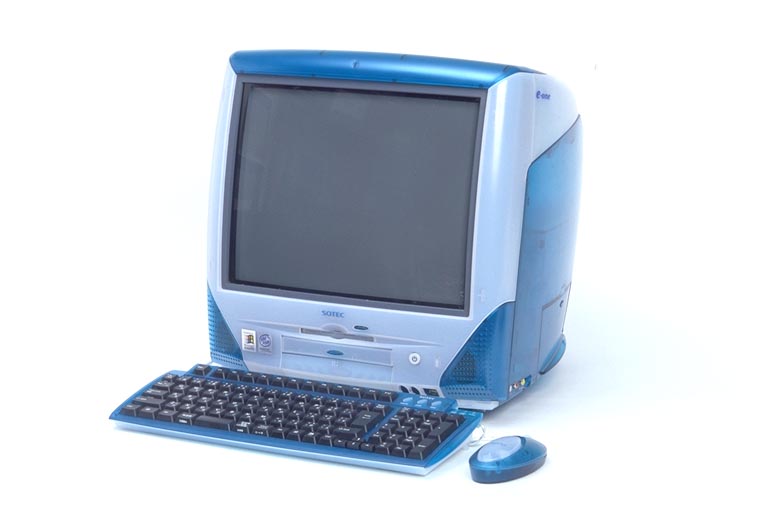
Apple sued eMachines and Future Power, stating that their designs were too close to the iMac’s and claiming they were trying to sell computers by capitalizing on the merits of Apple’s work. I’m not sure if anyone was actually confused by the differences, but Apple wasn’t happy. Here’s Steve Jobs:
There is an unlimited number of original designs that eMachines could have created for their computers, but instead they chose to copy Apple’s designs. We’ve invested a lot of money and effort to create and market our award-winning computer designs, and we intend to protect them under the law.
Future Power settled with Apple, but continued to ship all-in-one machines. Likewise, eMachines was allowed to sell a redesigned all-in-one computer. In short, the courts ruled that this was a color-scheme issue, as US District Judge Jeremy Fogel ruled:
There are many ways in which modern lines, bright colors and translucent plastics might be combined in the design of a personal computer. Any of these combinations is available to Apple’s competitors, so long as the combination selected is not so similar in appearance to the iMac as to infringe on Apple’s trade dress rights.
Of course, neither company is making computers — or anything — today.
The Five Flavors
Last time, we looked at the original iMac introduction that took place in 1998.
Just a year later, Apple discontinued the Bondi Blue iMac and replaced it with something far more colorful.
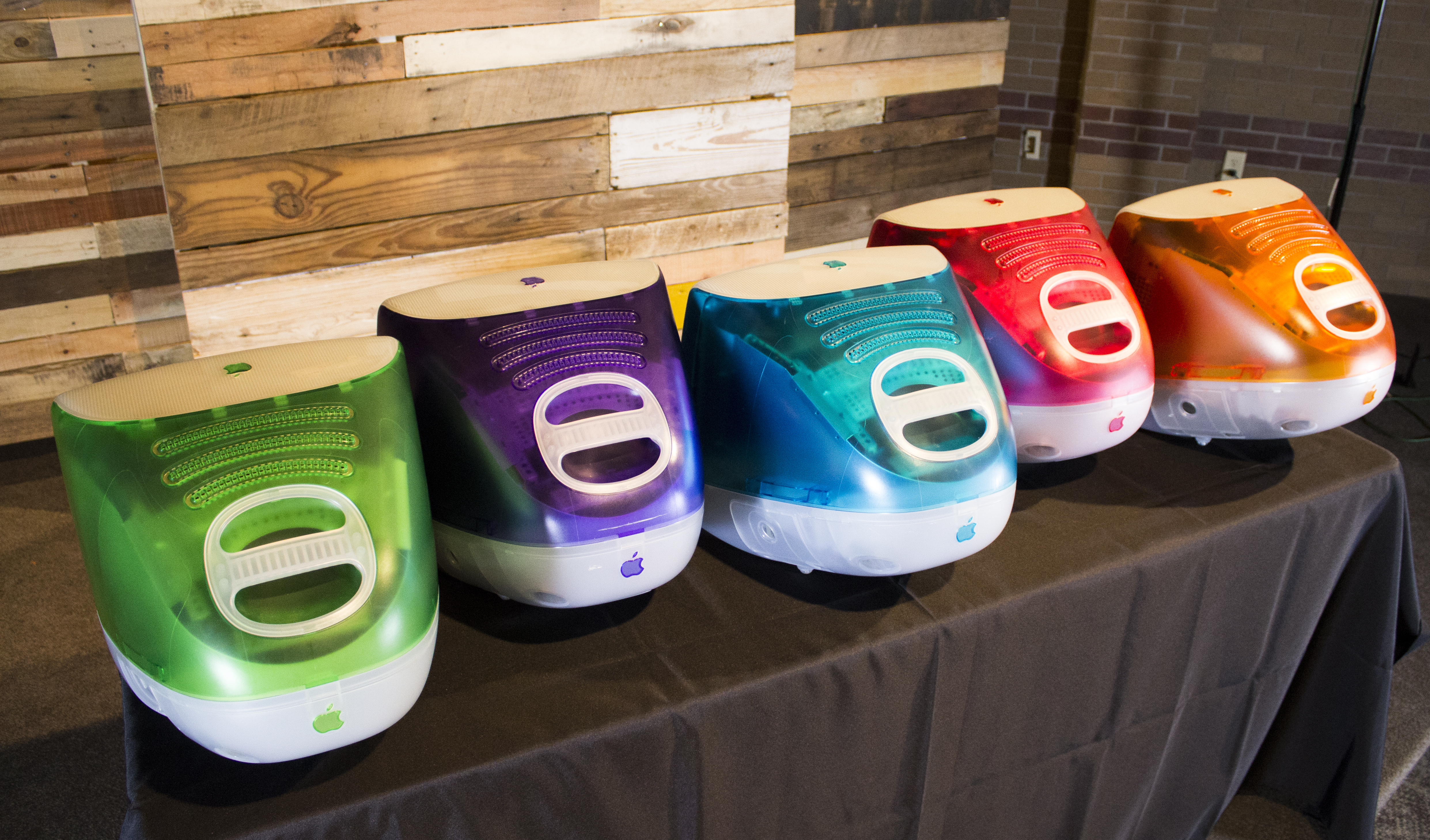
The 1999 iMacs came in five flavors:
- Lime
- Grape
- Blueberry
- Strawberry
- Tangerine
(Blueberry is very similar to the Bondi before it, but was a little richer and slightly less teal. It’s hard to tell them apart unless you have them next to each other.)
Under the covers, these iMacs weren’t drastically different from the Bondi before them. The mysterious mezzanine slot was removed, as was the IRDA port. The processor was bumped to 266 MHz, but the rest of the specs matched.1
In short, this update was just a yearly speed bump, with a lot of flash.
Peter Lewis wrote about them for The New York Times, saying:
Breaking with its original philosophy of making only one version of the iMac – the hard part for buyers was choosing the color – Apple has created three models. All have features that makers of Windows-based computers are probably already scrambling to try to copy.
The new iMac case is now fully translucent and about an inch shorter, front to back. The carrying handle is ringed by ventilation holes, enabling Apple to get rid of the noisy internal fan. Apple says the new iMac is not only the most powerful consumer PC on the market, but also the quietest.
Here’s a quote from Jobs’ keynote address:
In our consumer surveys, [color] is far more important than most of the mumbo-jumbo associated with buying a consumer computer. Megabytes, Megahertz, Gigabytes, people don’t care about that stuff. They want to trust us to give them a really great computer … They want to express themselves and pick the color [they] want.
This marks Apple’s first efforts to offer a wide range of options to its customers in terms of how a product looked. All five iMacs were the same; customers got to pick their color. This strategy would play out for years to come, in products like the iPod mini, iPod nano and even iPhone and now the MacBook.
Jobs — and Apple today — understand that people want their purchases to say something about them. It’s a huge reason the company’s brand equity is what it is. Carrying a gold iPhone or a blue iPod nano back in the day made a statement.
That’s what these iMacs introduced to the world for the first time. This generation of iMac is a lot of fun, and it was an important step for Apple to make.
-
Like the Bondi’s silent “Rev. B” before this, the Five Flavors would get a small spec bump just a few months after going on sale. Starting in April 1999, these machines would ship with a 333 MHz G3 and a 6 GB hard drive. ↩︎
RSS Sponsor: Codescanza - Scan and store loyalty cards, add them to Apple Wallet⇢
Codescanza is an iPhone app that stores all those loyalty cards or other codes that you can’t add to Apple Wallet.
Codes that you scan or import can be accessed instantly in Notification Center (without unlocking your phone) or by swiping up on an Apple Watch.
With Codescanza 1.2 you can also add codes directly to Apple Wallet, and if you specify a location they’ll appear automatically on your lock screen or Apple Watch whenever you’re nearby.
Download on the App Store for $2.99 or learn more at codescanza.com.
Simple Beep Episode 39⇢
On the latest episode of the Simple Beep podcast, Ed, Brian and I got real deep into the detailed history of the various revisions Apple made to the iMac. Think of it as an extended version of that YouTube video from the other day.
Connected #91: Developer Festival⇢
The boys talk about Google’s I/O announcements and Federico drops a bombshell.
My thanks to our sponsor this week:
- Textexpander, from Smile: Simply indispensable.
Apple shows off revamped San Francisco store⇢
It’s not often that Apple invites journalists to its stores for a preview anymore, but today was a bit different. Apple not only unveiled its new San Francisco store, it also explained its new strategy for its major retail outlets.
As I sat listening to Angela Ahrendts, Apple’s senior vice president of retail and online stores, it became clear very quickly that Apple kept its attention to detail in the design of the location, but completely rethought how it functioned.
The iMac G3 family tree
In August of 1998, Apple released the Bondi blue iMac. This computer left a bunch of stuff in the past, including beige plastic, ADB and serial ports, and the floppy drive.
It received a minor update a couple of months in, but the Revision A and B machines aren’t all that different.
In January 1999, the company introduced the Five Flavors. Essentially it was a faster 1998 iMac, but in new exciting colors: Blueberry, Lime, Tangerine, Strawberry and Grape. A speed bump took place in April 1999, bringing the machine to 333 MHz.
In the fall of 1999, things started getting more complicated. Apple switched to slot-loading optical drives and slightly revised the cases, making the computers a touch smaller and more transparent. At the bottom of the line was a USB-only Blueberry for 999 dollars. The Five Flavor colors made a comeback, gained FireWire ports and were renamed “iMac DV.” A new color — Graphite — shipped with FireWire and a 13 GB hard drive as the high-end model.
In July 2000, things got out of hand. A 799 dollar Indigo iMac shipped with no FireWire and no support for AirPort. The faster DV Summer 2000 added Ruby, while the faster-again DV+ was available in Indigo, Ruby and Sage. The DV SE sold in Graphite and Snow and came with an even faster processor and 30 GB hard drive.
February 2001 brought some much-needed sanity. The Early 2001 iMac included the ubiquitous Indigo, and introduced Blue Dalmatian and Flower Power. These patterns were molded into the plastic, and supposedly took Apple 18 months to perfect. The Early 2001 SE swapped Graphite for Indigo and came with an updated G3 and a faster GPU.
The last generation of iMac G3 was available in Indigo, Graphite and Snow. After the iMac G4 was introduced in early 2002, just the Snow remained, and stayed on sale all the way to March 2003.
There’s no doubt that the iMac G3 family tree is confusing in places, but I think Apple learned some valuable lessons here. As shown later in products like the iPod and now the MacBook, color matters to people. Many customers didn’t care so much about the difference between a 400 and 450 Mhz computer; they cared if it came in blue or if it came in green. Likewise, Apple learned that giving each of its good/better/best products a discrete name just led to confusion. If you buy a MacBook Air today, you just get an “MacBook Air.”