With Myke out this week, Stephen and Federico bravely carry on, discussing the future of web browsers, how iOS 18.2 is shaping up, and a Kickstarter that seems a bit unusual.
Festivitas ⇢
Simon B. Støvring has launched a new app:
Festivitas automatically adds festive lights to your menu bar and dock upon launch and you can tweak their appearance to match your preferences.
I love this, and not just because it reminds me of the old Holiday Lights app.
Strategic Linear Contextual Bandits ⇢
Thomas Kleine Buening, Aadirupa Saha, Christos Dimitrakakis, Haifeng Xu, on Apple’s “Machine Learning Research” blog:
Motivated by the phenomenon of strategic agents gaming a recommendation system to maximize the number of times they are recommended to users, we study a strategic variant of the linear contextual bandit problem, where the arms strategically misreport privately observed contexts to the learner. % under strategic context manipulation. We treat the algorithm design problem as one of \emph{mechanism design} under uncertainty and propose the Optimistic Grim Trigger Mechanism (OptGTM) that minimizes regret while simultaneously incentivizing the agents to be approximately truthful. We show that OptGTM achieves sublinear regret despite the agents being unrestricted in their ability to game the learning algorithm by misreporting contexts. We then also show that failing to account for the strategic nature of the agents results in linear regret. However, a trade-off between incentive-compatibility and regret minimization is shown to be unavoidable. More broadly, this work provides insight into the intersection of online learning and mechanism design.
I’m sure we all understand what all of that means.
Focused 218: Turning Down the Volume, with Stephen Hackett ⇢
In my week of guesting on other people’s Relay podcasts, I’m on today’s episode of Focused, talking about my recent sabbatical. I found the topic surprisingly weird to talk about, but David and Mike helped make it much more comfortable to do so.
The Verge Launches Its Subscription ⇢
Today we’re launching a Verge subscription that lets you get rid of a bunch of ads, gets you unlimited access to our top-notch reporting and analysis across the site and our killer premium newsletters, and generally lets you support independent tech journalism in a world of sponsored influencer content. It’ll cost $7 / month or $50 / year — and for a limited time, if you sign up for the annual plan, we’ll send you an absolutely stunning print edition of our CONTENT GOBLINS series, with very fun new photography and design. (Our art team is delightfully good at print; we’ve even won a major magazine award for it.)
A surprising number of you have asked us to launch something like this, and we’re happy to deliver. If you don’t want to pay, rest assured that big chunks of The Verge will remain free — we’re thinking about subscriptions a lot differently than everyone else.
Let me explain.
I read a ton of stuff on The Verge, enjoy their podcasts, and love full-text RSS. I’m already signed up.
The Flexbar ⇢
Andrew Liszewski, writing at The Verge, about a thing that should probably not be made:
Apple may have said goodbye to the MacBook Pro’s Touch Bar last year, but a team of four engineers believes the concept deserves a second chance. They’ve created the Flexbar, which is essentially a standalone version of the MBP’s thin touchscreen display that can be used with multiple devices and platforms through a USB connection.
The Flexbar’s creators have started a new company, Eniac, which is attempting to bring the accessory to consumers through a Kickstarter crowdfunding campaign. The earliest backers can preorder one discounted to $119 from the full MSRP of $179, with delivery expected as early as February 2025.
I don’t know anything about the folks behind this project, but it seems to be that this a little like the time the Germans opened the Ark of the Covenant in Raiders of the Lost Ark. It’s best to keep your eyes shut when it comes to the Touch Bar. Let it rest in peace.
Existential concerns about the fabric of space and time aside, the $2,569 goal for the Kickstarter immediately caught my attention. That is basically no money when it comes to manufacturing hardware like this and to build the accompanying software.
Upgrade 540: Validation for Shower Jason ⇢
Myke Hurley was out this week, so I joined Jason Snell for today’s episode of Upgrade:
Stephen Hackett joins Jason to discuss emergency calls, reaction to Jason’s “The Mac is the Model” piece, iPhone metals, our innate troubleshooting powers, Jason’s laptop dilemma, the ChatGPT Mac app, and some very old Vision Pro news.
On Upgrade+, I had Jason price out a MacBook Pro, then we talked about our Thanksgiving breaks.
Sponsor: Rogue Amoeba’s SoundSource ⇢
Do you use audio on your Mac, in any way at all? Then SoundSource is for you. SoundSource provides superior control over all audio, right from your menu bar.
With SoundSource, you get:
Per-application control: Change the volume of any app relative to others, and play individual apps to different audio devices.
Audio effects, anywhere: SoundSource has great built-in effects, like Magic Boost and Volume Overdrive, as well as a built-in 10-band equalizer to sweeten sound. Advanced users will love the ability to apply Audio Units like “Sound Isolation” to any audio.
Fast device access: Adust settings for your Mac’s Output, Input, and Sound Effects audio devices, instantly. Change levels, tweak the balance, and even switch sample rates, right from the menu bar. You may never need to open the Sound System Preference again!
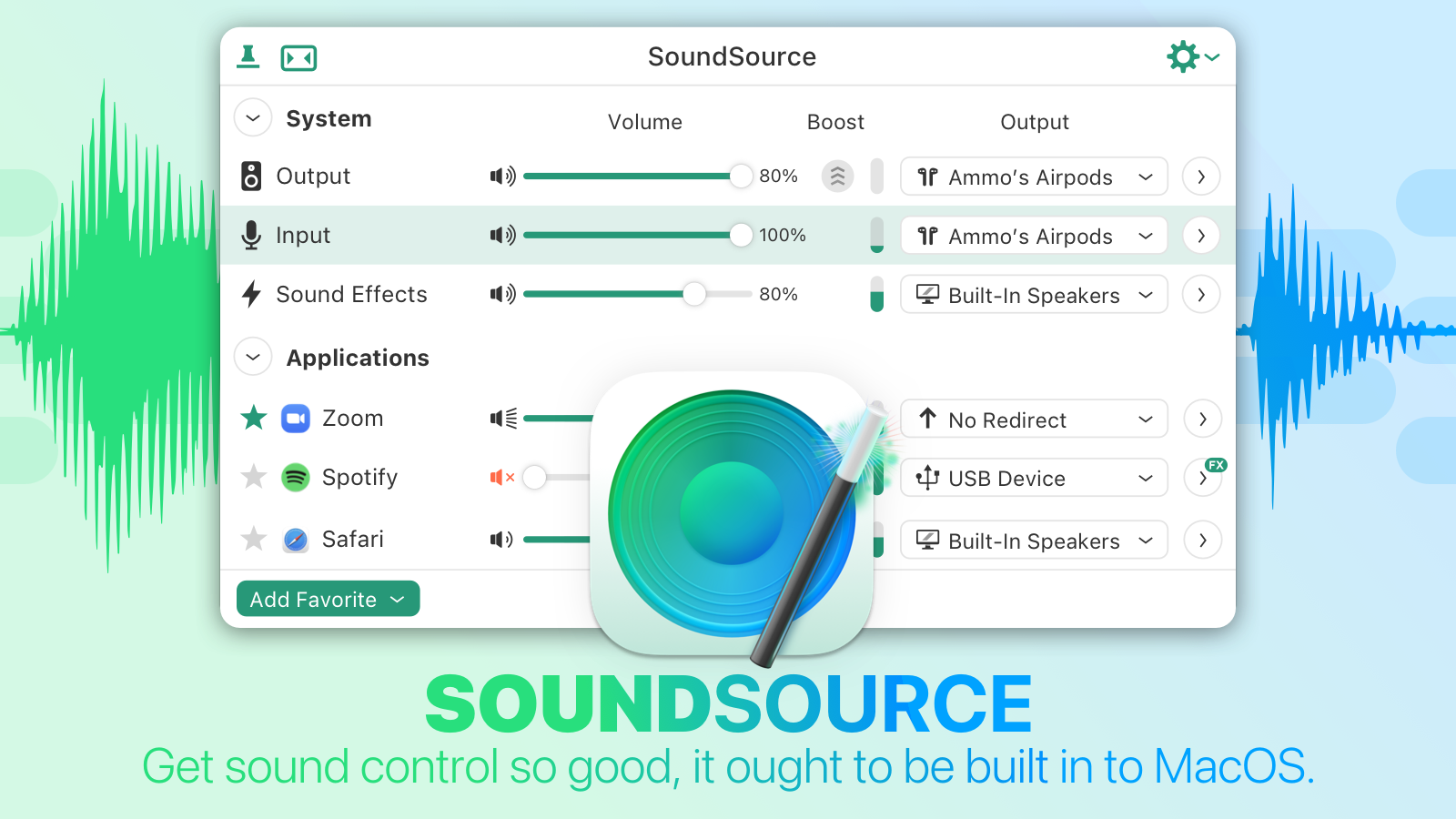
SoundSource is incredibly powerful, and now, it’s easier to use than ever. Get started in just a few seconds when you download the free SoundSource trial.
When you’re ready to buy, you can save 20% off SoundSource (and any other purchase too!) through the end of the year. Just use coupon code SMH20P to save.
Mac Power Users 773: 2024 State of the Platforms Part 2: Mac, Vision Pro, Apple TV, iCloud & Services ⇢
On this week’s Mac Power Users, David and I make it through the rest of Apple’s platforms this week, including a speed round of the company’s entertainment portfolio.
On More Power Users, we covered the state of HomeKit, both in our own homes and more generally. You can sign up for a year of the ad-free, longer version of the show for 20% off between now and December 18.
Indie App Sales ⇢
It’s that time of year again: Indie App Sales is currently boasting over 400 Mac and iOs apps for sale. There are some real gems on the list.
Connected 529: Slop Trokt ⇢
Federico has been battling color profiles and Stephen has been working to solve a mystery, while Myke has just been enjoying the vibes.
On Connected Pro — the longer, ad-free version of the show — we reviewed the new Linkin Park and talked about my Thanksgiving plans. You can get Connected Pro at 20% off right now!
MacStadium Rolling Out M4 and M4 Pro Mac Minis ⇢
They have four standard models, from the base machine up through a pretty nice M4 Pro model. For years, we ran Relay’s live stream on a Mac mini hosted by MacStadium. If you need a Mac in the cloud, it’s the only way to go.