
Athena Chapekis and Anna Lieb at the Pew Research Center, on the effect AI-generated results have had on websites showing up in Google search results:
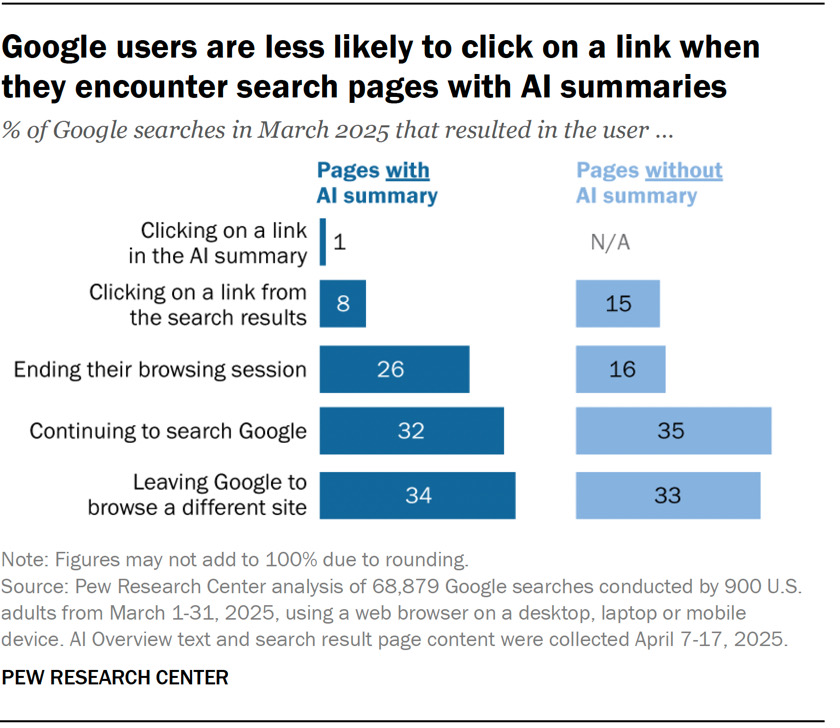
A Pew Research Center report published this spring analyzed data from 900 U.S. adults who agreed to share their online browsing activity. About six-in-ten respondents (58%) conducted at least one Google search in March 2025 that produced an AI-generated summary. Additional analysis found that Google users were less likely to click on result links when visiting search pages with an AI summary compared with those without one. For searches that resulted in an AI-generated summary, users very rarely clicked on the sources cited.
This charts sums things up nicely:
Casey Newton at Platformer reported on this last night:
To Google, those numbers are a sign of success: they show a growing number of satisfied customers, who have been spared the need to browse the web by the AI overview, and who are thus likelier to return to Google (and not, say, ChatGPT) the next time they have a question. (And the company often cites internal statistics showing that people who see AI overviews are more satisfied.)
To publishers, though, they’re reasons for alarm — and job cuts.
Google took issue with the study when I asked the company about it today.
“This study uses a flawed methodology and skewed queryset that is not representative of Search traffic,” the company told me. “We consistently direct billions of clicks to websites daily and have not observed significant drops in aggregate web traffic as is being suggested.”