Relay for St. Jude 2025: $753,756 Raised

We just wound down our annual St. Jude fundraiser. The Relay community was once again incredibly generous, donating $753,756 to help end childhood cancer around the world. This makes 2025 our third-biggest fundraiser ever.

When we started this back in 2019, we just wanted to raise a few thousand dollars, but as of today, we’ve raised a total of $4.8 million!

That’s an eye-watering amount of money, and I am deeply humbled by it. I view this work as an important part of Relay’s legacy. When we’re gone and the RSS feeds grow stale, St. Jude will still be at work saving the lives of children around the world with the most advanced treatments known to humankind. That’s not a small thing, and as the father of a pediatric cancer survivor, it’s a very personal thing.

There are a lot of people who put a lot of work into the campaign each year. The folks we work with at St. Jude and ALSAC are just the best, and it’s an honor to be a true partner with them in this project. We spend a lot of time together putting this together each year, and it never grows old.

On the Relay side of things, my co-hosts have my forever gratitude. Every show at Relay — and beyond — have taken ownership of this campaign. This may have started with my story, but now our St. Jude work is seen as personal for all of us.

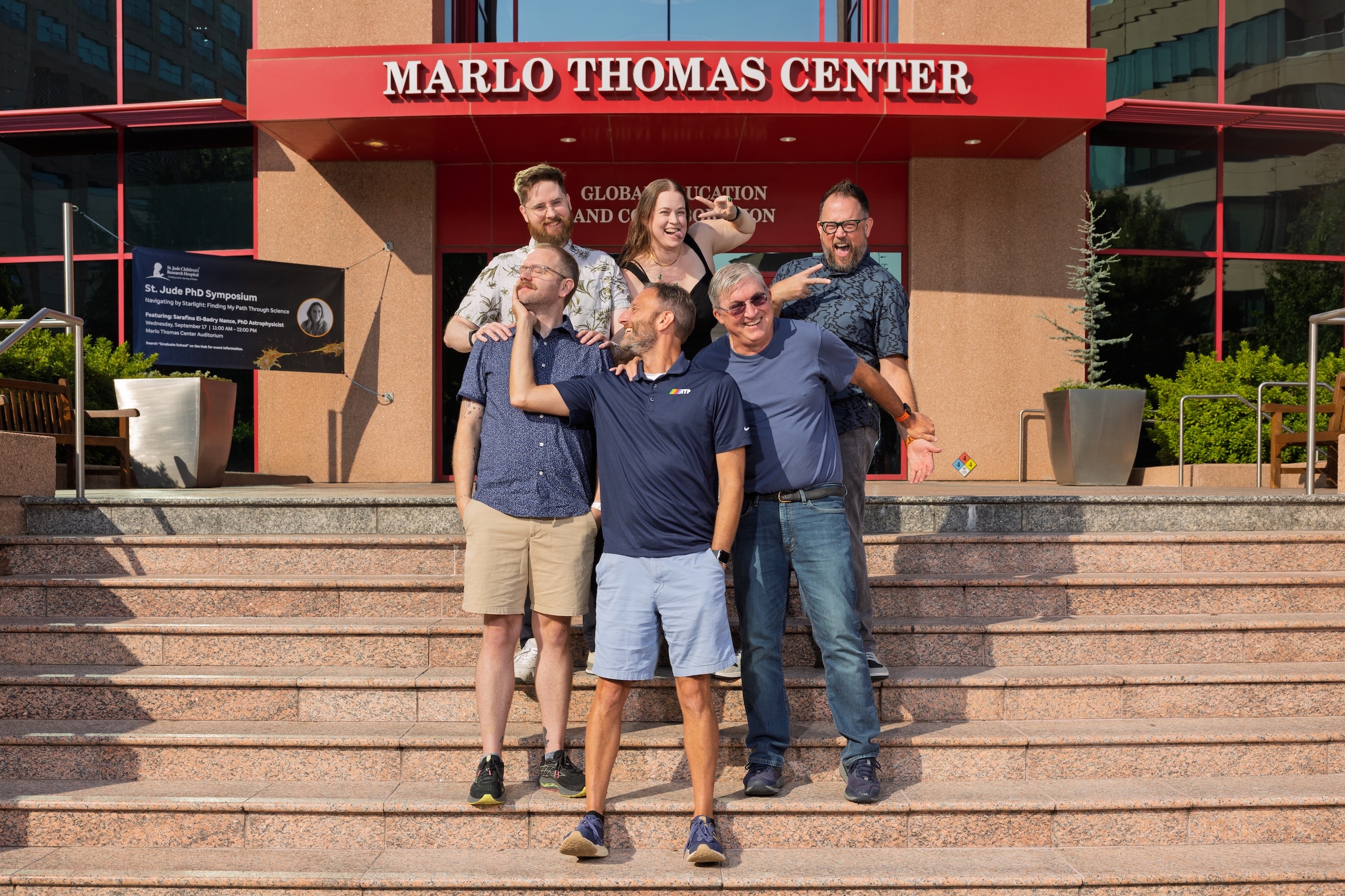
Then there’s this nutty bunch, who joined me for the best Podcastathon yet. Being on for 12 hours is not easy, but they made it so much fun:

Relay Podcastathon Crew

(It’s hard to believe that back when we started, it was just me and Myke with a folding table and a ball pit. We’ve come a long way!)

Extra thanks goes out to the rest of our team at Relay for supporting this work. From Kerry working on our talking points to our Discord moderators cultivating excitement about the fundraiser, this is truly a team effort.

A few years ago, folks started hosting their own community fundraisers during September alongside us. The passion and creativity this has brought to the month has been inspiring, and has given the whole thing a much more community-driven feel, which I love.

Most of all, thank you. Each year, you take time and your hard-earned money and spend them on something amazing at St. Jude. While I hope you will never need the hospital’s care, know that families who do are eternally grateful for your love and support.

Sponsor: Magic Lasso Adblock: Incredibly Private and Secure Safari Web Browsing

Online privacy isn’t just something you should be hoping for – it’s something you should expect. You should ensure your browsing history and app usage stays private and is not harvested by ad networks.

By blocking ad trackers in Safari, Magic Lasso Adblock stops you being followed by ads around the web.

Magic Lasso Adblock

And with App Ad Blocking in Magic Lasso v5.0, it also extends protection to all apps on your device including News apps, Social media, Games and other browsers like Chrome and Firefox.  

Built from the ground up to protect your privacy, Magic Lasso is an efficient, high performance and native Safari ad blocker that blocks all intrusive ads, trackers and annoyances on your iPhone, iPad and Mac.

Users rely on Magic Lasso Adblock to:

With over 5,000 five star reviews; it’s simply the best ad blocker for your iPhone, iPad and Mac.

And unlike some other ad blockers, Magic Lasso Adblock respects your privacy, doesn’t accept payment from advertisers and is 100% supported by its community of users. 

So, join over 350,000 users and download Magic Lasso Adblock from the App Store, Mac App Store or via the Magic Lasso website.

iPhone Heir to the Throne

Picking an iPhone used to be easy.

For years, the only real option was what color you wanted, at least for some models. Then came the iPhone 6 and superior-yet-a-little-bendy 6 Plus, which made things a little more complicated.

A few years later, things started getting weird. In rapid succession, we saw the 8 and X, then the XR and XS and XS Max, then the 11, 11 Pro, and 11 Pro Max.

Starting with the iPhone 12, Apple introduced four new iPhones each year: two regular iPhones and two Pro iPhones. The iPhone mini came and went, with the Plus replacing it.

That brings us to 2025, and the iPhone family still has four members, but picking the right one is more complicated than ever.

Trust me: I have an iPhone 17 Pro and an iPhone Air on my desk.

The Most Pro Ever

iPhone 17 Pro Family

When reviewing the M3 MacBook Pro a couple of years ago, John Gruber wrote:

The wildcard in Apple’s MacBook lineup is what I’m cheekily calling the “Pro Jr.” model. For the last few years, that’s been the 13-inch MacBook Pro with Touch Bar — a laptop that most expert users thought shouldn’t even exist, but which Apple has stated was the company’s second-best-selling laptop. There are a lot of buyers who want a MacBook Pro, even if they don’t need — or want to pay for — truly professional performance specs.

With the introduction last week of the 14-inch MacBook Pro with the regular M3 chip, Apple has fixed this tier. I often note that Apple means several different things when it describes a product as “pro” — it sometimes means professional, but sometimes means nicer or better. The regular M3 MacBook Pro exemplifies this latter meaning. It has the same industry-best 14-inch display as its M3 Pro and M3 Max siblings, the same excellent 6-speaker sound system, and the same modern form factor. It is, by all appearances, a MacBook worthy of the name “MacBook Pro” heading into 2024.

That line I made bold has applied to the iPhone for years. Previous iPhone Pro models had better features than their non-Pro siblings, but they were also nicer, with stainless steel or titanium rails as opposed to the more traditional aluminum found on mainstream iPhones.

With the iPhone 17 Pro, Apple went back to the drawing board. It has been rebuilt from the inside out to serve as a tool for creation. Its new thermal system keeps it from getting hot, an issue that has been a problem for a couple of years now. The cameras are better than ever and can do some truly amazing things. The battery life is fantastic, and its A19 Pro SoC is going to be fast for years to come.

All of these changes are housed in a new chassis whose industrial design is a big departure from previous iPhones. The 17 Pro is not beautiful in the same way the gold iPhone XS or the iPhone 15 in the natural titanium finish were. It is decidedly utilitarian, and I really dig that.

It feels like this iPhone Pro really deserves its name.

The New Kid

In a normal year, I would have spent more than a mere 375 words writing about the iPhone Pro, but it is living in the very thin shadow of the iPhone Air.

iPhone Air Family

In some ways, the iPhone Air reminds me of the iPhone X. I closed my review of that phone with this:

All in all, with the iPhone X, Apple has dumped a whole lot of revolution on its most important product. The screen, body, cameras, and more are all better than before, but the iPhone X is more than the sum of its parts. It’s the first chapter in a new era of iPhone design. The things that seem special about this iPhone will soon be normal, as evolution kicks in again.

That’s how these things go. Evolution may be important, but revolution is where all the fun is, and the iPhone X has plenty of it to go around.

Those two paragraphs have held up incredibly well. Every new iPhone since 20171 has looked and worked a lot like the iPhone X. It was a critically important iPhone for Apple, and its then-new features are taken for granted today.

The iPhone Air feels important in a similar way.

Its design is breathtaking. I’ve been using it as my primary phone for almost two weeks, and every time I pick it up, I get a little jolt of disbelief. Sometimes when devices are thin and light, they feel cheap but Apple has avoided that with the iPhone Air, probably thanks to its shiny titanium rails and glass back.

It’s a bit cliché to say that you need to go to an Apple Store to check it out, but you really need to go to an Apple Store to check it out.

To make this possible, Apple has done some incredible engineering. iFixit’s teardown video shows off how much work went into this phone. The majority of the computery bits are crammed into the plateau and the area right above and below it. The rest of the chassis is filled with battery, to the point that Apple doesn’t even ship a version that supports a physical SIM card.

I switched over to eSIM a few years ago, and it’s been great. They are extremely easy to transfer, which has been especially handy this year, as I’ve spent time with both the 17 Pro and Air. If your carrier supports it, I can heartily recommend switching, even if Steve Troughton-Smith may say otherwise.

The physical SIM slot isn’t the only thing the Apple tossed overboard to build this iPhone. The lack of a bottom speaker leaves the earpiece speaker alone in its sound duties. The iPhone Air is fine for playing podcasts, but when it comes to music, it lacks the punch that other modern iPhones have.

Then there’s battery life. I haven’t killed the battery in a single day, but I work at home. On days I have been out and about, I’ve landed in the 20-30% range by the evening. I’ve not seen that on an iPhone Pro in years, but your mileage certainly will vary. Apple seems well aware of this, hence the new-but-sadly-iPhone-Air-only MagSafe Battery Pack. I have not needed to rely on it, but I think keeping it in my backpack on a travel day would be wise.

This thin battery was required to make the iPhone Air what it is, but it also speaks to how far Apple silicon has come. Apple is building the best SoCs on the market, both in terms of capability and efficiency. It’s hard to imagine Apple creating the iPhone Air without Johny Srouji’s team.

The biggest tradeoff Apple made with the Air is the single rear camera. It clocks in at 48 megapixels and has many of the same features as the main cameras found on the 17 and 17 Pro, including a 2x crop/zoom, focus and depth control, and it matches the 17 with its 4K video recording at 60 fps.

In my usage, photos from the Air look great, but coming from an iPhone 16 Pro, the lack of zoom has been frustrating. Trying to get decent pictures or video at things like my daughter’s cross-country races has proven futile. Often, I need more than 2x’s worth of reach.

Moving from the far to the near, I also miss macro mode when using the Air. I don’t take many macro photos, but it’s a nice feature to have.

The Way Forward

Those tradeoffs make the iPhone Air a worse option than the Pro for me, but when I pick the phone up or slide it into my pocket, I forget all about its shortcomings.

Apple may overuse the word magical in its marketing, but hot damn, this iPhone fits the bill. It’s the most incredible iPhone Apple has ever shipped, and it is the most interesting phone since the iPhone X.

But is it the best iPhone for sale right now?

For me — and probably for you — it’s not. To create something that feels like the future, Apple had to draw on some specifications from the past. For me, the primary thing that holds the Air back is its single camera. For others, it may be the battery life.

However, hardware compromises tend to fade over time. Look no further than the top of your iPhone. After years of the notch, Apple was able to move to the Dynamic Island. We all bought new Lightning cables in 2012 and replaced them with USB-C cables 11 years later.

For some, the compromises that define the iPhone Air are worth it. For me, that’s not quite true. I love the iPhone Air, but I want the camera system found on the iPhone Pro.

Some people have suggested that the iPhone Air is not only the foundation of a future folding iPhone, but how all iPhones will be in the future. I have no doubt a folding iPhone is in the works using the technology found in the Air, but I don’t see all iPhones being like the Air any time soon.

One look at the iPhone 17 Pro should tell you that Apple is very willing to make an iPhone with the opposite trade-offs than the Air. Apple seems more willing than ever to offer its customers options, and I don’t think we should do anything to discourage that, even if it leads to hard decisions when standing in the Apple Store.

So, is the Air the key to the future of the iPhone? Will it take the crown from the Pro and become the default choice for people who want the best iPhone possible?

In its current form, no. It’s an incredible device, but it’s a device waiting in the wings until technology evolves to a point where Apple can build something as capable as the iPhone Pro in the chassis of the iPhone Air. One day it may take the throne from the iPhone Pro, but it hasn’t yet.

Until then, it’ll be the best iPhone in my heart, but not in my pocket.


  1. Other than the iPhone SE 2 and SE 3, of course. 

Google Announces $4 Billion Investment in AI Data Center in West Memphis, Arkansas

After months of reporting and rumors, Google made its investment in West Memphis official today. Here’s The Daily Memphian’s Dima Amro:

Google’s new data center in West Memphis will cost $4 billion and take 18 to 24 months to complete, officials said Thursday, Oct. 2.

The data center will host cloud and artificial intelligence infrastructure, Ruth Porat, president and chief investment officer of Google, announced during a groundbreaking ceremony at the site in Crittenden County.

“Google is investing in the next generation of AI innovation in Arkansas and across the country,” Porat said. “The upside of AI cannot be unlocked without the energy it requires. That is why Google is building energy capacity that protects affordability for ratepayers and creates jobs that will drive the AI-powered economy.”

West Memphis — and its future AI datacenter — is right across the Mississippi River from downtown Memphis, and just a couple dozen miles from xAI’s first site in Memphis. That obviously leads to the obvious question about power deliver to the datacenter.

Google and Entergy, the utility company that operates in Arkansas, say that the site will have 600 megawatts of solar power and 350 megawatts of battery storage. Details past that are sparse, but Google cares about the environment more than its soon-to-be neighbor xAI seems to.

That bit from Porat about the “AI-powered economy” stood out at me as a bit over the top, but then I read the press release that landed my Inbox about the news, which includes this paragraph and photo:

Google’s deep, longstanding investments in American technical infrastructure, as well as research and development, will help the U.S. continue to lead the world in AI. This will unlock substantial economic opportunity for American businesses, advance scientific breakthroughs, fortify cybersecurity for the U.S., and create new career opportunities for millions of Americans.

West Memphis PR photo

I know it’s 2025 and everything is very USA USA USA but millions of career opportunities created by AI? Ehhhhhhh … time will tell.

So, why is Google coming to the so-called “Digital Delta” for this new site?

Water.

Memphis and the Mid-South sits above a vast aquifer. This is where our water comes from, and is a truly amazing natural resource. It gives Mid-South residents access to cheap, clean water.

It also gives companies easy-to-reach water for cooling massive data centers. One reason folks in Memphis are upset with xAI is the company’s use of aquifer water for cooling its vast array of GPUs. xAI has proposed a greywater facility that will reduce strain on the aquifer by nearly 10% by treating and recycling wastewater. That facility is not operating yet, but I hope Google will follow suit in West Memphis. A river may divide my city from Arkansas, but the water beneath our feet is the same.

Nick Heer, on Liquid Glass

Nick’s long column on Apple’s new design language is probably the best thing I’ve read on the subject. This line about the glass material switching from light to dark as content scrolls behind it really jumped out at me:

It is Apple’s clever solution to a problem Apple created.

I like a lot about Liquid Glass, but there’s no arguing that there are issues that still need work, and I think Nick is pretty fair about what those are.

Relay for St. Jude 2025: The Final Week

September is winding down in a couple days, and with it, Childhood Cancer Awareness Month. This year marks our 7th annual fundraiser for St. Jude, and as of this writing, we’re sitting just shy of $640,000 raised this year, which is incredible. I know it’s rough out there right now, which makes this number all the more meaningful to me this year.

But there’s still time to give! We’re going to shut down the campaign a week from today, on October 6th. We’ve learned that some employee-matching gifts take a little extra time to clear, so if you’re working with your employer on having them match a gift, now’s the time to follow up! This is a great way to see your money do even more good in the world.

* * *

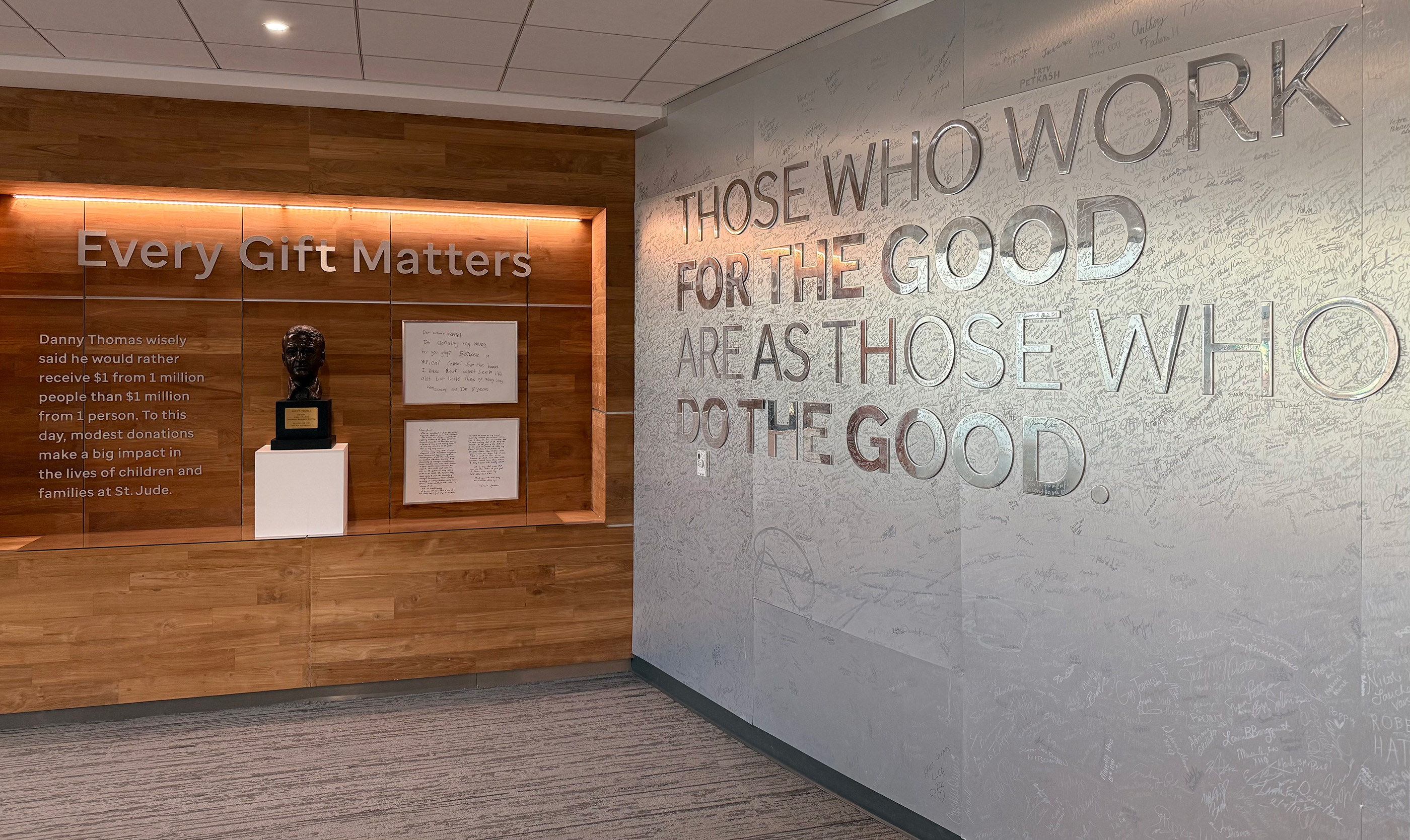
When you walk into the ALSAC building on St. Jude’s campus, the wall you see behind the check-in desk always catches my attention:

Do the Good

That quote is from St. Jude founder Danny Thomas, and perfectly encapsulates how I think about Relay’s fundraising efforts for the hospital.

I’m not a scientist, nurse, researcher, child psychologist, doctor, or social worker. I don’t know how chemo interacts with cancer cells, or how to build a microscope to do things no microscope has ever done. I can’t sequence DNA, read an MRI, or work in a pharmacy.

What I can do is tell my story and use my platform to share the wonderful news of a place where kids with cancer and other catastrophic diseases receive the best care in the world.

At St. Jude, no child is denied treatment based on race, religion or a family’s ability to pay. From the moment in 2009 when Josiah was diagnosed with a brain tumor to a checkup he had two weeks ago, I have never been billed by St. Jude.

That is a true kindness, made possible by donors around the world.

* * *

St. Jude is expanding its mission worldwide, so kids who never step foot on St. Jude’s campus benefit from the research done there. St. Jude is shipping medication and providing training to doctors around the world, and shares it research freely.

Through fundraisers like this, we become part of that work. We work for the good, and by doing so, do the good. Please join us in our final push for this year’s campaign, in doing the most good we possibly can.

Sponsor: DEVONthink: Store, Organize, and Work the Smart Way

We’re all dealing with more information than ever, and it’s becoming increasingly complex. You need bulletproof financial documents for audits, collaborative tools for your team, and AI that can actually help.

DEVONthink 4

DEVONthink 4.0 Copernicus1 is here, and it’s designed to work with you, not against you. Its AI integration is incredibly useful — it can analyze your documents, write summaries, suggest tags, and you can even create AI-based automations for specific tasks.

If you keep financial records or other documents that need to be audit-proof, then DEVONthink 4’s new audit features have you covered.

Working with a team? The new web interface lets everyone access shared databases and collaborate instead of just emailing files back and forth. Automatic versioning means you’ll never accidentally lose an important change, and the enhanced automation handles the boring stuff so you don’t have to.

Don’t spend another year fighting with your documents. Download DEVONthink 4.0 Copernicus and see how AI-powered document management can make your work easier.


  1. The DEVONtechnologies team named version 4.0 after the Copernicus moon crater and its namesake, astronomer Nicolaus Copernicus, who ultimately changed the way we see and experience the universe. 

Mr. Liss Goes to Memphis

For the second year in a row, Casey Liss joined us for the Podcastathon. He just published an amazing piece about the show and his time at St. Jude:

This was my fourth time in Memphis; it’s staring to feel — to a degree — like a home away from home. Having been on campus several times now, not a ton about St. Jude surprises me. I’ve known for many years that St. Jude is dedicated wholly and completely to curing childhood cancer. ALSAC — St. Jude’s fundraising arm — is dedicated wholly and completely to funding that mission.

What struck me this year — as I toured the Domino’s Village, as I worked with the incredible team at ALSAC, as I spoke with people on the far periphery of the Podcastathon — is that everyone gives a crap. Top-to-bottom. Inside-and-out. They really give a crap. About everything they touch.

This really crystallized in me as I toured Domino’s Village. Domino’s Village is longer-term housing right on campus at St. Jude. It gives patients and their families a home base for their time in Memphis. And it isn’t just one-bedroom apartments. Cancer affects an entire family, not just the patient. Often, that means patients, caregivers, and even siblings are making Memphis their home, for months at a time. Domino’s Village has two- and three-bedroom apartments for exactly this reason. They’re beautiful, and nicely furnished.

But it doesn’t end there.