Kbase Article of the Week: Apple Studio Display 21/Apple Studio Display 17: Tripod Stand Safety Tips ⇢
This article provides specific safety tips relating to the new tripod stand used on the Apple Studio Display 21-inch and Apple Studio Display 17-inch displays.
- Lift the display by the indentations on the under-sides near the front of the display. Never lift the display by the tripod stand.
- Likewise, do not adjust the position of the monitor by pulling the stand legs. The tripod stand is subject to damage if mishandled.
- When placing the monitor on a table surface, ensure that all three legs on the tripod stand contact a solid surface. If one of the legs is too close to the table edge, the weight of the monitor could cause the display to fall off the edge.
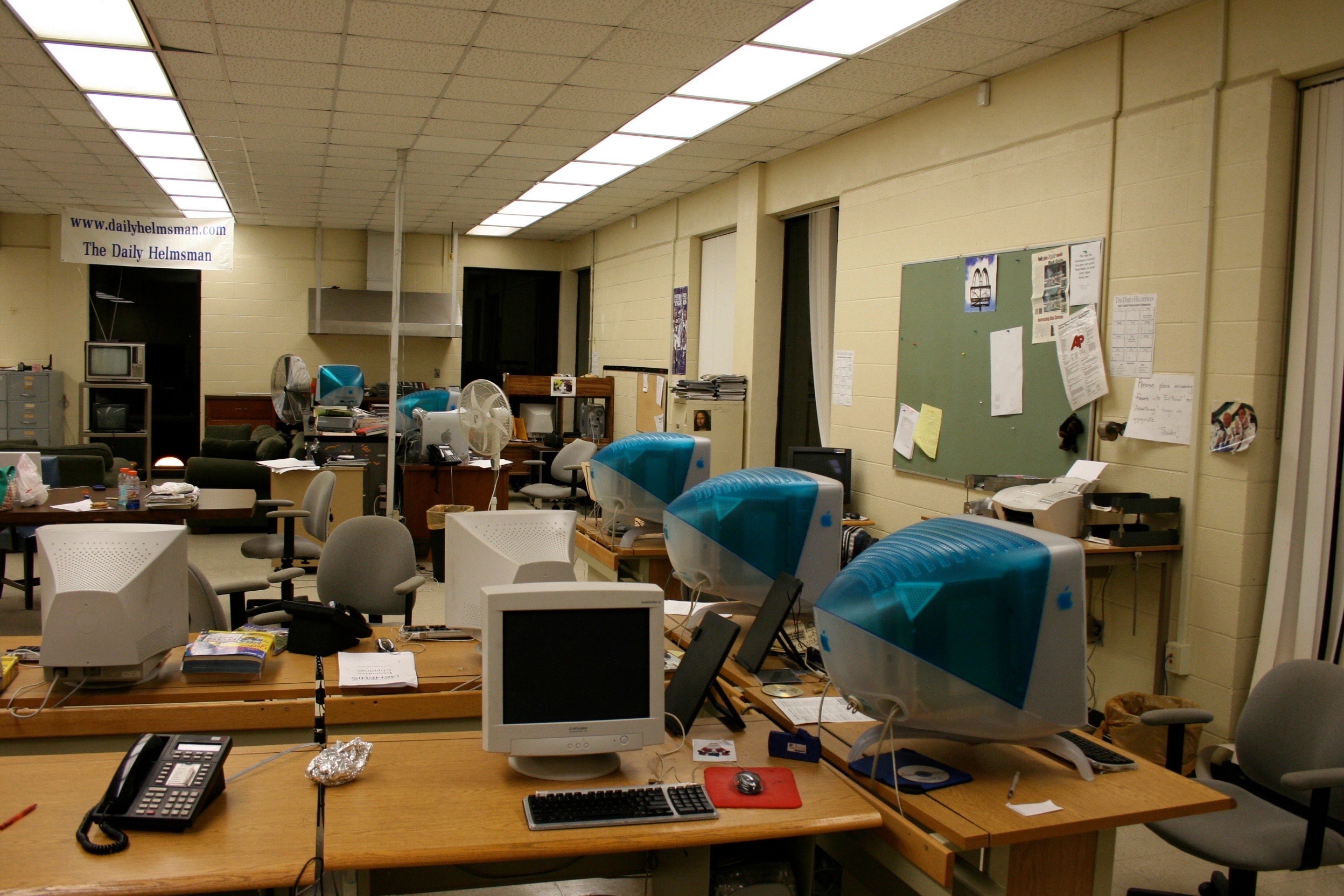
We had a bunch of these displays at my college newspaper. The stands were … not great.
Sponsor: Magic Lasso Adblock ⇢
Want to browse the web quickly, smoothly, and anonymously with no advertising?
Then get the ad blocker made for you – easy to setup, easy to keep up to date and now with best-in-class YouTube ad blocking.
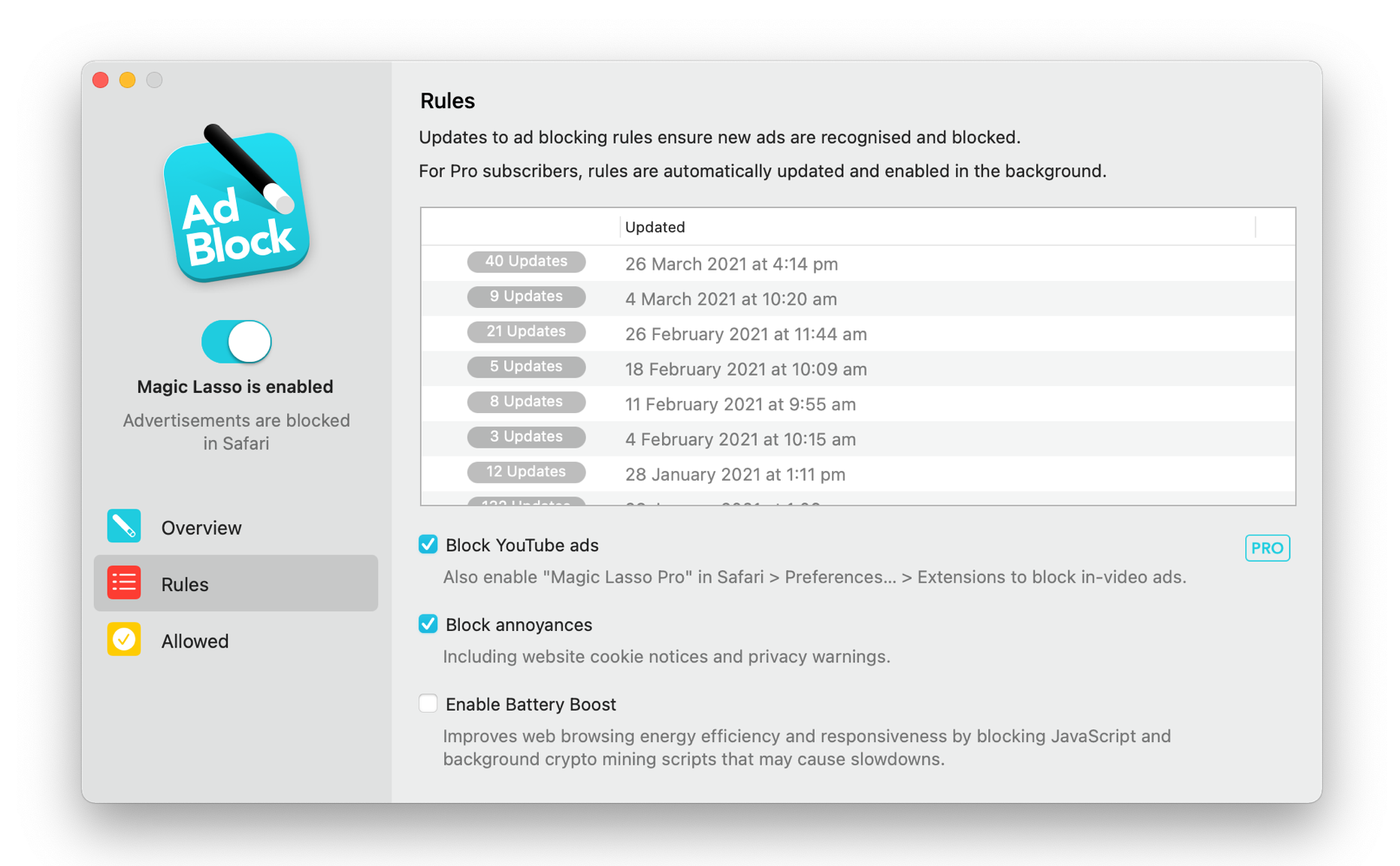
Magic Lasso Adblock is an efficient, high performance ad blocker for your iPhone, iPad and Mac. It simply and easily blocks all intrusive ads, trackers and annoyances in Safari. Just enable to browse in bliss.
- Over 200,000+ users rely on Magic Lasso Adblock to:
- Browse common websites 2.0x faster
- Improve their privacy and security by removing ad trackers
- Block over 10 types of YouTube ads, including pre-roll video ads
- Double battery life during heavy web browsing
- Lower data usage when on the go
Unlike some other ad blockers, Magic Lasso Adblock respects your privacy, doesn’t accept payment from advertisers and is 100% supported by it’s community of users.
Download for free today via the Magic Lasso website, the App Store and Mac App Store.
Mac Power Users #633: Workflows with Nick Milo ⇢
On this week’s episode of Mac Power Users:
Nick Milo is a creator who is teaching people about Obsidian. This week, he talks with David and Stephen about how he manages his business, creates polished content and, of course, Obsidian and personal knowledge management.
TextExpander ⇢
The way we work is changing rapidly. Make work happen wherever you are by saying more in less time and with less effort using TextExpander. TextExpander is available on Mac, Windows, Chrome, iPhone, iPad. 512 Pixels readers get 20% off their first year.
My thanks to TextExpander for sponsoring 512 Pixels this week!
Overcast 2022.2 Delivers Phase One of App’s Redesign ⇢
Marco Arment’s excellent podcast client Overcast has been updated today to version 2022.2. The new build includes what he is calling “Phase One” of an app-wide redesign.
As you can see from these screenshots, quite a bit is new:
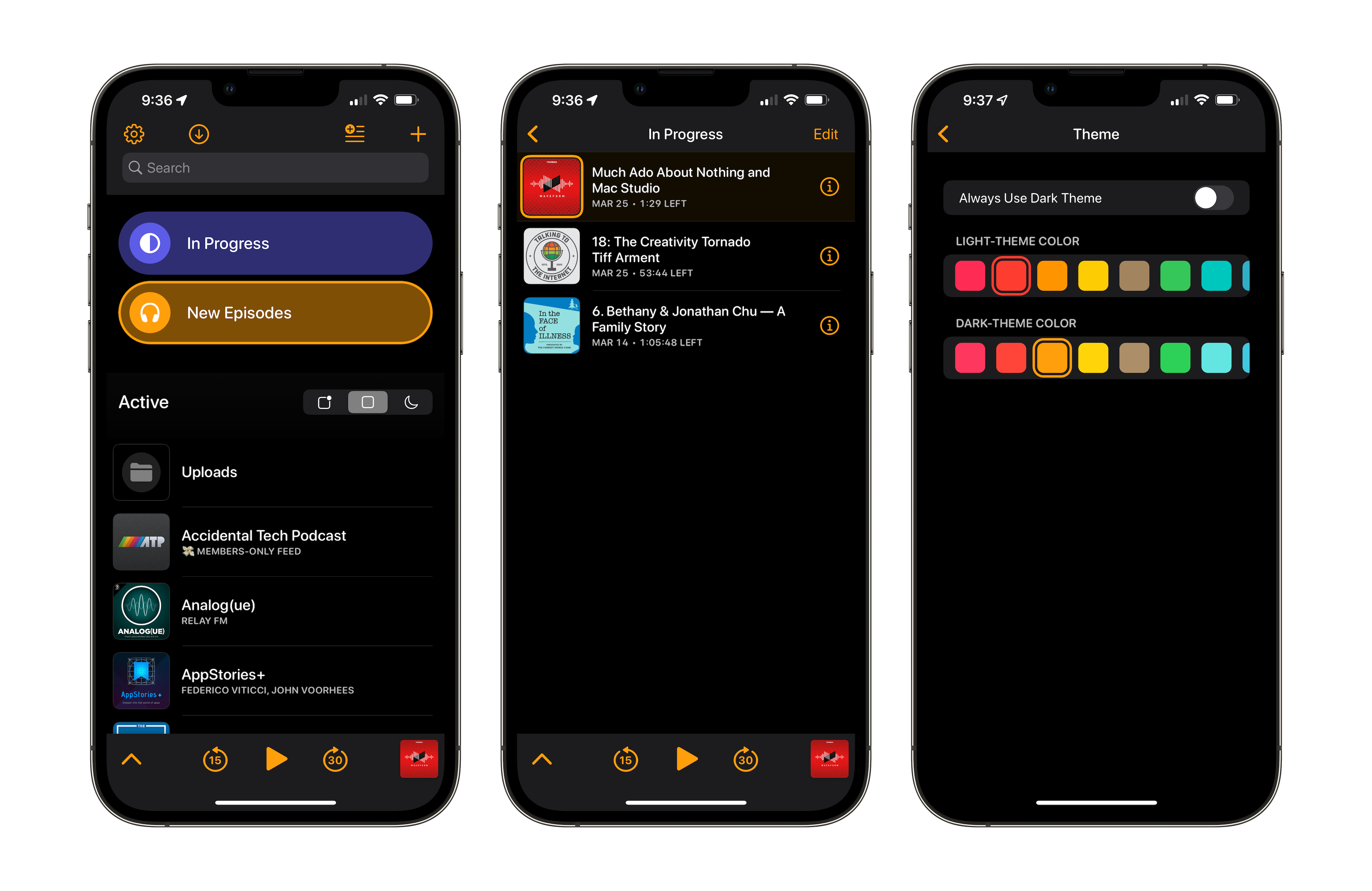
The biggest improvement comes to the styling of playlists. I’m not a huge playlist user as you can see, but I can appreciate this change. I know some folks have a lot more playlists than I do, and I think the ability to customize the color and icon of each playlist individually really adds a lot of fun to the app.
In addition to the styling, there are some new tricks when it comes to creating playlists, including the ability to set one up for in-progress episodes. I added that one as soon as I saw it.
The main screen also now has the ability to show recent episodes. This feature and the new playlist options are available with a tap at the top of the screen:
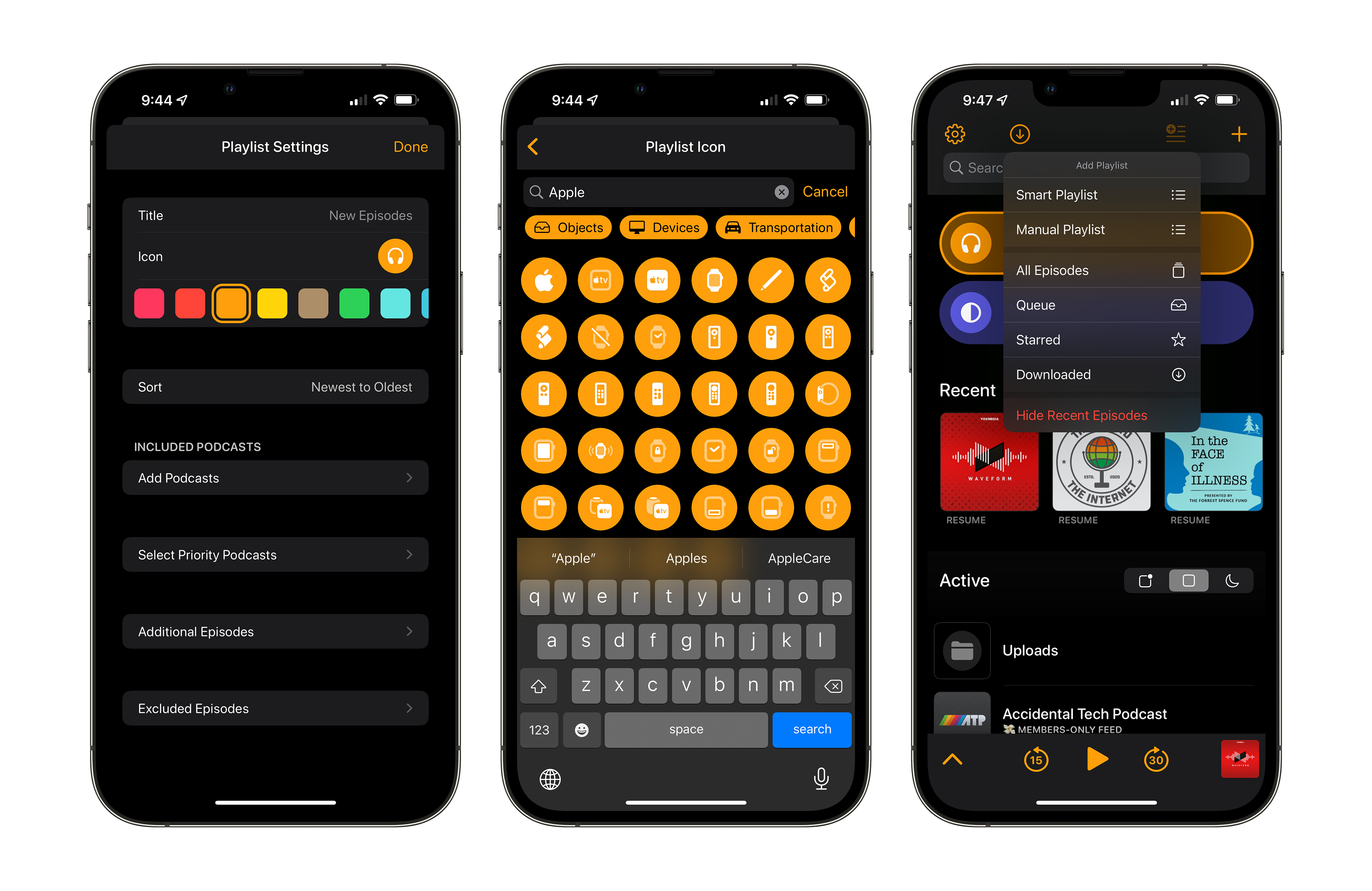
Below the playlists section, the list of podcasts can now be automatically filtered into three buckets:
- Unplayed
- Active
- Inactive
I have some feelings about that last one. For a while, Overcast has shown how often a podcast is published. For example, on the Connected Pro screen, it shows “Wednesday Afternoons,” reflecting when I publish the show each week. After a time, if no new episode appears, Overcast would label a show as Inactive.
I like this attention to detail, but as a publisher, I don’t want a podcast client deciding when a show is “inactive,” and stashing it off in another part of the app’s UI. At Relay FM, most of our shows publish on a regular basis, but not all of them do. Other networks and publishers often do seasonal podcasts, which may show as “inactive” in between seasons. I understand wanting to filter these out for listeners, but I also think listeners can work out what’s going on in a feed by looking at the publication dates on episodes.
Beyond that, the Inactive filter also includes shows with episodes I’ve listened to without subscribing to the podcast itself. I tend to do this to check out interviews on shows I don’t normally listen to, and wouldn’t mind them being in a section on their own.
For a fuller review, check out John’s post on MacStories. He has a nice bit on how the “Inactive” filter works:
The inactive list is worth explaining, though, because it wasn’t entirely clear to me how it worked when I first tried it. What threw me off is that in addition to a handful of shows that I knew hadn’t published an episode for a very long time, my inactive list included shows like Relay FM’s Connected, which published an episode a couple of days ago. The reason is that Overcast’s inactive list combines shows that haven’t published an episode recently with those that you no longer follow and where you manually deleted all episodes from your library, which is why Connected showed up. Months (probably years?) ago, I subscribed to the Relay membership version of Connected, unsubscribed to the ad-supported version, and deleted old episodes. I suppose this is a way to easily revisit shows that you don’t subscribe to but sometimes download episodes of, but I think it’s likely to confuse some users because of the way it combines inactivity from both a show and user perspective into one list.
(I totally understand my nitpicking about “inactive” shows is very much a Owner-of-a-Big-Podcast-Network problem that no one else may care about, but after reading John’s review, I think the label is a bit confusing. Hopefully, Marco revisits it in a future version.)
All in all, the changes to the playlists feature and the main screen of the app make it easier to manage larger libraries, and I’m a fan of them.
I’m also a fan of the revised theme. SF Rounded is used heavily, and I think it looks really nice. And I straight up love being able to pick a color for use in my theme. Dark Mode + Orange is the one true way to use the new version of Overcast.
Overcast has been my podcast client of choice since it launched, but I’ve noticed the UI feeling more and more out of date. This update has things moving in the right direction, and I can’t wait to see what comes next.
Swatch X Omega ⇢
I’ve long been a fan of the so-called “Moon Watches,” but owning one is way, way beyond my means. Looks like Swatch is trying to change that with a new, limited-run set of watches.
I don’t have a Swatch store anywhere near me, so hopefully a Mercury or Moon edition shows up on eBay at a reasonable price at some point in the future.
iFixit Tears Down Mac Studio ⇢
I love how good looking the inside of this machine is — even if no one will ever see it. The ports are mostly modular, meaning repairs to them shouldn’t require a full logicboard swap.
Connected #390: The Permanence of Objects ⇢
Myke has questions about the Mac Studio, Federico was right about Workflow and Stephen has some suggestions for the Bill of Rickies.
On Connected Pro, the longer and ad-free version of the show, we talked about dreams and bassoons.
Kbase Article of the Week: Apple Displays: Changes In Colors Requires Degaussing ⇢
This week, we’ve got another Q&A-style support document:
What can cause the below symptoms?
When the computer and monitor are powered on, a green an area on bottom left of the monitor changes colors depending on what is displayed on screen. Another less intense area is directly in the center of the screen. Both distortions are approximately one inch high and 3.5 to 4 inches wide.
The display has been moved in the house and checked for any environmental factors but this didn’t change anything. The monitor was left off for over 24 hours but the discolored areas didn’t change.
For younger readers, this problem will sound super bad. For others of you, it’s probably brought back memories you’d rather not relive:
This sounds like a classic case of magnetic field interference. Evidently the CRT has come in contact with a strong magnetic field that magnetized the CRT screen and thus created the problem you are now having. The magnetic field could have been generated by anything from a small magnet to the electric motor on a vacuum cleaner. The cure is fairly simple. The unit should be degaussed with an external manual degaussing coil, as used by TV technicians. They can be purchased at most good electronic parts stores and cost about $30.00.
The Cowboy’s iMac ⇢
I just love this piece by Jason Snell.
On the Mac Studio’s Extra SSD Slots
Last week, a story went around that at least some Mac Studio models come with unpopulated slots for SSD modules. This led to speculation that the machine could be upgraded with more storage.
I asked around about this, and came to the conclusion that these slots are populated on higher-end models with 8TB of storage, and maybe even the 4TB option. SKUs with less storage still have the slots, just without any modules in them.
Today, there’s confirmation that the Mac Studio freaks out when additional modules are added:
The Mac Studio recognizes the SSD, but Apple’s software prevents it from booting, suggesting that this is a conscious decision by Apple to prevent users from upgrading their storage themselves. On its website, Apple claims that the Mac Studio’s SSD storage is “not user accessible” and encourages users to configure the device with enough storage at the point of purchase.
Let’s look at my 2019 Mac Pro. In it, Apple used a similar design, with smaller, individual SSD modules raided together and tied to the logic board with encryption. Upgrades on those machines were possible but required a bonkers (and more than a little scary) process to set the drives up with the Mac’s T2 chip.
Apple may very well offer an in-store program1 for those wanting to add capacity to these machines, but things aren’t looking good as far as being able to buy additional storage from someplace like Mac Sales and pop it in.2
Don’t miss Quinn Nelson’s Twitter thread on the matter:
Everyone continues to talk about how there are 2 SSD slots on the new Mac Studio. This does *not* mean that the machine is intended to be upgraded.
The Mac Studio is configurable to 8TB and the SSDs themselves are barely larger than M.2 2230 drives that max out at 2TB right now.
— Quinn Nelson (@SnazzyQ) March 20, 2022
- Like the one for upgrading the RAM in an iMac Pro. ↩
- I have no doubt that Apple continues to lock their storage modules and logic boards together. I’m not surprised at all that components from one Mac Studio made another one refuse to boot. ↩