Sponsor: DEVONthink: Store, Organize, and Work the Smart Way

We’re all dealing with more information than ever, and it’s becoming increasingly complex. You need bulletproof financial documents for audits, collaborative tools for your team, and AI that can actually help.

DEVONthink 4

DEVONthink 4.0 Copernicus1 is here, and it’s designed to work with you, not against you. Its AI integration is incredibly useful — it can analyze your documents, write summaries, suggest tags, and you can even create AI-based automations for specific tasks.

If you keep financial records or other documents that need to be audit-proof, then DEVONthink 4’s new audit features have you covered.

Working with a team? The new web interface lets everyone access shared databases and collaborate instead of just emailing files back and forth. Automatic versioning means you’ll never accidentally lose an important change, and the enhanced automation handles the boring stuff so you don’t have to.

Don’t spend another year fighting with your documents. Download DEVONthink 4.0 Copernicus and see how AI-powered document management can make your work easier.


  1. The DEVONtechnologies team named version 4.0 after the Copernicus moon crater and its namesake, astronomer Nicolaus Copernicus, who ultimately changed the way we see and experience the universe. 

Memphis Light, Gas and Water Serving as Backup Power Provider for xAI’s Colossus 2

MLGW CEO Doug McGowen was recently interviewed on our local PBS affiliate about the utility company’s role in xAI’s newest Memphis data center, as reported by The Daily Memphian, whose CEO interviewed McGowen:

McGowen said the company had initially discussed with MLGW a 1.1 gigawatt load for the project — or the equivalent of 33% of MLGW on a peak day. He said MLGW does not have that amount of power available, and no utility nationwide does either.

That fact likely pushed xAI toward a potential natural gas plant.

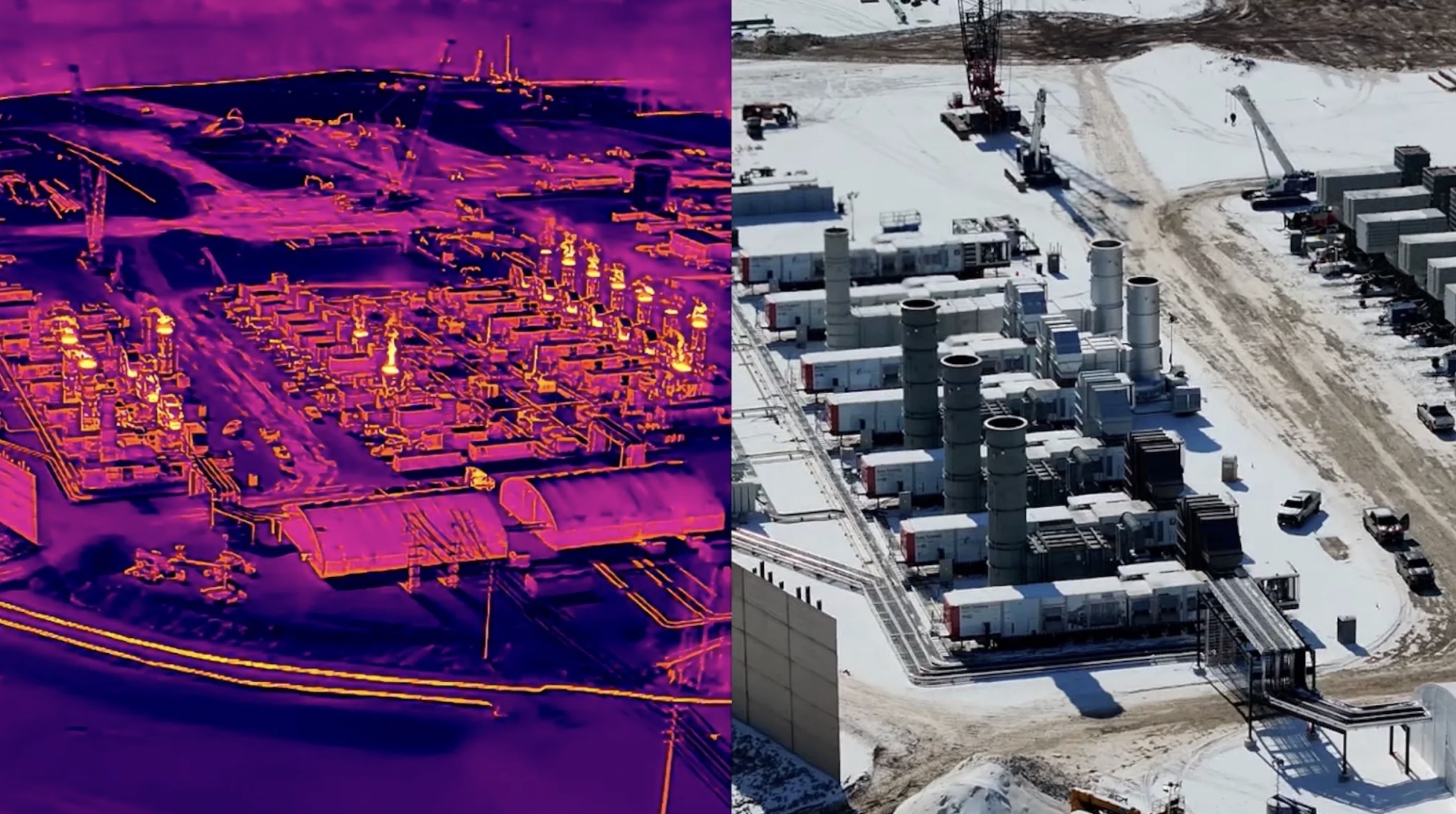
xAI and its partners just received approval to run up to 12 gas-powered turbines in Southaven, which is about a mile south of the new datacenter, just over the Tennessee/Mississippi state line.

The company uses similar units to power Colossus 1. At that site, the company is (or was) reportedly relied on roughly 35 turbines, despite local leaders and permitting paperwork saying just 15 were in use. xAI is currently being sued over this issue.

McGowen’s interview comes after a July 22 statement from MLG&W stating that it was providing no power to Colossus 2, and after reports as early as June that xAI was starting to collect turbines for the site.

It also comes after a press release issued by the Greater Memphis Chamber of Commerce on May 8:

xAI is demobilizing turbines in Shelby County and has no plans to site any turbines at its Tulane [Colossus 2] location. The company continues to evaluate various power solutions for its Memphis facilities while working within all applicable regulatory frameworks.

As I wrote at the time, this statement is plainly untrue, and even in May, xAI was working toward the situation that is now unfolding.

Back to the interview:

“Our responsibility before we connect any new customers is to ensure the reliability and availability of power for our existing customers. And if we can’t guarantee that, then we will not allow anybody to connect to the grid,” McGowen said. “The practical reality of things is we just don’t have 1,000 megawatts of power lying around. So if you want to put your data center here, you’re going to have to generate power on your own and connect it to your system.

“The question then becomes if you want to be connected to the larger grid for when your power plant goes down, and that is the technical challenge that TVA is working on today,” McGowen said.

TVA, in a statement, did not say whether the federal agency would be serving xAI at all.

With Colossus 2 expected to be at least twice as big as the Colossus 1, residents in Southaven and nearby areas are going to be subjected to the same pollution concerns as the folks around xAI’s first set of turbines are.

Apollo 13’s Jim Lovell Dead at 97

Richard Goldstein at The New York Times with some sad news for fans of the early space program or amazing stories in general:

James A. Lovell Jr., the commander of the three-man Apollo 13 spacecraft that survived a near catastrophic explosion as it approached the moon in April 1970, before safely returning to Earth in an extraordinary rescue operation, died on Thursday in Lake Forest, Ill. He was 97.

His death was confirmed by his daughter-in-law, Darice Lovell. He lived in Lake Forest.

Captain Lovell, a former Navy test pilot, flew for some 715 hours in space, the most of any astronaut in the pioneering Mercury, Gemini and Apollo programs forged by the United States as it vied with the Soviet Union to put a man on the moon by the end of the 1960s.

He took part in two Gemini missions that orbited Earth and was one of the three astronauts aboard Apollo 8, the first spaceflight to orbit the moon, before he was chosen by NASA for Apollo 13.

‘Macintosh HD’ Icon Updated in macOS Tahoe Beta 5

Juli Clover at MacRumors spotted the change:

The existing icon still resembled a hard disk drive, but the new icon looks like a modern solid state drive. Apple’s Macs stopped using hard disk drives starting more than a decade ago. The low-cost 21.5-inch iMac was the last Mac that had a hard drive component, as it used Apple’s SSD + HDD Fusion Drive. All current Macs use SSDs.

I will miss the old icon, but as Clover points out, spinning drives are long gone for most Mac users. The new icon feels more modern and fits in much better with the rest of Tahoe’s icons:

Macintosh HD in Tahoe

I’m just glad Apple kept Macintosh HD around.

xAI Receives Approval to Run Natural Gas Turbines in Southaven to Power Second Memphis Site

As xAI inches toward completing Colossus 2, the company’s second Memphis data center, its plans for powering the site are coming into focus, as The Daily Memphian reports:

Last week, the company received approval from the Mississippi Department of Environmental Quality to operate natural gas turbines without an air emissions permit for up to 12 months while the company works on its plans to build permanent natural gas generation at 2875 Stanton Road in Southaven.

The xAI subsidiary, MZX Tech LLC, has also submitted air pollutant modeling to MDEQ for 2875 Stanton Road, according to documents obtained via the Mississippi Public Records Act.

That modeling sheds some light on the company’s long-term plans for the former Duke Energy Plant it bought last month and reveals that the company could be adding a major source of air emissions to the Memphis metropolitan area.

“MZX Tech LLC (MZX) is proposing to construct and operate a new greenfield major source consisting of simple cycle combustion turbines and pressure reduction systems (the ‘Facility’) that will provide electricity to its data center located in Shelby County, Tennessee,” according to documents obtained by The Daily Memphian.

The news isn’t good, as Hardiman continues in his report:

According to the air modeling submitted by xAI’s consultants, the long-term natural gas buildout at 2875 Stanton Road could add a significant amount of new air pollution.

The document identifies the buildout as a potential major source of air pollution under the federal Clean Air Act. The modeling shows that the site could emit about 423.4 tons of nitrogen oxides, or NOx.

That figure would make xAI the second-worst polluter in DeSoto County, which borders Memphis directly to the south.

Southaven Mayor Darren Musselwhite doesn’t seem to take this concern seriously. In a recent blog post on the city’s website, he wrote:

It’s certainly no secret by now that concerns have been raised in Memphis regarding potential air pollution, power capacity impacts and water capacity impacts from artificial intelligence operations. Cultivating quality economic development should always go hand-in-hand with keeping clear view of the ultimate goal of public benefit. Never would I advocate for any development that didn’t share these goals in Southaven. xAI has proven their commitment to being an outstanding corporate citizen in this regard in every possible way. Environmental sensitivity is at the forefront of this commitment as they go above and beyond required emission control requirements. The Solar SMT-130 natural gas turbines they use which are necessary to generate electricity for backup purposes are equipped with SoLoNOx dry low emissions (DLE) technology and selective catalytic reduction (SCR) systems that lower nitrogen oxide emissions to 2 ppm, which is the Lowest Achievable Emission Rate, making xAI’s facilities the lowest emitting facilities in the United States. They further display conscientious efforts in protecting the electricity grid as they take no power from the grid during emergency or strained situations and have invested tens of millions of dollars to protect the public with an MLGW substation with further commitments such as this for MLGW and Mississippi providers. xAI has made the largest investments in the world for sustainable energy storage systems with hundreds of millions of dollars for battery megapack installations. Their commitment to grid stability and sustainability goes beyond their own power needs into the realm of helping power providers provide additional power sources for the communities where they operate. In addition, xAI has committed to funding a state-of-the-art water recycling plant in Memphis and more funding for future needs in Mississippi to prevent the need to draw any water from natural aquifers for industrial purposes. xAI has followed all of the regulatory processes to obtain a permit to operate here, but they have also proven that they will go above and beyond in bringing public benefit to the communities where they operate. This is further evidenced by their community investment efforts into transportation infrastructure and the support and education of our youth in preparing them for even better educational and unprecedented occupational opportunities.

As recently as July 22, Memphis Light, Gas & Water has stated that it is not providing power for Colossus 2:

MLGW currently has a general services agreement with xAI’s location at 5420 Tulane Road.

MLGW has no new contracts with xAI at their site located at 5420 Tulane Road.

The general services agreement with this location is supplying around .5 MW of power. The site located at 5420 Tulane was formerly set up to receive utility services and no other infrastructure changes have occurred at this time.

MLGW is not supplying power to their supercomputer, Colossus 2.

If and until a substation is built to power Colossus 2, Southaven will be home to spinning gas turbines. While its Mayor seems optimistic about the number of jobs and the amount of pollution this will bring to the area, xAI has shown with Colossus 1 that very often those promises are left unfulfilled.

I wonder how the Mayor feels about Grok’s newest features,1 as reported by Jess Weatherbed for The Verge:

xAI’s new Grok Imagine tool is an AI image and video generator that encourages users to make NSFW content. In contrast to rival generative AI video tools like Google’s Veo and OpenAI’s Sora, which try to block users from generating anything seedy, the Grok chatbot’s Imagine feature provides a “Spicy” generation mode that actively directs it to spit out nudity and sexualized content.

Quality economic development, indeed.


  1. I’ve asked the Mayor’s office for comment. If someone there gets back to me, I’ll update this post. 

Rollercoaster Tycoon’s History

Jimmy Maher, writing at The Digital Antiquarian, about my favorite game as a kid:

Back in 1994, MicroProse had published a game called Transport Tycoon, by a lone-wolf programmer named Chris Sawyer, who worked out of his home near Glasgow, Scotland. Building upon the premise of Sid Meier’s earlier Railroad Tycoon, it tasked you with building a profitable people- and cargo-moving network involving not just trains but also trucks, buses, ships, ferries, and even airplanes. Written by Sawyer in pure, ultra-efficient Intel assembly language — an anomaly by that time, when games were typically written in more manageable higher-level languages like C — Transport Tycoon was as technically impressive as it was engrossing. When it sold fairly well, Sawyer provided a modestly upgraded version called Transport Tycoon Deluxe in 1995, and that also did well.

But then Chris Sawyer found himself in the throes of a sort of writer’s block. He had planned to get started right away on a Transport Tycoon 2, but he found that he didn’t really know what to do to make the game better. In the meantime, he took advantage of the royalty checks that were coming in from MicroProse to indulge a long-running fascination with roller coasters. He visited amusement parks all over Britain and the rest of Europe, started to buy books about their history, even joined the Roller Coaster Club of Great Britain and the European Coaster Club.

One day it clicked for him: instead of creating Transport Tycoon 2, he could leverage a lot of his existing code into a Rollercoaster Tycoon, making the player an amusement-park magnate rather than a titan of transport.