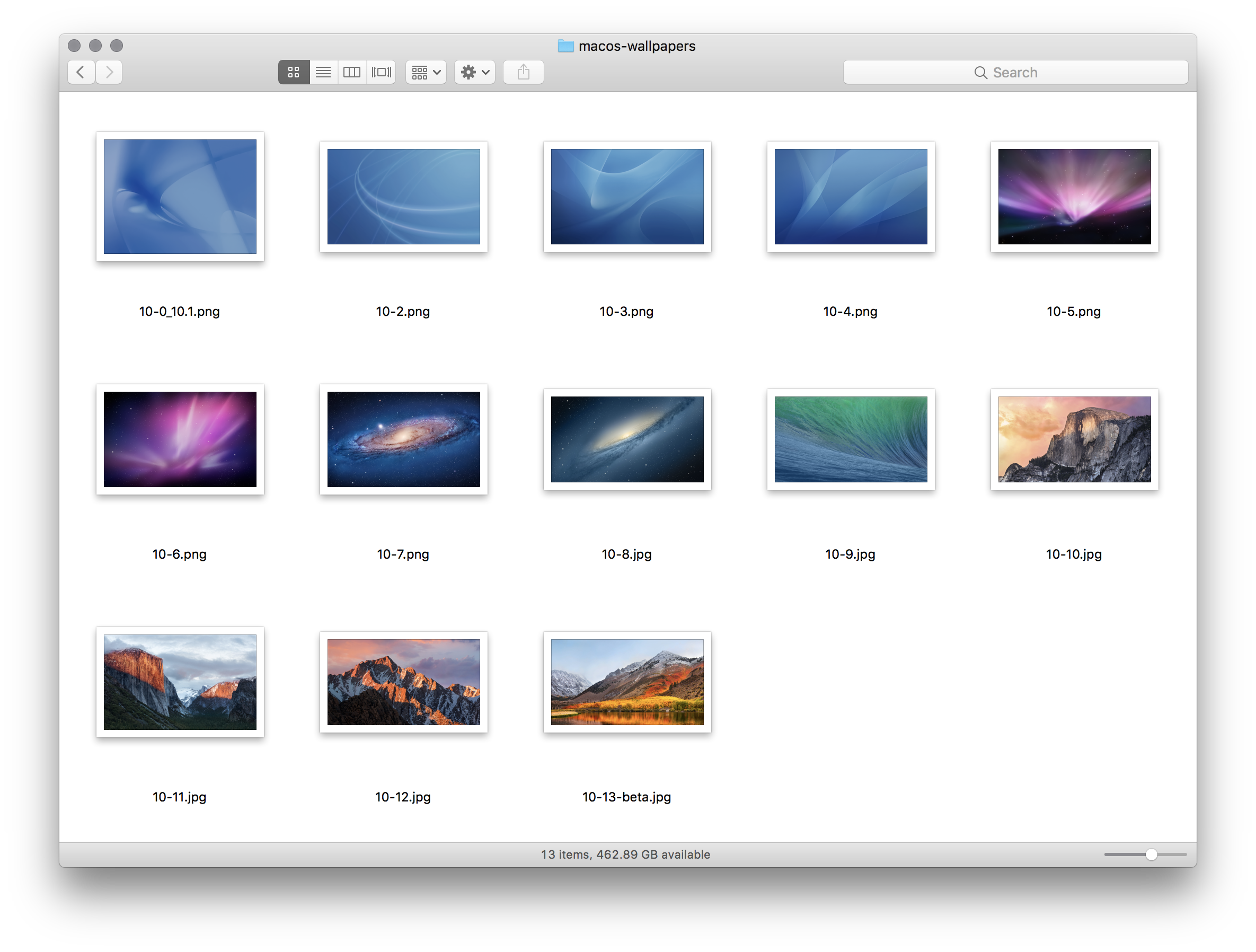
Your Mac includes many photos and other images that you can use as desktop pictures (wallpaper) to give your Mac a custom look. Or you can use your own.
Follow these steps to change the desktop picture used as the background of your screen. You can do it from from Photos, the Finder, or Desktop preferences.
While we’re on the topic of my recent appearances, I was pleased to sit down with David Sparks and Jason Snell to talk about my early attempt at being an Apple blogger, a fateful meeting over tea and how I ended up leaving my job two years ago.
I was honored to speak at AltConf back in June. I spoke about my first two years of independent life, and some of the assumptions I had about making the transition to working on my own stuff full-time. Things I assumed would be easy were really difficult, and I really struggled the first nine months or so of working for myself.
Balance is a powerful menubar app for your money built by a team from Apple, Stripe and Ethereum. It was featured in the U.S. Mac App Store when it launched in February.
Securely connect to your accounts
Balance uses Plaid.com, the best API for securely accessing your financial data. It gives the app a read-only token to access your account history.
Quickly check your balances
With one click or keyboard shortcut you can pop open Balance and check all of your accounts. Lock the app with a password or TouchID.
Speedily search through your transactions
As a native app with local data storage, Balance is super fast. Quickly search through all of your downloaded transactions with powerful filters.
Powerful notification engine
Balance is Hazel for money. You can create rules to trigger useful notifications to help you stay on top of your finances.
One subscription, coming to all of Apple’s platforms
The basic plan starts at $4.99 / month. Balance is launching on iOS and watchOS later this year, and is also building a full windowed app for macOS. Early customers will get access to betas for all of these.
There are a lot of colorful Macs. Look no further than the original iMacs and iBooks if you need a little more than brushed aluminum in your life.
These machines are all great, but there’s one Mac that puts them to shame when it comes to being colorful.
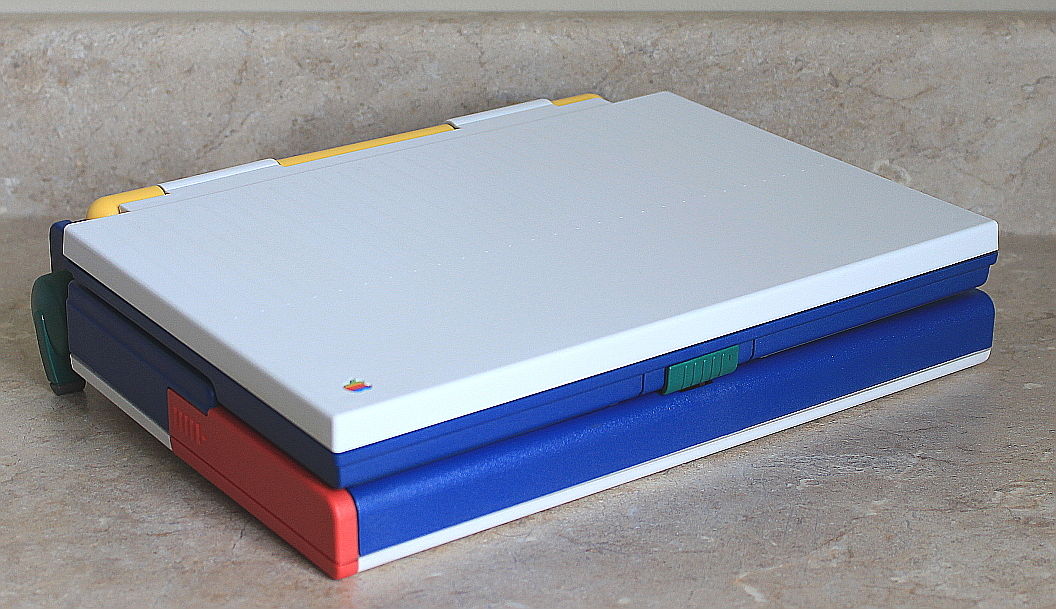
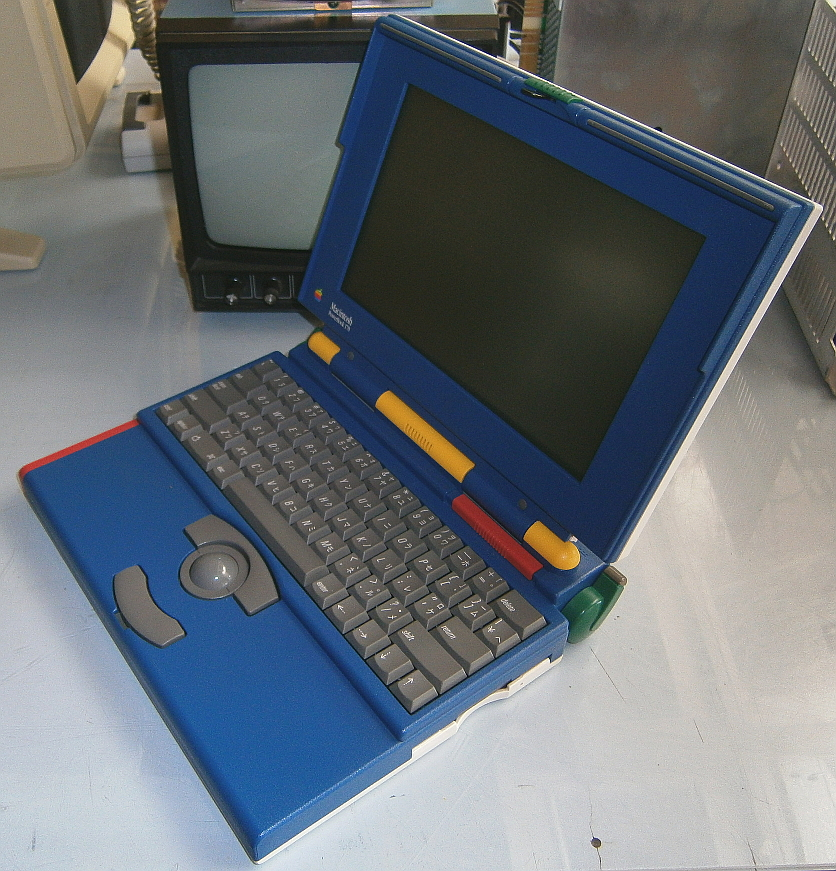
Say hello to the JLPGA PowerBook 170:
There were only 500 of these made to commemorate the 1992 JLPGA golf tournament in Japan. The guts are a run-of-the-mill PowerBook 170,1 but the case is truly special. The blue body is completed with a white lid and base. The battery doors are red, as are the screen adjustment sliders. The hinges are bright yellow; rounding things out are the green feet.
These JLPGA machines go for a pretty penny when the pop up for sale. Currently, there is non-working example on eBay for a cool $7500. You could buy several 20th Anniversary Macs for that. While I’ll never be in the market to add this machine to my collection due to the price, any time I see a photo of the colorful PowerBook 170, I have to crack a smile.
Apple really enjoyed tinkering with this machine. The company also released an all-white “10th Anniversary Mac” version in 1994. The only photo I’ve ever seen of it is on that Low End Mac page. ↩
Yesterday, Vice President Pence visited Kennedy Space Center. He was given a detailed tour1 of the spaceport and updates on its on-going evolution into a multi-user facility.
At the heart of that evolution is NASA’s relationship with private companies, including SpaceX and Boeing. Both are part of the Commercial Crew program, which will fly American astronauts to the International Space Station aboard non-NASA vehicles.
Pence spoke about this program in a lengthy speech that took place in addition to his tour. “In conjunction with our commercial partners we’ll continue to make space travel safer, cheaper, and more accessible than ever before,” he said.
This seems to be a nod toward efforts by the commercial space industry, led by SpaceX and Blue Origin, to develop reusable launch vehicles that have the potential to substantially cut the cost of access to space and provide launch-on-demand services. “I think he pretty clearly gave advocates of cheap access a shout-out,” said James Muncy, the founder of PoliSpace, and a commercial space supporter.
I agree with this way of viewing Pence’s comments, and I believe the Trump administration will lean heavily on commercial companies to take over some of NASA’s work.
That isn’t new, however. NASA had been handing this work over to its partners as it focuses on the Space Launch System, a new heavy-lift rocket, and Orion, a next-generation capsule that will send crew members around the moon in the next few years.
There have been many complaints lodged against the SLS. It is incredibly expensive, but more importantly, is being built without a clear mission in mind. After the initial test launches and a crewed trip to cis-lunar space, NASA will still be left without the additional hardware needed to go to Mars.
The Obama administration holds the blame for this, but Trump hasn’t done anything to move the ball forward yet, either.
This was evident in Pence’s speech, which was heavy on something close to patriotism and light on details:2
Let us do what our nation has always done since its very founding and beyond: We’ve pushed the boundaries on frontiers, not just of territory, but of knowledge. We’ve blazed new trails, and we’ve astonished the world as we’ve boldly grasped our future without fear.
From this ‘Bridge to Space,’ our nation will return to the moon, and we will put American boots on the face of Mars.
Pence did not mention the SLS, which I found a little surprising. There are few things as American as building a giant-ass rocket and blasting crew members into space.
Moreover, it’s been unclear what sort of mission the new executive branch may have in mind for the SLS. Republicans, historically, have favored returning to the moon, complete with landing on its surface once again. Is that what Pence meant? Then again, he specifically mentioned landing on Mars, which is a plan set forth under Obama’s leadership.
This confusion is made worse by the fact that the Trump White House still has not named an administrator for NASA. Here’s Loren Grush at The Verge:
[Pence] didn’t mention any new additions to NASA’s leadership team either, which means the space agency is still left without a permanent administrator and no clear direction for its future under President Trump. “Usually you have a leader visit, tour, and give a speech to roll out a detail-oriented policy after it’s been developed,” Phil Larson, a former space advisor for the Obama administration and assistant dean at the University of Colorado’s college of engineering, tells The Verge. “This is backwards.”
The only concrete news out of the speech was that the National Space Council will be meeting in the coming weeks. The NSC — first founded in the 1960s and briefly resurrected by George H.W. Bush — is tasked with shaping US space policy.
Perhaps then we will see what Trump and company have in mind for NASA and its commercial partners. Until then, there are far more questions than there are answers about what this executive branch wants to do with America’s space program.
Replacing the battery in a Retina MacBook Pro is no easy task, but the folks at iFixIt are looking to change that. This kit looks great, and if I were still opening up Macs on a regular basis, I think I’d pick one up.
There are a bunch of milestones to celebrate this week: Juno’s been at Jupiter for a year, I built his LEGO Saturn V and Pathfinder landed on Mars 20 years ago.
My thanks to our sponsor:
Luminos: A fantastic astronomy app, 10 years in the making! Now with an Apple Watch app for skygazing!
Serenity Caldwell has a long background in helping people with their Apple products. She started out as a Creative at Apple retail, teaching classes and training individuals on how to use the software that came on their devices. After writing at Macworld, she now works as the Managing Editor at iMore.
Before I was a professional podcaster, I had a career in IT. Like Serenity, that started at my local Apple Store, but behind the Genius Bar.
Today, we’re both getting back to our roots and launching a new podcast named Query. I’ve wanted to work with Serenity for as long as I can remember, and we are both super excited about this show.
Each week, we will be answering two community-submitted questions, then knock out three quick ones during the Speed Run. The show notes for each episode will be full of the resources we discuss. We’re serious about our homework, but sidebars and nerdy jokes are going to be par for the course on Query. It’s a little part help desk, a little part Car Talk, and we’re keeping the runtime to just 30 minutes each week.
This week, Serenity and Stephen help Tyler with some personal hotspot concerns and share their excitement over iOS 11’s features. Then, they tackle Mac backups for Richard, help Doug make a cinemagraph and pick out an iOS device for Daniel.
Christmas Eve 1945 brought tragedy to the home of the Sodder family. A fire leveled their home, and four children disappeared, with little evidence left that they perished in the flames.
Will the next iPhone eschew TouchID for facial scanning? Is Stephen keeping his Echo Show? Can Ticci explain CoreML in a way that normal humans can understand?
My thanks to our sponsors this week:
Mack Weldon: Smart underwear for smart guys. Get 20% off with the code CONNECTED.
Hover: Domain names for your ideas. Get 10% off your first purchase.
Igloo: A digital workplace platform Free for up to 10 people.