Veteran reporter Steven Levy has a great feature on Apple’s new campus. It’s full of details about the building and its environment. This part really jumped out at me:
“This might be a stupid question,” I say. “But why do you need a four-story glass door?”
Ive raises an eyebrow. “Well,” he says. “It depends how you define need, doesn’t it?”
Originality is hosted by Aleen Simms and K Tempest Bradford. The show is all about exploring the wheres, hows, and whys of creative genius. The hosts are joined each episode by a diverse assortment of guests from a variety of fields.
Roboism is a podcast mostly about robots. Alex Cox and Savannah Million care about how robots, artificial intelligence, and machine learning are affecting our culture.
MP3, the digital audio coding format, changed the way we listen to music and drove the adoption of countless new devices over the last couple of decades. And now, it’s dead. The developer of the format announced this week that it has officially terminated its licensing program.
The gist of the story is pretty simple. The Fraunhofer Institute has licensed certain MP3 patents, and recently announced that program has come to an end:
On April 23, 2017, Technicolor’s mp3 licensing program for certain mp3 related patents and software of Technicolor and Fraunhofer IIS has been terminated.
We thank all of our licensees for their great support in making mp3 the defacto audio codec in the world, during the past two decades.
The page then launches into a history lesson of sorts:
The development of mp3 started in the late 80s at Fraunhofer IIS, based on previous development results at the University Erlangen-Nuremberg. Although there are more efficient audio codecs with advanced features available today, mp3 is still very popular amongst consumers. However, most state-of-the-art media services such as streaming or TV and radio broadcasting use modern ISO-MPEG codecs such as the AAC family or in the future MPEG-H. Those can deliver more features and a higher audio quality at much lower bitrates compared to mp3.
MP3, the format that revolutionized the way we consume (and steal) music since the 90s, has been officially retired — in a manner of speaking. The German research institution that created the format, The Fraunhofer Institute for Integrated Circuits, announced that it had terminated licensing for certain MP3-related patents…in other words, they didn’t want to keep it on life support, because there are better ways to store music in the year 2017. Rest now forever, MP3.
It is true that there are better options than the MP3 for some applications, but don’t be fooled. The reason the licensing plan is over is not that AAC is suddenly the savior of the world.
MP3 has at least three separate companies that claim to have patents, Alcatel-Lucent, Thompson and AudioMPEG. All their claimed US MP3 patents are listed in the automatically generated MP3 patent list. The last of these patents expires in April of 2017. If you only look at the MP3 patents filed before December 1992 (one year after the decoding spec was published), then the last decoding patent expires in September of 2015. AudioMPEG claims that their patents cover MPEG-1 layers 1,2 and 3. The other companies just talk about Layer 3. So, at the minimum, fully decoding and encoding MPEG-1 audio is patented.
The MP3 isn’t dead; it’s just not profitable anymore.
It’s another week, and Amazon has another Echo for preorder. Microsoft’s Build keynote brings changes to Windows 10 and how it interacts with the wider world, and the U.S. Department of Homeland Security is considering a ban on electronics larger than phones on flights across the Atlantic.
Joseph Hill is undertaking one hell of a project: porting Swift to Haiku. For the uninitiated, Haiku is an open-source operating system based on BeOS:
Haiku has ports for several modern programming languages available to developers, but some of them are in the form of version specific patches, which haven’t been upstreamed yet. As new releases of programming languages come by, maintenance of platform support through patches becomes increasingly difficult and Haiku misses out on official support for those languages. By working directly with the Swift community, this task aims to add Haiku support specifically for Swift and its sub-projects in the effort to not only improve Haiku’s programming language diversity for future developers, but to make Swift a possible alternative programming language to develop Haiku apps in.
Tekserve found its niche in an era when Apple had a much smaller slice of the computer market. Among many of Tekserve’s customers then, Apple computers had a devoted following. “It was the cult of Mac,” said Mr. Gepner, who, before running Tekserve, was a regular customer.
He said that customers had gravitated to Tekserve to buy Apple computers, have them serviced or have questions about them answered at a time when computers were more cumbersome to use and help was not simply a Google search away. “It was also a gathering place,” Mr. Gepner said, “where knowledge was shared.”
The shop opened up in 1987, just three years after the original Macintosh was introduced. It survived The Very Dark Times of the 1990s, and held its ground as Apple opened more and more retail locations. Its customer base — and the rent bill — were changing, and not for the better.
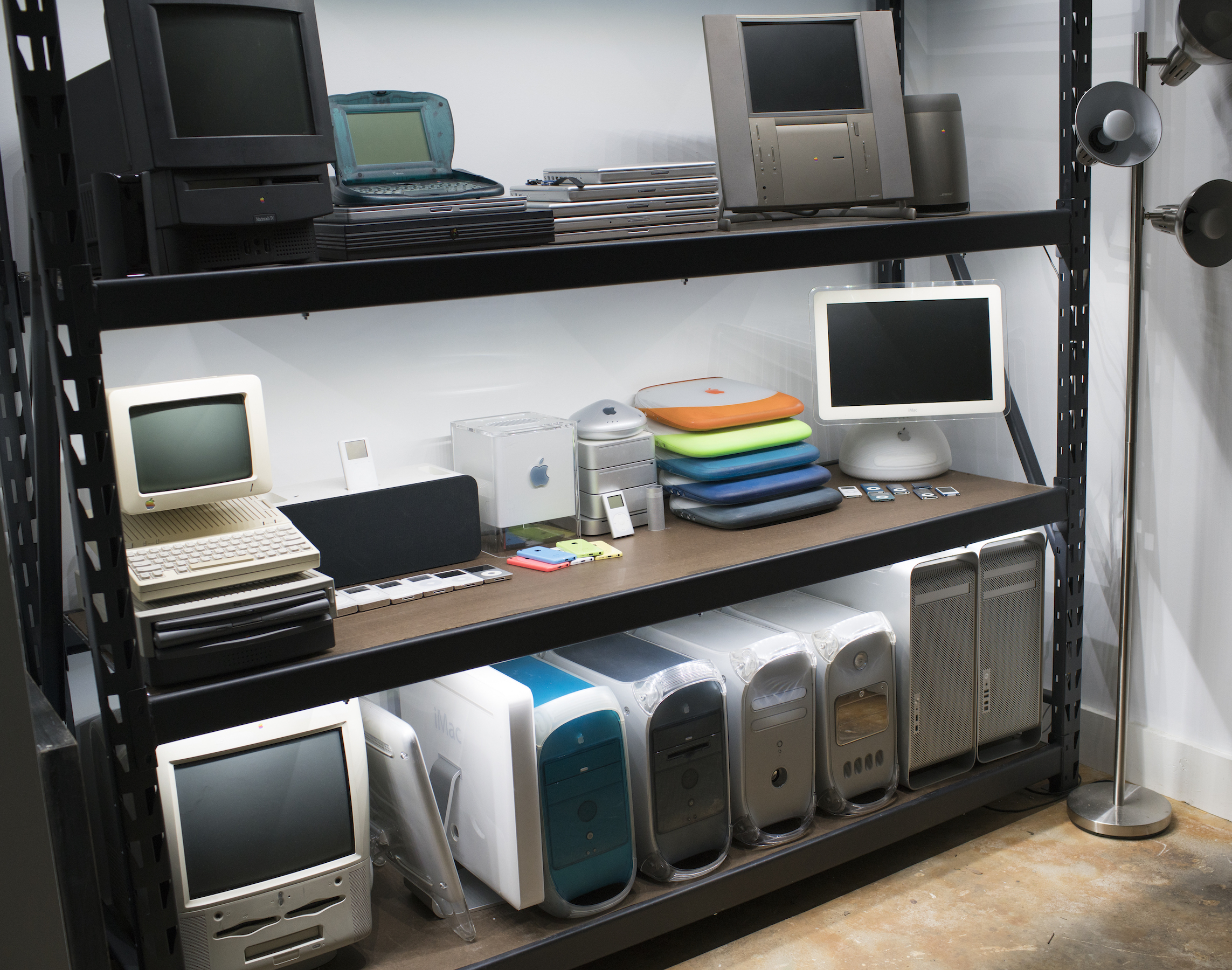
A hallmark of the company’s retail space was its collection of Apple hardware, as Darren Orf at Gizmodo showed off in August of 2016:
“We were the un-Apple Store,” [co-founder, Dick Demenus] told Gizmodo in a live interview. “At the Apple Store, everything is new, glitzy, and shiny. We liked to reflect history.”
That history—including typewriters, radios, victrolas, cameras, microphones, old IBM programs, phonographs, Coke machines, and a 35-piece collection of Macintosh computers lovingly named the “Mac Museum”—is now on sale.
The extensive Apple collection went up for auction. There were some amazing pieces in it, and I hoped at the time that it went to a good home.
I can report that is indeed the case. Today, its new caretaker has been announced: MacPaw.
The software company is known for products like Setapp and CleanMyMac, and is an active participant in the Mac community at large.
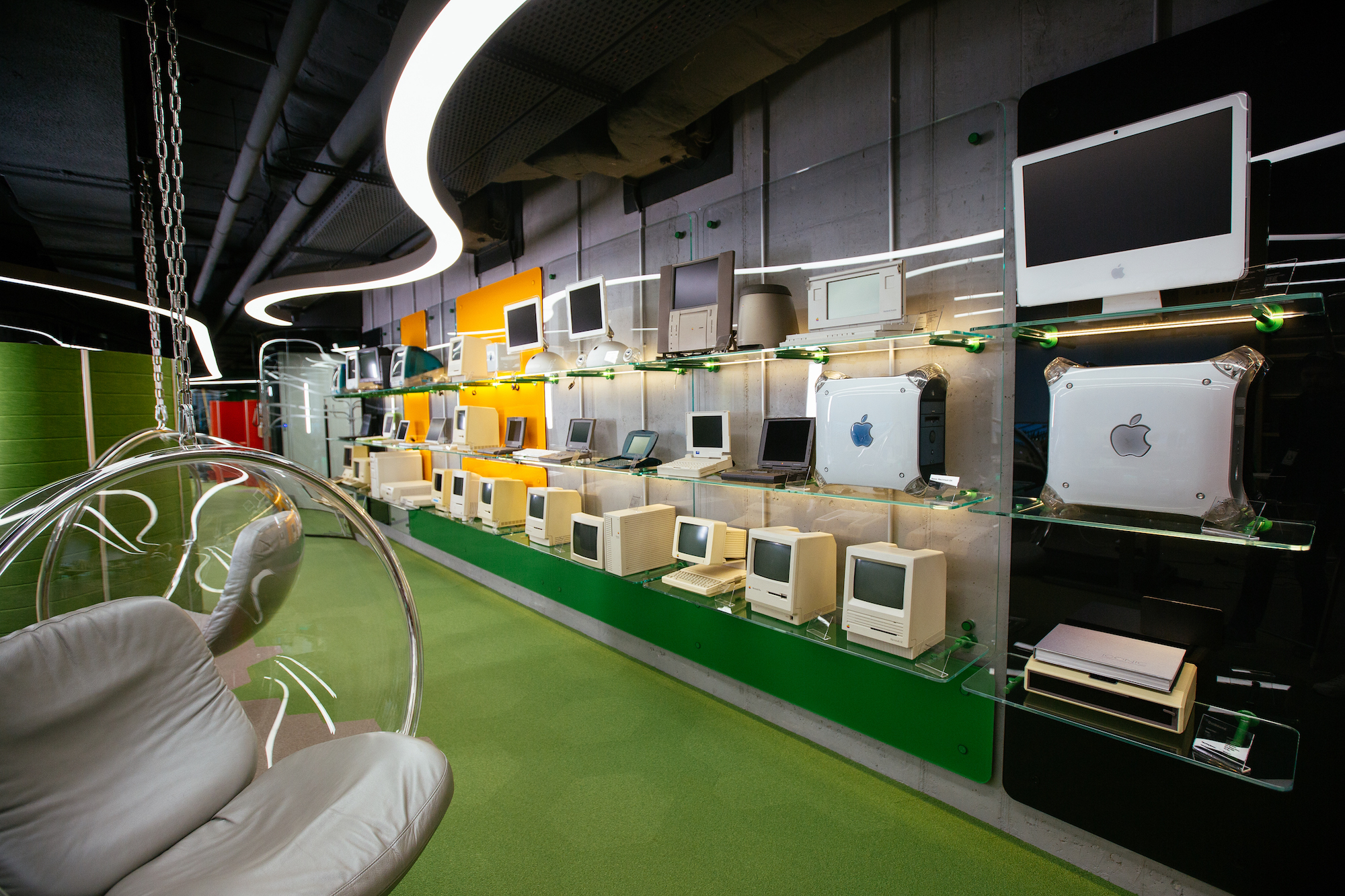
As shown in the video, the collection is now at home in a beautiful display at MacPaw’s Ukrainian office:
The company is taking time to restore some of the pieces to working order, and a working space for repairs can be seen in the video.
Oleksandr Kosovan, the company’s CEO, said:
Apple changed my life in many ways. Driven by Steve’s vision for better and simpler products I was able to implement these ideas in our products development. I cannot say thank Apple enough other than paying this great tribute to the history of iconic Apple products by setting up a Museum.
Kosovan bought the collection in secret, before it could be split up into smaller auctions.
The MacPaw Museum now boasts 70 pieces, 39 of which came from Tekserve. While it’s not open to the public, the company hopes to continue to grow it in the future.
I think what MacPaw has done here is pretty special. No company needs a badass collection of Macs adorning a wall in their office, but that’s not the point of something like this, is it?
I recently spoke with Jon Butt on his podcast about my background, Relay FM and the podcasting industry. I enjoyed our chat, despite a huge thunderstorm going on in the background here in Memphis.
Apple Computer did not purchase Power Computing Corporation.
Apple purchased core assets from Power Computing Corporation. Power Computing Corporation continues to service and support their computer hardware. If you feel you have a warranty issue, contact Power Computing Technical Support at 1-800-708-6227.
The band is back together just in time to talk about Federico’s new iPhone case, the Echo Show, Phil Schiller’s comments on App Store upgrade pricing and more.
Amazon has a new Echo for preorder starting today. The $229 device does all the same voice-driven stuff as the traditional Echo, but includes a 7-inch touchscreen. With that, Amazon is adding things like video conferencing, feeds from supported IP cameras, YouTube playback and video updates from news sources.
I — like most people with an Echo — use Amazon’s product in the kitchen, often when I have my hands full. While adding a screen to the experience is certainly interesting, I’m curious how often I would take advantage of it.