No announcement, no press release. Just a new tag at the top of this web page.
The new Apple Watch Models ⇢
There’s a lot to unpack from today’s keynote, but this page jumped out at me. It compares the various models of Apple Watches now for sale. The lineup is more confusing than last year.
“Series 1” Watches are last year’s model, but with a new dual‑core processor. This doesn’t seem to be the same chipset that’s in the new watch, but should still be an improvement. Gone is the single-core model that’s on my wrist today.
The “Series 2” models have a new dual-core “S2” processor, but also pack GPS, a brighter screen and waterproofing.
(I’m a big fan of both changes. The Watch needs to be faster, and I think people are going to really like having GPS.)
There is a new Nike+ model that comes with exclusive bands and watch faces, but the same core tech as found in its siblings, not unlike the Hermès models.
Apple Watch Edition is still around, but instead of gold, the case is a white ceramic that I think looks amazing. As I’m not going to spend $1,299 on a watch, it’ll be something I’ll buy for my Apple collection in 10 years or so.
Live Coverage of Apple’s Event ⇢
A bunch of us from Relay FM have crashed the Six Colors live coverage of today’s Apple event. We’re already answering questions and talking about the one time I cracked open a raw egg that I thought had been hard boiled.
Less Than or Equal #97: Stephen Hackett ⇢
I joined Aleen Simms on the latest episode of her podcast to talk about Relay FM, diversity, the importance of community, and my life as the parent of a child with cancer.
Kbase Article of the Week: Prepare for Changes to Xsan Before You Update to macOS Sierra ⇢
In case you are one of the three people on the planet that this would affect:
The first time you activate an earlier Xsan volume on macOS Sierra, the Xsan file system manager (fsm) upgrades your volume’s metadata to a newer format. Once this conversion begins, you won’t be able to use this volume with Xsan MDCs running OS X 10.11 or earlier.
Older MDCs won’t be able to control Xsan volumes that are created in Xsan 5. If you attempt to start a volume that has been upgraded to or created in Xsan 5 on an older MDC, the volume won’t open. When this happens, the system will deliver an ICB alert.
Here’s what Xsan is.
On App Store Business Models ⇢
On November 8th it will have been eight years since my first app went live in the App Store. Back when I started I would have been gobsmacked to hear that eight years later I’d still be making my living solely from apps.
The App Store ecosystem today is wildly different from what it was back then. I launched my first app into a store of around 90k apps, today we have well over 2 million. Back then we didn’t have advertising networks, in-app purchases or subscriptions. You were free or paid, and if you wanted to make a living you pretty much had to be paid.
Today things are quite different.
As usual, David’s insight into these things is well thought out and well graphed.
September: Another 12 Months ⇢
Instead of running RSS sponsorships this month, I’m raising money in support of St. Jude Children’s Research Hospital as part of Childhood Cancer Awareness Month. Click here to learn more and donate.
I can’t believe it’s only been a year since the last time September rolled around, but that’s what time does when you’re a parent. It speeds up, leaving you behind if you aren’t careful.
It’s worse when you have a child with a catastrophic disease. When I scroll back through photos of our oldest son, so many of them are tinted by his experience.
He wasn’t diagnosed until he was six months old, but I search his newborn photos for signs of the earliest indications that something was wrong. Most of the photos of him under the age of three are taken in a hospital or show his old feeding tube. His scars were visible until his hair grew in.
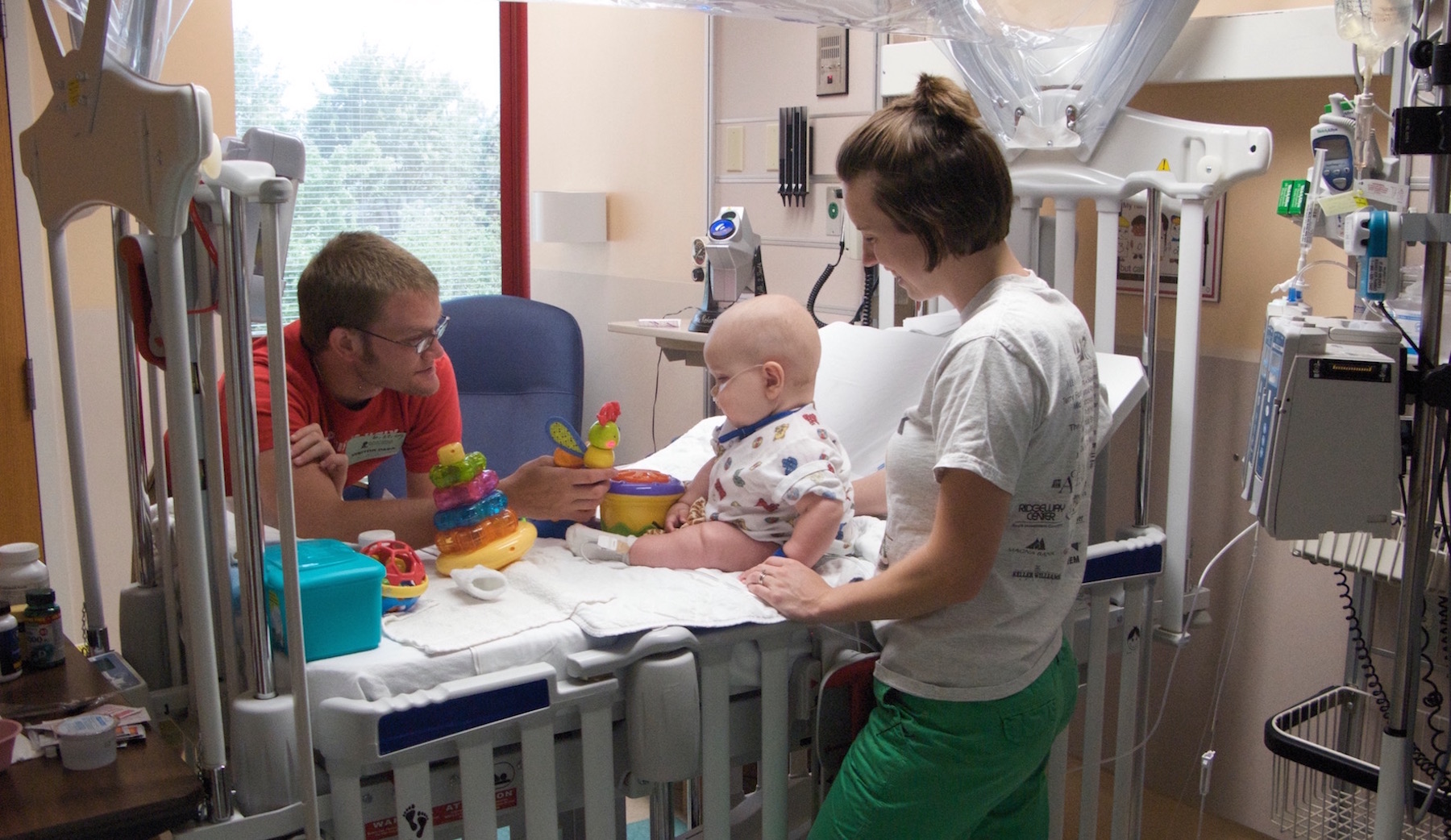
I love this photo of my wife Merri, Josiah and our friend Levi. I wish it was taken in our living room or in a park, but that’s not the hand we were dealt.
Here’s the thing. I can look at my photo library and feel angry and sad, but a lot of parents we have known don’t get to have almost eight years of photos of their children.
As good as St. Jude is, cancer still claims young lives every day. It’s is a stain on our humanity, but it’s one we can rid ourselves of.
No child should die in the dawn of life. Every family should have decades of intact family photos. Donate now.
Juno Beams Home Images From First Perijove ⇢
Emily Lakdawalla at The Planetary Society:
On August 27, Juno soared across Jupiter’s cloud tops from pole to pole, with all instruments operating. NASA posted some terrific first results from several of the instruments today. And the JunoCam team released all 28 raw images taken during the close encounter. I’ve collected all the data onto a single page for easy browsing and downloading; I’ll have more to say about that below.
Her post is full of breathtaking imagery of Jupiter. There’s going to be a lot more where this came from:
Ungeniused #7: The Emu War ⇢
In 1932, farmers in Western Australia were having their crops destroyed by a migrating emu population. Their solution? Soldiers armed with machine guns.
September is National Childhood Cancer Awareness Month
Every September, I forgo running RSS sponsorships on 512 Pixels to highlight and raise money for a cause — and an organization — that is very close to my heart.
September is National Childhood Cancer Awareness Month.
It’s a month that’s of vital importance to my family. As some of you may know, our oldest son was diagnosed in May of 2009 with a malignant brain tumor. In the blink of an eye, we went from a young family with a seemingly-healthy six month old baby to a young family facing the reality that our son was gravely sick.
Time stood still, but raced forward, all at once. He had a CT scan, blood tests, an MRI, then surgery, within 48 hours.
Then the diagnosis came.
It was bad.
Josiah had brain cancer. His particluar cancer is exceedingly rare in children, and almost unheard of in infants. To beat it — to save his life — would take the very best science and medicine had to offer.
Thank God for St. Jude Children’s Research Hospital.
At St. Jude, Josiah underwent 18 rounds of chemotherapy. He had several subsequent surgeries, and still has regular MRIs to check on things. His cancer hasn’t grown, but as it is not a type that “goes away” with chemo, his disease is considered “stable.” He still has cancer, and always will. The hope is that it simply never grows again. So far, that’s been the case.
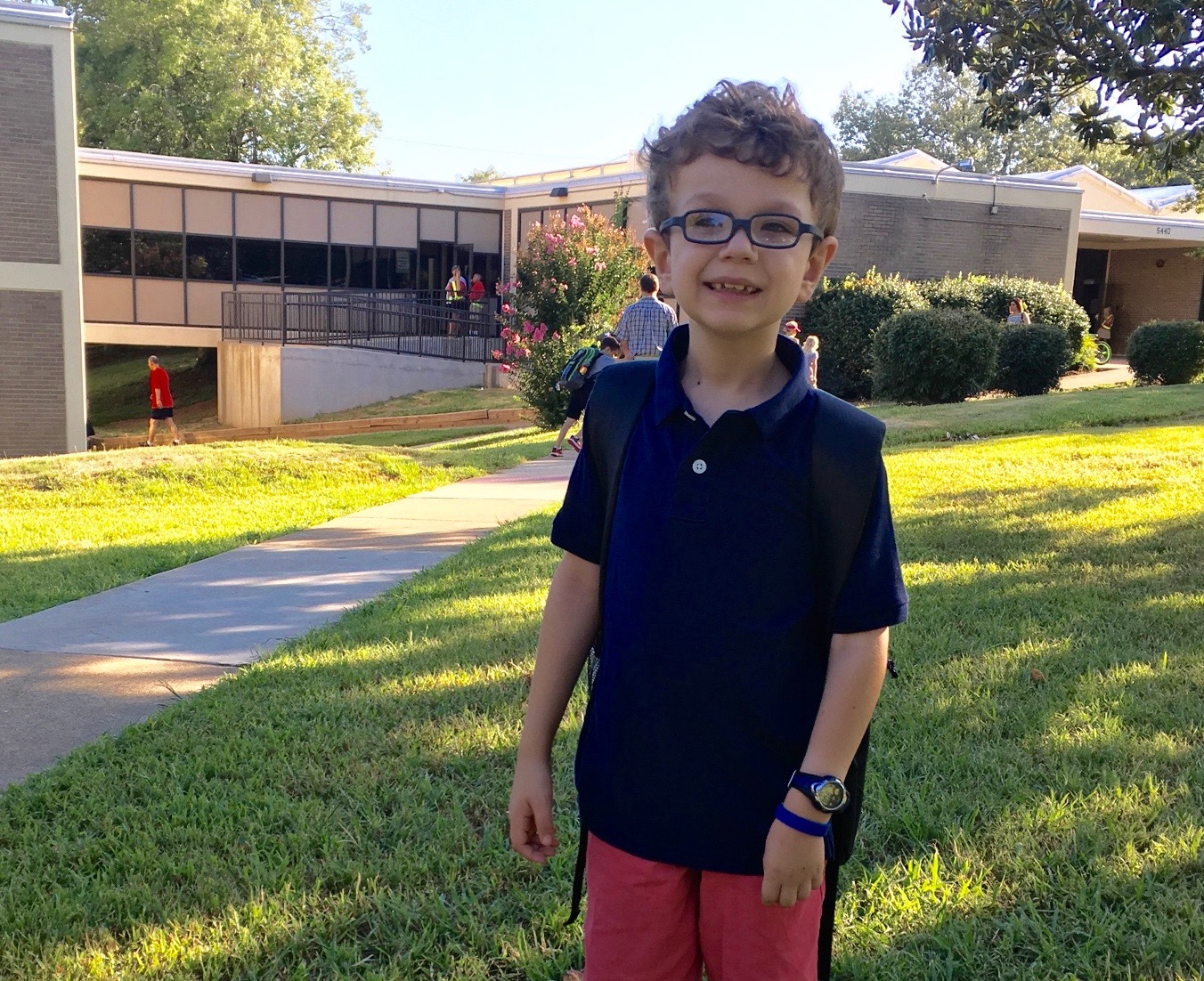
We’re lucky. We’re blessed. We’re thankful that we get many more days with our child than some of our friends have had with theirs. Childhood cancer is a stain on our humanity.
Josiah turns 8 later this year. To honor his upcoming birthday and the amazing care he has been given at St. Jude, my goal is to raise $8,000 this month for the hospital — a symbolic $1,000 for every year.
I know many of you have donated in the past. Last year’s fundraiser was amazing, raising over $18,000. I’d like to go even higher this year.
On ‘Statewide Emergency Alert Tests’
This morning, anyone with a smartphone in the state of Tennessee got two back-to-back emergency alerts:
The alerts were part of a statewide test:
“This year, in Tennessee and across the nation, natural and human-caused disasters have taken lives, destroyed homes and damaged roads and infrastructure,” said TEMA Director Patrick Sheehan. “While we live in some of the safest times in history, these fires, storms, flash-floods, heatwaves, tornadoes, accidents, and active shooter tragedies serve as reminders of the importance of being aware of the potential threats around us and to prepare ourselves and our loved ones. This statewide EAS test message will recognize National Preparedness Month and emphasize the importance of emergency preparedness.”
While the state claims the test was “designed to have limited impact on the public,” I call bullshit. It’s like the boy who cried wolf; emergency alerts should be used for emergencies.
Having two back-to-back alerts1 that most people will consider spam will tempt some to disable the feature. If Tennessee — or any other state — can’t see that as an obvious outcome, I just don’t know what to say.
Update: Tennessee has issued an apology for the tests:
We have received calls and messages from hundreds of Tennesseans letting us know about problems with receiving messages and the concerns caused by the messages received. In many instances the caveats that the message was part of a test were not received, making it seem like an emergency was imminent. While many are understanding, knowing that we need to test our systems, many have voiced their concerns about the angst this test cause. Please accept my sincerest apologies for any inconvenience today’s test caused.
- That may have been sent at the wrong time. ↩
SpaceX Falcon 9 Explodes on Pad
News broke this morning that a Falcon 9 rocket due to launch later this weekend exploded on the launch pad at Cape Canaveral.
Black smoke from an explosion of a #SpaceX rocket in Cape Canaveral, Fla. pic via @PointyEndUp pic.twitter.com/pHKy0jLgpK
— Zora Suleman (@ZoraSuleman) September 1, 2016
There are few details known at this point, but early reports say the failure occurred leading up to a static fire test, in which the rocket’s motors are fired while the vehicle is clamped down to the pad. Some tweets have indicated the explosion took place during a “catastrophic abort” of the test.
Here is SpaceX’s initial comment on the accident:
SpaceX can confirm that in preparation for today’s static fire, there was an anomaly on the pad resulting in the loss of the vehicle and its payload. Per standard procedure, the pad was clear and there were no injuries.
This is the second failure SpaceX has seen in 14 months.
The payload for this weekend’s launch was a $200 million Internet.org satellite.
Update: US Launch Report has published video of the accident.