Breaking Down the DOJ’s Case Against Apple

Unlike most of us Apple Bloggers, John Voorhees actually went to law school. Like David Sparks, he left the law to become a writer and podcaster, so his article on the DOJ’s suit against Apple is the one I’ve been waiting for. Over on MacStories, he has broken down the complaint filed last week.

I learned a ton in reading through this, and I think you will too. I’m not going to blockquote any of it, just to make you click through to MacStories.

United States DOJ Sues Apple

Lauren Feiner, writing at The Verge:

The US Department of Justice and 16 state and district attorneys general accused Apple of operating an illegal monopoly in the smartphone market in a new antitrust lawsuit.

The DOJ and states are accusing Apple of driving up prices for consumers and developers at the expense of making users more reliant on its iPhones. It alleges that Apple “selectively” imposes contractual restrictions on developers and withholds critical ways of accessing the phone, according to a release.

The initial filing can be read as a PDF here.

Apple has issued a statement on the lawsuit:

At Apple, we innovate every day to make technology people love—designing products that work seamlessly together, protect people’s privacy and security, and create a magical experience for our users. This lawsuit threatens who we are and the principles that set Apple products apart in fiercely competitive markets. If successful, it would hinder our ability to create the kind of technology people expect from Apple—where hardware, software, and services intersect. It would also set a dangerous precedent, empowering government to take a heavy hand in designing people’s technology. We believe this lawsuit is wrong on the facts and the law, and we will vigorously defend against it.

Weather Forecasts Are Much Better Than They Used to Be

Hannah Ritchie:

Weather forecasts are often seen as just a nice thing to have. Useful when planning a Sunday barbecue, or when we want to know if we’ll need an umbrella for the day. But in many ways weather forecasts are absolutely crucial: they can be a matter of life and death.

Accurate forecasts can save lives by giving early warnings of storms, heat waves, and disasters. Farmers use them for agricultural management, which can make the difference between a lost harvest or a harvest of plenty. Grid operators rely on accurate forecasts of temperatures for heating and cooling demand, and how much energy they’ll get from wind and solar farms. Pilots and sailors need them to carry people across oceans safely. Accurate information about future weather is often absolutely vital.

In this article, I look at improvements over time and the global inequalities that need to be closed to protect lives and livelihoods around the world.

We’re Going Matte to the Future

A pair of rumors are circulating about the screens on future Apple devices.

Up first, we have Chance Miller, writing at 9to5Mac:

A new rumor today says that Apple has invested billions in a new coating technology for future iPhone displays. This technology would allegedly make future iPhone displays “more scratch-resistant” and add a new anti-reflection layer, but it won’t be ready for the iPhone 16 this year.

The rumor comes from the account Instant Digital on Weibo, which has previously shared accurate information about upcoming iPhone announcements. Apple has reportedly developed equipment that adds a “super-hard” anti-reflective layer to the iPhone’s display, which is also more scratch-resistant than before.

This report notes that the work needed to create these displays at scale is just now underway, with the designs “only recently handed over to Apple’s supply chain partners,” hence the belief that this won’t be coming to the iPhone 16 line this fall.

Next, we have Hartley Charlton, writing at MacRumors on another report by Instant Digital that claims that the next iPad Pro will have a matte screen option. Charlton writes:

The Weibo user explained that the iPad Pro’s new matte display option will be offered in addition to the standard, glossy glass finish. It apparently features -4° to +29° of haze and may tout some kind of blue-light blocking technology to help protect the eyes. Matte screen protectors for the iPad have become popular, so it is possible that Apple is trying to offer such an option at the point of purchase for those who want it.

It is not known if the matte display option will be “nano-texture” glass like on the Pro Display XDR and Studio Display, but it seems plausible. Nano-texture glass is effectively a matte finish that scatters light to minimize glare, which is ideal in environments with bright light sources. While matte screen coatings effectively reduce reflections, they also make the image slightly more dull and hazy. Nano-texture glass features an etched surface to help preserve image quality.

I would expect that if these reports are true, these new matte screens would not be like the nano-texture glass used by Apple on the Pro Display XDR, Studio Display and the old 27-inch iMac. While its anti-glare properties seem very desirable in a mobile device like an iPad, it comes with a cost when it comes to keeping the screen clean. Here’s how Apple directs users to care of the screen:

If your Apple Studio Display, Apple Pro Display XDR, or iMac has nano-texture glass, follow these important guidelines to prevent damage when cleaning the screen.

To remove dust or smudges from the nano-texture glass screen, use only the polishing cloth that came with your Studio Display, Pro Display XDR, or iMac.

For infrequent cleaning of hard-to-remove smudges, you can moisten the cloth with a 70-percent isopropyl alcohol (IPA) solution.

Never use any other cloth to clean the nano-texture glass. If you lose the included cloth, you can order a replacement polishing cloth.

That said, if the iPhone report is correct, whatever Apple has cooking up for the iPhone isn’t going to be ready for iPads that are due any time now. Maybe the company would apply its existing nano-texture glass to a high-end iPad Pro, despite its complexity, and wait for something that would theoretically be easier to care for to come along for the iPhone, which vastly outsells the iPad.

However this shakes out, I think making the iPad and iPhone less glossy is very interesting. Screen brightness can overcome a lot of glare, but if Apple can make its devices less reflective, without harming what makes its displays so great, I’m all for it.
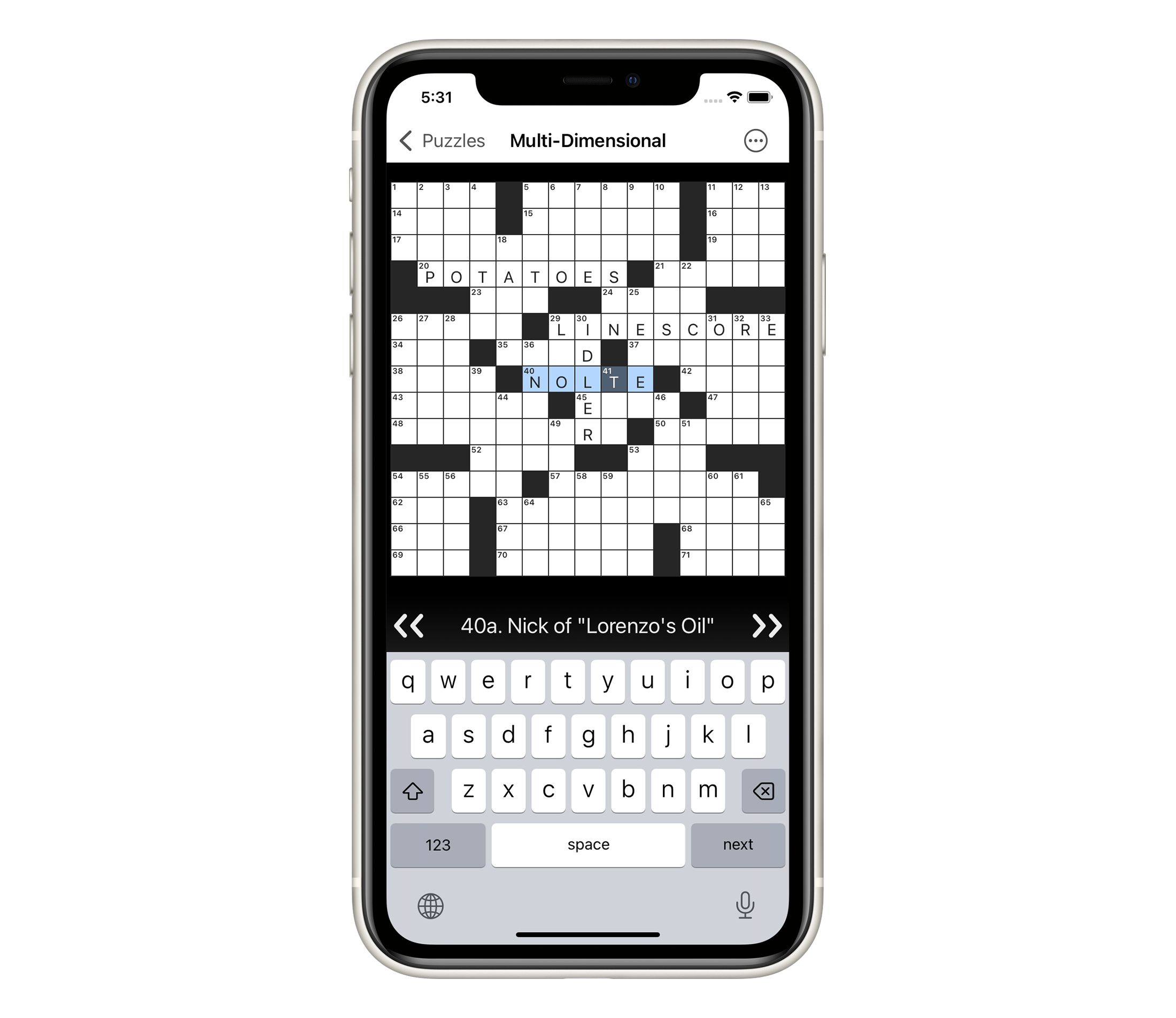
Sponsor: Black Ink for iOS

Calling all crossword fans! Black Ink, the beloved Mac app for solving crosswords from the New York Times, Wall Street Journal, Washington Post, and more, is now available for iOS. Download it from the App Store and enjoy nearly-endless crossword-solving fun on your iPhone, iPad, or Apple Vision Pro!

Not so sure about your solving ability? Don’t worry, Black Ink is ready to assist. If you’re stumped, just use one of its built-in features to offer hints or even to reveal a square you are really stuck on.

Black Ink for iOS

Rediscover your love of crossword puzzles with Black Ink. It’s free to download and all of its premium features are unlocked with a one-time payment.

Apple Style Guide: March 2024

Hot off the presses, a new PDF from Apple, complete with this silliness:

Apple Vision Pro: Always use the full name. In general references, don’t use the with Apple Vision Pro. It’s OK to use another article or a possessive adjective: Adjust the fit of your Apple Vision Pro.

You put on and take off Apple Vision Pro. When you have it on, you’re wearing it.

And this:

Don’t refer to Apple Vision Pro as a headset. In most cases, use the product name; in
content where the name is repeated frequently, you can use device.