We’ve done it; we have come to the final three Performas. It’s taken 11,000 words to get here, but there is light at the end of the tunnel.
In a world of weird 1990s Macs, the 6400 may take the prize for the most awkward. Here it is, in Power Macintosh form, in an official Apple photo:
Launched in August 1996, this is the first (and only) Performa to use the traditional vertical tower case, and as you can see, it was quite the case.
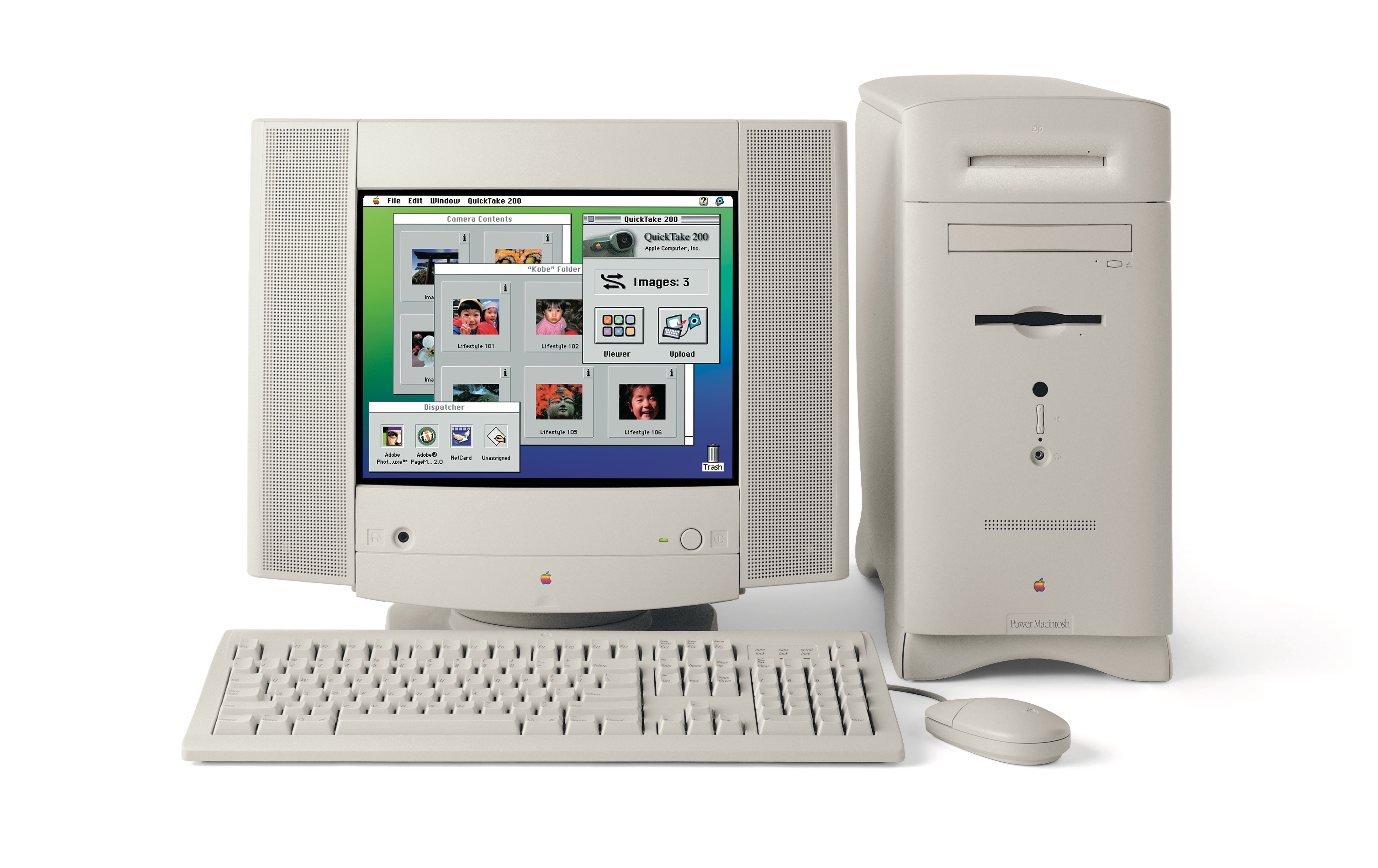
Some people referred to this machine as the “Forehead,” but internally, it was known as “InstaTower.”
There were four machines in this series:
| Model |
CPU |
Memory |
HDD Size |
Price |
| 6400/180 |
180 MHz PowerPC 603e |
16 MB |
1.6 GB |
$2,400 |
| 6410/180 |
180 MHz PowerPC 603e |
16 MB |
1.6 GB |
Unknown |
| 6400/200 (VEE) |
200 MHz PowerPC 603e |
32 MB |
2.4 GB |
$2,800 |
| 6400/200 |
200 MHz PowerPC 603e |
16 MB |
2.4 GB |
Unknown |
That “VEE” label stood for “Video Editing Edition.” This SKU shipped with 32 MB of memory, video in/out cards, and some bundled software for capturing and slinging video around via those cards. Both 200 MHz models came with a standard 256 kB level 2 cache. It was a $100 add-on for the slower machines.
All four models came with a built-in subwoofer in the bottom of that weird case. Bass levels were controlled with an adjustment knob on the back of the case. A BASS KNOB ON A MACINTOSH!
Unlike the 5200 and 6200 machines, the 6400’s logic board supported a 64-bit data path to main memory, providing more bandwidth for RAM-intense applications. An 8X CD-ROM drive was present in all systems, and for those who spent the money for a Power Macintosh version, a ZIP drive could be added right smack in the middle of the forehead.
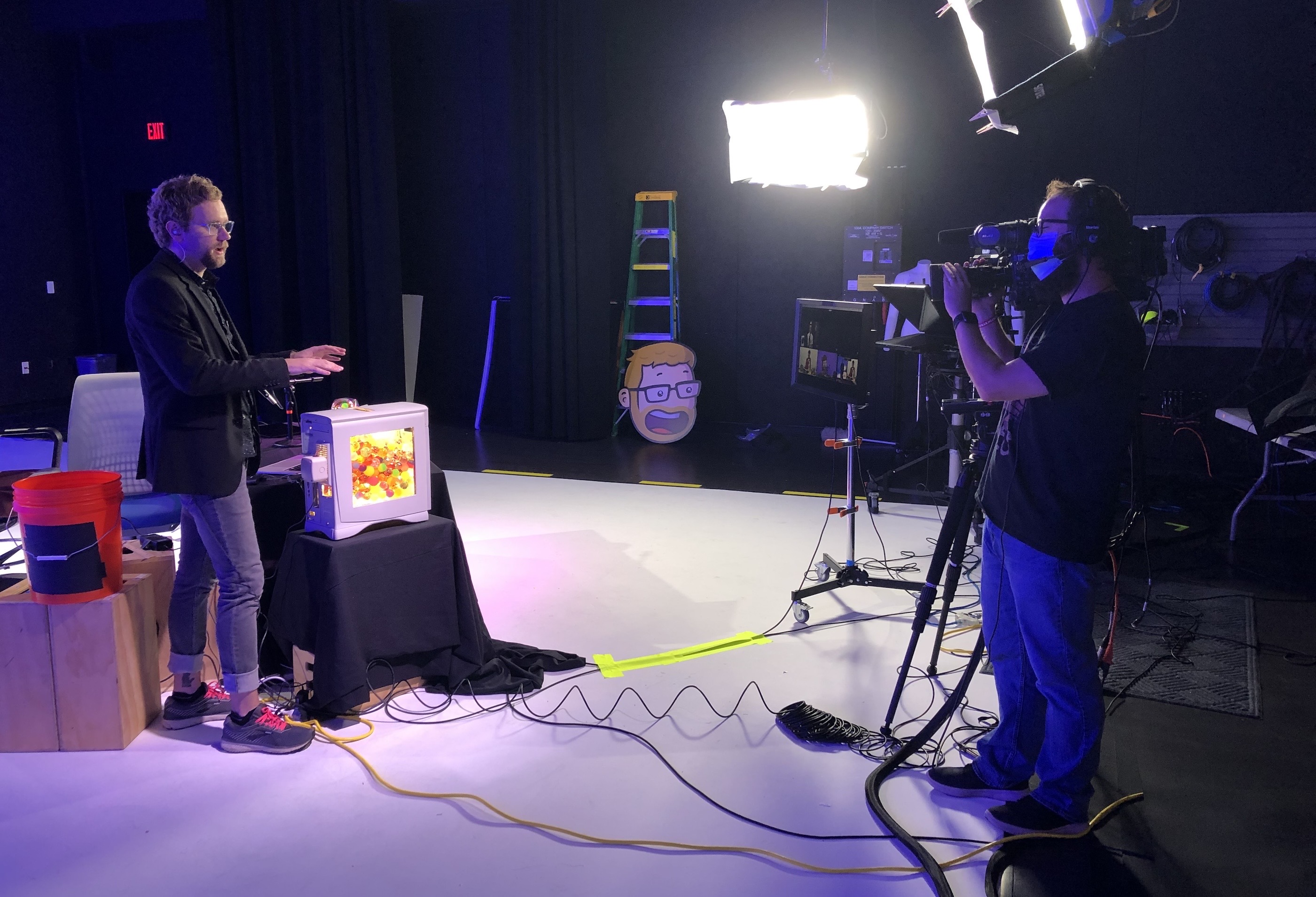
I scooped all of that out and filled one with bouncy balls for the 2020 Relay for St. Jude Podcastathon:
Years before I turned one of these things into actual art, Apple had a press release announcing the machine:
The Performa 6400 is designed to deliver what consumers want, including a long, useful computing life, multimedia and Internet capabilities, and high-quality, bundled software.
In the face of rapidly advancing technology, customers want a computer that’s powerful enough to run the most demanding applications–both today and in the future. The Performa 6400 series is designed with more than enough built-in power for today’s applications–and with industry-standard expansion options that make it easy for the user to add peripherals and additional functionality as needed, the Performa 6400 models will continue to deliver well into the future.
The release goes on:
Adding functionality or performance to the Performa 6400, in the future, is easy by design. The Performa 6400 series includes two industry-standard PCI slots (7-inch) that make it easy to add special capabilities, such as: Avid Cinema, a digital video editing system from Apple (see separate release); the Apple PC Compatibility Card, for customers who need to run DOS or Windows applications; or a video card, for adding a second monitor (see list of available PCI cards and vendors).
By including a SCSI expansion bay, the Performa 6400 models make adding storage devices easy. Fully cabled and powered, this bay lets the customer add an affordable, internal SCSI storage device just by sliding it into the bay. As with all Macintosh computers, the Performa 6400 units include an external SCSI port for the addition of up to six peripheral devices, such as scanners or additional storage devices, making it easy for customers to add to their computers as their needs change–and to do so without ever opening the computer’s case.
Inside the tower, the 6400 offered a wide range of hardware, including an optional TV tuner card, optional video import card, two PCI slots, and one COMM II slot, pre-populated with a modem.
Here’s an overly moody press image of the 6400:

The 6400 would be the only Performa to use this case, but on the Power Macintosh side of things, a 6500 materialized in February 1997.
It’s easy to poke fun of this machine, but the reality is that it was a shift in direction toward the high-end for Performa, even if it never shipped with the faster PowerPC 603ev or later 604.
Of course, that wouldn’t matter in the long run, but it’s interesting to think about what Apple may have done had the Performa line lasted longer than it did.
The 6360 came in the same desktop case as many previous machines did. Released in October 1996, it was powered by a 160 MHz PowerPC 603e processor and came standard with 16 MB of RAM, a 1.2 GB hard drive, and an 8X CD-ROM. All of this could be had for $1,500.
As this was a 1996 Mac, it came with a PCI slot, replacing the older LC/PDS style slot that previous desktop Performas had used. It was also sold as the Power Macintosh 6300/160.
In April 1997, the 6360 popped up in a joint Apple/Sears back-to-school program:
At Sears Brand Central, from April 1 to May 15 (or while supplies last), when families purchase an Apple Macintosh Performa 6360 computer, 15-inch MultiScan Display, and Color StyleWriter 1500 printer, schools can earn points towards computer hardware and Internet products from Apple.
This program from Sears, Roebuck and Co. and Apple Computer, Inc. is designed to help both parents and educators provide students greater access to computer and Internet technology at home and at school.
While both parents and educators would like to enhance children’s learning through greater access to computer and Internet technology, obviously, household and school budgets are limited," said Chuck Cebuhar, Sears vice president of Home Electronics. “This program helps make much-wanted computer and Internet related equipment affordable for both families and schools, and allows us to give something back to the community.”
When friends and families of students in any of the 50 states purchase the Macintosh Performa 6360 computer, 15-inch MultiScan Display, and Color StyleWriter 1500 printer bundle (at Sears stores in the continental U.S. for $1,499), they will also receive a “School Rewards” coupon worth 2,000 points which can be assigned to any public or private non-profit school of their choice. (Limit two bundles per customer. Price may vary in Alaska and Hawaii.) The points are redeemable by the school, to Apple, for specially selected computer and Internet products ranging from one year of Internet access to Apple Internet servers.
The last new Performa put on sale was the Performa 5280, launched in November 1996. It used the all-in-one case introduced with the 5200, housing a 120 MHz PowerPC 603e, 8 or 16 MB of memory, a 1.2 GB hard drive, and an 8X CD-ROM. It sold for $2,000.