512 Pixels

Performa Month: The Transition to PowerPC and a New All-in-One

Starting in November 1994, Apple transitioned the Performa line to use the PowerPC processor. This took some time and started some eight months after the first Power Macintosh models were announced, but as covered at great length in this series, Performas were all rebadged Macs from other lines, so it was inevitable that they’d get the PowerPC treatment at some point.

With that said, let’s walk through this processor transition through the lens of a bunch of beige Macs. If you want to learn more about why Apple moved to PowerPC, I recommend this excellent article on the subject.

As you will see, this transition took some time. This ad aired as Apple was selling both 68K and PowerPC Performas:

Performa 6100 Series

The first PowerPC Performa was actually six Performas:

This machine was based on the Power Macintosh 6100 and used its enclosure. It was a lower, wider case than the 68k-based Performa 600 series. This design was first used on the Centris Quadra 610, which launched in early 1993. There were Quadra and Power Macintosh versions. Here’s my less-than-stellar example of the latter:

6100

When you’re looking at the names of old Macs, it’s important to note the number of …well… numbers in the name. If the model name ends in a 3-digit number, it’s a 68k Mac, while four digits means you’re reading about a PowerPC-based Mac.

Being based on a PowerPC 601, each of these models came equipped with an FPU, which wasn’t true of a bunch of 68K Performas. Storage across the 6100 Series ranged from 250 up to 700 MB, with a 2x CD-ROM drive and 1.44 MB floppy drive standard across the board. Each Performa 6100 Series came with 8 MB of RAM from the factory but had a 72 MB ceiling for upgrades, at least officially. (136 MB worked fine once SIMMs large enough were available on the market.)

Some earlier models came with a comms slot for a modem or Ethernet to be added. The 6100 Series instead came with an AAUI-15 port for use with an external Ethernet adapter. A modem was available via the GeoPort, as David Morgenstern wrote in MacWEEK in 1994:

Apple rolls its entry-level systems on board the PowerPC bandwagon as it debuts five 601-based Performas this week. The Performa 6100 series is based on the 60-MHz Power Mac 6100/60. Each model in the line comes with an internal CD-ROM drive, a 15-inch display with built-in stereo speakers, a modem, a unidirectional microphone and a keyboard.

The Performa packages include a special version of Global Village Communication Inc.’s new $155 TelePort/Gold II 14.4-Kbps fax and data modem. The modem uses a single cable connected to the Performa 6100 series’ GeoPort-compatible serial port for both power and data.

He went on:

Each of the new Performas will come with 8 Mbytes of RAM but will vary in their hard drive configurations or software bundles.

Both the Performa 6110CD and 6112CD have 250-Mbyte hard drives and street prices between $2,600 and $2,650, Apple said. The 6110CD will be sold in consumer electronics stores and will include ClarisWorks 2.1, Intuit Inc.’s Quicken 4.0, Now Software Inc.’s Now Up-to-Date 2.1.1, a dictionary, a file-translator set, clip art and game software. Six CD-ROM titles, including Grolier’s Multimedia Encyclopedia, 1994 Time Almanac, an atlas and a home medical reference, will come with the 6110CD.

Sold in office product superstores, the Performa 6112CD will come with Microsoft Works 4.0a, Quicken, a dictionary, file translators, a typing tutor, and educational and game programs. Eight CD-ROMs, including Grolier’s Multimedia Encyclopedia, the Time Almanac and children’s games, will ship with the 6112CD.

The Performa 6115CD and 6117CD each ship with a 350-Mbyte drive. Apple said it expects prices to range from $2,700 to $2,750.

The Performa 6115CD will be offered in computer superstores and through higher-education resellers. The software includes ClarisWorks, Quicken, Now Up-to-Date, Now Contact 1.1, a dictionary, clip art, file translators, games and a CD-ROM set similar to the 6110 bundle.

Sold in selected warehouse stores, the Performa 6117CD will include ClarisWorks, Quicken, Now Up-to-Date, a dictionary, file translators and games; its eight CD-ROMs are similar to the 6112 package. Also available in warehouse stores is the $2,800 to $3,000 Performa 6118CD with a 500-Mbyte hard drive. The software bundle is similar to the 6117CD.

Even at the time, it was hard to write about the Performa line without using a lot of words.

The 6100 Series ran a standard version System 7.5, not the weirdo “P” versions that earlier machines ran. Not only did this simplify things for Apple, but it meant some features that had been Performa-specific were folded into the mainstream release of System 7. The primary example was Launcher, which was a customizable user interface for quick access to saved applications, documents, and more:
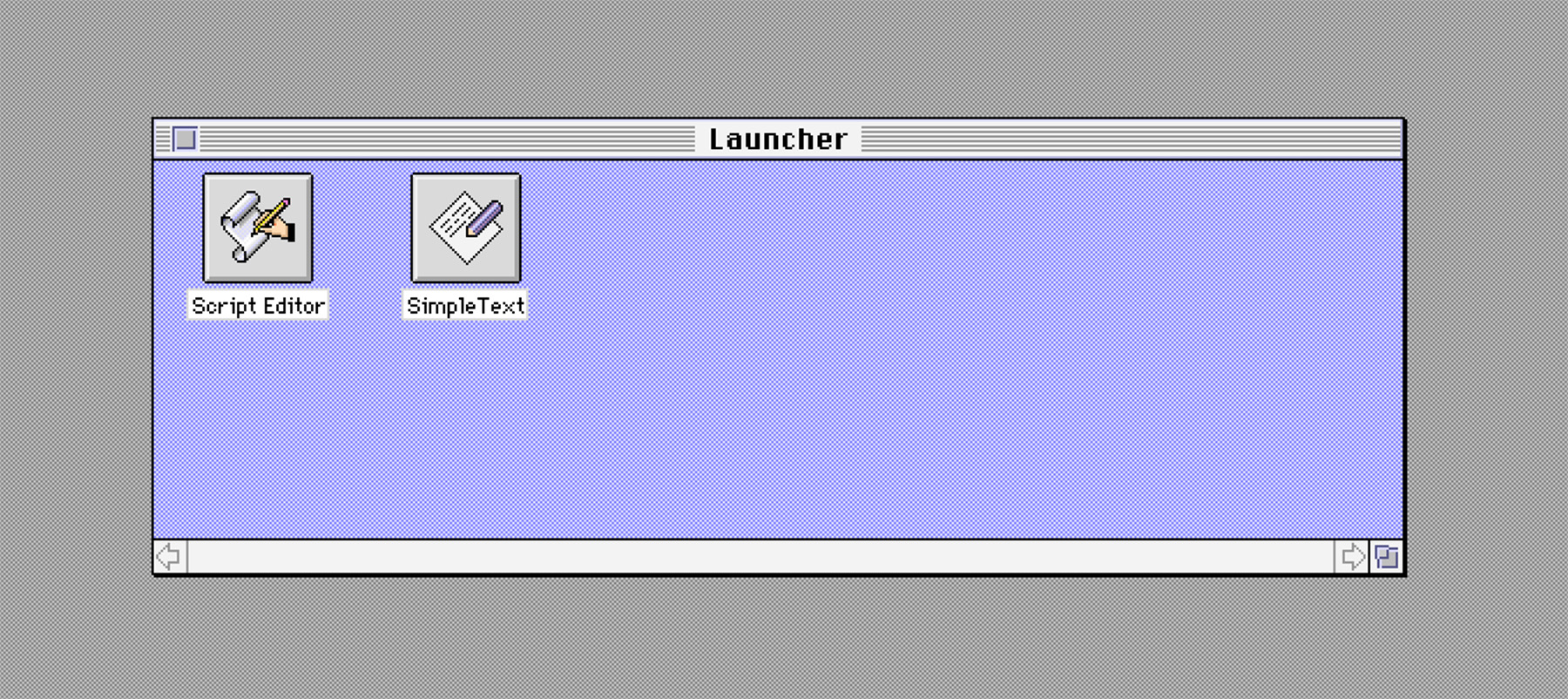
Launcher in System 7

Performa 5200 Series

In the summer of 1995, Apple launched the second batch of PowerPC-based Performas:

The Performa 5200 Series was powered by a 75 MHz PowerPC 603, but to save on costs, the board shipped with a 32-bit memory bus, slowing everything down, not unlike the LC’s combination of a 32-bit CPU and 16-bit bus earlier in the 90s.

(This mistake was repeated on the 6200, and we’ll get back to it in a moment.)

Like previous Performas, the model numbers mostly relate to various default storage sizes, which topped out at 1 GB. All but the base model shipped with a 4X CD-ROM drive.

It also came in the same new case that Apple debuted with the Power Macintosh 5200/75 LC.

Thanks to the magic of eBay, I happen to have one such machine. It was for sale “For Parts,” and it sounds like something is very broken deep inside its beige plastic case.

5200 Front5200 BackThe entire machine could be tilted forward or back on its plastic foot, a feature not found on previous all-in-one Macs.

For good measure, here’s a photo of the machine, straight from the archives of Apple PR:

Power Macintosh AIO

This case design was dubbed “Bongo” and was an evolved version of the “Hook” design that was used in the 500 line. Adrian Mell wrote this about the design in Macworld:

The all-in-one design exhibits a lot of the same spirit that Apple vested in the original Macintosh. A deceptive minimalism belies this machine’s utility and value. Apple has again figured out how to package a full-featured computer into the simplest possible shape.

Its predecessors, which include the Performa 520, 550, 575 and now 580, all offer good functionality and value, but they lack the 5200’s design integrity. In comparison, their efforts to mimic the appearance of a conventional three-piece desktop computer just made them look clumsy.

I honestly don’t know where I fall on this debate. On one hand, the 5200 is much less busy looking than the old 500 series, but something about the 5200’s design is too bulbous for me from some angles.

To help meet the desired costs — and to fit in the shallower case — Apple dropped the beloved Sony Trinitron CRT in favor of a lesser CRT with a more rounded front from LG.

People were not a fan of that move.

Performa 6200 Series

When the 5200 line came out in May 1995, the 6100 was upgraded to the 6200. The change replaced the 6100’s 60 MHz PowerPC 601 with two options: a 75 MHz PowerPC 603 or a 100 MHz PowerPC 603e.

This line of Performa has a bit of a reputation:

Part of this was due to a batch of faulty CPUs, as reported by Andrew Gore for MacWEEK:

If you’re going to eat crow, you might as well take big bites.

That seems to be Apple’s philosophy with the announcement this week of another problem with a shipping Macintosh. However, unlike the PowerBook lithium-ion batteries, which caused the recall of the 5300 series,1 this time the problem affects only a very small number of systems.

Specifically, 0.1 percent of LC and Performa 6200 and 5200 machines shipped since July have defective 603 CPUs. The problem is so subtle that it is noticeable only when doing certain floating-point instructions in a certain sequence, which results in calculation errors.

“It sounds like the Pentium [math problem],2 but the difference is that with the Pentium it was a design flaw in the chip,” said Bruce Gee, product line manager for entry Mac systems. “This is just a manufacturing flaw.” Gee added that Apple has taken steps to make sure none of the systems shipping today have flawed chips.

Performa and LC users can find out if they have the faulty chip by running the 52xx/62xx Diagnostics Utility, which Apple made available on major on-line services and its FTP sites last week. Customers can also call (800) 785-7371 to get the utility and, if necessary, arrange for a replacement logic board.

The Final 68K Performas

Despite the launch of the machines described above, two final 68K Performas made it out the door in the spring of 1995: the 580CD and 588CD.

These machines shipped without the Sony Trinitron, and were powered by a 33 MHz 68LC040, so there was no FPU included. Storage options included a 250 and 500 MB IDE-based hard drives. Like some earlier models, they could be outfitted with Apple’s TV tuner card.

A DIY Upgrade

If you had a 68K Performa and wanted a PowerPC, there was an official way to do so from Apple, as Daniel Knight covered on LowEndMac:

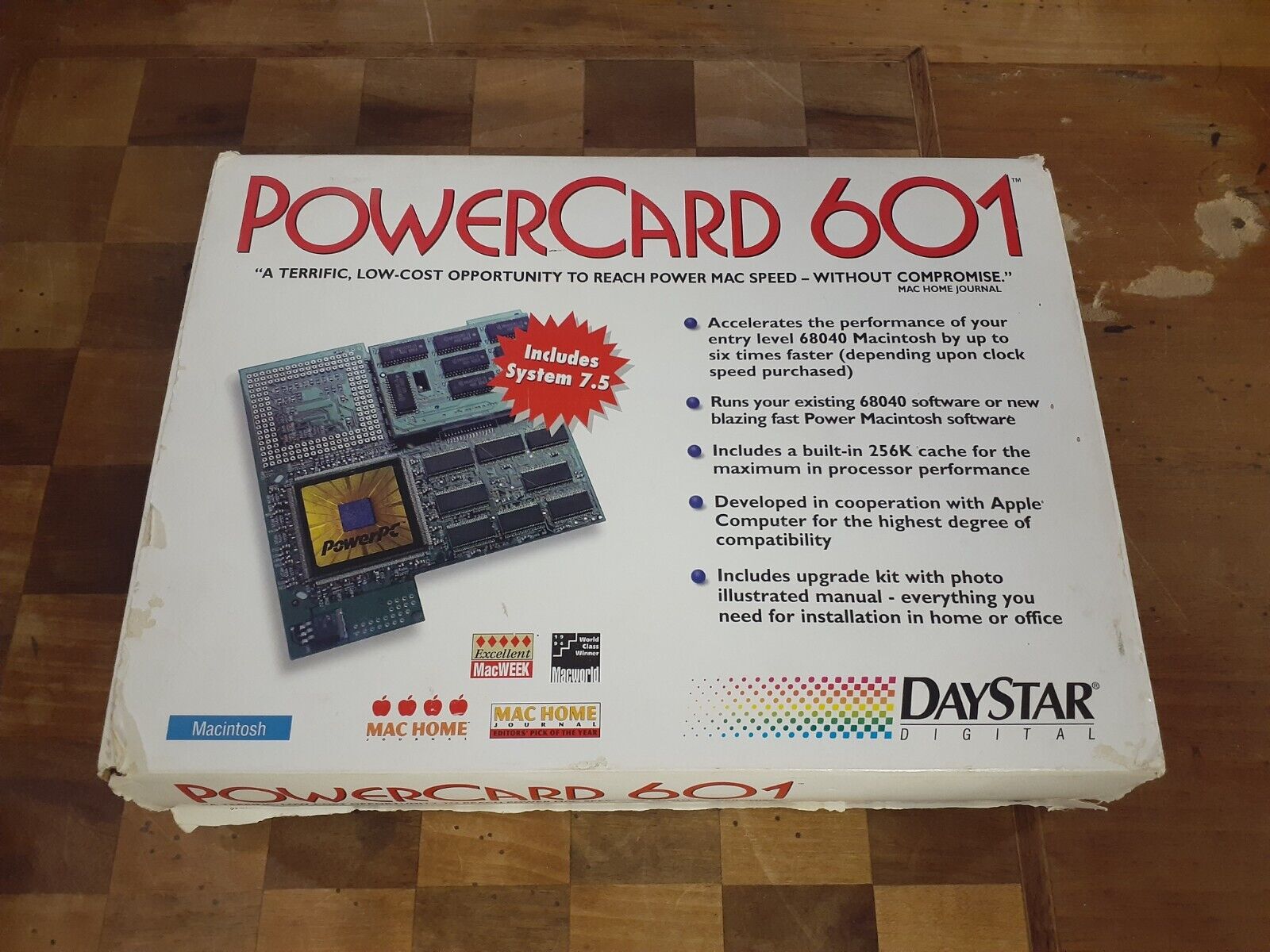
The Apple Power Mac Processor Upgrade (APMPU) is a PowerPC 601 upgrade for 68040-based Macs that have a 32-bit LC processor direct slot (PDS) – the Quadra 605/LC 475/Performa 475-476, LC 575/Performa 575-578, LC 580/Performa 580-588, and Quadra 630/ LC 630/Performa 630 series.

The APMPU has a 66 MHz PowerPC 601 processor, which operates at twice the clock speed of the 68040 processor installed in the computer being upgraded.

Although this upgrade is specified for 68040-based Macs with LC PDS, the upgrade does not plug into the PDS. In fact, due to the size of the upgrade card, the processor direct slot cannot be used with the PPC upgrade card, very much limiting expansion options.

This upgrade is not compatible with the 040 PDS in the Centris line, the Quadra 610, or the Quadra 650-950. These models work with the Apple Power Mac Upgrade Card and equivalents from DayStar and Sonnet.

Turns out the APMPU itself was built by DayStar, which sold a version of the card under a different (and better) name: t he PowerCard 601:
PowerCard 601

Take a Breath

I did not expect to write nearly 2,000 words on the Performa’s transition to the PowerPC chip, but here we are. Next time, we’ll be looking at the next batch of updates to come to the Performa line.


  1. The PowerBook 5300 story is a wild one. ↩︎
  2. This one was new to me. ↩︎

Sponsor: ScreenFloat - Power up Your Screenshots⇢

ScreenFloat is your Mac’s screenshot all-rounder. You capture screenshots and recordings with it, and they’ll float above all windows, so you can always reference them. It’s like Picture-in-Picture — just for screengrabs.

ScreenFloat

Copy or redact text, barcodes, and faces effortlessly to keep private data private.

Easily share your screenshots via drag and drop, or create shareable and embeddable links hosted on iCloud, ImageKit or Cloudinary. Crop, “fold”, resize, de-retinize, cut, trim and mute your screenshots and recordings, or add markup and annotate them non-destructively.

Creating screenshots doesn’t have to clutter up your Desktop. ScreenFloat stores all your shots in its Shots Browser, where you can organize, categorize and find your shots. ScreenFloat supports iCloud syncing, so you can access these files on your other Macs.

With Double-Click actions, AppleScript, and Shortcuts support, you can automate your screenshots with ease.

But don’t take this sponsor post’s word for it - here’s what users of ScreenFloat say about it on the Mac App Store:

  • “A world-class tool. Should not be missing on any Mac” - Bärlibob
  • “One of the most important apps in my workflow.” - Osram
  • “I couldn’t live without it” - danielc41
  • “Super useful app” - JohnBSirius

What’s most important, though, is what you think about it. So please do give it a try!

There’s a free, 28-day trial, and after that, it’s a one-time purchase on the Mac App Store.

I’m sure you won’t regret it. Not like Apple, putting a 32-bit CPU on a 16-bit bus in a bunch of old beige Macs. That was regrettable.

Relay Turns 10

Ten years ago, we published the first episodes of five podcasts, and Relay was born. Just a few weeks before, Myke Hurley and I — along with some friends — had wound down our shows on 5by5 and promised we’d be back with something new.

As I wrote at the time, that entire timeframe was a blur of activity. This part of that post really jumps out at me, a full decade later:

I’ve heard it said not to go into business with close friends, but there’s not another person on the Internet I’d rather make things with than Myke.

We’ve spent lots of money, lots of time and lots of energy in creating Relay FM. It’s ours. We’ve molded it with our own hands; what it is and what it becomes is up to us and our amazing hosts. Relay is a labor of love, and I think it shows.

In one week, thousands and thousands of people will download our shows and tap play on their devices, hearing Myke’s laugh, Federico’s accent, Brad’s passion and Casey’s near-cursing.

Not only am I humbled by what Relay has become, but I’m so pleased that all of our original hosts are still with us. Over time, many more have launched shows on the network, and Relay has grown far beyond what Myke or I ever imagined it could become. Today, we work with a bunch of the very best podcasters on the planet, and it’s a true pleasure to support them in their creative work.

A year into this, I left my job to become a full-time podcaster/writer/whatever. (The term “content creator” didn’t really exist back then the way it does now, and I still don’t think I fit super neatly into that category, but that’s a me problem.)

In 2020, we pivoted hard into membership as the COVID-19 pandemic wrecked the advertising market. We launched longer, ad-free versions of many of our shows alongside a Discord server which is now my favorite place on the Internet. In a letter announcing the changes, Myke and I wrote:

Relay FM will be around for the long haul. This is our dream job; there is nothing else we want to do more. The world has become a more difficult place, but we believe in the strong connection between all of our hosts and the people who listen to their podcasts week in and week out. We can’t express how much we appreciate your support.

That change worked spectacularly well, and today Relay is on solid ground.

Thanks largely to our members, I believe in the connection we wrote about in that letter more than ever. Just a few weeks ago, I got to experience it first-hand at our first live show since 2019.

Our friend Ian Anderson was there and captured how all of us at Relay feel about the network:

Looking back, I could never have guessed what Relay would become, and likewise, I struggle to imagine where it will be in another ten years. But as long as I have any say in it whatsoever, we’ll still be here, making shows about the things we love.

I often find myself wondering how we got to be the ones lucky enough to do this for a living, then I remember that the community around Relay is the best on the Internet. I truly mean that.

Thank for you for an amazing ten years, and thank you in advance for whatever comes next.

Performa Month: A Change in Direction

In August of 1994, Apple was on the cusp of shipping the first PowerPC Performas. That’s a topic for a future blog post, but just because the 68K machines were getting old doesn’t mean Apple was giving up on them.

Robin Meyerowitz wrote this for MacWEEK at the time:

Breaking from a 2-year-old strategy that limited Performas to major retailers, Apple USA last week said it is expanding distribution of its consumer Mac line to authorized Apple resellers, smaller retail outlets and computer superstores.

Apple said it expects to add up to 600 stores to its nationwide roster of Performa dealers. Models available to resellers include the 475, 550, 630, 630CD and 638CDV.

Under the new distribution plan, Performas will be sold through superstores such as CompUSA Inc. and MicroCenter, as well as regional retailers such as Creative Computers, ComputerTown, Ballards and Computize.

In addition, Apple will help finance the new Performa resellers’ advertising campaigns and support the Performa with in-store, point-of-purchase materials.

According to Julie Faster, Apple USA retail channel programs manager, the company decided to begin offering Performas through traditional dealers this month to make the line more available to consumers and small businesses. “We’ve learned how to optimize the product in a retail environment,” she said.

Previously, Performas were sold through what Apple calls “power retailers,” including Sears, Roebuck and Co., Circuit City Stores Inc., Silo Inc. and Best Buy Co. Inc. Those 30 retailers represent about 5,000 storefronts.

Meyerowitz went on, quoting an industry export:

Laura Curran, director of research at Merrin Information Services Inc. of Palo Alto, Calif., said making Performas more readily available is necessary for Apple to expand its user base.

“A large retailer like CompUSA is the best place to be; customers prefer a large, one-stop-shopping format,” she said. “[Selling through superstores] is like food and water. If it’s going to survive, it has to be in the superstore.”

Just for kicks, enjoy this photo of some 1990s consumers checking out a Performa at Sears:

Performa at Searsimage via AppleInsider

Performa Month: The Expansion of the 600 Series

As a quick recap, the 600 launched at the top of the Performa range in 1992, as a remix of the Macintosh IIvx. The 200 and 400 both saw updates in 1993, but even after the 500 series was introduced, the 600 remained untouched. That changed in July 1994, when Apple took what had been just two SKUs — the 600 and 600CD — and exploded them into a range of machines:

Each of these machines was based on the Quadra 630, which was the last of its line. It used a new case design that was also used on the Power Macintosh 6200, among other machines. It featured the CD-ROM on the left, next to the floppy disk, which was now at the center of the case. To its right was a stack comprised of an infrared port, volume buttons, and a headphone jack. Its code name was “Show & Tell.”

Here is a photo of my 631CD, in all of its yellowing glory:

Performa 631CD

As far as the differences between this huge list of models, it’s really more of a the same thing that we have previous seen. They may differ slightly in terms of hard drive size, memory configurations, and what specific software titles were bundled, but these machines are largely the same.

At $1,500, the Performa 630 started with 4 MB of RAM, a 250 MB hard drive, and no CD-ROM drive. At the high end, the 640CD came with 8 MB of RAM and a 500 MB hard drive for $2,300.

These Performas were powered by the FPU-less 68LC040 found in the Performa 475 & 476. Notably, however, they — and their Quadra cousin — were the first Macs to use IDE hard drives. These drives were cheaper than the SCSI units used in other Mac models at the time. However, the CD-ROM drives on equipped units still used SCSI, so it was still present in the system and accessible externally.

(It was also sold as the LC 630, which was powered by the same 33 MHz 68LC040.)

Video Options

The expansion story for these machines is interesting. They came with an LC PDS slot that could accommodate both LC and extended LC cards, opening the door to a wide range of accessories. They also included a comms port for a modem or ethernet card, as had some previous Performas.

This time around, however, Apple included support for one of two video-specific cards:

Kris Seago wrote about these systems in 1996 for The Washington Apple Pi:

(The Apple Video System) solution comes with a user- installable video card and software that lets you easily capture and add still or moving video images to the documents and presentations you create on your Macintosh computer. The video card allows you to connect a VCR, camcorder, laserdisc player, or other video source to your computer with a single cable.

The Apple Video/TV System gives your computer the capabilities of the Apple Video System, and more — it also allows you to watch television programs in a window on your Macintosh, and work on documents simultaneously. The Apple TV/Video System comes with a video card, TV Tuner card, remote control, and software.

(That’s why the case had an infrared port on the front. SYNERGY!)

While we’re quoting ancient publications, I also found this passage by David Pogue in the 5th edition of Macworld Mac Secrets, in which he describes the 630 line:

Released in August 1994, this small, attractive desktop Mac represented new highs in speed and multimedia flexibility — and new lows in pricing. Shortly after it was released, it became one of Apple’s top-selling Macs. The 630 has a 33 MHz 040 processor — surprisingly enough, as fast as the old Quadra 950 — and was sold as part of the Performa, Quadra, and LC families.

This replacement for the Quadra 610, 650, and 660AV had three slots, each of a different type: (1) an LC-style PDS; (2) a communications slot like that found on the LC 575 (for an Ethernet card or — as bundled with the Performa models — a fax/modem card): (3) a video slot for either the $150 Apple Video System card (which lets you record video as a quarter-screen, 10-frames-per- second, 16-bit-color QuickTime movie), or a $250 Apple TV/Video System card (which offers a TV tuner and cable hookup for watching TV in a resizable window, as well as QuickTime recording). You can also hook up the 630 to the $300 Apple Presentation System, a converter card that can send the Mac’s image to a TV or VCR.

Just for completeness — and because these products are more interesting than the Performa 630/640 line — let’s go back to Seago’s article:

The Apple Presentation System makes it easy for you to create a presentation on your Macintosh, then dis- play it to an audience on a larger television screen exactly as it appears on your Macintosh display. You can also connect your Macintosh to a VCR and record your presentation on videotape for easy and inexpensive distribution.

The Apple Presentation System comes with software, cables, and video converter box. Unlike the Apple Video and Apple Video/TV systems, the Apple Presentation System can be used with any Macintosh computer that has a DB-15 video port. The computers that can be used with the Apple Presentation System include, but are not limited to any of the following computers which have a DB-15 video port: Macintosh PowerBook, Macintosh LC, Performa 400-600 models, Centris, Quadra, or other Macintosh and Power Macintosh computers.

The DOS Compatible Performa

In addition to all of those SKUs, several 600-series Performas were sold as a “DOS Compatible” or “PC” version. These machines shipped with a bundled version of Apple’s DOS Compatibility Card with either an Intel 486DX2 CPU running at 66 MHz or a Cyrix 486 clocked at 70 MHz. This card could pull from the memory slotted into the Mac’s motherboard, or use up to 32 MB of RAM installed in its own single slot.

This hardware let Mac users run DOS and Windows, right on their Macs. It was weird.

Apple’s DOS Compatibility cards came in a few different versions of the years and supported a range of 1990s Macs. Check out these videos to learn a lot more:

A Lot in the Box

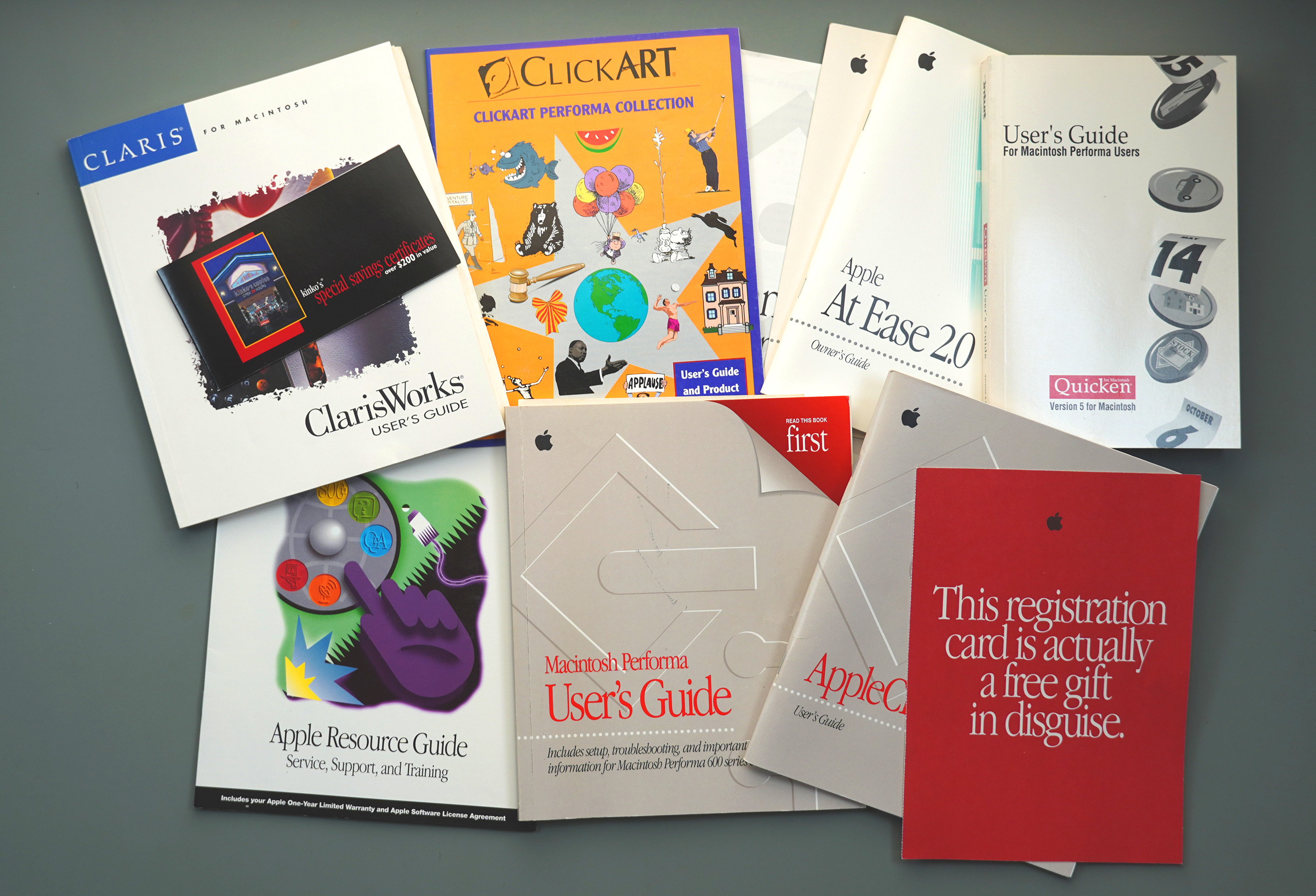
When I bought it on eBay, my Performa 631CD was advertised as having all of its original documentation and software. Given the mountain of materials in the box, I believe the seller:

Performa 631CD - Bundled DocsPerforma 631CD - Bundled CDs

That “5 A Day Adventures” title looks incredible.

BirdNote: The Peabody Ducks⇢

A while back, my buddy Mark Bramhill — yes that Mark Bramhill — was in town for work. The episode of BirdNote he was working on is now live:

Twice every day, a rapt audience gathers at the Peabody Hotel in Memphis, Tennessee to see six local celebrities: five ducks and the hotel’s head Duckmaster, Kenon Walker, who leads them in “The Duck March.” With John Philip Sousa music playing, the ducks march across a red carpet through the hotel’s lobby to a fountain. The ducks swim about the fountain until the afternoon, when the Duckmaster marches them back to their palace on the roof. People travel from all over to see this surreal local tradition.

I have lived in Memphis my whole life and even I learned a lot listening to this.

Performa Month: February 1994 Updates

In February 1994, Apple released three new Performa models. Dubbed the Macintosh Performa 575, 577, and 578, these machines were essentially a Quadra 605 in the all-in-one Performa/LC 520 case, bringing the 68LC040 CPU to the all-in-one Performa for the first time.

Here is how the three models compared in some key metrics:

Model Memory HDD Size Price
575 5 MB 250 MB $2,099
577 5 MB 250 MB $2,199
578 8 MB 320 MB $2,299

Each of these models ran at 33 MHz. This was a full 32-bit design, so both the CPU and data path were 32-bit, unlike some previous machines which were slowed down by narrower buses.

However, in true Apple-in-the-1990s fashion, there is weirdness we have to discuss. The clock input ran at 66 MHz on this version of the 68LC040, leading to some sources — including Apple’s official tech specs — to show these machines running at 66 MHz. However, that’s not true, as the CPU itself was clocked at 33 MHz.

These three machines came equipped with a new communications slot that could be equipped with an Ethernet card for users who wanted high-speed networking.

True to the Performa game plan, these computers came with numerous bundled software titles, including ClarisWorks 2.0, America Online 2.0, Microsoft Corp.’s Dinosaurs, and SoftKey International Inc.’s American Heritage Electronic Dictionary 2.0.

What’s in a Name

I think the 575, 577, and 578 really highlight the ridiculous nature of Apple’s naming scheme during this period. Like many Performas before and after the 570 series, this could have been a single computer with multiple BTO options. Today, we take for granted that a computer like the iMac can come with various RAM and SSD specifications. We understand that each option doesn’t need its own name and marketing, but Apple just wasn’t there in the 1990s.

Most consumers didn’t understand what the differences were between memory and storage, let alone how much they needed of each. Multiple model numbers made it clear where a particular computer fell into the good/better/best matrix, at least to a degree.

However, it doesn’t seem that Apple took real advantage of this scheme, according to James Staten at MacWEEK, who wrote:

According to reports, the Performa 575, 577 and 578 are similar to the Mac LC 575, which features a 33-MHz 68040 processor, built-in 14-inch Trinitron display, tray-loading internal CD-ROM drive, unidirectional microphone, stereo speakers and one LC processor direct slot.

The new models share the same logic board and enclosure but vary in their RAM and hard disk configurations.

Sources also said that each model will be earmarked for sale in different retail channels, meaning that dealers will be able to sell only one of the three models.

In the January 2 1995 edition of MacWEEK, David Ramsey revisited this topic, answering a confused reader:

This is a result of an Apple manufacturing program called Customer Directed Manufacturing, or CDM. But lest you get the wrong impression, you are not the customer Apple has in mind here.

The Performa line of Macs is designed to be sold through mass-market merchants rather than traditional computer-only stores. Mass-market merchants include consumer-electronics and appliance stores, as well as large department stores such as Sears, Roebuck and Co. CDM means that Sears can order 10,000 Performa 500-series machines built just as they want them, with memory, hard disk and installed software as specified.

This also helps stores that have price guarantees – you know, “We’ll beat anyone’s price on this exact model.” Thanks to CDM, nobody else has that exact model! In fairness to Apple, though, I should mention that it is not the only company that does this. (This shouldn’t dissuade anyone from buying Performas; their preinstalled software and bundled monitors and modems are frequently the best deals in the Mac world.)

Additionally, much of that clarification went out the window as Apple sold overlapping models and even other computers with the same number, such as the LC 575. This education-only SKU was the same as the Performa 575, but shipped with just 4 MB of RAM and with no CD-ROM drive. There was also an LC 550, powered by a Motorola 68030.

Whew.

Performa Month: The 560 ‘Money Magazine Edition’

Today we are talking about a very weird Performa, announced in early 1994. Dubbed the “Money Magazine Edition,” this 560 is unusual, even by Performa standards.

A Very 90s Partnership

Looking at the specs, there’s not much to write home about here. This machine is just another 500-series Performa, powered by a 33 MHz Motorola 68030, but there’s more to this one, as reported by MacWEEK:

Apple and Money Magazine have made a bundle that pairs Mac hardware with a selection of multimedia finance-management software.

The Performa 560 Money Magazine Edition, available while supplies last for a suggested price of $2,199, includes the same hardware as Apple’s $1,949 to $2,049 Performa 550 system: a 33-MHz 68030 CPU with 5 Mbytes of RAM, a color monitor, a 160-Mbyte hard disk, an internal CD-ROM drive, stereo speakers, an internal microphone and a fax modem.

The financial system also comes with 19 preloaded applications and CD-ROMs comprising more than $1,900 worth of software, according to the companies.

The Performa 560 Money Magazine Edition is available from Apple by calling (800) 351-6111, as well as at Circuit City and Nobody Beats the Wiz stores.1

Shockingly, photos of this ultra-rare machine can be found online, complete with a green “Money” badge:

Macintosh Performa 560 Money Magazine Edition

Just think about this for a second. Apple not only partnered with a magazine to co-brand a computer, but put the logo of that magazine on the computer. If you want to talk about things that wouldn’t happen if Steve Jobs was running the show, this should be at the top of your list.

Thanks to MacWEEK, we know what software was included:

  • ClarisWorks 2.0
  • MacLink Plus Translators
  • Quicken 4.0
  • MacInTax 1040
  • WealthBuilder 3.0
  • Personal Recordkeeper 3.0
  • WillMaker 4.0
  • After Dark Starter Edition
  • Datebook Pro
  • Touchbase Pro
  • American Heritage Dictionary, Third Edition
  • Apple Edition of America Online
  • Grolier’s Encyclopedia
  • Time Almanac 1993
  • Monopoly: World Tour Gold

In December 1994, CNN held a contest for Money Magazine readers. In it, our friend the Performa 560 shows up:

Alan Greenspan, pay attention. Peter Lynch, pull up a chair. We’d like to introduce the best personal-finance managers in the U.S.-and we figure everyone will want to take notes. Our winners accomplished their financial feats with no support staff of highly trained analysts. Not one holds an M.B.A. And the eight top-ranking contestants didn’t depend on friends in high places either (unless the postmaster in Columbiana, Ohio counts).

Nonetheless, these amazing masters of moolah, ages 28 to 78, demonstrated extraordinary abilities to the panel of judges in Money’s first annual Best Personal Finance Manager in America contest. And Mark and Lori Menges (right, with son Ryan) succeeded in impressing our judges the most.

To win, these three couples and two singles, along with 2,299 other Money readers who entered, laid out their 1993 personal finances in meticulous detail on a 41-question entry form published in our May 1994 issue. Entries were judged in five lifestyle categories-couples with no children, married parents, singles, single parents and retirees-and subjected to three rounds of scoring, including rigorous reviews by experts in investing, insurance, budgeting, taxes and retirement planning.

These eight contestants came out on top in their categories, with the Mengeses snagging the grand prize: $10,000 in cash. Each of the five category winners receives a Macintosh Performa 560 Money Magazine Edition computer loaded with 19 personal-finance and general interest software programs (total suggested retail value: $2,199).

What makes this group the champs? Simple. Given their needs and goals, these winners made the smartest, best-timed personal-finance decisions in 1993. Granted, there is always room for improvement. But overall, these eight great personal-finance wizards are solidly on course to realizing their dreams, whether it’s starting a family, building a new house, sending kids to college or enjoying a secure retirement.

No … There is Another

The 560 is the most well-known Money Magazine Edition Performa, but there’s at least one more — the 637CD Money Edition. I had no idea this particular machine existed until I came across this Reddit thread during my research. The Performa 637CD Money Magazine Edition is not listed in MacTracker, on EveryMac, LowEndMac, or apple-history.com. It pops up in a few forum posts beyond Reddit, but this thing is basically a ghost.

Then — in what must be an act of a thankful universe shining upon my work on Performa Month — one popped up on eBay.

I bought it as a way to say “You’re welcome” to the universe. It only seemed fitting. Please enjoy:

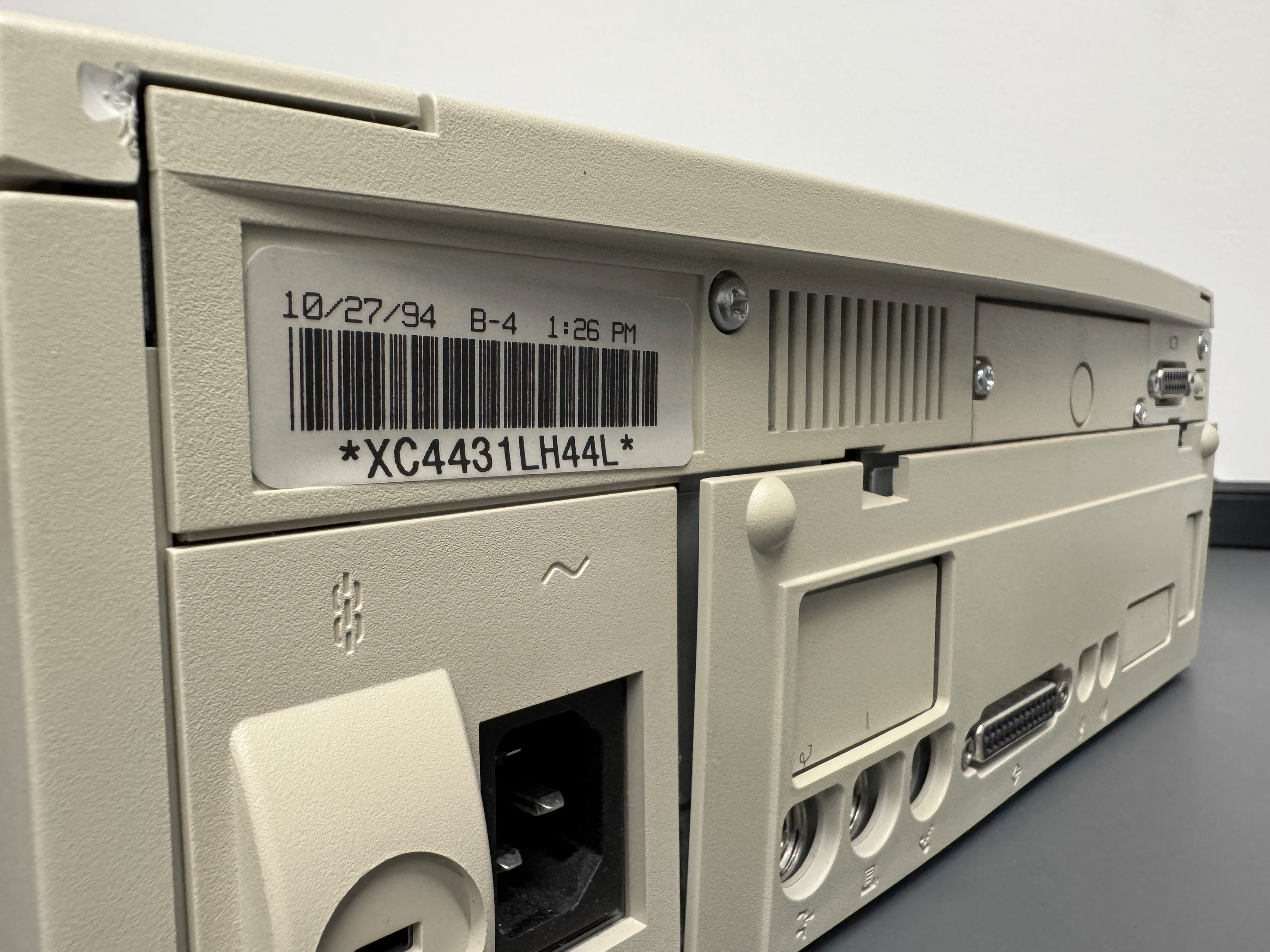
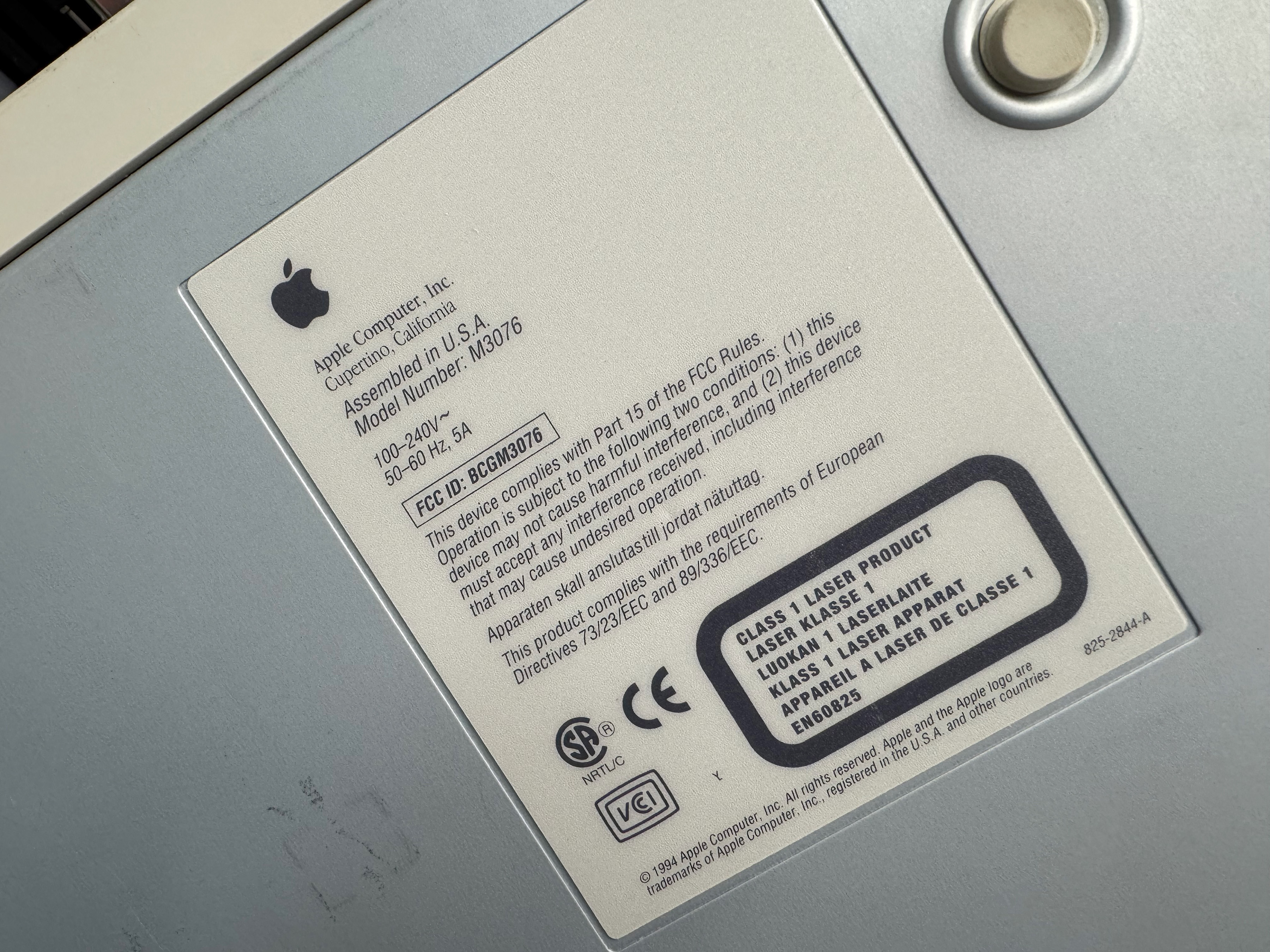
637CD Money Magazine Edition637CD Money Magazine Edition - BadgePay no attention to that janky volume button.637CD Money Magazine Edition - Serial637CD Money Magazine Edition - Product Info

There may be other Money Magazine Edition Performa models out there, but I am so, so happy to have this one in my collection.


  1. Yes that Nobody Beats the Wiz store. ↩︎