
512 Pixels
Rumor States Apple Testing New External Display with Apple Silicon Inside ⇢
For years, Mac users have wanted Apple to ship an external display that doesn’t cost an arm and a leg.
Filipe Espósito at 9to5 Mac has some good news on that front:
The new display is being developed under the codename J327, but at this point, details about technical specifications are unclear. According to sources, this display will have an Apple-made SoC, which right now is the A13 Bionic chip — the same one used in the iPhone 11 lineup.
Having an Apple silicon SoC inside the display is interesting. Espósito goes on to say that it will be used to speed up machine learning tasks and even act as an external GPU for the connected Mac:
Today’s report from 9to5Mac’s sources suggests that Apple has not given up on its plans to launch an external display with some sort of SoC, at least internally. Having a CPU/GPU built into the external display could help Macs deliver high-resolution graphics without using all the resources of the computer’s internal chip.
Apple could also combine the power of the display SoC with the Mac’s SoC to provide even more performance for running intensive graphic tasks. Another possibility is to use this SoC to add some smart features to the Pro Display XDR, such as AirPlay.
That gets this new display dangerously near Duo Dock territory, which would surprise me.
It’s possible that this A13 could just be the brains of the display, especially if it can be used as a hub for accessories. After all, the old Thunderbolt Display had a tiny computer inside, as does the Pro Display XDR.
This theory makes more sense to me than the former, especially when considering the longevity of external displays. At some point, the extra oomph something like the A13 or even M1 could add to a connected Mac would be eclipsed by the natural evolution of Mac hardware.
Connected #355: Roast my Menu Bar ⇢
Myke has questions about the Apple Watch, Stephen holds an unboxing and Federico has a new computer. Then, judging others based on the menu bar of their Mac.
On Connected Pro, we spoke about breaking up with a professional and counting words in iOS reviews.
My thanks to our sponsors:
- Squarespace: Make your next move. Enter offer code CONNECTED at checkout to get 10% off your first purchase.
- Indeed: Get a free $75 credit to upgrade your job post.
- ExpressVPN: High-Speed, Secure & Anonymous VPN Service. Get an extra three months free.
macOS Big Sur 11.5 Released ⇢
macOS Big Sur 11.5 includes the following improvements for your Mac:
- Podcasts Library tab allows you to choose to see all shows or only followed shows
This release also fixes the following issues: - Music may not update play count and last played date in your library - Smart cards may not work when logging into Mac computers with the M1 chip
As always, Mr. Macintosh has more.
Kbase Article of the Week: If Your iPhone Doesn’t Unlock Your Apple Watch After Updating to iOS 14.7 ⇢
For once, a timely support document:
When you have Unlock with iPhone turned on, unlocking your iPhone unlocks your Apple Watch as long as you’re wearing it. An issue in iOS 14.7 affects the ability of iPhone models with Touch ID to unlock Apple Watch.
If you experience this issue, just type the passcode directly on your Apple Watch to unlock it. This is required only one time, as long as you keep your Apple Watch on your wrist. If you forgot your passcode, you need to reset your Apple Watch.
This issue will be addressed in an upcoming software update.
Alfred & Reminders ⇢
If you use Alfred and Reminders, Robb Knight has some good news for you.
The Meaning of ‘Performa’
These are the two most interesting tweets about the Macintosh Performa … maybe ever.
Think it’s possible that the Macintosh Performa name was a portmanteau of performance and the Latin “pro forma?” I never made this connection before. pic.twitter.com/QJlC9q2owa
— Michael Steeber (@MichaelSteeber) July 18, 2021
The Performa debuted three years after Andy spun out with General Magic, and he wouldn’t have been involved in hardware product line naming anyway. “Performa” was intended to evoke performance, both computational and artistic. The Latin phrase had nothing to do with it.
— Chris Espinosa (@cdespinosa) July 18, 2021
Sponsor: TextExpander from Smile ⇢
TextExpander removes the repetition out of work so you can focus on what matters most. You can say goodbye to repetitive text entry, spelling and message errors, and trying to remember the right thing to say.
When you use TextExpander, you can say the right thing in just a few keystrokes. Snippets allow you to maximize your time by getting rid of the repetitive things you type while still customizing and personalizing your messages.
TextExpander can be used on any platform, in any app, anywhere you type. Learn more and get 20% off your first year for being a reader of 512 Pixels.
2001 Revisited: Macworld New York
In my series 2001 Revisited, I’m covering Apple’s major announcements from 20 years ago. On July 18, 2001, Steve Jobs presented the keynote at Macworld New York, less than two months after WWDC 2001.
Retail Update
This event took place a couple of months after the first two Apple Stores opened, and Jobs seemed eager to show photos of them off before announcing four new stores:
- Willow Bend in Dallas, TX, which closed in 2019
- Mall of America in Minneapolis, MN
- Woodfield in Chicago, IL
- Northshore in Boston, MA, which moved locations in 2016
This would bring the total number of Apple Stores to six, with a goal of 25 being set for the end of 2001. To share his excitement about this, Jobs ran a video showing off the concept.
Mac OS X
Next, Jobs turned to Mac OS X, which had been on the market for a mere 116 days at the time of this keynote.1 He said that while Apple was still in the early days of the transition away from the classic Mac OS, there were many signs that the young operating system was doing well:
- Over 1,000 native Mac OS X apps shipping
- 29% of Mac developers were targeting OS X in a release due within three months of WWDC
- 55% of them were planning releases for OS X by December 2001
Jobs went on to talk about “10 on X,” a collection of ten great apps that were coming soon to Mac OS X. These included some major names, including titles from Macromedia, Adobe and Microsoft.2
Demos of these applications took up a big chunk of time in the keynote, but when they were done, Jobs moved on to talk about OS X itself.
He lauded the operating system’s progress, with four updates being pushed to version 10.0 since its launch. These updates has patched bugs and added features such as support for burning CDs in iTunes.
These were minor updates, ticking the version number up to 10.0.4 by the time Macworld New York rolled around. What was next, Jobs said, was a major update.
Mac OS X 10.1 Preview
Jobs then went on to preview Mac OS X 10.1 Puma:
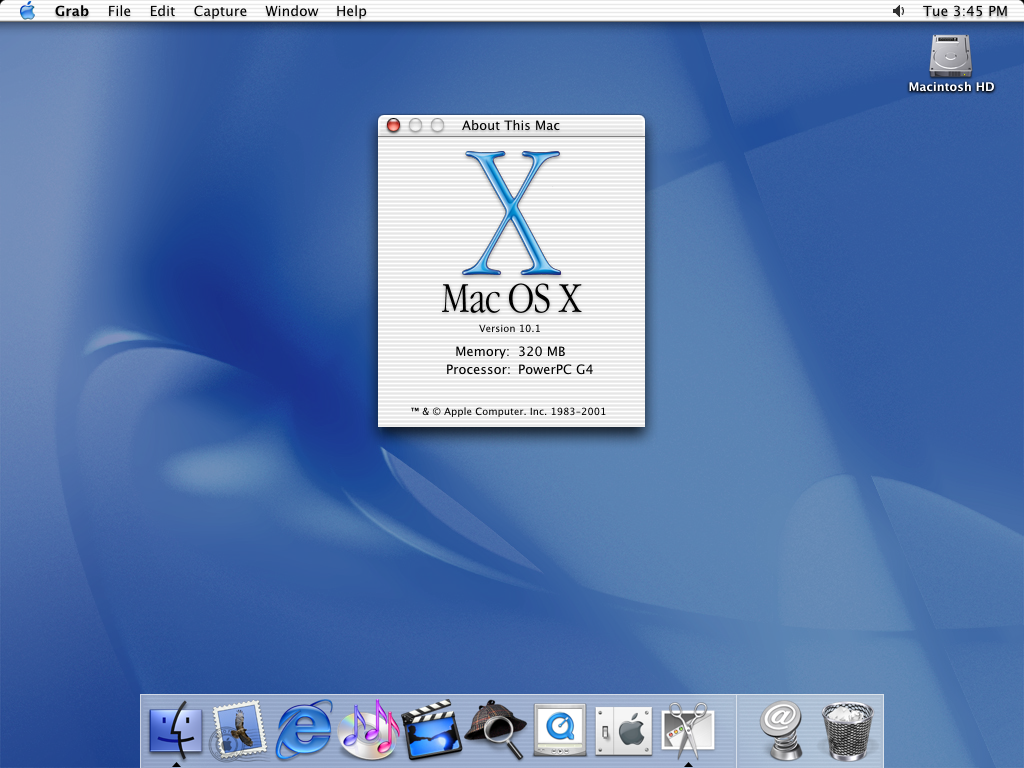
I will write more fully about Puma this fall when the 20th anniversary of its release rolls around, but what Jobs showed off was a more refined, feature-complete version of Mac OS X.
10.1 was focused on performance, something that plagued OS X in those early days. If you haven’t read John Siracusa’s review of 10.0 in a decade or two, this section really shows how slow OS X could be.
Aqua, the Mac’s new user interface, got big updates as well, with a Dock that could be placed on the side of the screen, alongside other options for customization.3
iTunes would be bundled with the OS, as well as support for DVD playback. Finder gained the ability to burn CDs, and a new application named Image Capture made grabbing pictures off of digital cameras a whole lot easier.
(The demo for that didn’t go super well.)
Mac OS X 10.1 would ship in the fall of 2001, as would iDVD 2, also previewed at the show. The big feature was the ability to use video for the background of menus or buttons.
Mac Hardware
Jobs opened the hardware section of the keynote talking about the new iBook G3, which had been introduced on May 1. He reported that the iBook was already a huge hit, both with reviewers and customers, with 182,000 models already sold, overwhelming Apple’s production abilities.

The Titanium PowerBook also got a mention, with Jobs rattling off praise for the machine from the tech press. I liked this quote from Hiawatha Bray from The Boston Globe in particular:
“If you could take just one laptop with you on a desert island, this would be the one.”
Up next was the iMac, with three new models being announced at 500, 600 and 700 MHz. You can read all about these iMacs over here, but the gist is that the new machines were faster and more capable than ever, even as the finishes of Indigo, Graphite and Snow were more mature than the outgoing models.
The “Quicksilver” Power Mac G4 was the next announcement. Personally, I think this is the best looking G4 tower:
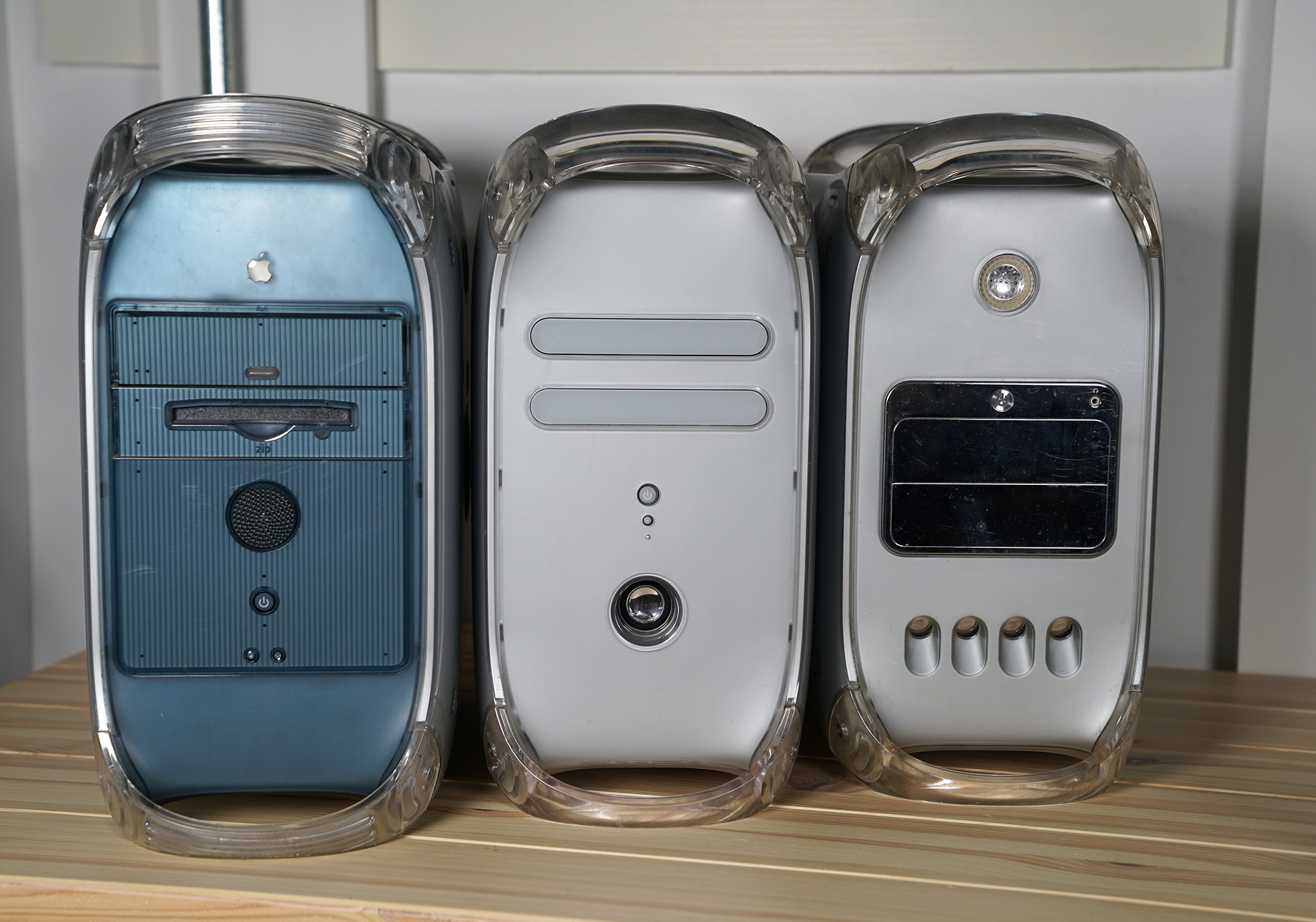
(It’s the classy one in the middle.)
This was more than just a fresh coat of polycarbonate. Inside the Power Mac was a nice jump up from the previous model. As with the iMac, Apple had three new models for sale:
| 733 MHz | 867 MHz | Dual 800 MHz | |
|---|---|---|---|
| RAM: | 128 MB | 128 MB | 256 MB |
| HDD: | 40 GB | 60 GB | 80 GB |
| GPU: | GeForce2 | GeForce2 | Dual Display |
| Optical: | CD-RW | SuperDrive | SuperDrive |
| Price: | $1,699 | $2,499 | $3,499 |
The previous generation topped out at 733 MHz, and the SuperDrive had been only available in the most expensive model.
(Years later, the Dual 800 MHz Quicksilver would be the center of a small storm when it came to Mac OS X Leopard’s system requirements, which stated a 867 MHz G4 or faster was required. Customers with a Dual 800 MHz machine were stuck on OS X Tiger, or forced to look for ways to trick Leopard’s installer.)
After it was announced, the new G4 was pitted against an Intel Pentium that was clocked much higher. As was the case in all of these shootout segments, Apple showed the PowerPC was competitive with the best Intel had to offer, despite what the numbers on the box may have suggested. This time, Jon Rubinstein got roped into things to explain why the G4 was better than what else was on the market.
After reminding the crowd of Apple’s display lineup for these new towers, a promotional video for the new G4 played:
Wrapping Up
Macworld New York 2001 wasn’t the most impactful event of 2001, but I was surprised to see just how much Apple managed to announce so close to that year’s WWDC. 2001 really was a busy year.
-
It’s now been 7,421 days, in case you were wondering. ↩︎
-
Quark was on the list as well, but the first version of QuarkXPress that would support Mac OS wouldn’t ship until 2003, much to the disappoint of the high school version of yours truly. ↩︎
-
If you haven’t seen screenshots of it, I’ve got you covered. ↩︎
14 Days ⇢
We’re halfway through the Kickstarter campaign for my 2022 Apple Hardware Calendar and I could not be more thrilled by the results so far: over 800 backers so far. If you haven’t checked it out, I would love for you to consider pledging.
The Print Shop Club ⇢
Need to run an emulated Apple II in a browser to run The Print Shop to make some PDFs? This website is for you.
Automattic Buys Pocket Casts ⇢
We’re excited to announce that Pocket Casts will be joining Automattic, the parent company of WordPress.com. More than 80M people in the US listen to a podcast weekly, and this critically acclaimed podcast app makes it easier for fans to discover podcasts and customize their listening experience. Pocket Casts has been recognized by The New York Times, WIRED, The Verge, and other top publications for its exquisite design and user-friendly features.
As part of Automattic, Pocket Casts will continue to provide you with the features needed to enjoy your favorite podcasts (or find something new). We will explore building deep integrations with WordPress.com and Pocket Casts, making it easier to distribute and listen to podcasts. We’re thrilled that we can continue to give our users a multitude of ways to tell and engage with stories that matter.
Co-founders Russell Ivanovic and Philip Simpson will continue to lead Pocket Casts as part of Automattic.
I’m glad Russell and Philip are staying on. While I don’t know what “deep integrations with WordPress.com and Pocket Casts” may look like, I think this is good news for the podcast player.