Mac Power Users 804: From NeXT to Liquid Glass, with Ken Case

This week on the podcast:

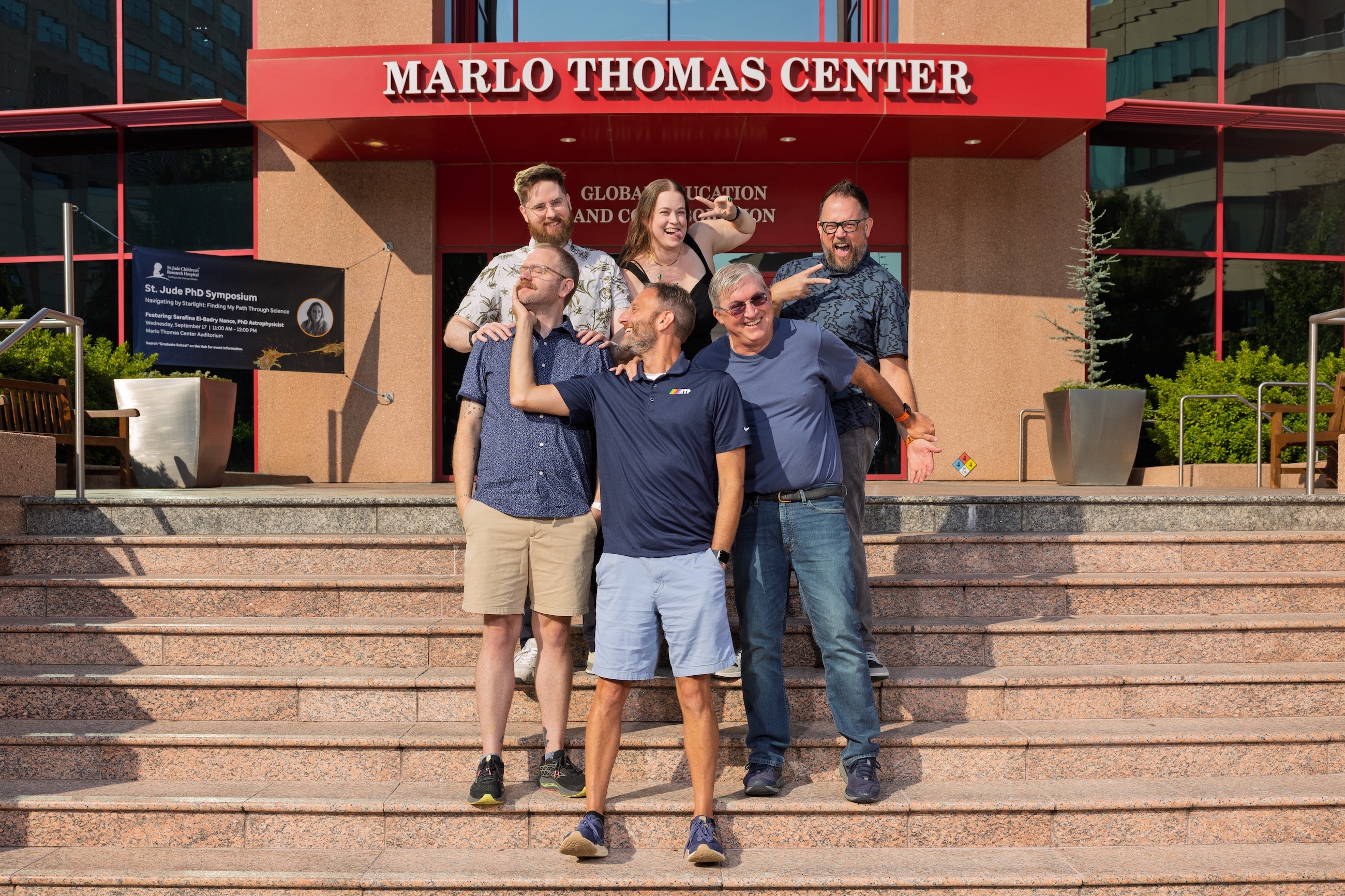
Ken Case is the CEO at The Omni Group and has been developing for Apple platforms for decades. He shares with Stephen and David how he got his start in technology, what Apple gear he uses, his approach to customer communication, and his thoughts on WWDC.

On More Power Users, we chatted with Ken about managing applications across software and platform transitions.

This one was a lot of fun.

‘Memphis Community Against Pollution’ Launching Air Quality Tests as xAI Granted Air Emissions Permit

Joseph Mangin, at The Daily Memphian:

The nonprofit announced plans to install two different models of air-quality sensors in the Memphis area with a focus on the 38109 ZIP code, which includes Boxtown, where the press conference was held.

MCAP’s Wednesday event follows air-quality testing carried out by the City of Memphis. The testing was a response to concerns about pollutants stemming from xAI’s supercomputer.

That testing showed no dangerous pollution, but concerns were raised over the testing protocol used.

Back to Mangin:

He said while the Shelby County Health Department was supporting the initiative, both the city and county governments have yet to provide funds.

This news comes the same that day xAI was granted an air emissions permit (PDF here) for 15 turbines at its first Memphis site, as Samuel Hardiman reports:

The Shelby County Health Department has granted xAI an air emissions permit to operate 15 natural gas turbines as a backup power source for its Southwest Memphis data center.

The health department posted the permit on its website on Wednesday, July 2. The permit is effective as of Wednesday and expires on Jan. 2, 2027.
The air emissions permit was granted despite widespread community opposition to the turbines. The health department received more than 1,000 public comments on the project.

These turbines have been running for over 300 days while xAI waited on the permit.

xAI commented, via a provided statement:

xAI welcomes today’s decision by the Shelby County Health Department. Our onsite power generation will be equipped with state-of-the-art emissions control technology, making this facility the lowest emitting of its kind in the country. We look forward to being a valued partner to the Memphis Community for years to come.

There is evidence that more turbines than this 15 are spinning, and that xAI will use additional turbines at its second site. A month ago, the Shelby County Health Department responded to that evidence, which was spearheaded by the Southern Environmental Law Center (SELC). In a letter dated June 2, the department wrote:

The majority of the SELC comments focus primarily on the temporary turbine engines that will soon be removed from the site, not the permanent turbines associated with the air construction permit. SELC asserts in varying degrees that granting the air construction permit will improperly allow the temporary turbine engines on site to continue operating indefinitely. The draft permit under review will ensure that CTC will be authorized to construct and operate only 15 permanent turbines at the facility.

I have asked xAI for any new comment concerning additional turbines beyond the 15 covered by today’s permit, and will report back if they get back with me.

Snell, on That A18 Pro MacBook Rumor

Writing at Six Colors:

The A18 Pro is 46% faster than the M1 in single-core tasks, and almost identical to the M1 on multi-core and graphics tasks. If you wanted to get rid of the M1 MacBook Air but have decided that even today, its performance characteristics make it perfectly suitable as a low-cost Mac laptop, building a new model on the A18 Pro would not be a bad move. It wouldn’t have Thunderbolt, only USB-C, but that’s not a dealbreaker on a cheap laptop. It might re-use parts from the M1 Air, including the display.

I like that Apple sells a laptop at $649, and I think Apple likes it, too.

Thoughts on a Possible Low-End MacBook Powered by the A18 Pro

Ming-Chi Kuo is back with a new report, this time concerning a new MacBook Apple is apparently working on behind the scenes:

  • Expected to enter mass production in late 4Q25 or early 1Q26, with an approximately 13-inch display and powered by the A18 Pro processor. Potential casing colors include silver, blue, pink, and yellow

  • Apple aims to return total MacBook shipments to the COVID-19 peak of around 25 million units in 2026 (vs. an estimated 20 million units in 2025). The more-affordable MacBook is projected to account for 5–7 million units for 2026.

I don’t see any reason why a low-end MacBook couldn’t be powered by the A18 Pro, the chip inside the iPhone 16 Pro. Inside, it has:

  • A 6‑core CPU with 2 performance and 4 efficiency cores
  • A 6‑core GPU
  • A 16‑core Neural Engine

Here’s how Apple hyped the chip in the iPhone 16 Pro press release last year:

The new A18 Pro chip is designed with industry-leading compute power to propel Apple Intelligence, ushering in a new era of pro performance. Built with second-generation 3-nanometer technology and featuring a new architecture with smaller, faster transistors, A18 Pro delivers unprecedented efficiency. The new 16-core Neural Engine is faster and more efficient than the previous generation, powering remarkable on-device performance for Apple Intelligence. A 17 percent increase in total system memory bandwidth — the highest ever in iPhone — enables faster experiences when using Writing Tools and Image Playground, and helps deliver astounding graphics. The bandwidth increase also benefits the 6-core GPU, which is up to 20 percent faster than the previous generation, driving graphics rendering for Apple Intelligence and stunning visuals for gaming. Hardware-accelerated ray tracing gets up to 2x faster for even more realistic light sources and reflections, and Game Mode in iOS 18 unlocks more consistent frame rates while making AirPods, game controllers, and other wireless accessories incredibly responsive. A new 6-core CPU is the fastest in a smartphone, with two performance cores and four efficiency cores that can run the same workload as the previous generation 15 percent faster while using 20 percent less power. Next-generation ML accelerators are optimized for Apple Intelligence, and save power by handling high-efficiency, high-throughput, and low-latency computations on the CPU without engaging the Neural Engine.

The immediate downside to the A18 Pro is that it only supports USB 3 at 10 Gb/s, not Thunderbolt. This would make any Mac with an A18 at its heart only capable of USB-C. I think that’s fine on a low-end Mac, but it could cause confusion for some customers.

We’ve been down this road before, with the 2015-2017 MacBook. It’s design pushed the envelope in new ways, with a 12-inch Retina display, a cursed an ultra-thin keyboard, and a single USB-C port. Coupled with a low-end Intel CPU at the time, it was pretty slow, but loved by many:

Single-port MacBook

That MacBook shipped at a time when the MacBook Air was on the ropes. Apple wasn’t updating it in any meaningful way, possibly hoping users would spring for a more expensive MacBook or the two-port MacBook Pro without the Touch Bar. Thankfully all of that got sorted out in 2018 with the Retina MacBook Air the and the cancellation of the MacBook, but things were messy in the Mac line for years.

Beyond its neglect of the MacBook Air, Apple didn’t make things any easier by having the MacBook and the entry-level MacBook Pro share overlapping price points. If you had $1,200-$1,400 to spend on a new laptop, you had too many options and none of them were great, and I don’t think Apple will repeat that pricing mistake.

Kuo himself reports that this machine is designed to be more affordable, so I expect it would slot in below the M4 MacBook Air’s starting price point of $999. Apple already has a machine that sells for less; the M1 MacBook Air can still be purchased through Walmart for $699 or less.

I don’t think we’re going to see the same confusion we did between the old MacBook Air, the 12-inch MacBook, and the entry-level MacBook Pro that we suffered through a decade ago.

The M1 Air won’t stick around forever, and I can see a cheaper, USB-C-only MacBook powered by an A Series chip slotting into that low-end price point nicely. Apple could distinguish it from the Air with colorful finishes, like it does the entry-level iPad. A 13-inch display would make it viable for more users, and with an update every few years, it could offer great value for those who don’t need — or can’t afford — a MacBook Air. I know some folks want Apple to release a 12-inch laptop, but I’m not sure that makes sense for a product like this.

I’m excited about this rumor, and it seems that there is now concrete evidence behind it, according to Hartley Charlton:

MacRumors can now reveal that it first spotted evidence of such a device in backend code related to Apple Intelligence last summer, and subsequently confirmed its use of the A18 Pro chip. The machine features the identifier “Mac17,1.”

Now we just need to see if Apple ships an orange one.

Sponsor: Godspeed, A Fast, 100% Keyboard-Oriented Task Manager

Godspeed is a task manager built with two priorities in mind: speed and 100% keyboard orientation.

Every action in Godspeed can be done from your keyboard and will respond instantly. It’s like Superhuman for your to-do list.

Godspeed

Godspeed comes with all the features you need from your task manager, and a few you wouldn’t expect: full offline support, attachments, shared lists, end-to-end encryption, task creation via email, calendar integration, mobile and web apps, custom macros, and more.

They are so serious about keyboard orientation they even built Hardcore Mode, which completely disables your mouse.

Available for macOS, iOS, and web.

Godspeed offers an unrestricted 2-week free trial. Then use coupon code 512PIXELS to get 25% off your first year.

Some Random Blog Numbers

The other day, my buddy Joe Rossignol wrote this on Threads:

Looks like I surpassed 8,000 blog posts at MacRumors recently.

My typed word count has probably well exceeded 2 million.

Sheesh.

That got me wondering about my own output, so here are some random stats:

  • Including this article, there are 11,337 posts on 512 Pixels, published over the course of nearly 17 years.
  • I have published 1,655,996 words across the previous 11,336 posts.
  • The XML export of those posts is 43.2 MB in size.
  • I don’t expose them on the website, but 51 different categories are in use, and every article is in at least one of them.
  • There are 55 pages on the site. There are another 20,981 words in total across those pages.
  • There are 5,396 items in the site’s media library within WordPress.
  • In the last three years, my macOS wallpapers page has been visited over a million times.
  • In the same time frame, the largest referrals of traffic to the blog have been Hacker News, Daring Fireball, and Flipboard. That last one surprised me.

The Blue Screen of Death is Going Away

Tom Warren has the details:

The Blue Screen of Death (BSOD) has held strong in Windows for nearly 40 years, but that’s about to change. Microsoft revealed earlier this year that it was overhauling its BSOD error message in Windows 11, and the company has now confirmed that it will soon be known as the Black Screen of Death. The new design drops the traditional blue color, frowning face, and QR code in favor of a simplified black screen.

The simplified BSOD looks a lot more like the black screen you’d see during a Windows update. But it will list the stop code and faulty system driver that you wouldn’t always see during a crash dump. IT admins shouldn’t need to pull crash dumps off PCs and analyze them with tools like WinDbg just to find out what could be causing issues.

His post includes an example of the new Black Screen of Death:

New BSOD

For years, Apple has used a beige CRT with a Blue Screen of Death on it to show “generic PCs” on the user’s local network:

Generic PC

This will be the true end of an era.

Connected 558: A Podcast Drive-Thru

This week on the podcast: Federico has been experimenting with KVMs, I have been fixing macOS between dreams, and Myke finally experienced iOS 26. After those conversations, we turned to a list of questions from listeners about WWDC, Apple’s app strategy, and more.

On Connected Pro, we had Federico judge some American “pizza” and then discussed Apple’s sending of promotional notifications. Connected Pro is the longer, ad-free version of the show for just $7/month.

The City of Memphis Conducted Air Quality Tests in Response to Community Concerns Over xAI

After months of reporting and community concern, the city of Memphis has released its findings of air quality testing that took place near xAI’s two data centers. The PDF of those results can be seen here, and for more, we turn to Samuel Hardiman:

The city tested at Macedonia Missionary Baptist in Boxtown, which is near xAI’s first Memphis data center; The Links at Whitehaven, located near xAI’s second Memphis data center, and City Hall. Both xAI facilities as well as the nearby locations tested are also close to the Tennessee Valley Authority’s natural gas plants, which also emit pollutants.

There are no air-monitoring stations anywhere near either xAI facility, so it is not clear how air-quality levels have changed in time and what the levels of chemicals were before xAI arrived in Memphis. The results are for just two days: June 13 and 16.

In a press release, the city outlined the results:

The testing was conducted by an independent, accredited laboratory and targeted key pollutants known to impact public health, including benzene, toluene, formaldehyde, nitrogen dioxide, sulfur dioxide, carbon monoxide, and particulate matter.

The findings were definitive and reassuring.

At every site and for every pollutant tested, levels were either too low to detect or well below established safety thresholds. Only one sample – formaldehyde at City Hall on June 13 – slightly exceeded the lab’s Limit of Quantitation (LOQ), yet even that result remained far beneath any level of health concern.

City officials emphasized that while this initial data provides important insight, it represents only a snapshot in time. Continued monitoring is planned, and future results will be made publicly available.

(Emphasized text quoted as it appears in the original post.)

This testing was clearly limited in scope, but is encouraging. In a statement released to press outlets — including 512 Pixels — xAI said:

xAI welcomes the independent third-party data showing no dangerous pollutant levels at test sites near our Memphis data center. We have built a world-class data center in Memphis and we couldn’t have done it without the support of the local community and its leaders.

The Southern Environmental Law Center, which is preparing to sue xAI, pushed back on the results, according to Hardiman:

Not everyone welcomed the results. SELC said the city’s release of the results was misleading and failed to take into account some smog-causing chemicals the city tested in nearly enclosed spaces and didn’t take wind into account.

“The city’s flawed air quality analysis creates a misleading narrative that serves as a distraction from the air pollution problems that Memphians face every day,” SELC’s Patrick Anderson said in a statement.

I hope that the city — and other groups — continue to test air quality around all of the data centers that are springing up around the “Digital Delta.” This will continue to be an important issue, especially once xAI’s massive second site comes online.

Pushing Tahoe’s Finder Icon Even Further

John Gruber, responding to my article celebrating Tahoe Beta 2’s new Finder icon:

I’m going to strongly disagree here. The Tahoe beta 2 Finder icon is slightly better, but seeing it this way makes it obvious that the problem with the Tahoe Finder icon isn’t whether it’s dark/light or light/dark from left to right. It’s that with this Tahoe design it’s not 50/50. It’s the appliqué — the right side (the face in profile) looks like something stuck on top of a blue face tile. That’s not the Finder logo.

The Finder logo is the Mac logo. The Macintosh is the platform that held Apple together when, by all rights, the company should have fallen apart. It’s a great logo, period, and the second-most-important logo Apple owns, after the Apple logo itself.

Reading through the articles (and the replies to those articles) about Beta 2’s icon, I realize I may be in the minority in liking the current icon:

Finder in Beta 2

I see what John and others are saying, though: Beta 2’s icon does break the meaning of the Finder icon. My assumption from the start of all of this is that Apple wasn’t going to go back to previous look with the lighter color going all the way to the edges of the icon, so I had written that off as a possibility.

If Apple does want to align the new new Finder icon with its history even more, they should mimic Michael Flarup’s design that John linked to:

Flarup's Finder Icon

(I also like Louie Mantia’s example that returns some purple to the icon.)

I don’t know if Apple is going to revise Tahoe’s Finder icon again. I would happy if they do, but I am also okay if they don’t. The appliqué design fits pretty well with what Apple is doing with Liquid Glass, and the colors being on the correct side was the biggest sin of the original Tahoe design.

Revisiting the Aqua Introduction

In the wake of Apple’s Liquid Glass announcements at WWDC, I took some time and rewatched the Macworld San Francisco Keynote from 2000, when Steve Jobs introduced the world to the Aqua user interface:

Here’s how Apple PR wrote about it at the time:

“Mac OS X will delight consumers with its simplicity and amaze professionals with its power,” said Steve Jobs, Apple’s iCEO. “Apple’s innovation is leading the way in personal computer operating systems once again.”

The new technology Aqua, created by Apple, is a major advancement in personal computer user interfaces. Aqua features the “Dock” — a revolutionary new way to organize everything from applications and documents to web sites and streaming video. Aqua also features a completely new Finder which dramatically simplifies the storing, organizing and retrieving of files—and unifies these functions on the host computer and across local area networks and the Internet. Aqua offers a stunning new visual appearance, with luminous and semi-transparent elements such as buttons, scroll bars and windows, and features fluid animation to enhance the user’s experience. Aqua is a major advancement in personal computer user interfaces, from the same company that started it all in 1984 with the original Macintosh.

On the page for the OS X Public Beta, Apple wrote:

The Aqua interface brings your Mac to life with color, depth, translucence and fluid motion — and keeps you on top of things with continuous visual feedback.

If you’ve never seen the early versions of Mac OS X, I have a whole collection of screenshots for your enjoyment.

Here are a couple of Apple’s press images from the release of Mac OS X:

Mac OS X

Mac OS X

By the time OS X actually shipped a year after Aqua’s introduction, Apple had made some changes to the interface, including an updated Dock.

Liquid Glass feels like it harkens back to this era, but it is amazing how well Aqua has held up over time. The overall structure of OS X’s user interface is basically intact today, some two and a half decades later. The Dock, menu bar, and the various views in Finder are all still here today. They have evolved over the last 25 years, but not as much as you might have thought they would back in 2000.

Beyond the sheer consistency of the Mac’s interface, what really struck me about this video is how relatable it all feels. Steve Jobs is clearly proud of the work his team had done, but his comments are about how their work was going to make users’ lives better. They took what was great about the Mac’s previous interface and married it with what was great about OPENSTEP, all with a new look and feel. There was a reason for everything, even it was just because something was cool.

Jobs was at his best in these moments, and while I like a lot about Liquid Glass, it’s hard to argue that its introduction holds a candle to Aqua’s.

In this video, Alan Dye explains a lot about how the new design works, but is light on the why. I think part of it is the pace. The video is less than four a half minutes long. Nothing has any room to breathe, and at no point does Dye show any emotion about the work.

This all makes me miss live keynotes. I know Apple likes the control it has over pre-recorded introductions, but its announcements deserve live demos, off-the-cuff remarks, and the humanity that was once more prevalent at things like WWDC or iPhone introductions.