512 Pixels

36 Seconds ⇢

Shelly Brisbin has published an audio documentary about accessibility and the iPhone:

From the moment Steve Jobs announced it in 2007, anticipation for the first iPhone was off the charts. And when it shipped? Customers lined up around their local Apple stores; some arriving days before the phones could be bought.

But the hype and hysteria left one group of cell phone users out – if you had a disability, the new hotness was just a cold, unresponsive rectangle of plastic and glass.

This is the story of how that changed in June of 2009, and what it has meant to people who are blind, have a hearing disability, or experience motor delays.

I started it this morning and can’t wait to wrap it up this evening.

On the Mac Pro, the G4 Cube and Their Shared Vent Design

In a recent episode of ATP, the guys spoke about a conversation that was overheard at WWDC between Tim Cook and Jony Ive that included an interesting detail of the holes in the front and back of the new Mac Pro:

Then there’s video Marco posted on Twitter, in which Ive appears to compare the opening of the Mac Pro to the Cube:

Well, I was in the right place at the right time. pic.twitter.com/9ib25nwbOL

— Marco Arment (@marcoarment) June 3, 2019

In short, it seems that the vents on the new machine came from a design rooted in the era of the G4 Cube, nearly 20 years ago. There was speculation that a different route was taken due to cost.

As you can see in this image by John Siracusa, the openings on the new Mac Pro are quite complex and probably expensive to manufacture:

Here’s how Apple describes this design:

The lattice pattern on the Mac Pro is based on a naturally occurring phenomenon in molecular crystal structures. A network of three-dimensional interlocking hemispheres, it increases the surface area, optimizing airflow and structural rigidity.

To create the structure, a spherical array is machines onto the internal and external surfaces of the aluminum. The result is a lightweight lattice pattern that maximizes airflow while creating an extremely rigid structure.

This video on Apple’s website shows it well:

Here’s where the G4 Cube comes in. This morning, I saw a tweet from Huxley Dunsany, complete with a macro shot of the underside of the Cube:

Big tip of the virtual hat to @68kMLA member jessenator for catching this: the “new” multi-layered grill design of the 2019 #MacPro actually debuted on the PowerMac G4 Cube in 2000! Check out this close-up shot of the underside of the Cube @apple @arstechnica @ismh #MacPro2019 pic.twitter.com/7w9Vb1RyYE

— Huxley Dunsany (@Huxley_D) June 18, 2019

From the bottom, these vents do look very much like what’s on the Mac Pro, perhaps the subject of the comments between Ive and Cook.

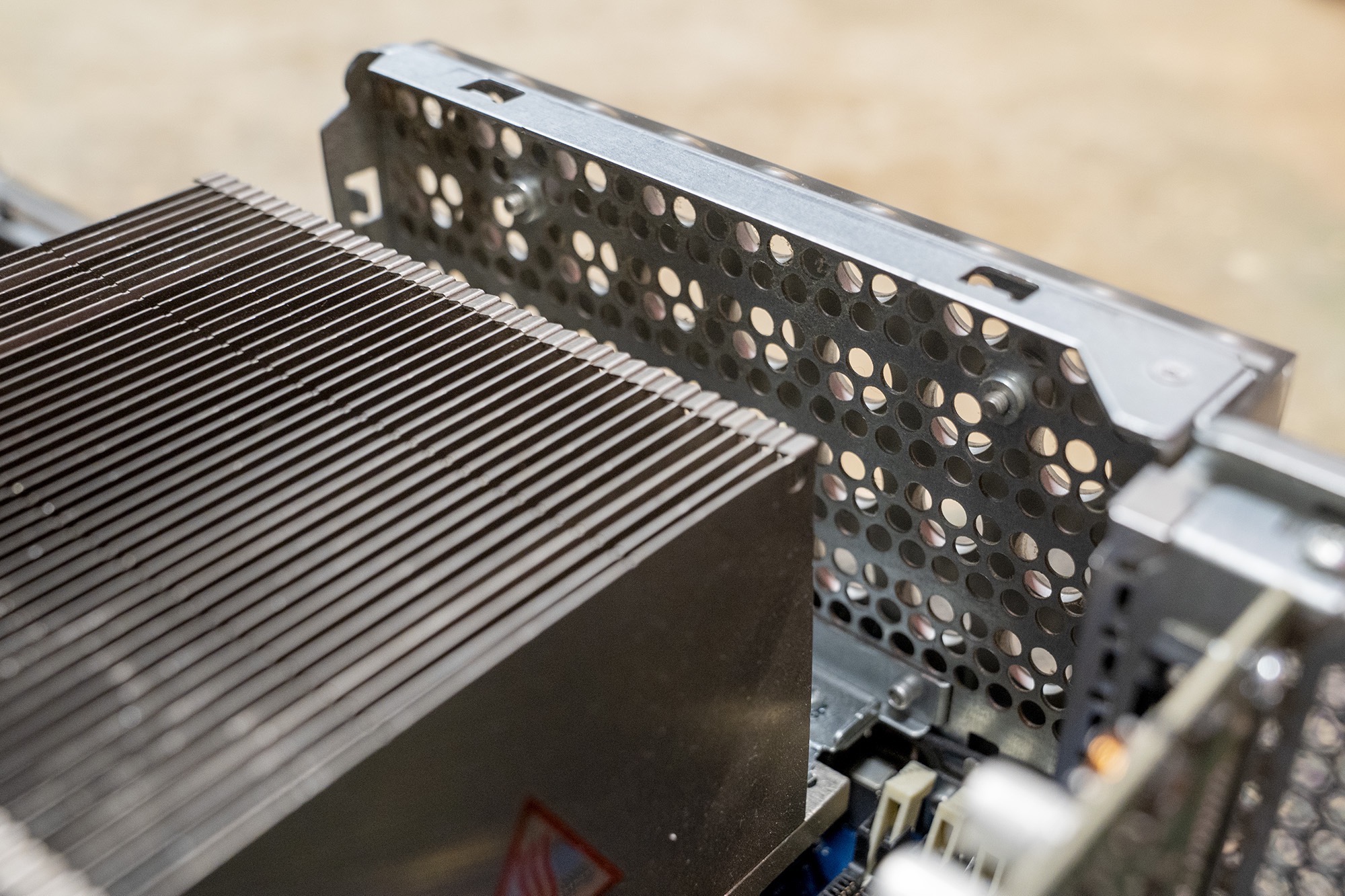
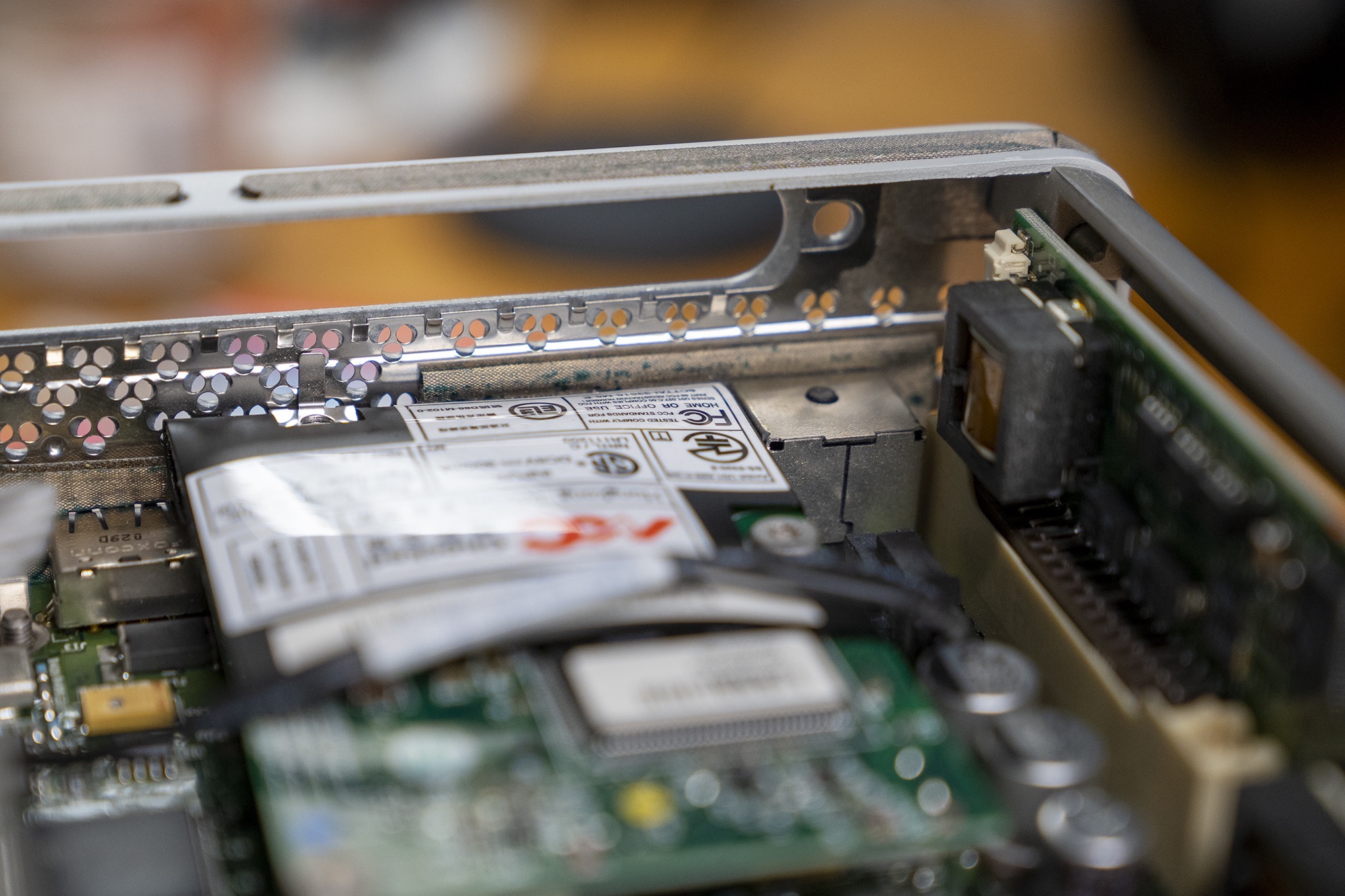
As I have a G4 Cube in my collection, I decided to do have a closer look. I pulled the core out of mine and removed the video card to take a closer look at this area from the back:

While the design from the outside is very similar to the Mac Pro, to my eye, it is not quite the same. The new machines uses hemispherical cuts, while the design on the Cube is created by two overlapping flat components. There are no fancy hemispherical cuts here.

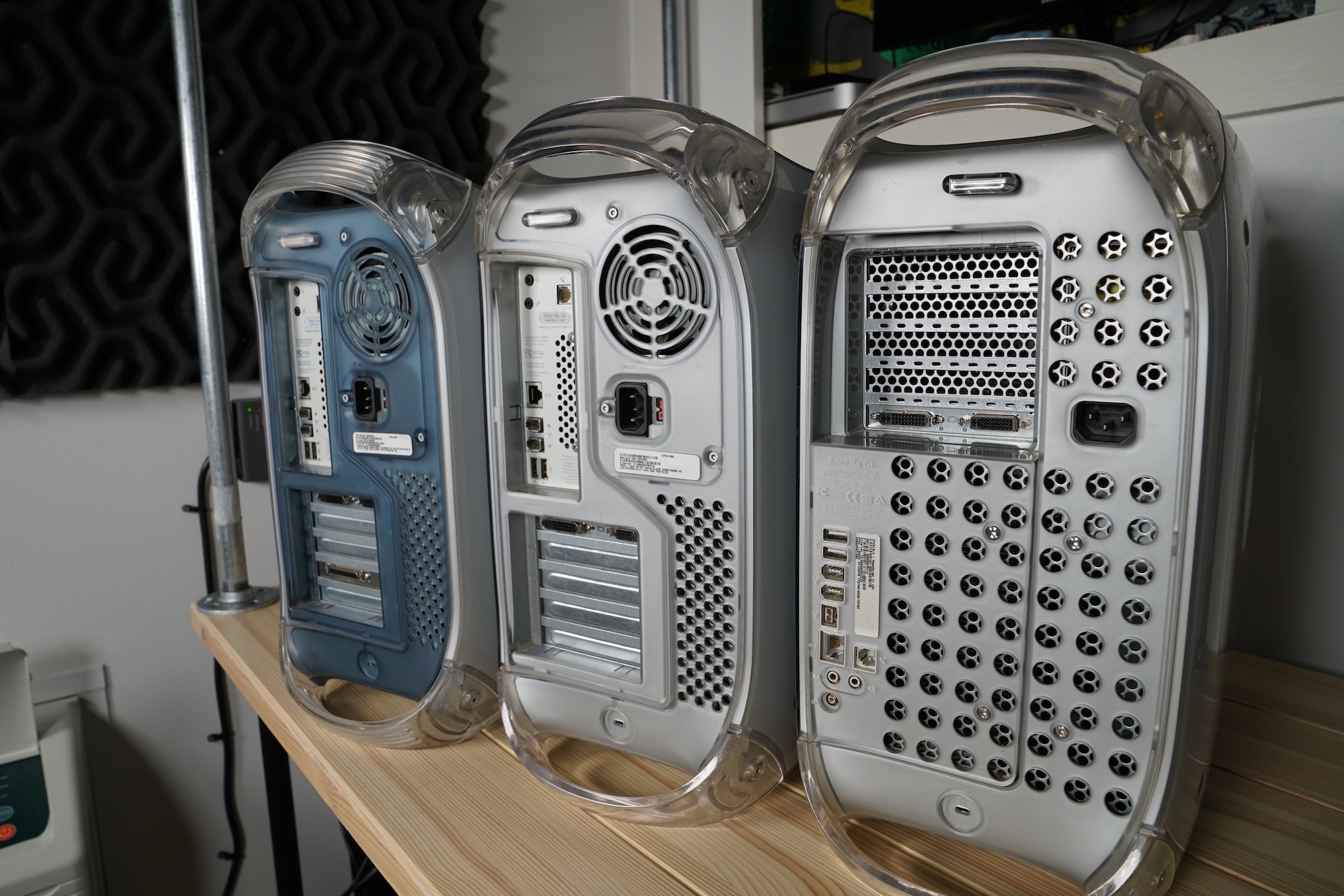
The vents in the rear of the PowerMac G4 (Mirrored Drive Doors) are constructed in a similar fashion, just with much bigger openings, as you can see on the right of this photo:

And from inside the machine:

No fancy hemispherical cuts here, either; just two sets of flat, off-set holes.

Apple may have been playing with what would become the vents on the new Mac Pro nearly 20 years ago, but the construction of them seems to be all-new.

Ungeniused #81: High Fives ⇢

This week on Ungeniused:

High fives can be used as a rad greeting or a sick burn, and they can even help you keep from getting sick.

This may be my favorite episode of Ungeniused in quite a while. Don’t miss the “up high; down low” segment.

My thanks to our sponsor:

  • Moo: Custom business printing and design. Use promo code PRINTMOO for 15% off, when you spend $50 or more.

Syncing an iPod with macOS Catalina

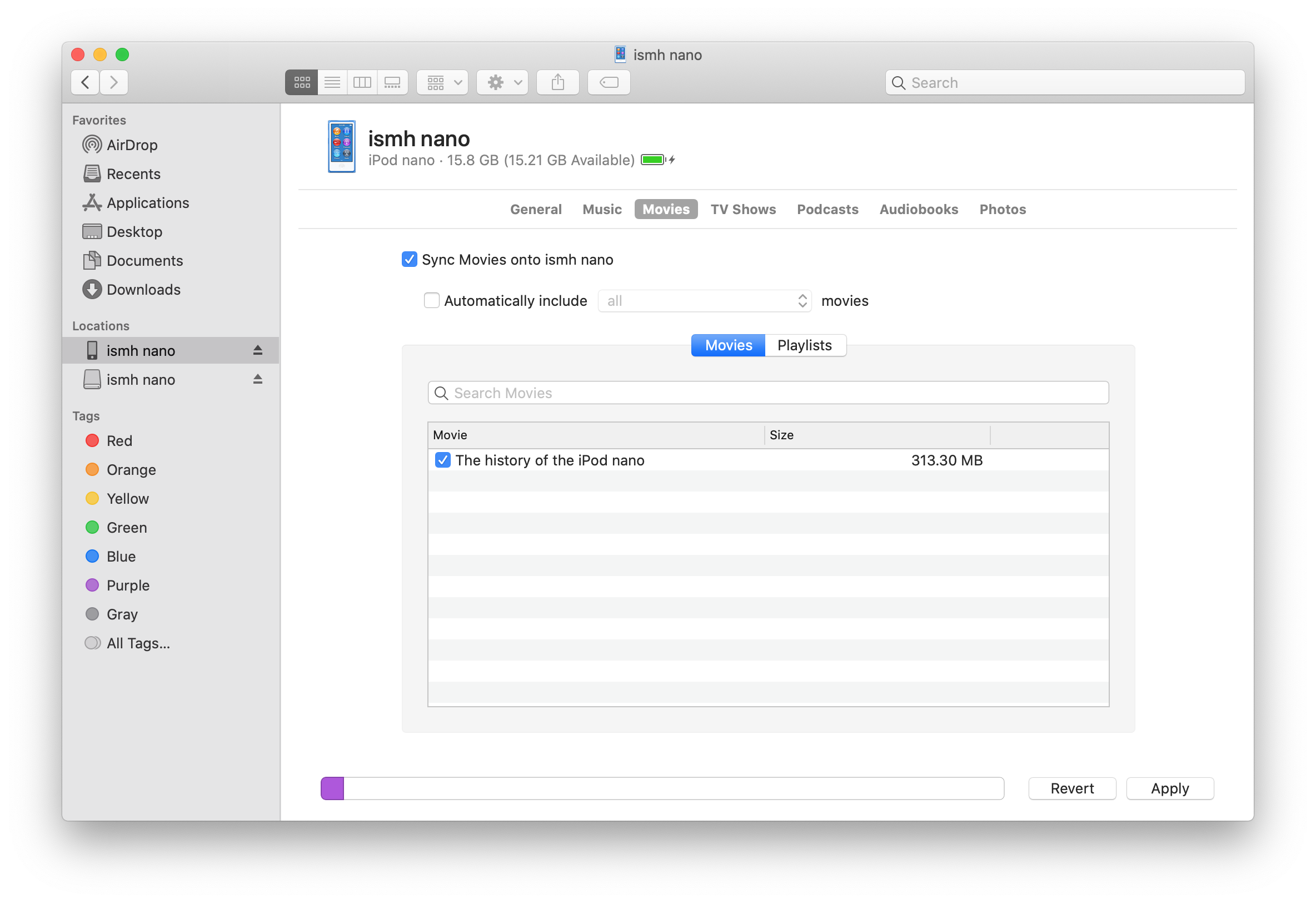
With the breakup of iTunes, the USB-based syncing of iPods and iOS devices has been moved into Finder. While I am fully on the Apple Music train, there are many users who still plug in their devices to move media onto them, and I’m glad macOS Catalina has been engineered with those users in mind.

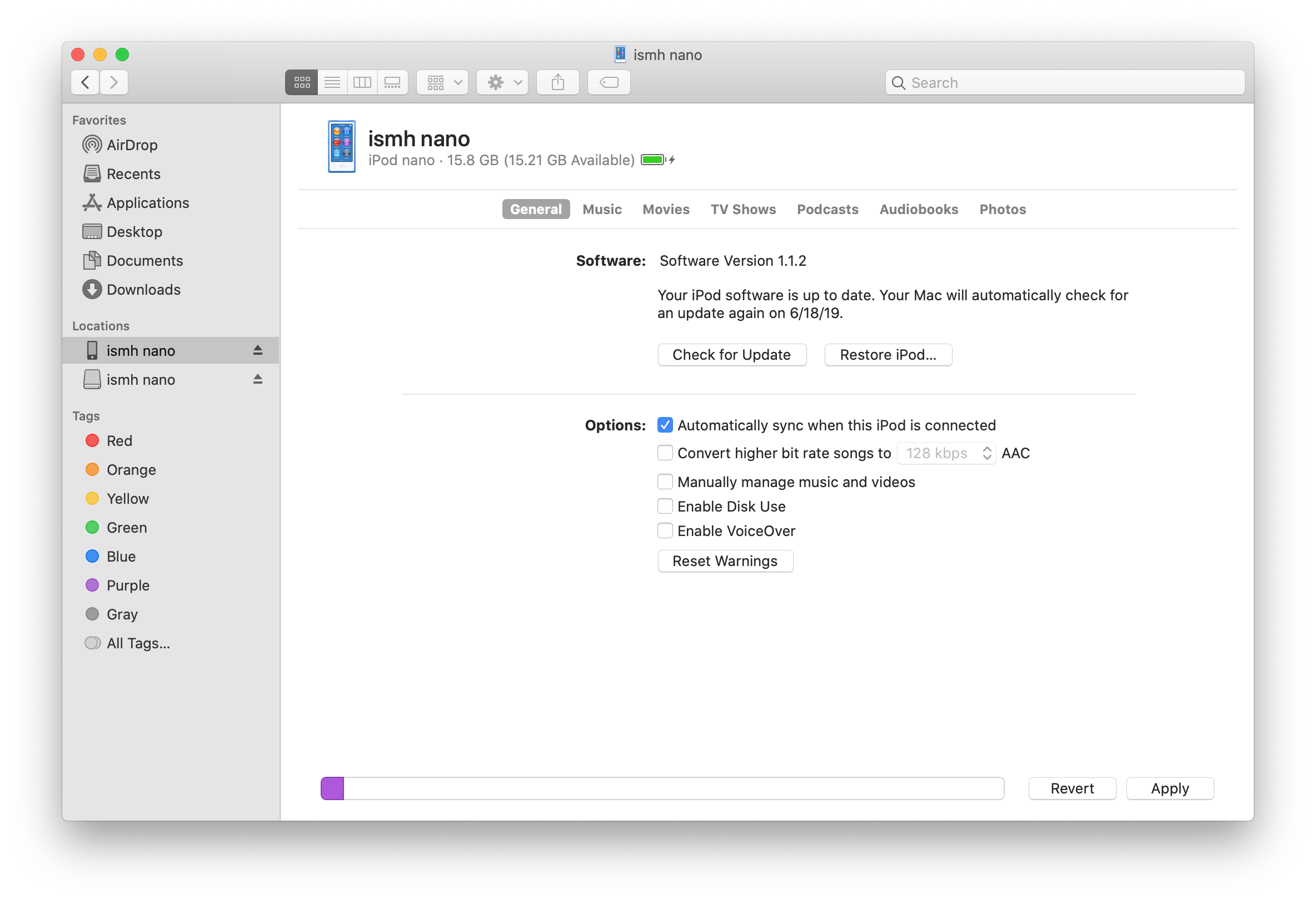
When you plug in an iPod to a Mac running Catalina, the device appears in the Finder sidebar,1 and clicking it reveals a wide range of syncing options, organized in a much nicer fashion that what is found in iTunes 12:

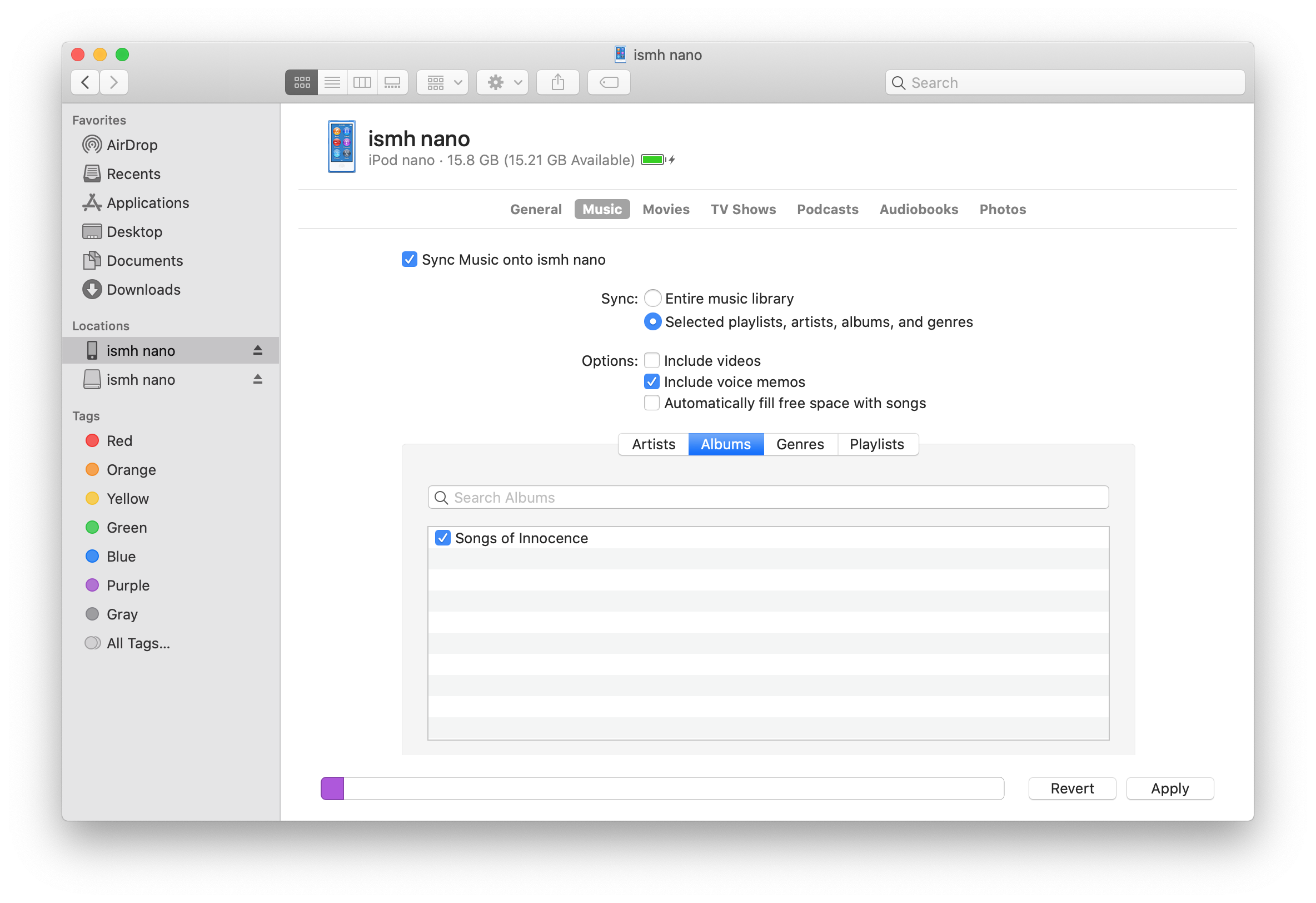
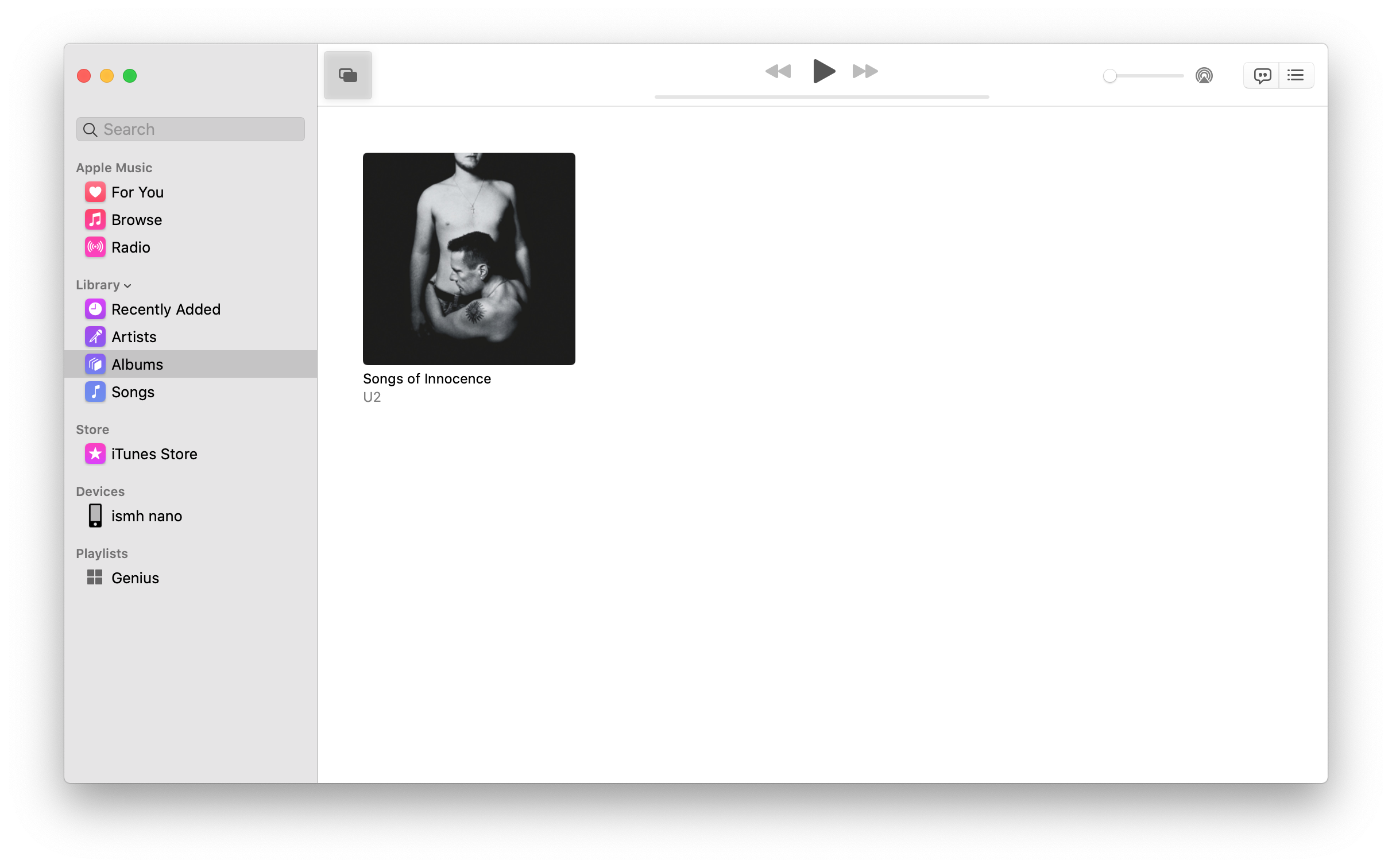
As you would imagine, each section in this interface surfaces content across various apps on the system. For example, Finder sees the local files I have in the new Music app:

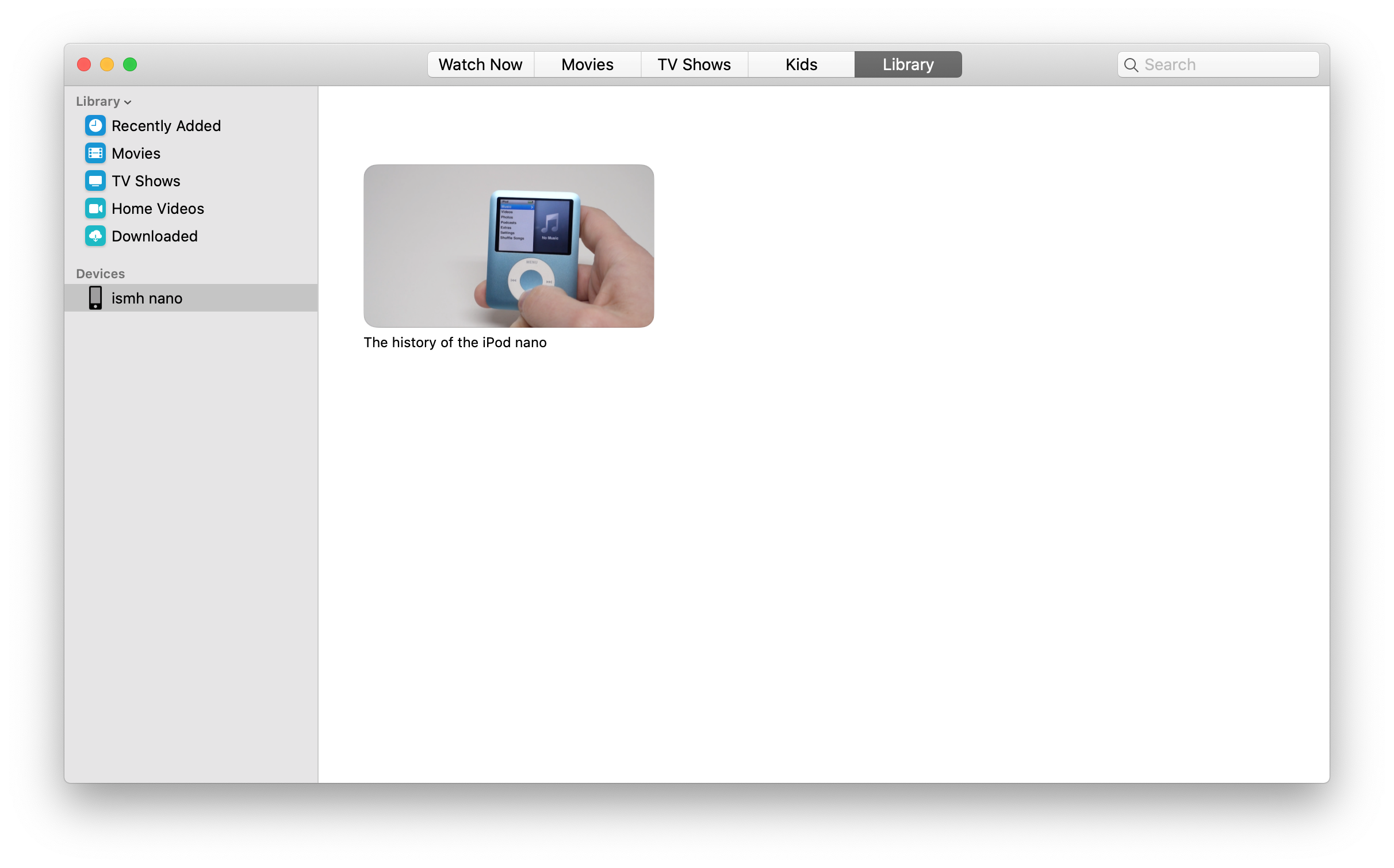
The same is true for videos. Here, I have a local file that I simply dragged from Finder into the TV app, and Finder sees it, ready to sync it to my iPod:

If all of this seems a bit simple and obvious, it is. Apple’s done a good job at keeping support for its older media ecosystem intact, just tucked away out of sight so the new one can shine.


  1. In this example, I am using a 7th-generation iPod nano. Even though Finder has Disk Mode disabled, the iPod still shows up as a mass storage device. I’m assuming that’s a bug in this early beta. I would have used one of my much older iPods, but my Catalina test machine is a 12-inch MacBook, so I can’t adapt back to FireWire with it. ↩︎

Kbase Article of the Week: Mac Pro (Early 2008 to Mid 2012): About the PCI Express Slots ⇢

Apple Support:

PCI Express (Peripheral Component Interconnect Express), or PCI-E, is a newer implementation of PCI which uses a much faster physical-layer communications protocol than older PCI bus architectures.

Rather than using a bus as PCI did, PCI Express uses dedicated, unidirectional, point-to-point connections known as “lanes” to communicate with PCI Express devices.

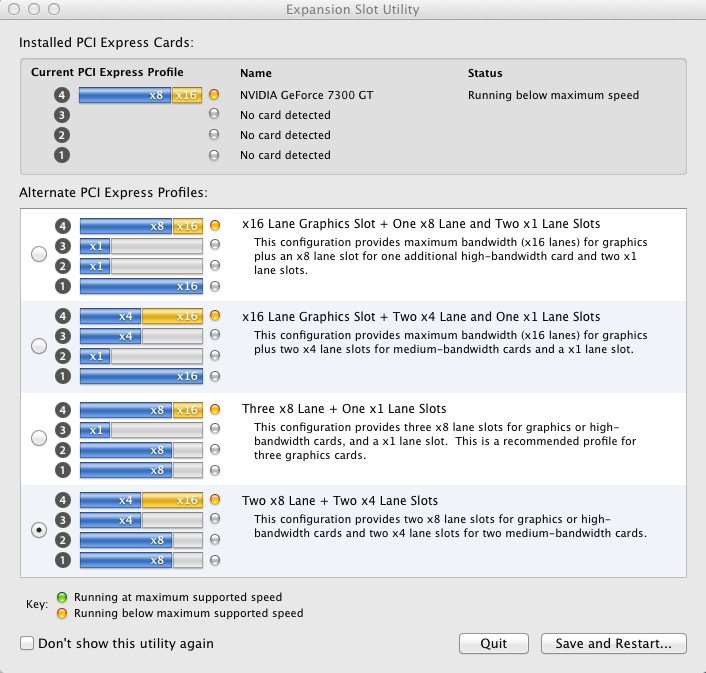
The first generation of Mac Pro came with a program named Expansion Slot Utility:

I wonder if the new one will come with something similar…

Update: I guess so:

The icon of Expansion Slot Utility has been updated for new Mac Pro ???? pic.twitter.com/TVdxAUMxvR

— Khaos Tian (@KhaosT) June 18, 2019

Mac Power Users #487: Josh Centers: Beta Spelunker ⇢

This week on Mac Power Users:

Josh Centers is the managing editor at TidBITS, which has been covering the world of Apple for nearly 30 years and is a writer for the “Taking Control” series of books. He sits down with David and Stephen to talk about his writing, the tools he uses and why running Apple betas can be a real adventure.

My thanks to our sponsors:

  • eero: Never think about WiFi again. Get $100 off.
  • Moo: Custom business printing and design. Use promo code PRINTMOO for 15% off, when you spend $50 or more.
  • 1Password: Have you ever forgotten a password? You don’t have to worry about that anymore.
  • The Omni Group: We’re passionate about productivity for Mac, iPhone and iPad.

Twitter Promises Catalyst Mac App ⇢

Nolan O’Brien, writing on the Twitter Engineering blog:

Last week, Apple announced Project Catalyst for macOS 10.15 Catalina, which makes it easy for developers to bring their iPad projects to macOS as native Mac apps. We are excited that Project Catalyst will enable us to bring Twitter back to the Mac by leveraging our existing iOS codebase. We’ll also be able to add native Mac features on top of our existing iPad experience, while keeping our maintenance efficient as we continue to improve this shared codebase in the years to come.

The Twitter iPad app isn’t spectacular, but it’s good to see a company as big as Twitter taking Catalyst seriously.

Connected #247: You Never Want the Egg ⇢

This week on the podcast:

With the dust settling from WWDC, the boys go through Apple’s major platforms and talk about what they are excited about seeing in these releases.

We walked through the biggest changes coming to tvOS, watchOS, macOS, iPadOS, iOS and CarPlay. Apple’s been busy…

My thanks to our sponsors this week:

  • Hover: Get 10% off any domain name - extensions for anything you’re passionate about.
  • Luna Display: The only hardware solution that turns your iPad into a wireless display for your Mac. Use promo code CONNECTED at checkout for 10% off.
  • Freshbooks: Online invoicing made easy.
  • Squarespace: Make your next move. Enter offer code CONNECTED at checkout to get 10% off your first purchase.

Putting the Mac Pro’s Price into Historical Context

Editor’s Note: This is a guest post by Ed Cormany, co-host of the excellent podcast Simple Beep, which focuses on the history of Apple and the Mac.


When Apple announced the new Mac Pro last week, one of the things that got the most attention was its price tag: the base configuration will cost $5,999. The question is whether it’s an outlandish price for what is far and away the most powerful Mac ever sold. The fact is that Apple has definitely charged that much in the past for its hardware.
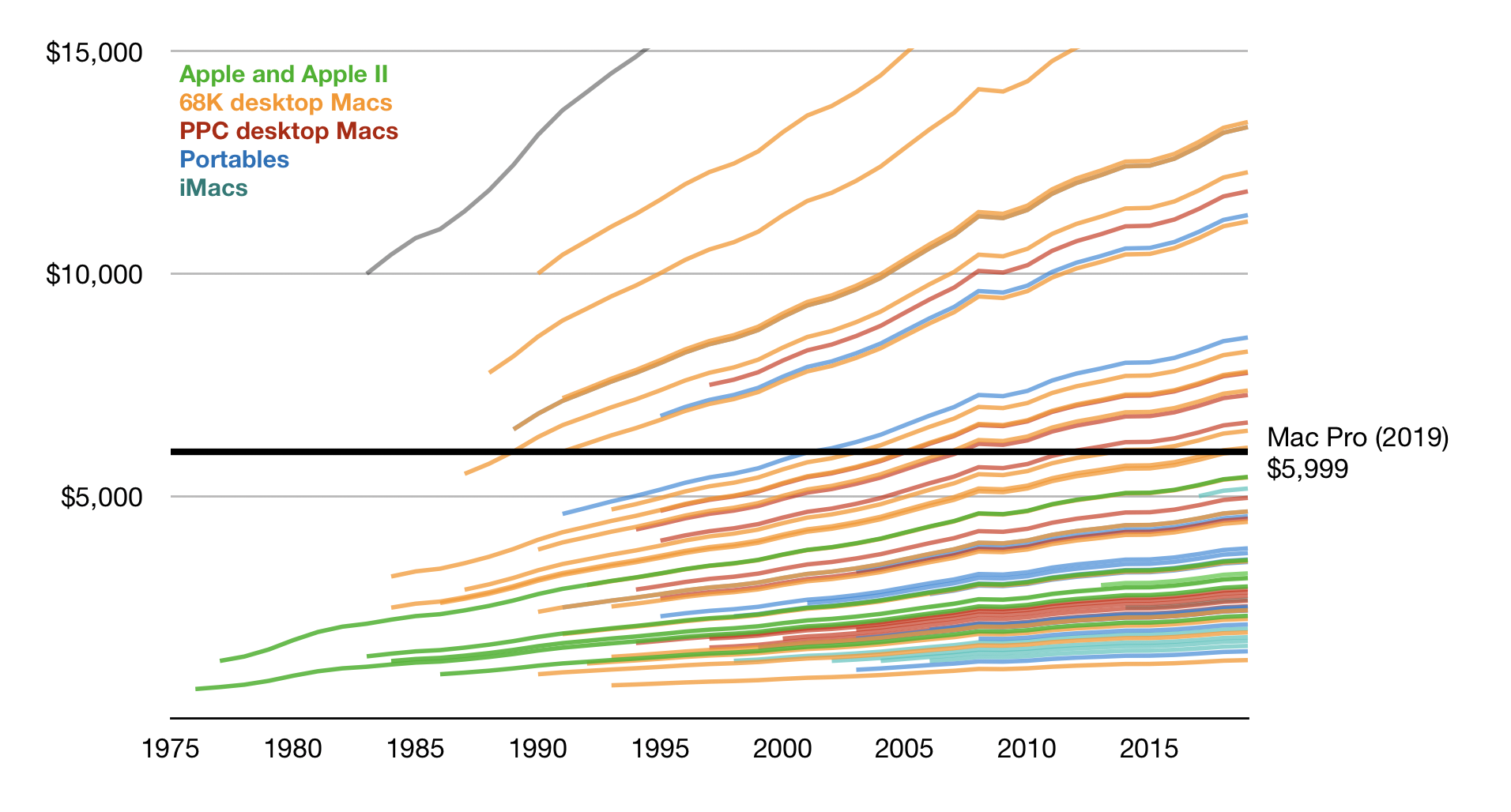
The graph above shows the base prices for 60 different Apple hardware lines, and how those values compare over time accounting for inflation.1 Of course, these computers didn’t actually become more valuable over time, except for collectors items, but this visualization allows for comparison of how much of an impact any given model had on consumers’ wallets. 22 of the models shown cost more than a Mac Pro when adjusted to 2019 dollars, and several of them cost more than $6,000 when they were launched.

Apple I and II – a bargain!

Apple launched their first computer in 1976 for the devilishly competitive price of $666.66. Adjusted to 2019 dollars, that doesn’t crack $3,000. On the other hand, you did have to supply your own case, monitor, keyboard, and cassette decks for data storage. The original Apple II came closest to Mac Pro prices, at over $5,000 in 2019 dollars. In the mid and late 80s, the Apple II line was an absolute bargain compared to Apple’s new product line: the Macintosh.

Early Macs – pricey and pricier

The 128K Macintosh launched in 1984 for $2,590. At the time people wondered: why would you buy this bizarre all-in-one computer with a black-and-white display and this thing called a mouse for the price of serious, “you can get real work done on it” computer hardware? That’s right, adjusted for inflation the original Mac just outpaces today’s Mac Pro, at $6,088. It’s the same story as it was 35 years ago: buying the future is never cheap.

In fact, no Mac released before 1990 finishes under the Mac Pro line, and a few of them started above it. The modular2 Macintosh II line was wildly powerful and wildly expensive, with models ranging from $5,500 and up in 1987. The all-in-one SE/30, often lauded as the Mac with the greatest longevity, launched at $6,500 and barely stays on our chart in 2019. The priciest Mac ever, the IIfx, started at $10K and achieves escape velocity sometime in the early 2000s.

It literally stands for “low-cost”

The 90s were a time of differentiation for the Mac product line. The Macintosh Classic put affordable components in the familiar Macintosh case, while the LC line delivered simple pizza boxes with color display support. The LCIII had the cheapest sticker price of any Mac for a long time — until the Mac Mini — at $750, or just over $1,300 adjusted for inflation.

Meanwhile, the Quadra line was the Mac Pro of the day, with prices to match. The Quadra 900 was the last ordinary desktop Mac to start above the Mac Pro line, at a whopping $7,200. And if you think that Apple is cheaping out now on its base SSD storage, think again. That base model had no hard drive whatsoever, just an empty drive bay for you to fill with even more of your hard-earned dollars. Even the LCIII had a 40MB hard drive.

Power for pros

At the dawn of the PowerPC era, Apple released “good, better, best” versions of its desktops: the Power Macintosh 6100, 7100, and 8100. They ranged from consumer3 to professional pricing, with only the 8100 topping our Mac Pro line after inflation. The high end went even higher with the 6500, 7500, 8500, and 9500 models a year later. The 9500 would be about $7,800 in 2019.

The later generations of Power Mac towers had less sticker shock, primarily due to the collapsing of product lines. The grid of four wouldn’t work with tons of numerical model numbers, so only the “good” models of G3, G4, and G5 towers are charted here; they all (even the Cube) retailed for under $2,000 and wouldn’t crack $3K today. Of course, the beefiest tower configurations cost far more than that.

Portables – got it in two

The first Macintosh Portable was not a good buy. It retailed for $6,500, had a lead-acid battery, and only weighed 4 pounds less than the similarly priced SE/30. The first PowerBook, on the other hand, got it right at $2,500 ($4,600 in 2019 dollars) and just 5 pounds. Most PowerBooks were good deals, and only a couple surpass the Mac Pro line, including the top-class PowerBook 5300ce, which started above the line at $6,800 in 1995.

Outliers

To close out, there are a couple expensive oddities that merit their own mention. The Twentieth Anniversary Macintosh is the latest machine that was introduced at over $6,000, but that comes with an asterisk as it was marketed as a collector’s piece and had its price slashed from $7,500 to $3,500 after just six months because nobody was buying them.

And finally, I haven’t covered the most egregious line on the chart, the one at the top left, not color-coded in any category. It’s Steve Jobs’ biggest losing bet, the Lisa, which cost $9,995 in 1983. At over $25,000 adjusted for inflation, it’s the most costly computer Apple has ever sold. Anyone who has recently said, “Wow, I could buy 5 cheap iMacs for the price of that Mac Pro” might have said the same thing about the Apple II and the Lisa then.

Fortunately for today’s Apple, the new Mac Pro is not nearly the risk that the Lisa was. To be so daring, it would have had to be an all new architecture (maybe ARM-exclusive, leaving all Intel software behind without a compatibility mode) and costing something like $20,000 including the monitor. But the 2019 Mac Pro isn’t foolish bet; it’s a high-end Mac tower offered at a historically consistent price.

  1. Inflation data source: US Department of Labor Consumer Price Index ↩︎

  2. Some things never change. ↩︎

  3. The 6100 was my family’s first Mac, so it definitely could be seen as a consumer PC. ↩︎