
With Federico away, Stephen and Myke talk about video games.
Nah, just kidding. Instead, they ponder the future of Google and of social media, consider what maple syrup can do to an iPhone, and discuss Apple’s AI summarization features.
512 Pixels
The Mac is the Model⇢
Jason Snell, in an incredible piece for Macworld:
To a kid growing up in the 1980s, the idea that the maker of your computer would actively stop you from using software it didn’t approve of would have seemed beyond the pale. It certainly would’ve been a deal-breaker. And yet so many of today’s computing devices are locked down–for some good reasons, but also a lot of bad ones.
What do we want the world to look like in the future? Is the destiny of the most important invention of the last half-century, the computer, to become a series of locked-down devices controlled by the giant companies that designed them? Should the iPhone be the model for all future devices?
If Apple’s locked-down approach in the App Store era is our future, it’s a bleak one indeed. But there’s good news: Apple has also built a system that provides security, flexibility, and responsibility while letting device owners run the software they want to run.
It’s called the Mac. When we consider the future of computing devices, the Mac is the model we should aspire to, not the iPhone.
It’s not often I want to shout “Amen!” as I read an article, but here we are. I think I startled my sleeping dog.
The Eeeend d of an Eraa⇢
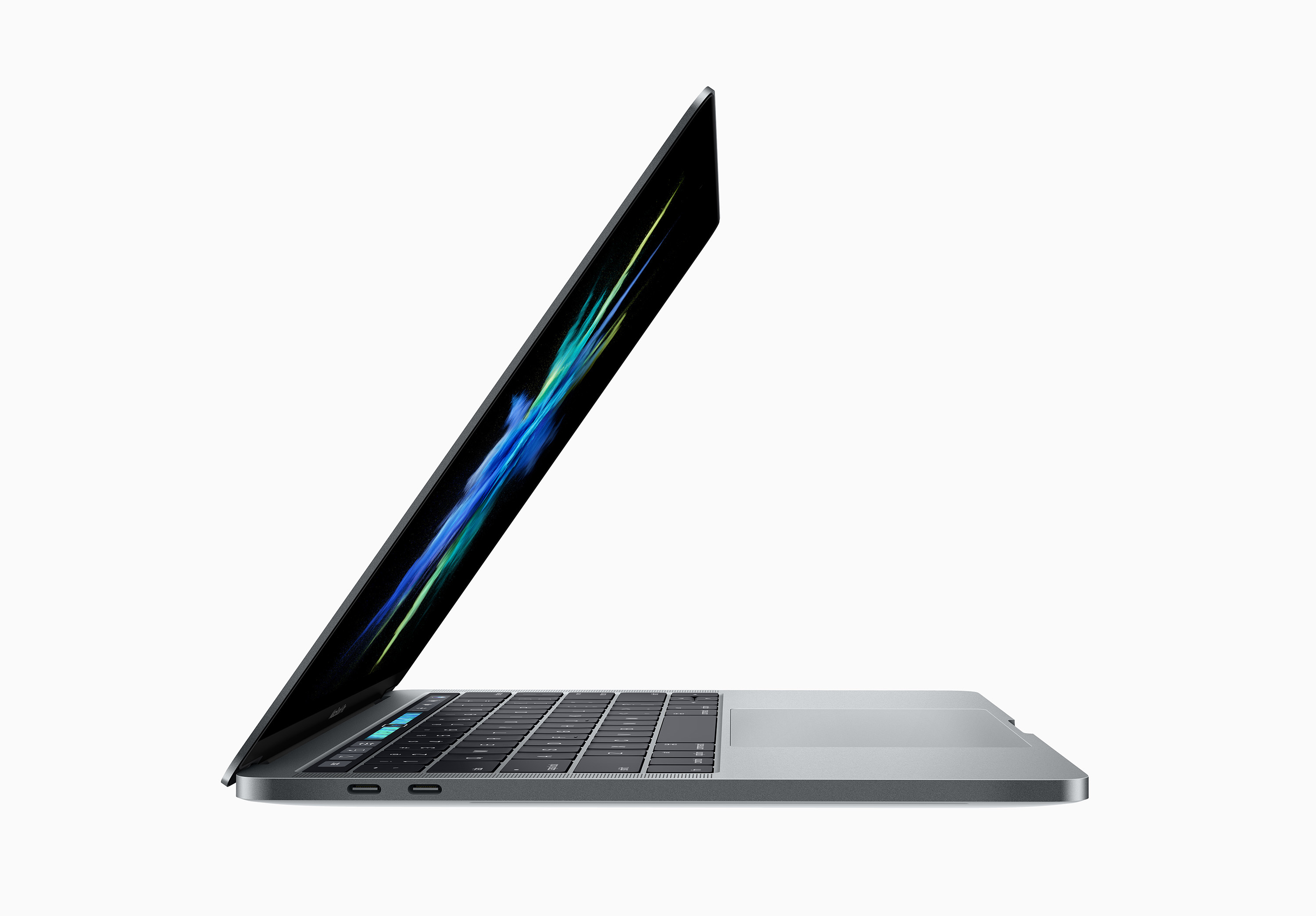 Joe Rossignol at MacRumors is reporting that Apple’s long-running repair extension program for the butterfly keyboard has ended:
Apple’s free butterfly keyboard service program for select MacBooks models ended late last week, nearly six and a half years after it launched.
With the program now over, it is no longer guaranteed that customers with affected MacBook keyboards will be able to receive a free repair from Apple or an Apple Authorized Service Provider. However, exceptions could be made.
Apple has taken the page down, but it’s preserved at the Internet Archive. Those folks really are doing the Lord’s work. Here’s a bit from the page:
Apple has determined that a small percentage of the keyboards in certain MacBook, MacBook Air, and MacBook Pro models may exhibit one or more of the following behaviors:
- Letters or characters repeat unexpectedly
- Letters or characters do not appear
- Key(s) feel “sticky” or do not respond in a consistent manner
Apple or an Apple Authorized Service Provider will service eligible MacBook, MacBook Air, and MacBook Pro keyboards, free of charge. The type of service will be determined after the keyboard is examined and may involve the replacement of one or more keys or the whole keyboard.
The list of machines covered was long:
- MacBook (Retina, 12-inch, Early 2015)
- MacBook (Retina, 12-inch, Early 2016)
- MacBook (Retina, 12-inch, 2017)
- MacBook Air (Retina, 13-inch, 2018)
- MacBook Air (Retina, 13-inch, 2019)
- MacBook Pro (13-inch, 2016, Two Thunderbolt 3 Ports)
- MacBook Pro (13-inch, 2017, Two Thunderbolt 3 Ports)
- MacBook Pro (13-inch, 2019, Two Thunderbolt 3 ports)
- MacBook Pro (13-inch, 2016, Four Thunderbolt 3 Ports)
- MacBook Pro (13-inch, 2017, Four Thunderbolt 3 Ports)
- MacBook Pro (15-inch, 2016)
- MacBook Pro (15-inch, 2017)
- MacBook Pro (13-inch, 2018, Four Thunderbolt 3 Ports)
- MacBook Pro (15-inch, 2018)
- MacBook Pro (13-inch, 2019, Four Thunderbolt 3 Ports)
- MacBook Pro (15-inch, 2019)
That list grew over time, even as Apple made changes to the keyboard, trying to make it more durable. Notably, those 2019 machines were introduced into the repair program at their launch. As far as I know, that’s the only time that has happened in the history of the Mac.
This problem was widespread and widely mocked. My personal favorite coverage of it came from Joanna Stern. If you haven’t seen her column on it in a while, it’s worth revisiting, as is Casey Johnston’s article titled “The New MacBook Keyboard is Ruining my Life.”
In late 2019, Apple relented and returned to a more traditional keyboard with the 16-inch Intel MacBook Pro. Jason Snell reviewed that machine over on Six Colors:
Apple doesn’t like to admit that it’s wrong, but will be the first to let you know when it’s made an improvement. In this case, the Apple representatives I talked to admitted that while many people liked the butterfly keyboard, “some didn’t.” (That feels like a bit of an understatement.) Regardless, Apple spent time reconsidering what users wanted out of their keyboards, including doing a lot of internal research—and the result is that this new MacBook Pro has a keyboard based on the other 2015 Apple keyboard design, in the hope that this keyboard will be more broadly appealing to laptop users.
It’s wild to think about how much about this generation of MacBook Pros has been erased from the product line. The Butterfly keyboard is gone, as is the Touch Bar. The Thunderbolt-only future that these machines promised didn’t pan out, and the current MacBook Pro design brought with it the return of MagSafe, HDMI, and even the SD card slot.
As thin and light as it was, it’s clear in hindsight that the 2015 MacBook set Apple’s entire notebook like down a path that the company should have never traveled. Like Jason wrote in 2019, Apple doesn’t admit when it gets things wrong, but the improvements made to the MacBook line in the years since have been a much-needed breath of fresh air.
Elon Tried Buying Substack⇢
Jessica Testa and Benjamin Mullin at The New York Times:
In April 2023, the newsletter platform Substack received an unexpected proposal from Elon Musk, who had recently purchased Twitter.
Mr. Musk put it plainly: He wanted to buy Substack. At the time, he was trying to supercharge paid subscriptions on the social network, now called X, which had long fashioned itself as a “global town square” for political news and debate. Paid subscriptions are the core of Substack’s business.
He floated the acquisition on a call with Chris Best, chief executive of Substack, suggesting that Mr. Best could serve as chief executive of the combined company, according to three people familiar with the conversation.
Mr. Best declined to entertain the proposal, and the short-lived discussion ended, the people said.
One on hand, this would have been disastrous for the writers who have built businesses on Substack. On the other hand… yeah, it kinda tracks.
Sponsor: Unite 5 Turns Web Apps Into Supercharged macOS Apps⇢
Unite 5 for macOS takes your web experience to the next level, transforming websites into feature-rich Mac apps. Powered by a completely redesigned WebKit browser, Unite 5 offers a more immersive and customizable browsing experience.
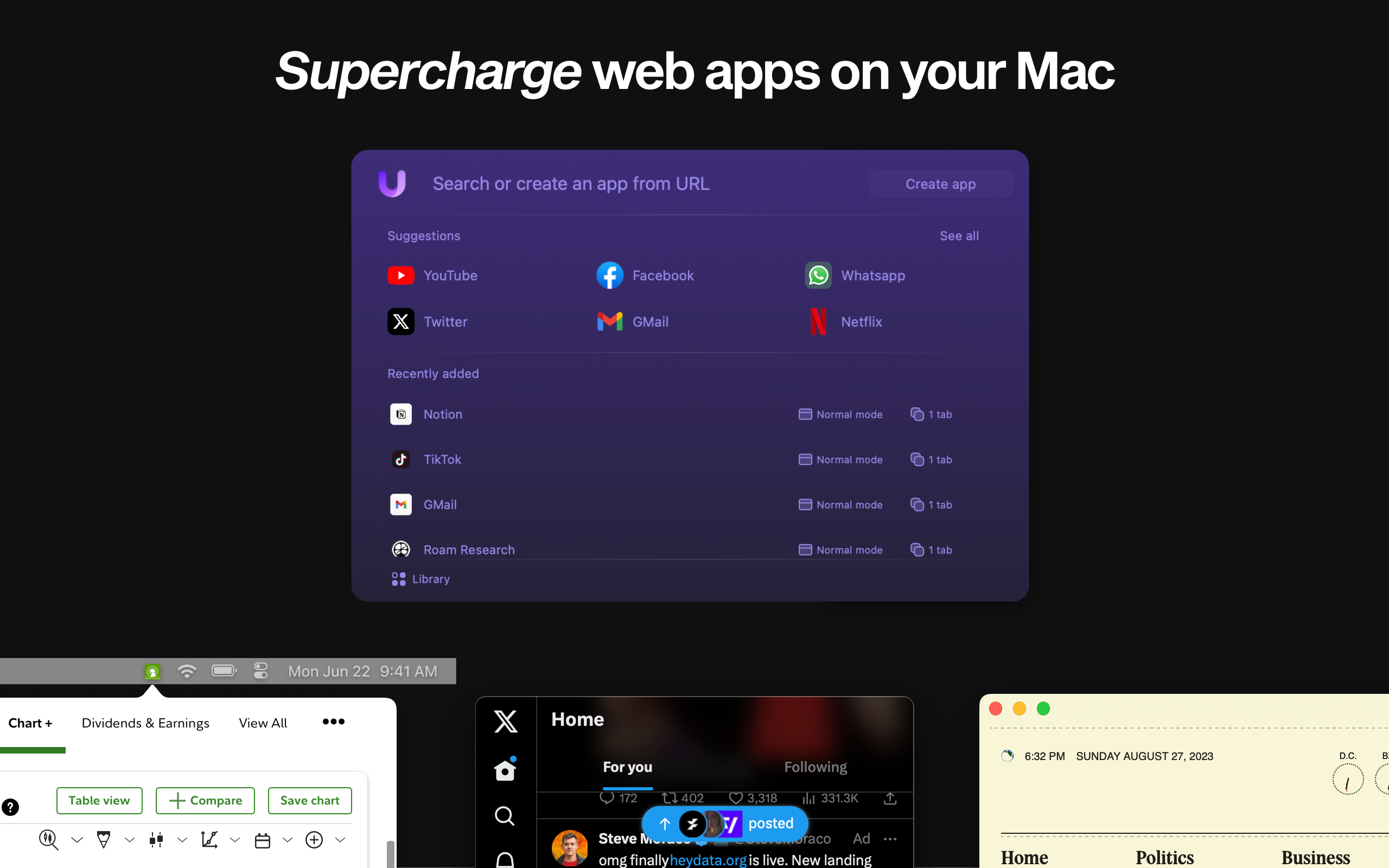
What sets Unite 5 apart? We’ve gone beyond just app conversion. Our new intricate link-forwarding rules give you unparalleled control over web interactions, making your web apps smarter and more integrated than ever before.
Some highlights of Unite 5:
- Advanced Link-Forwarding: Navigate your web apps like a pro.
- Revamped Browser Engine: Faster, more reliable, and tailored for macOS.
- Enhanced Customization: More ways to make your web apps truly yours.
Create powerful web apps in seconds, such as:
- A Gmail client that integrates seamlessly with macOS.
- A resource-efficient Slack or Discord app with full notification support.
- A dedicated AI app for ChatGPT or Claude.AI
- A Robinhood or Figma app that feels native on your desktop.
512 Pixels readers get an exclusive 20% off this week! Use the promo code 512Pixels at checkout or visit bzgapps.com/unite512.
Experience Unite 5 for yourself with a 14-day free trial, or access it as part of a Setapp subscription.
Mac Power Users #771: Beauty & Friction⇢
On this feedback episode, David and I talk about the M4 family of Macs, our RSS setups, and recent updates to some of our favorite apps. Then we discuss some listener feedback and our home networks.
Casio Made a Smart Ring⇢
It looks like a tiny Casio, and I can’t tell if I love it or hate it.
Apple Launches Final Cut Pro 11⇢
From the Newsroom announcement:
Final Cut Pro 11 takes full advantage of Apple’s M-series chips, introducing the powerful and intuitive Magnetic Mask; Transcribe to Captions, a highly requested feature that provides fast and accurate closed captions; spatial video editing; and a range of timesaving tools and workflow optimizations.
While I use Final Cut occasionally, I am by no means an expert. Thankfully, Tyler Stalman is:
Final Cut Pro is $300 in the Mac App Store, and this update is free for Final Cut Pro X users. A free 90-day trial is available as well. Apple still offers its “Pro Apps Bundle for Education” for just $199.
Connected #527: myke why did you say that⇢
Stephen wants to make showers more interesting, Federico is spending time with AI writing tools, and Myke is excited about a possible Apple smart home hub.
Joanna Stern Took Four AI Assistants on a Camping Trip⇢
She’s the best tech YouTuber out there:
Siri wasn’t part of her project for hilarious and obvious reasons. When the four examples start talking to each other things get weird, and Stern is right to worry about the ramifications of technology like this.
Gurman: Apple Working on Home ‘Command Center’ for 2025 Launch⇢
Apple Inc., aiming to catch up with rivals in the smart home market, is nearing the launch of a new product category: a wall-mounted display that can control appliances, handle videoconferencing and use AI to navigate apps.
The company is gearing up to announce the device as early as March and will position it as a command center for the home, according to people with knowledge of the effort. The product, code-named J490, also will spotlight the new Apple Intelligence AI platform, said the people, who asked not to be identified because the work is confidential.
He goes on:
The device has a roughly 6-inch screen and looks like a square iPad. It’s about the size of two iPhones side by side, with a thick edge around the display. There’s also a camera at the top front, a rechargeable built-in battery and internal speakers. Apple plans to offer it in silver and black options.
Gurman writes that the OS and interface are something like a mix of watchOS and the iPhone’s Standby mode, all powered by widgets with glanceable information, Siri, and Apple Intelligence.
(I would assume that iPad apps would make an appearance as well as an escape hatch, like they do on visionOS.)
After writing about the software, he goes back to a well he can’t seem to stay away from:
Apple is already planning a more expensive follow-up version with a robotic limb that can move the screen around. Apple plans to market that technology as a home companion with an AI personality.
What a robot is — or not — is beside the point here, of course, but the idea of a device dedicated to managing the smart home is very interesting. Being wall mounted means something like this could near an exterior door or in a hallway, whereas products like this normally end up in the kitchen. Of course, Apple will include — or sell — some sort of stand for the device to make it as adaptable as possible.
Speaking of devices by Google and Amazon… they are normally under $250. I’m drawing my line in the sand for this at $499. Gurman says the one with the “robotic arm” may near $1,000.
I for one am super interested in this, and Jason Snell writes, it makes a lot of sense for Apple to go down this road:
This kind of product has seemed like a no-brainer for Apple for some time, since it’s largely built out of features and functionality Apple is already shipping, or is about to ship. It seems like Apple Intelligence is the feature that is finally putting it over the top.
Pre-Orders Open for Book Highlighting Apple Music’s 100 Best Albums⇢
At $450, this book makes my copy of Designed in California look like a deal at $299.