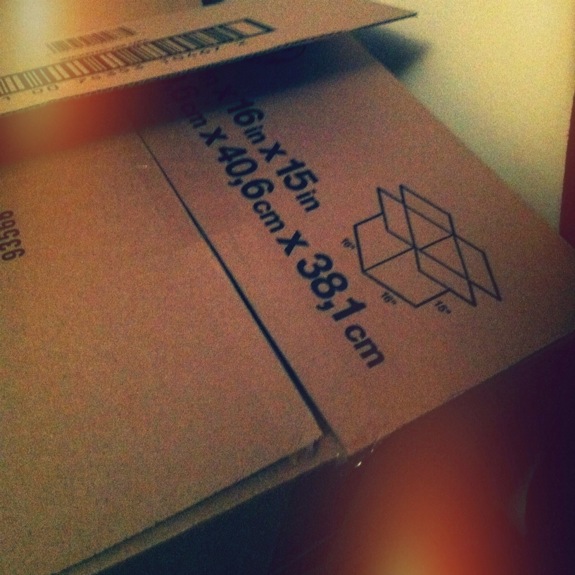
I heard heat was a real issue with this hardware, but it was great for storage.

I heard heat was a real issue with this hardware, but it was great for storage.
Merlin Mann, in his 2008 essay “Better”:
What makes you feel less bored soon makes you into an addict.
Hey guys, long time no see, toss me a PBR—actually, better make it a Coors Light. I know, I look different, but before you all start saying how I look like some midtown suit, let me explain. I haven’t gone pleb on you, I’m actually a neo-hipster now. It’s basically where you’re a hipster, but since hipsterism has gone so mainstream you dress and act like a regular person, ironically.
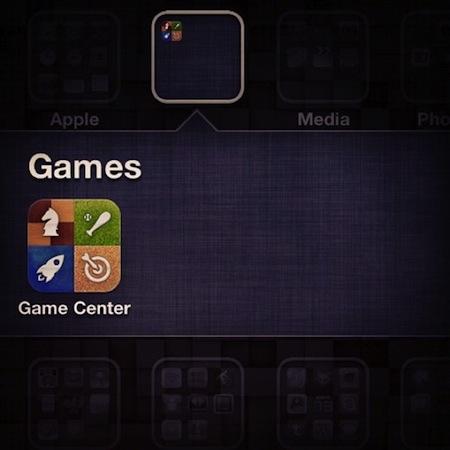
I posted the above photo on Instagram the other day, and have gotten several questions about it.
The explanation is pretty simple. I don’t play games on my iPhone.1
I noticed at some point over the last year or so that I used iPhone games to fill little gaps in my day. Instead of writing, reading or just thinking, I would play a game while waiting for an appointment or while on hold for a conference call. Any time I had a few “extra” minutes, I found myself pulling out my phone to play something.
It all started when I read this Steve Jobs quote a while back:
I’m a big believer in boredom. Boredom allows one to indulge in curiosity and out of curiosity comes everything.
I know I am my most creative when I have time to just sit, be still and think. For me, iPhone games killed that time.
Boredom isn’t a bad thing. But strangling it with Angry Birds probably is.
I keep Game Center in its own folder to keep my second home screen neat. I do have a few games on my iPad, but when I pick up that device, I have set aside time to spend doing stuff on it. ↩︎
Dave Winer, on the Steve Jobs biography:
Also, while Isaacson is a good writer and a good reporter, he doesn’t really understand how this stuff works. And you might think that’s what it takes to explain it to someone who doesn’t understand it, but I don’t think so. So much of the Jobs story is how he related to people who actually made the products. If one doesn’t understand the substance of those relationships, it’s impossible to tell the story, imho. It would be like writing a romance without having ever experienced love.
I’m only a couple of chapters into the book, but so far, this hasn’t bothered me.
As a nerd I would be pissed. I have to wonder though just how many Android users even know what version of Android they are on and if there is even a new version out — let alone what features are in the new version.
Nokia has announced its N9-esque Windows Phone 7 phone. My, it is handsome.
My mini-series on NeXT Computer:
Installment 1: On the Creation of NeXT
Installment 2: NeXT: The Hardware
Installment 3: NeXT: The Software
Installment 4: NeXT: The Apple Purchase
Installment 5: Why Did NeXT Fail?
With the Steve Jobs biography being read this week by just about every nerd I know, NeXT is coming up in conversations more and more. Today, I’m starting a mini-series on the company and its products.
NeXT was formed by Steve Jobs after he was kicked out of Apple in 1985.
While still at Apple, Jobs created the Apple University Consortium to help get the Macintosh into schools across the country. Its mission statement was:
To enhance and increase computing technology on campus, provide low-cost computing to the University community and, in conjunction with Apple, further develop Apple products and share experiences amongst other tertiary education institutions.
NeXT — in many ways — was Jobs’ effort to keep the AUC alive. Joined by former Apple engineers including Bud Tribble, George Crow, Rich Page, Susan Barnes, Susan Kare, and Dan’l Lewin, he formed Next, Inc to build the computers for the high-end educational market.
Apple, of course, wasn’t thrilled that its co-founder had started a competing company with lots of former Apple employees, and sued the fledging company for “nefarious schemes” to take advantage of the cofounders’ insider information. Jobs replied to the lawsuit, saying:
It is hard to think that a $2 billion company with 4,300-plus people couldn’t compete with six people in blue jeans.
The suit was dismissed before it made it to trial.
In 1987, Ross Perot invested $20 million — in exchange for 16% of NeXT’s stock. The next year, he joined the board of directors.
In 1986, Jobs hired graphic designer Paul Rand to create a brand identity for Next, Inc. Read all about it over at Imprint.
Originally, NeXT was just going to focus on hardware, but in mid–1986, the company decided it had to build its own software as well. Avadis Tevanian led the OS project, basing his work on the Mach kernel. But more on the hardware and software next time…
I think TUAW’s Erica Sadun might be over-stating the “fail rates” of the iPad 2 in this article.
