
This week on the world’s most downloaded Wikipedia-related podcast, Myke and I discussed kangaroos.
posts
The Windows Store
Starting in late February, developers can submit apps starting at $1.49 and charge as much as $999. We’re not sure why Microsoft chose to set the bar above the 99-cent mental barrier, but there’s some great news for developers when it comes to revenue share — like other app stores, Microsoft will take 30 percent of the proceeds at first, but reduce its cut to 20 percent after your app does $25,000 in sales. More reason to have a blockbuster program, we guess! There’s also a 70–30 split for in-app transactions, but only if you use Microsoft’s billing system — the eBay app, for instance, uses PayPal and doesn’t pay Microsoft a thing.
On iPads and Hospitals
For some doctors at Johns Hopkins, the iPad can save an hour to an hour and a half per day — time that would otherwise be spent on collecting paper printouts of medical images, or heading to computer workstations to look them up online. Many doctors say that bringing an iPad to the bedside lets them administer a far more intimate and interactive level of care than they’d previously thought possible.
Priorities
Harrison Weber at The Next Web:
From reputable news organizations to gossip magazines, everything is moving online. And to keep the flow of information going, content providers need profits. Everyone knows heaping revenues lie in advertising.
He calls out giant web sites like CNN, Mashable and more for having advertising that is distracting and even hides content.
The Fading of Kodak
Michael Hiltzik at the LA Times:
The Rochester, N.Y., company said it had $862 million in cash on hand as of Sept. 30, but at the rate it’s losing money from operations (more than $70 million a month), that hoard would barely last a year. As for future revenue, it’s banking heavily on winning patent lawsuits against Apple and the maker of BlackBerry phones.
The Motorola Droid Xyboard
Well, the contest for the worst product name ever is over.
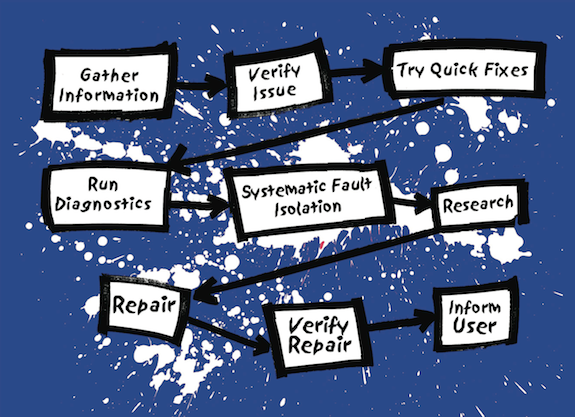
On Troubleshooting
Research Unveils Major Security Issues in Android
Daniel Dilger at AppleInsider:
Researchers from North Carolina State University have demonstrated that Android’s permission-based security system can be easily circumvented due to flaws in the software that licensees add to their devices, according to security testing performed on popular HTC, Samsung, Motorola and Google-branded smartphones.
Yikes.
OmniGraffle [Sponsor]
OmniGraffle is the easiest and most elegant way to create website wireframes, process flows, organization hierarchies, and, frankly, almost anything.
Rely on OmniGraffle to create beautifully simple documents to share with anyone. Even through the AppleTV.
Created for both Mac and iPad, OmniGraffle’s smart shapes, stencils and contextual styling elements gracefully guide you from rough outline to pixel perfection.
OmniGraffle is for anyone ages 5 to 105 and is available here.
The 27th Annual Eddys
Lots of good hardware and software on the list this year.
A History of QuickTime
Thomas Brand, describing QuickTime 1:
Before the introduction of QuickTime, only specialized computers with dedicated graphics hardware could playback color video. In 1991 very few people had access to such a computer, let alone own one. QuickTime brought personal computer video playback home to the masses, and it did so using software.
Apple has been bringing people content ever since.
Google Including Ads in Chrome Browser
Adrian Kingsley-Hughes at ZDNet:
Google has started to roll its own ads in the Chrome web browser. Is this a deal-breaker for you?
The ads appear at the top of the new-tab page and currently seem to be advertising Chrome OS-powered Chromebooks.
While I hate that Google is doing this, I’m not surprised. Google makes its money from ads. The company seems unable to produce income any other way.