
Earlier today Pennsylvania Governor Josh Shapiro signed an executive order requiring data center projects to be regulated with “strict guardrails to hold data center developers accountable to the public interest” in areas of energy costs, environmental impact, and workforce development.
This action is just one on a growing list of legislation fueled by pushback against AI data centers across the country.
This evening, the Memphis City Council acted on a year-long moratorium on new data centers.
It is not a done deal yet. If this passes, data centers already up and running will be allowed to continue operating under the agreement, but no new sites will be built — within city limits1 — while leaders spend a year studying issues related to these projects.
You can see the whole document here, but this is the opening of the moratorium:
AN ORDINANCE DECLARING A TEMPORARY MORATORIUM ON THE ACCEPTANCE, PROCESSING, APPROVAL, AND ISSUANCE OF ZONING, LAND USE, BUILDING, AND OTHER ASSOCIATED INFRASTRUCTURE PERMITS FOR DATA CENTER DEVELOPMENTS WITHIN THE CITY OF MEMPHIS
WHEREAS, pursuant to Tennessee Code Annotated § 13-7-201, the Memphis City Council possesses the authority to regulate land use, zoning, and development to protect the public health, safety, and welfare of its citizens; and WHEREAS, there has been substantial growth nationwide and throughout Tennessee in the development of large-scale data centers and high-density computing facilities supporting cloud computing, artificial intelligence, digital storage, cryptocurrency operations, and other advanced computing technologies; and
WHEREAS, modern data centers differ significantly from traditional commercial and industrial developments because they require exceptionally high electrical loads, extensive backup generation systems, electrical substations, battery storage systems, mechanical cooling equipment, water resources, telecommunications infrastructure, and continuous twenty-four-hour operations; and
WHEREAS, these facilities may generate impacts relating to electrical infrastructure capacity, water consumption, wastewater management, stormwater runoff, emergency services, traffic, lighting, vibration, noise, air quality, fuel storage, public utilities, and surrounding neighborhoods; and WHEREAS, the Memphis and Shelby County Unified Development Code’s current zoning regulations do not specifically classify or comprehensively regulate data center developments as a distinct land use and therefore do not adequately address their unique operational characteristics or community impacts; and
WHEREAS, the Memphis City Council finds that additional study is necessary before permitting additional data center developments to ensure that appropriate zoning classifications, siting standards, buffering requirements, operational standards, utility protections, and environmental safeguards are established; and
WHEREAS, the Memphis City Council further finds that a temporary moratorium is necessary to prevent applications from vesting under existing regulations while permanent zoning amendments are developed.
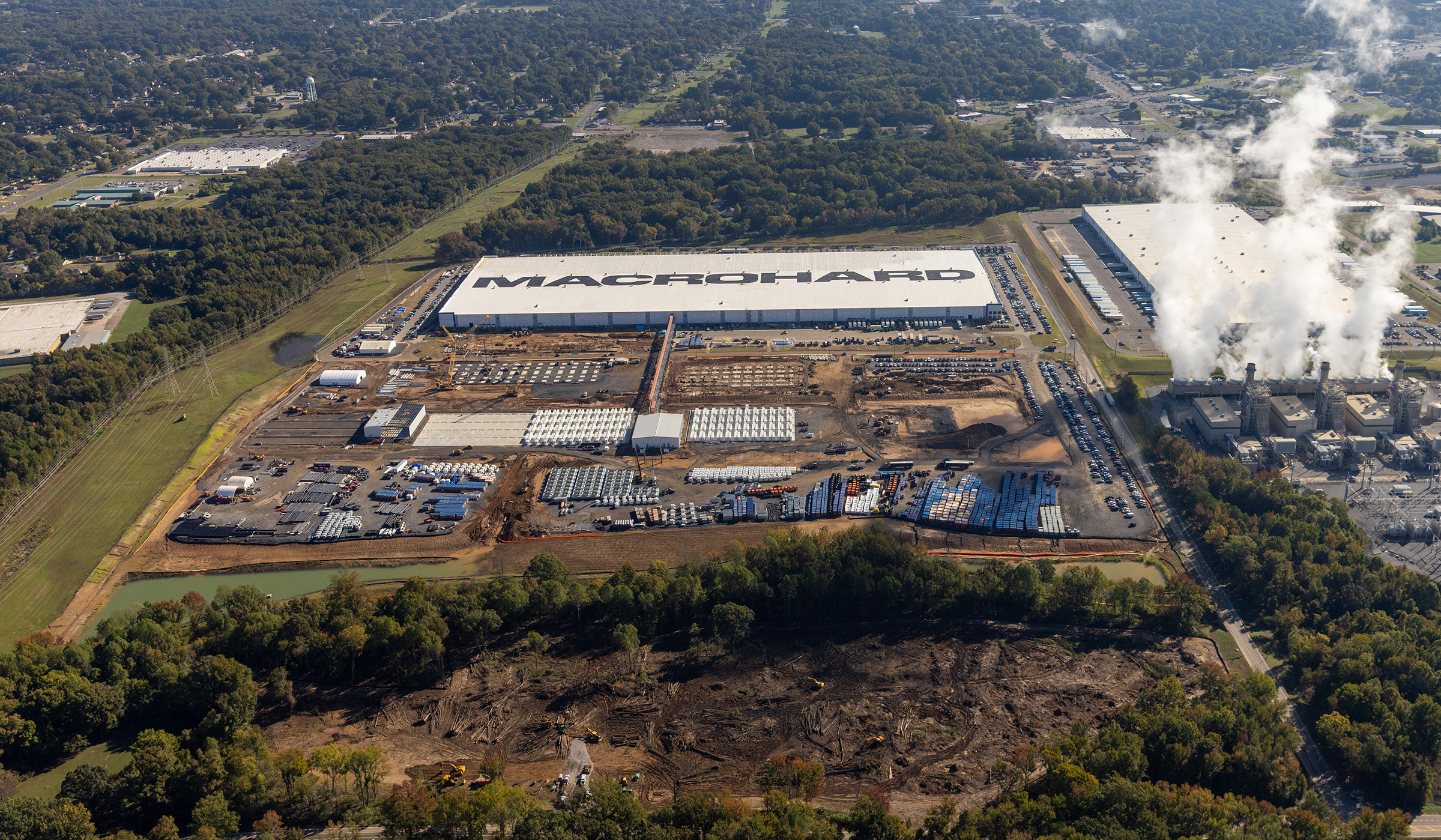
MACROHARD is SpaceXAI’s Colossus 2 data center, which Elon Musk said got its name from “a funny reference to Microsoft.” Nearby sit two more sites: Minihard and Macrohardrr Image via the SELC.
Immediately after hearing comments from citizens — many of whom were holding signs affirming the moratorium — the City Council meeting was adjourned in all of about eight seconds.
The meeting took place after the moratorium passed committee earlier today. That committee vote was the first step toward the document being adopted, as Samuel Hardiman explains:
The moratorium passed a City Council committee Tuesday. It was added to the body’s full meeting agenda and passed first reading later Tuesday afternoon.
A Memphis ordinance requires three readings to pass, meaning it would likely be weeks before any moratorium would take effect. Its legality also could be questioned.
The document’s first reading took place at nearly the same time the Greater Memphis Chamber of Commerce, the Mid-South’s “primary economic development organization,” published a letter against the move.
Since working to recruit xAI to Memphis in 2024, the Chamber has supported the numerous data centers that have popped up in and around the city, even as public sentiment has shifted.2 This letter is nothing short of doubling down.
The Chamber posted its letter on Instagram and other social media sites. It is not on the organization’s press release page or blog, so I’m going to block quote the whole thing here:
A Statement from the Greater Memphis Chamber:
The Greater Memphis Chamber believes Memphis is uniquely positioned to lead the nation in responsibly hosting the data center industry, and we are committed to leveraging that position for lasting community benefit.
Across the country, communities are closing their doors to data centers, often because they lack the power infrastructure, water capacity, or logistical footprint to support them. Memphis has all three. That reality is not a vulnerability. It is leverage, and it is leverage the Chamber intends to use on behalf of this community.
A moratorium surrenders that leverage at precisely the moment when Memphis’s competitive position has never been stronger. The concerns being raised deserve substantive answers, and those answers exist within the reputable regulatory agencies and partners whose expertise, data, and oversight are available to any Council member who requests them. Council members have direct access to those agencies, and the Chamber encourages them to engage those experts directly.
The better path is not to close the door. It is to stay at the table and negotiate harder. The Chamber is committed to working with our regulatory partners and industry to ensure that every data center investment in Memphis delivers sustainable, long-term value to our entire community, not just one-time capital dollars, but lasting infrastructure, workforce, and community benefits that outlast any single project.
The Chamber urges the City Council to vote NO on the proposed moratorium and to keep Memphis open for business at a moment when our competitive advantage has never been greater.
Of note, most of the “sustainable, long-term value to our entire community” and “lasting infrastructure, workforce, and community benefits” promised by SpaceXAI have not materialized, at least in the way they were originally pitched. We will see if the newest promise comes to pass.
After today, I am hopeful that the City Council will press pause on this mess for a year and spend the time working through the 17 items the moratorium lists as areas of study:
- Appropriate zoning districts and permitted locations;
- Classification of data centers by size, electrical demand, and operational intensity;
- Minimum separation distances and buffering from residential neighborhoods, schools, parks, hospitals, greenways, and other sensitive land uses;
- Noise mitigation standards, including operational sound limits and acoustic studies;
- Water consumption, cooling technologies, and conservation measures;
- Wastewater discharge requirements;
- Stormwater management standards;
- Lighting and visual screening requirements;
- Emergency access and fire protection requirements;
- Backup generator operations and fuel storage;
- Electrical infrastructure impacts, including substations and transmission improvements;
- Allocation of infrastructure costs to developers to ensure public utility customers are not responsible for costs attributable to new high-demand facilities;
- Traffic impacts during construction and operation;
- Environmental sustainability measures;
- Public notification and community engagement requirements;
- Potential capital expenditure fund for the benefit of the City of Memphis;
- Any additional development standards necessary to ensure compatibility with surrounding land uses.
The right time to study these issues was before ground was broken on the first Memphis data center; the next best time is now, as this quote to Kailynn Johnson writes at The Memphis Flyer points out:
Environmental advocacy group Protect Our Aquifer (POA) welcomed a proposed pause on data center construction in Memphis. Though they said this decision would not “close or reverse” existing facilities, the moratorium would give the city the opportunity to put protections in place for community members.
“A pause is not a verdict on this industry,” POA said. “It is 12 months to write the rules that should have existed for over two years.”
-
The City Council can’t do anything about data centers built in surrounding cities, such as Southaven. ↩︎
-
That can’t be related to the Chamber removing a once-prominent xAI section from its website or to posting this letter without a signature, right? ↩︎