
2012 was a weird time for iPad fans. That spring, the 3rd-generation iPad debuted with a Retina display. It was slightly heavier and thicker than the iPad 2 before it, but the screen looked amazing. Sadly, the performance of the A5X wasn’t always up to the job of pushing all those pixels, so Apple revised the full-sized iPad again in the fall.
The 4th-gen iPad shipped just seven months later. It kept the same heavier and thicker design, but the A6X inside was “up to twice the CPU performance and up to twice the graphics performance of the A5X chip,” and it showed. It smoothed out all the little hiccups its predecessor showed, except for those in the then-new Apple Maps.1
The most exciting iPad news of 2012 wasn’t any of that. It was this little guy:

A New Era
The iPad mini launched alongside the 4th-gen iPad and totally stole the show. Here’s how Phil Schiller announced it on stage at the California Theatre in San Jose, standing in front of a video of an iPad 4 slowly turning to reveal the iPad mini behind it.
What else can we do to help customers find even more uses for iPad, to use it in places they never imagined and in manners they never have before?
It took a moment for the applause to die down after the iPad mini was fully revealed, then he continued:
I think we can tell by your excitement that you know what this is. This is iPad mini. And what can you do with an iPad mini that you can’t already do with the amazing 4th-generation iPad?
You can hold it in one hand.
The original iPad mini introduced a new industrial design that would later show up on the iPad Air, with thinner bezels on the long sides of the screen. On the Mini, the screen was 7.9 inches, the chassis was 7.2mm thick (which Schiller compared to a #2 pencil), and the device weighed just 0.68 pounds, a little less than half the heft of the full-sized iPad.
Before the iPad mini’s reveal, people debated what screen size and resolution Apple would use. Turns out, Apple used the iPad 2’s 1024x768 resolution, just on a smaller panel.
How did that work out? The answer is how John Gruber started his review:
“Wow, it feels like a Kindle.”
“Ew, the screen is terrible.”
That was my wife’s initial reaction when I handed her the iPad Mini to see what she, an avid daily user of an iPad 3, thought. Her initial reaction matched mine exactly, and perfectly encapsulates the experience. The iPad Mini is not a device you need to spend a lot of time with to understand. My snap reaction from a week ago remains unchanged after a week of daily use.
It’s really light and easy to hold one-handed. The hardware design — chamfered edges, less tapered back, metal rather than plastic buttons — strikes me as better, more elegant, than that of the full-size iPad 3/4. But it’s disappointing to go non-retina after using the retina iPad for the last seven months. All of the accolades and advantages of retina displays work in reverse. I adore the size and form factor of the iPad Mini, but I also adore the retina display on my full-size iPad. My ideal iPad would be a Mini with a retina display.
He continued:
The actual iPad Mini display is not terrible. It’s exactly what you think: it feels like an iPhone 3GS display cut to iPad size, including the fact that the pixels seem deeper from the surface of the glass. (It does seem brighter and more vibrant than a 3GS display, perhaps because it uses an IPS panel.) And after a week of using it as my main iPad, the individually discernible pixels are no longer jarring to my eyes. The non-retina resolution is the one and only significant complaint I have with the iPad Mini, and it’s an issue that is only apparent to those of us who already own a nearly-new iPad.
That meant the touch targets on the iPad mini were exactly the same size as pre-Retina iPhones — no sandpaper required.
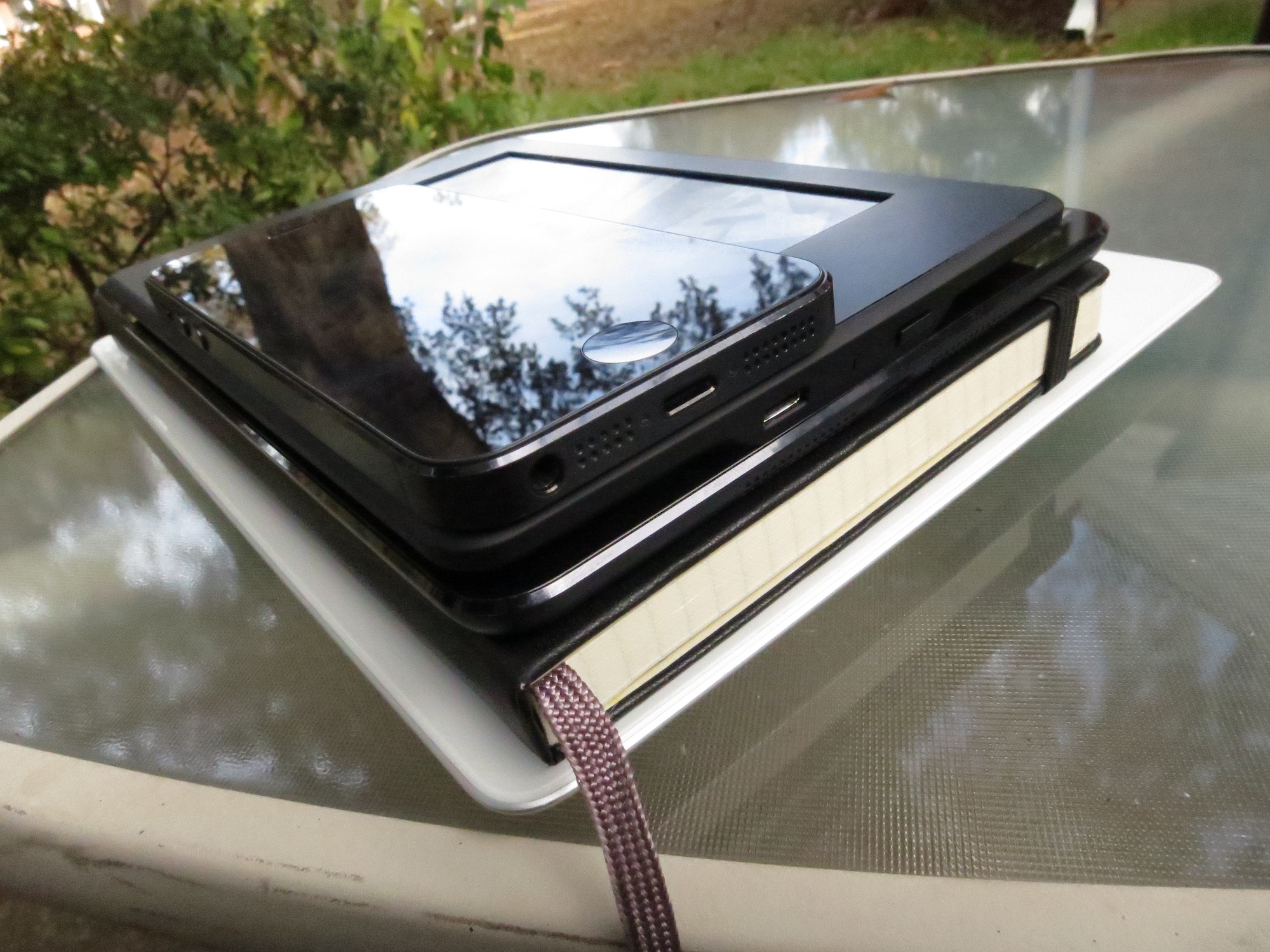
The screen may not have been amazing, but I loved the size. Here’s a photo from my review of an iPhone 5, Kindle Paperwhite, iPad mini, and Moleskine notebook, all atop an iPad 3:
Evolution
The next year, the iPad mini got what everyone wanted: a Retina display, at a glorious 326 pixels per inch.
It also came with an updated bigger brother, the iPad Air, which was an amazing device in its own right.
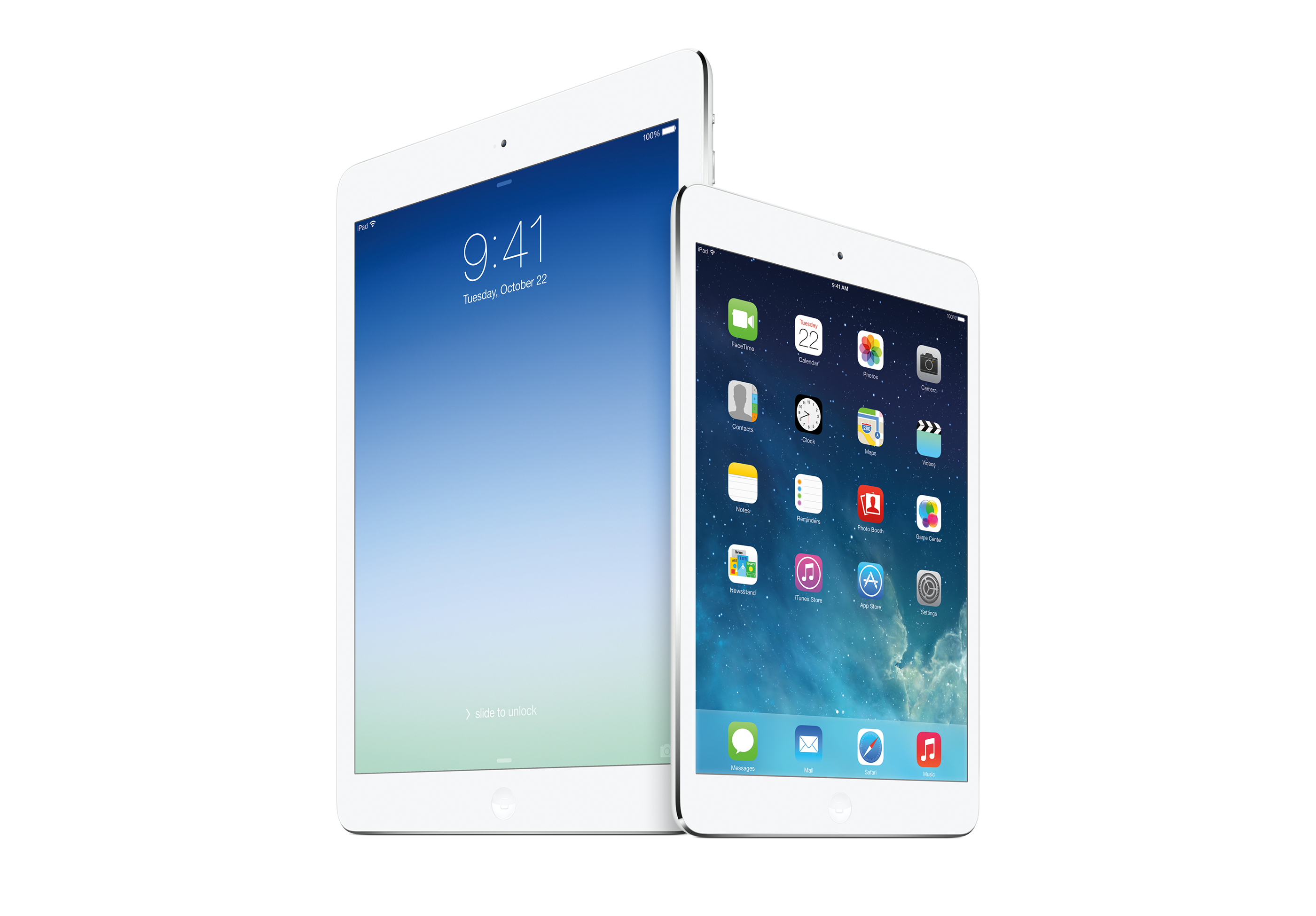
As it turns out, they were less like siblings and more like twins, with basically identical specs. You simply chose your size.
In 2014, Apple revised the iPad mini again, adding Touch ID. However, it remained on the A7 processor, while the iPad Air 2 got bumped to the much more powerful A8. The Air 2 unlocked a new era of productivity for iPad users, and when iOS 9 shipped in 2015, the Mini 3 didn’t support Split View, which was a true bummer. The iPad mini 4 with an A8 was released the same month as iOS 9, but customers with year-old iPad minis were left out in the cold.
The Wilderness Years
The iPad mini 4 was on sale for four years, from September 2015 until March 2019. In that time, Apple released:
- The iPhone 6S and 6S Plus
- Several iMac updates
- The 4th-gen Apple TV
- The original 12.9-inch iPad Pro
- The iPhone SE
- The 9.7-inch iPad Pro
- The iPhone 7 and 7 Plus
- First-generation AirPods
- The Series 2 Apple Watch
- The original line of TouchBar MacBook Pros
- The 5th-gen iPad
- The 2nd-gen 12.9-inch iPad Pro and the 10.5-inch model
- More new iMacs
- Apple Watch Series 3
- The iPhone 8 lineup
- The iPhone X
- The 4K Apple TV
- My beloved iMac Pro
- The original HomePod
- The 6th-gen iPad, with Apple Pencil support
- Two more generations of the TouchBar MacBook Pros
- The iPhone XR, XS, and XS Max
- Series 4 Apple Watches
- The Retina (Intel) MacBook Air
- The space gray Mac mini
- iPad Pros with Face ID
It was a bleak time for iPad mini users.2 Even some of the biggest fans of the small tablet lost faith.
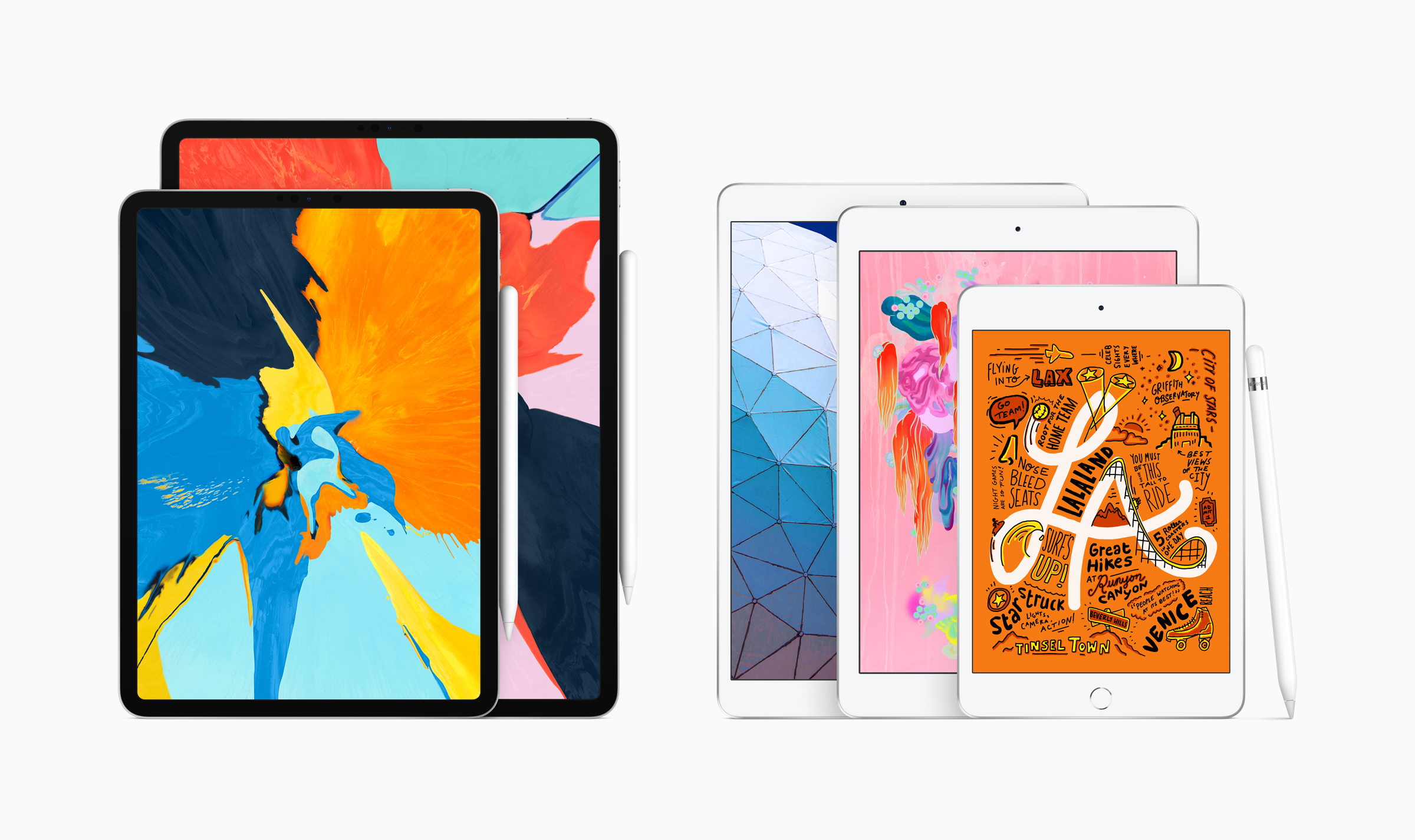
For their waiting, Apple rewarded them with an updated iPad mini with the then-modern A12 Bionic and support for the first-generation Apple Pencil. For the first time in years, the iPad line made sense, from top to bottom:
Still, it was hard to shake the feeling that the iPad mini had been ignored — and even updated — for a reason. It just wasn’t the direction Apple saw the iPad going.
The iPad mini 4’s long life spans many of the years when Apple seemed to view the iPad as the future, with the Mac being the most lost it had been since the mid 1990s. With that worldview, it’s clear the iPad Pro and iPad Air were far more important than the Mini, with the no-adjective iPad key to getting people (and kids!) into the ecosystem. Besides, all those great iOS/iPadOS features Apple has been rolling out worked best on a larger display.
A New Lease on Life
In September 2021, Apple revised the iPad mini with its biggest update since adding the Retina display eight years earlier.
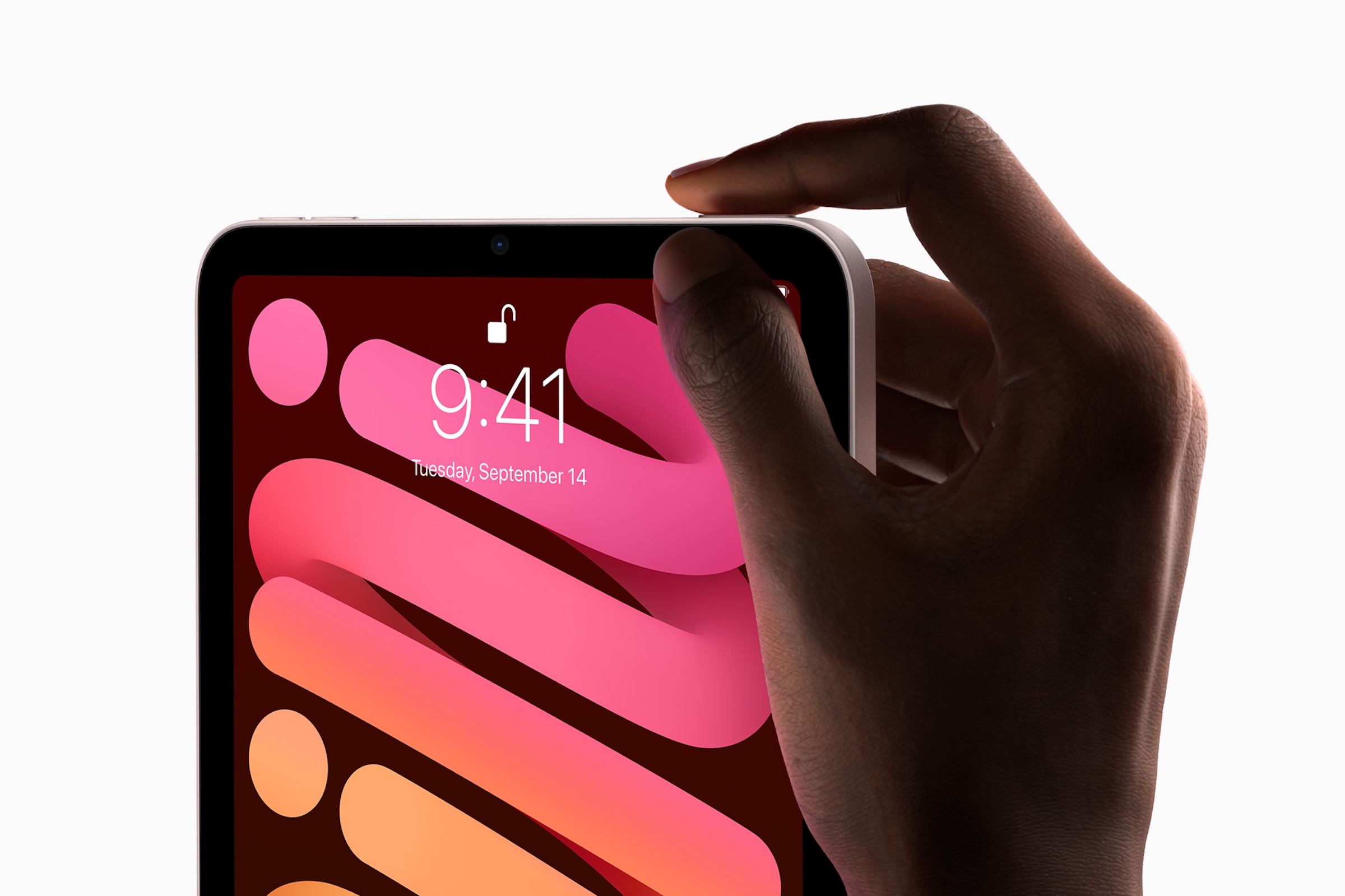
This iPad mini inherited years of advancement from its larger siblings. It was basically a smaller iPad Air, like it had been back in the glory days of the iPad mini 2.
This time around, it meant the iPad mini had flat sides, supported the second-generation Apple Pencil, included USB-C, and better supported iPadOS multitasking thanks to its larger 8.3-inch display. It was powered by the A15 Bionic, Apple’s flagship chip at the time.
Here’s what I wrote at the time:
It shouldn’t be surprising that this [update] is all about the form factor. Dating back to the original, the iPad mini has always been about size first, and this new industrial design suits it very well. Getting rid of the large bezels and moving to the new Touch ID makes this iPad portable in a new way. Coupled with a good set of speakers and USB-C, it’s a modern iPad in a small form factor.
Federico Viticci fell in love:
The new iPad mini owes much of its design and feature set to the fourth-generation iPad Air, which I reviewed last October and called the new baseline for a “portable, versatile computer for everyone”. Like the Air before, the mini does away with the classic, Home button-based design of the previous generation in favor of a variation of the iPad Pro design: it doesn’t have a physical Home button and comes with a Liquid Retina display. And, again, like the Air before, the mini doesn’t rely on Face ID for authentication but instead relies on a Touch ID button placed in the top right corner of the device (when used in portrait mode).
He went on:
In the iPad Air, you can see some traits of the Pro line trickle down to an affordable model that more people may consider as a lightweight laptop replacement. The iPad Air is a consumer tablet with iPad Pro aspirations: its display size is, effectively, equivalent to the 11” iPad Pro, and it even supports the same Magic Keyboard of its more expensive and performant relative. The new iPad mini has no such aspirations. Instead, the iPad mini flips the iPad Pro aesthetic on its head and asks: what if the iPad Pro’s industrial design, with its focus on gestures and the display, could also work in a tablet that is unashamedly portable and designed to be held at all times, rather than propped up on a keyboard?
I believe this is the crucial difference to understand between the iPad Air and new iPad mini.
In short, this was the iPad mini many people had been dreaming of, and it really delivered. It was a fantastic product, and Apple followed up three years later with a version powered by the A17 Pro. It was a year old by then, but it allowed the iPad mini to run Apple Intelligence… for whatever that was worth.
The Future
That is where the iPad mini stands today. Larger iPads now run atop Mac-class Apple silicon, but the mini is still a perfectly reasonable choice for those who want a small tablet.
It seems that the iPad mini is set to receive an update this fall. The new iPad mini is expected to ship with a larger 8.7-inch OLED display, a new SoC, and possibly increased water resistance, which would be a first for the iPad line.
This sounds like an excellent update, and one I will be tempted to check out personally.
However, as Yoda once said, there is another.
A Problem, Mostly Imagined?
The another, of course, is the folding iPhone.
The folding iPhone and iPad mini will have similarities.
If it’s anything like the Galaxy Z Fold 8 — and it probably is — when it is open, it is going to come in around 7.6 inches, corner-to-corner. That is awfully close to the original iPad mini’s size of 7.9 inches, but it still falls short of the current iPad mini’s 8.3 inches, let alone the rumored size increase coming.
The iPad mini going OLED will be a nice update, and while we haven’t seen what Apple is doing on the inside of the foldable, we know interior screens usually come with trade-offs in quality and durability.
The two devices will also be similar from the software perspective if the foldable can run two iPhone apps side by side on its interior screen. I don’t think we will see a full-blown iPadOS-like interface in there, but even two apps side-by-side will be enough for the multitaskers out there.
I also don’t think it matters all that much.
It is hard to imagine someone walking into an Apple Store unsure whether they want a folding iPhone or an iPad mini.3
As phones have gotten larger and iPadOS more complicated, the iPad mini has been squeezed from both sides, and nothing about that is changing this fall. A new iPad mini with an OLED display will be awesome for iPad mini users, but it’s probably not going to tempt people who want a foldable iPhone away.
Apple has seemingly overlapping products all over the place, with different trade-offs making sense for different people. A folding iPhone isn’t going to kill the iPad mini, just as the 15-inch MacBook Air hasn’t killed the base-model 14-inch MacBook Pro. Some folks want a high-end Series 11 Apple Watch, while others want an Apple Watch Ultra.4 Even with the differences between the iPad mini and folding iPhone, I suspect both will be just fine.
-
The Lightning port was also introduced to the iPad with this model, which was good or bad news, depending on how new your iPhone was.) ↩︎
-
If you were a Mac fan and loved the iPad mini, it had been a depressing few years, but as the 2010s drew to a close, a new hope was dawning for you in Apple silicon-powered Macs and a more modern iPad mini. ↩︎
-
Even if someone is buying a new iPhone and Mini at the same time, it’s possible the foldable will be more expensive. ↩︎
-
These are not perfect comparisons, given that every Mac and every Apple Watch run the same software, and the iPad mini and iPhone Ultra may have differences, but I don’t think they will matter much. ↩︎