
Apple just unveiled its new high-end notebook, the MacBook Pro with PROLED XDR Display. The name is a mouthful, but it makes a lot of sense, as the normal MacBook Pro is still alive and well.1
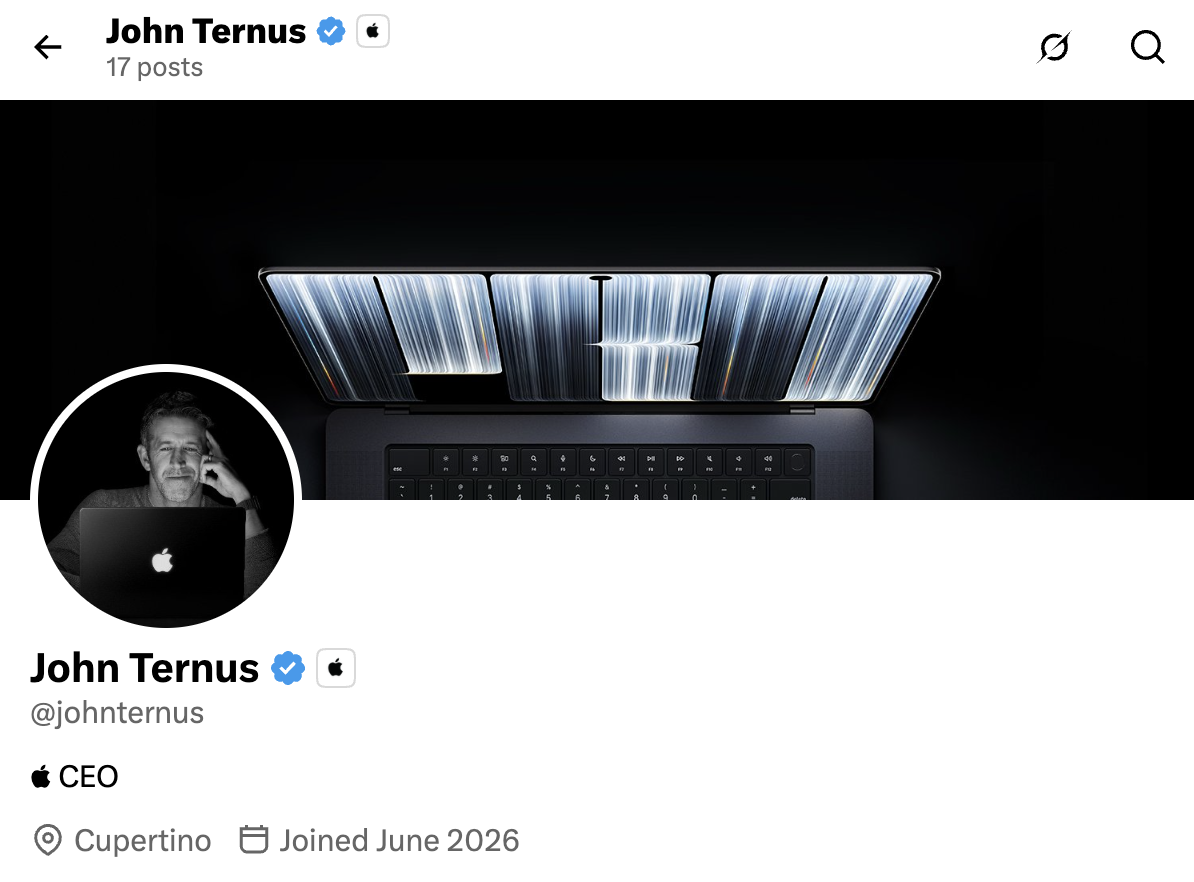
The most important thing about this laptop is that the Apple logo lights up on the lid. I will never forgive Jony Ive and Tim Cook for taking that away ten years ago. I understood it on the 12-inch MacBook in 2015, but taking it off the MacBook Pros was in poor taste.
John Ternus’ new X (gross) profile photo is all about this detail:
In terms of specs, the two classes of MacBook Pros are very similar. Both use the M5 Pro or M5 Max,2 and both top out at 128 GB of unified memory. The OLED model can be had with a 16 TB SSD for a cool $7,000. Here are the main areas in which the specs differ:
| MacBook Pro with PROLED XDR Display | MacBook Pro (Liquid Retina XDR) | |
|---|---|---|
| Max Storage | 16TB (M5 Max) | 8TB (M5 Max) |
| Max RAM | 128GB (M5 Max, 40-core GPU) | 128GB (M5 Max, 40-core GPU); M6 tops out at 32GB |
| HDR Peak Brightness | 2000 nits | 1600 nits |
| SDR Brightness | 1000 nits sustained, 2000 nits peak (outdoor) | Up to 1000 nits (outdoor) |
| XDR Reference Modes | P3-2000 nits; P3 + Adobe RGB-2000 nits | P3-1600 nits; Apple Display (P3-600 nits) |
| Additional Reference Modes | Adobe RGB D50/D65, HDR Photography, DICOM 350/600 nits | — |
| 14" Weight | 3.0 lb (M5 Pro) / 3.1 lb (M5 Max) | 3.4 lb (M6) / 3.5 lb (M5 Pro) / 3.6 lb (M5 Max) |
| 16" Weight | 4.0 lb (M5 Pro) / 4.1 lb (M5 Max) | 4.7 lb (both) |
The big story here is the display. Here’s a bit from that press release:
The new MacBook Pro debuts the PROLED XDR display, which uses tandem OLED technology and advances it with breakthrough innovations in every layer, advanced algorithms in the display engine, and a state-of-the-art factory calibration process to deliver Extreme Dynamic Range (XDR) and stunning visual fidelity. With exceptional brightness, striking contrast, and vivid true-to-life colors, PROLED XDR offers the ultimate front-of-screen performance, enabling a new level of visual acuity and precision for content creators, photographers, colorists, and designers who need a reference-caliber display on the go.
PROLED XDR is the world’s best laptop display, delivering true-to-life color and unparalleled brightness and contrast. The PROLED XDR display offers tandem OLED technology unlike any other, with deep innovations in its layers that keep brightness and grayscale uniform across the entire display, while minimizing internal reflections common in traditional OLED designs. It’s all backed by advanced algorithms in the display engine that precisely control each pixel in real time, plus a meticulous manufacturing process and precise calibration of every panel for consistency from display to display.
PROLED XDR offers up to 2000 nits peak HDR and SDR brightness, allowing specular highlights to shine with stunning intensity. And through optimizations in the tandem OLED panel and custom compensation techniques, combined with precise control of light across the display, the PROLED XDR display achieves an industry-leading 10,000,000:1 contrast ratio, so even the deepest shadows reveal incredible detail, bringing HDR content remarkably close to reality.
The tandem panel is built for professionals, and I think it shows. Its wide color gamut will be appreciated by some, as will the 2000 nits peak SDR brightness.
The notch of the current design is gone, and the Dynamic Island has washed ashore on macOS. I dig it.
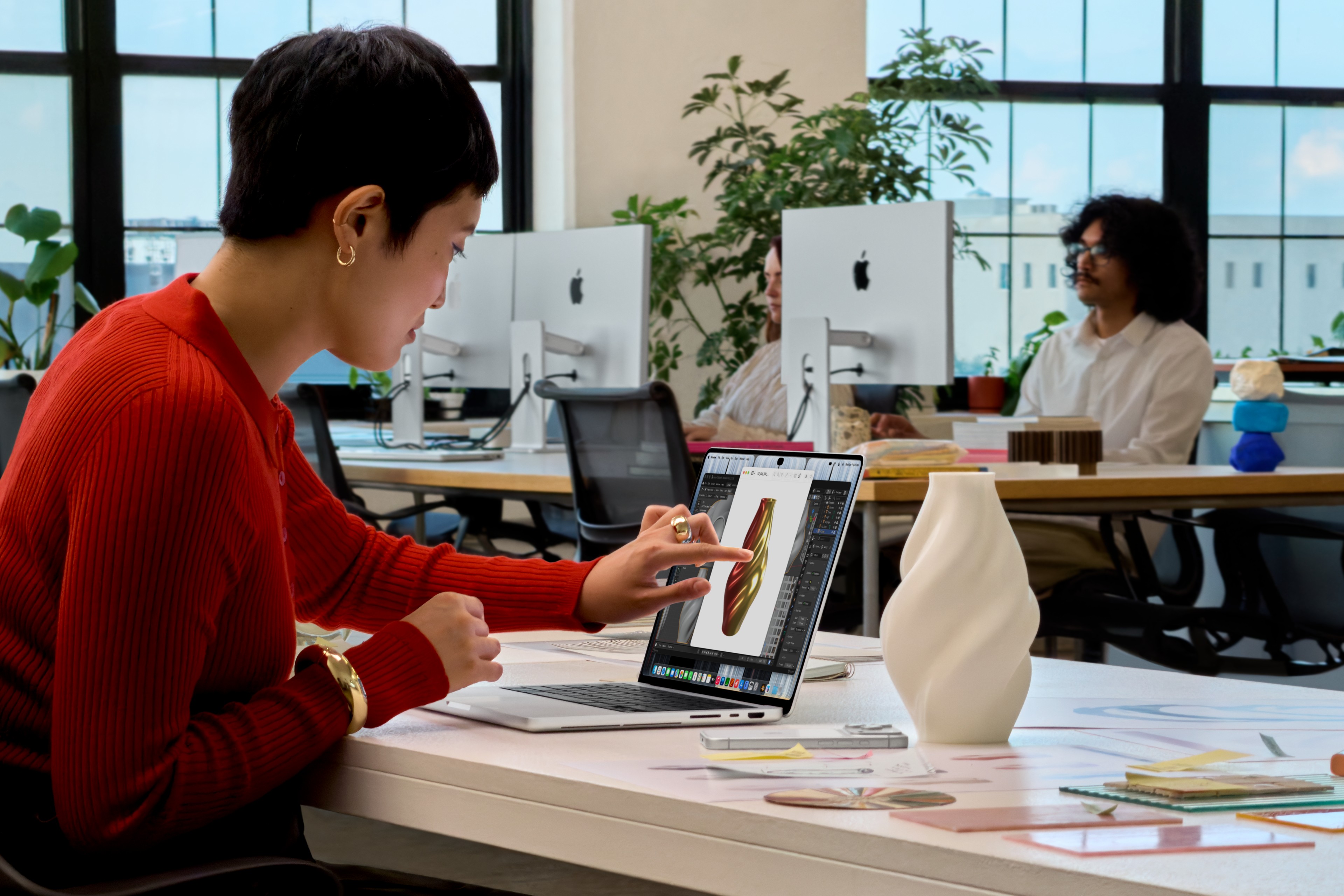
…but this display won’t be remembered for any of that stuff. It will be remembered for this:
Back to Apple:
Thoughtfully designed for Mac, Touch introduces a whole new way to interact with your work. The Touch sensor is built directly into the display panel — not layered on top of it — reducing latency so you feel like you’re touching the content itself. Everyday experiences like scrolling and pinching to zoom feel natural and responsive. And new, intuitive interactions let you do even more, like manipulating 3D objects or playing virtual instruments.
macOS has not followed Windows into the world of design elements overhauled for touch. There are some minor tweaks like increased menu spacing and small animations to assist when touching the UI, but this version of Golden Gate is very, very similar to the one we’re all running today.
I think this was exactly the right way to add touch to the Mac. As someone sticking with his M4 Max MacBook Pro, I don’t feel like I’m missing out on the future of the Mac. I’m sure this will be cool when I eventually upgrade from this notebook.
Jason Snell compares this strategy to one where Apple makes some convertible machine that’s more like an iPad when folded around:
If Apple wants to make that laptop in the future, it can—and it can add a more complex touch mode then. Instead, this interface strikes me as Apple doing right by its own MacBook Pro users by making the touch interface nice, but also acknowledging that for most people, touch will be an additive part of interfacing with their Mac, on top of keyboard and trackpad.
That said, one portion of Apple’s intro video showed a developer using Xcode to test an iOS app, and they were touching the app in the iOS simulator. That… is a really cool use case. For the first time, developers will be able to touch their apps right on their laptop screen during development.
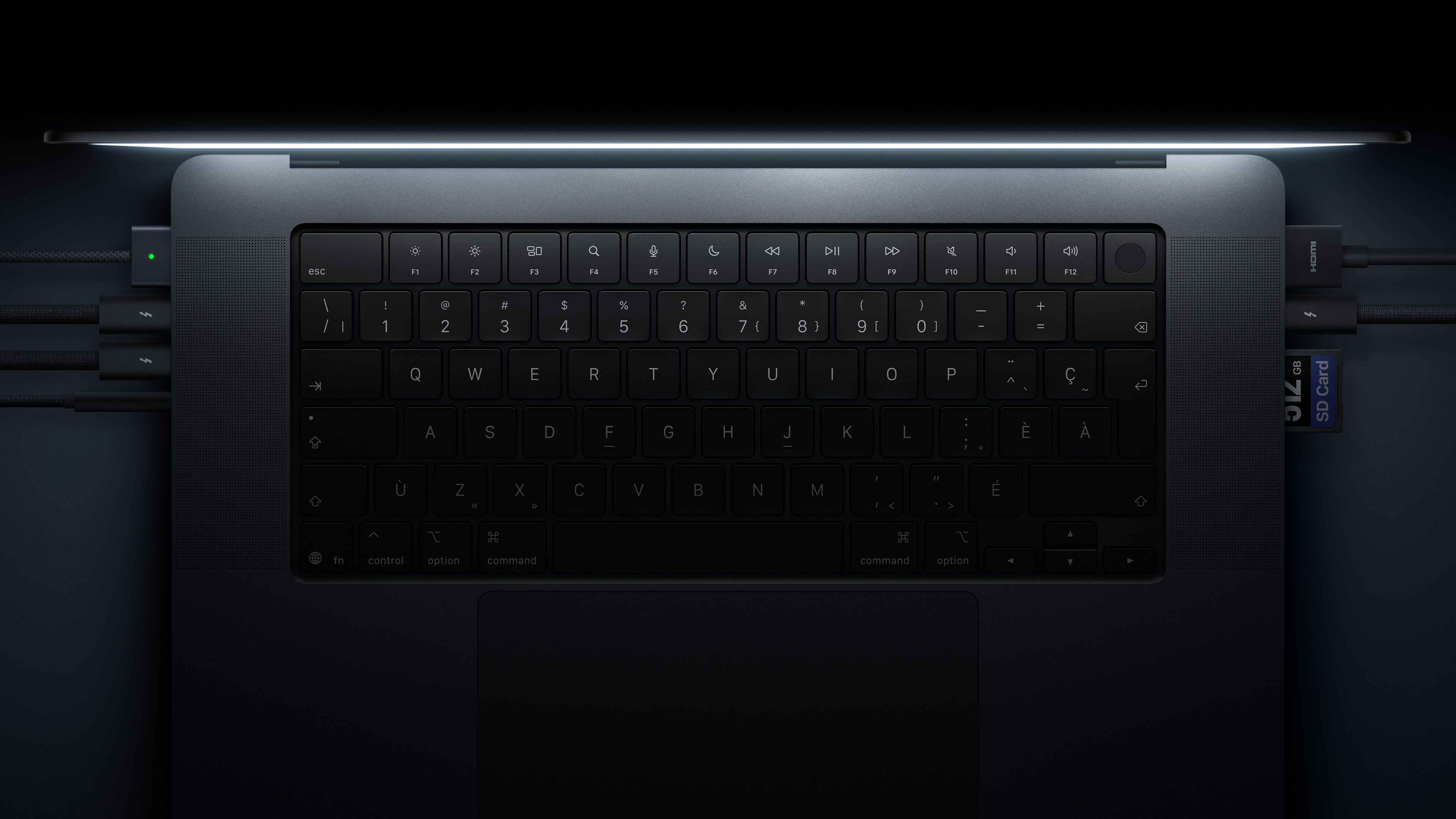
The chassis is both thinner and lighter on this machine, but not to the detriment of usability. Mercifully, all of the ports have survived, and Apple is boasting about an even better sound system than before.
All in all, this is exactly what most people expected, and I think that’s great. In the past, big swings with the MacBook Pro have led to some serious misses. Playing it safe — while still moving things forward — is the right call for such an important product.
These new machines are more expensive than the regular MacBook Pro, but not by as much as I feared. The PROLED models start at $2,899 for the 14-inch and $3,399 for the 16-inch, both with the M5 Max. The existing MacBook Pro starts at $2,499 and $2,999, respectively. Pre-orders are up now.
-
I am thankful for clarity in the name, but in the history of dumb Apple names … we may have a new winner. ↩︎
-
Mark Gurman has reported that the M6 Pro and M6 Max have been tossed overboard to move more quickly to the M7 generation of Apple silicon. Time will tell if he’s right, but it sure seems like he may be. ↩︎