
The gem of a video maybe be cringeworthy today, but Apple’s past is littered with a bunch of other not-so-awesome video projects. Here are a few of my “favorites” from the 1980s and 90s:
Category: Apple History
I Think We’re a Clone Now⇢
In the dark days of the 1990s, Apple had a license program allowing other companies to build and sell Mac OS-running computers. This is an internal Apple video that made the rounds in 1994 about the program.
I have no words.
via @ohples Update: Here are some more awkward Apple videos from the 80s and 90s.
Apple History: Nine notebooks worth remembering⇢
This month in my column over on iMore:
Apple’s been making notebooks almost as long as the Mac has been around: Here are nine models in its storied history that I think are worth knowing about.
I had a lot of fun putting this one together.
An interview with Kristen Gallerneaux, on the The Henry Ford Museum’s working Apple I
This week marks the 40th anniversary of the Apple I. It was’t a computer like the way we think of them now; it really was just a hand-built board with some accessories that users had to supply.
I recently got the chance to speak to Kristen Gallerneaux, the Curator of Communications and Information Technology at The Henry Ford Museum. Kristen and her team acquired an Apple I, which can currently be seen in the museum.
Apple I turns 40
Another in a slew of recent anniversaries, the computer that started it all turns 40 today. The Apple I isn’t a computer the way we think about computers now; your $666 got you a logic board. You had to bring a power supply, keyboard, display and tape drive to make it usable.
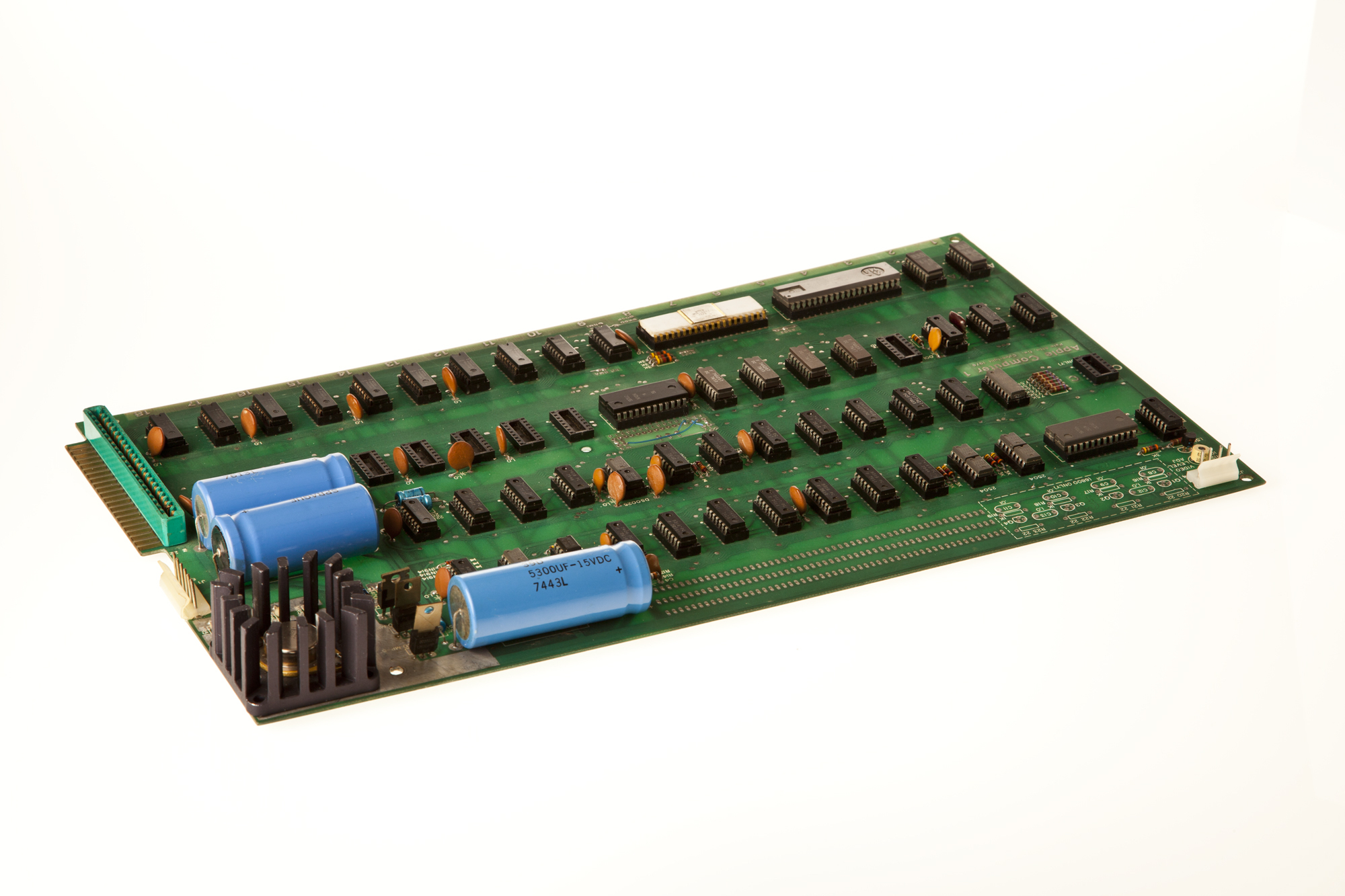 Image via The RetroMacCast
While this BASIC-running machine seems incredibly simple today, it sparked the personal computer revolution. It showed that computing didn’t have to involve punch cards and machines you couldn’t actually see or touch. While it was a hobbyist device and the Apple II would turn the corner toward the consumer market, we owe a lot to this little logic board.
Cassie⇢
I had seen photos of this prototype Apple keyboard, but now I know a lot more:
Cassie is pure SnowWhite. What computers would it look good with? Perhaps a Mac SE or Apple IIgs, but even those strike me as a little too sharp-edged and hard. A computer to go with Cassie would have to be soft, like Esslinger’s other designs of the period.
via @morrick
Leo Laporte interviews Bill Atkinson⇢
This is simply wonderful:
40 years in 40 songs⇢
Apple has published an Apple Music playlist highlighting some music from its rich history of ads. There are some fun songs in here.
iMac G3 Hunt
2016 collecting goal: every color of iMac G3. ¯\_(ツ)_/¯
— Stephen Hackett (@ismh) March 17, 2016
I want to put together a video on the Mac that saved Apple.
The problem is that there are a lot of iMac G3s. While many of the colors are present on multiple generations, I’m not worried about those details for this project. I just am looking for one each case type.
Here’s where I am so far:
Four Decades of History⇢
While I didn’t outline Apple’s history in glorious detail, Joe Rossignol ove at MacRumors has. What an amazing four decades.
40 years of Apple
40 years ago, Apple Computer, Inc. was born. While I certainly could wind a path through four decades of computers and products, software and services, I think that today is more about the why of all of it.
Why do we obsess over tiny design and development changes and decisions?
Why do we get into spats on Twitter about mobile operating systems?
Why do we care so much about an enormous, publicly traded company?