
This is the sort of thing that excited me when Apple announced the Smart Cover.
Category: Design
Windows 8 Preview
I love the Metro UI on Windows Phone 7. It will be interesting to see how it scales to the desktop. If Microsoft pulls the trigger on this, it will be the biggest UI change Windows has seen in years. Part of me is sad that currently, the company is showing this off as an alternative interface, that works beside the standard UI.
Of course, this is part of a larger trend — OS X Lion pulls lots of UI elements from the iPad.
On the Golden Gate Bridge
The Golden Gate Bridge was an engineering marvel. The site alone — buffeted by high winds and split by the swirling currents of the Golden Gate — made construction treacherous. The sheer size of the bridge (the longest suspension bridge in the world until the Verrazano-Narrows Bridge opened in 1964) required several innovations in bridge-building technology, especially when it came to constructing the two colossal towers in — and under — turbulent water.
Of all the mind-boggling statistics surrounding the bridge’s construction, and there are plenty, perhaps the most jaw-dropping involves the two main suspension cables. Each measures 7,659 feet in length and each used hundreds of pencil-thick wires bound together to make a cable just over three feet in diameter. In all, more than 80,000 miles of steel wire was needed, enough to circle the Earth three times.
An Interview with Dieter Rams
I am not going to add any commentary to this. There’s just nothing I can so but WHY ARE YOU STILL HERE?
[via MacStories]
Hold it ‘Naked’
I don’t use a case on my iPhone, and most probably never will. Apple made the thing to be a beautiful little block of glass. Precision engineered to be as slim and light as possible. It just feels perfect when you hold it. A case - any case - ruins that. If you have an iPhone and use a case, take it off for a second. Just hold it ‘naked’ for a second, and remember how it’s supposed to feel.
Maybe Size Does Matter
Casey Johnston at Ars, on the HP Veer:
While webOS remains a promising platform with many desirable features, we ultimately found that the Veer, both in terms of physique and power, is not sufficient for anyone performing more than very light and infrequent tasks on their smartphones. The inclusion of a physical keyboard makes the phone decent for messaging (though its keys are quite small) but the size of the screen and the underpowered processor can make moderate to heavy use a chore. The Veer is targeted at those who want latitude in the capabilities of their communication device, but have only a light reliance on the various functions a smartphone can perform.
Old Apple Startup and Crash Sounds
Be sure to check out the crash sound for the Power Macintosh 6100/60AV. It is my favorite, by far.
Long Live Adobe FreeHand
On Fantastical
My buddy Dave over at TUAW, on Fantastical, a new calendar app by Flexibits:
This handy app lives in your menu bar, providing quick access to your many appointments across calendars (including iCal or Outlook 2011). Fantastical supports incredibly rapid and natural full-text entry for appointments, making it easier than ever to get your events where you need them. It looks great, works well and is definitely worth your time.
Every review I’ve read of this app is positive. It seems to work well, and it looks great. However, I’m not convinced of why it exists. Here are my thoughts, in no particular order:
‘Not a Netbook’
The eMate is not a netbook. Wikipedia defines a netbook as a category of small, lightweight, legacy-free, and inexpensive laptop computers. Although the eMate has a small 6.81 inch display, weights just 4 lbs., lacks an optical drive, and cost $800 in 1997 it is not a netbook. The word netbook implies a clamshell computer with a network connection, and out of the box the eMate 300 has none.
The origins of the netbook can be traced to the Network Computer (NC) concept of the mid-1990s, but the eMate has no ethernet jack for dependable wired access, and no wifi for convenient wireless internet. Its IrDA infrared port is best used for beaming small snippets of information, and the Newton 2400 bps fax modem was an optional accessory. Even Apple’s Internet Enabler software, vital for deciphering a TCP/IP connection, was never preinstalled. It takes a complicated bootstrap process with a “old world” Mac to get the eMate online, and once you have struggled through that mess you have all of the eMate’s 25MHz ARM processor, 1MB of RAM, and no browser to surf the internet with. The eMate is a hobby of a network computer at best but still Wikipedia lists it as an example of one of the very first netbooks.
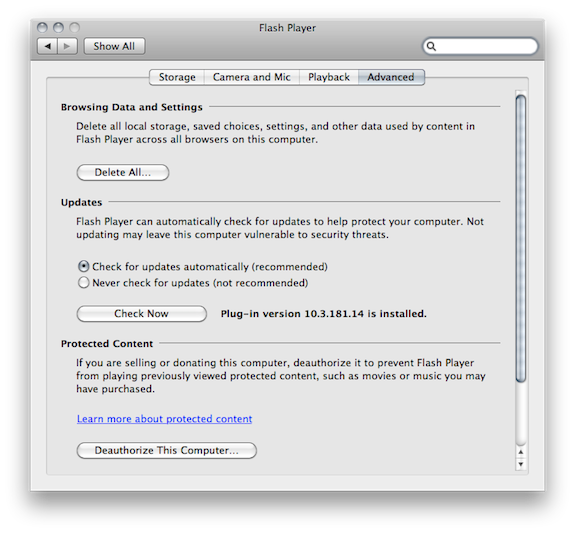
Only Adobe Would Use a Scrollbar in System Preferences
The Omni Group, on Creating iPad Apps
This video is simply great.