512 Pixels

Google Joins Anthropic in Leasing Compute from SpaceX/xAI⇢

Sean O’Kane, Techcrunch:

SpaceX has lined up another compute deal ahead of its historic IPO, this time with Google. The company announced the deal in a regulatory filing on Friday.

Under the terms of the deal, Google will pay SpaceX $920 million per month from October 2026 through June 2029 for access to “approximately 110,000 NVIDIA GPUs, CPUs, memory, and other related components.”

The deal is similar in length and scope to the one SpaceX announced with Anthropic in late May. As part of that deal, Anthropic agreed to pay SpaceX $1.25 billion per month through 2029 to rent all the available compute from its Colossus 1 data center near Memphis, Tennessee that xAI — now part of SpaceX — originally built for its own artificial intelligence efforts.

Lynn Doan, Bloomberg:

The cloud deal isn’t the only pact that Google and SpaceX have been engaged in talks over. The two companies had been discussing launching the search company’s test products for orbital data centers, a person familiar with the matter said in May. Google previously said it was exploring deals with other launch providers for what the company called Project Suncatcher.

The Anthropic deal was for access to “over 220,000 NVIDIA GPUs,” the entirety of Colossus I.

It’s unknown how many GPUs currently make up Colossus II, xAI’s second Memphis data center, but it seems like Google is leasing a good chunk of what’s available there.

Clearly SpaceX sees leasing hardware to its competitors as more valuable than using it to power Grok. Given that the company will be making north of $2 billion a month between the two deals, it’s hard to disagree.

Notably, Google is building a data center in West Memphis, Arkansas, just on the other side of the Mississippi River from Memphis. That project was estimated to cost $4 billion. It won’t be long before the company pays that amount to SpaceX for rent.
The Fitbit Air’s Sleep Tracking is Trying to Keep Me Up at Night

I’ve worn an Apple Watch for sleep tracking for ages, using our very own Sleep++. Over the last couple of weeks, I’ve also been wearing a Fitbit Air, slowly taking notes for a full review.

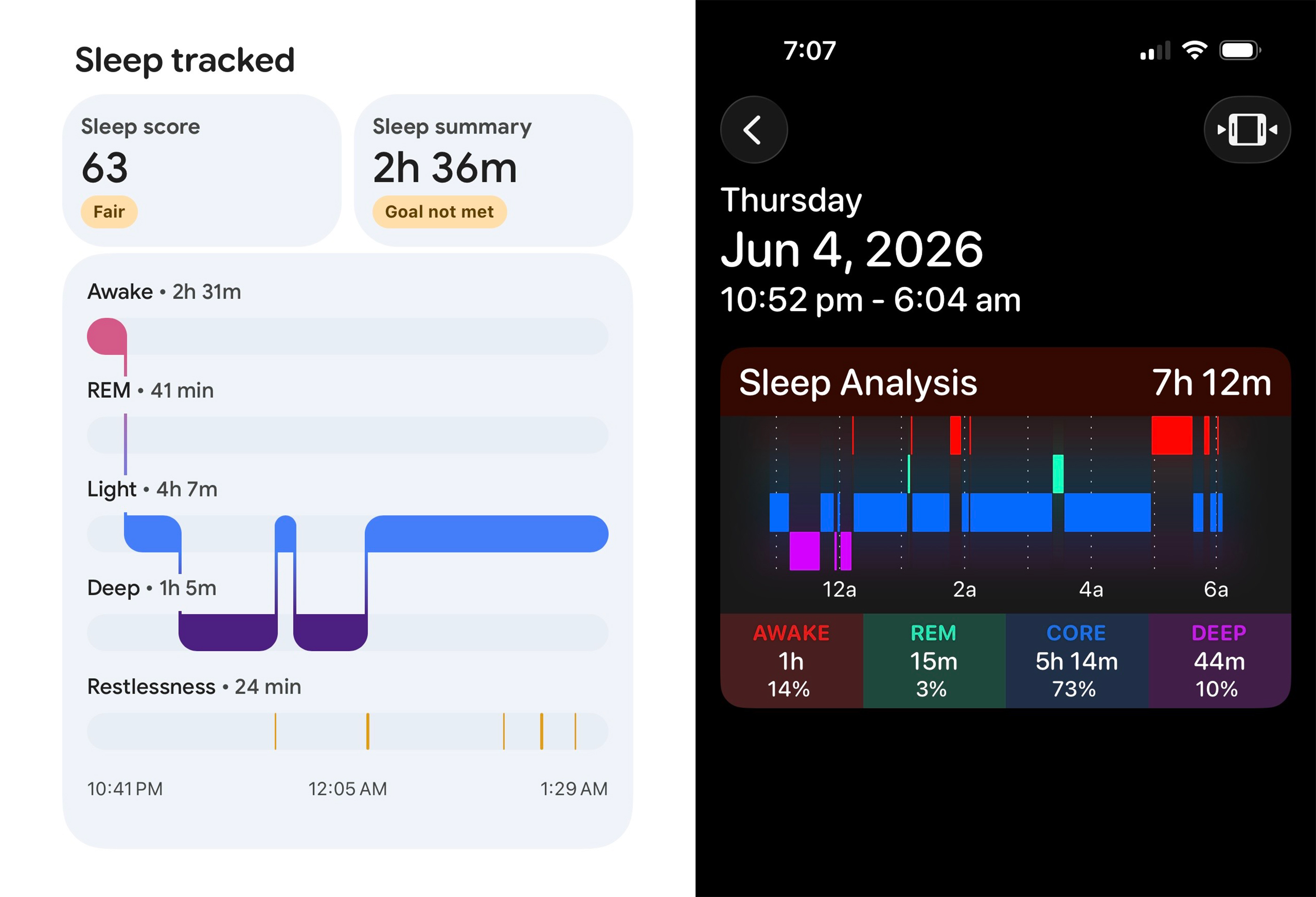
So far, the data it tracks is roughly similar to that of the Apple Watch, except for sleep. If you wake up at any point, Google Health stops tracking sleep for the night and gives you a horrific sleep score:

Fitbit Air Sleep Tracking

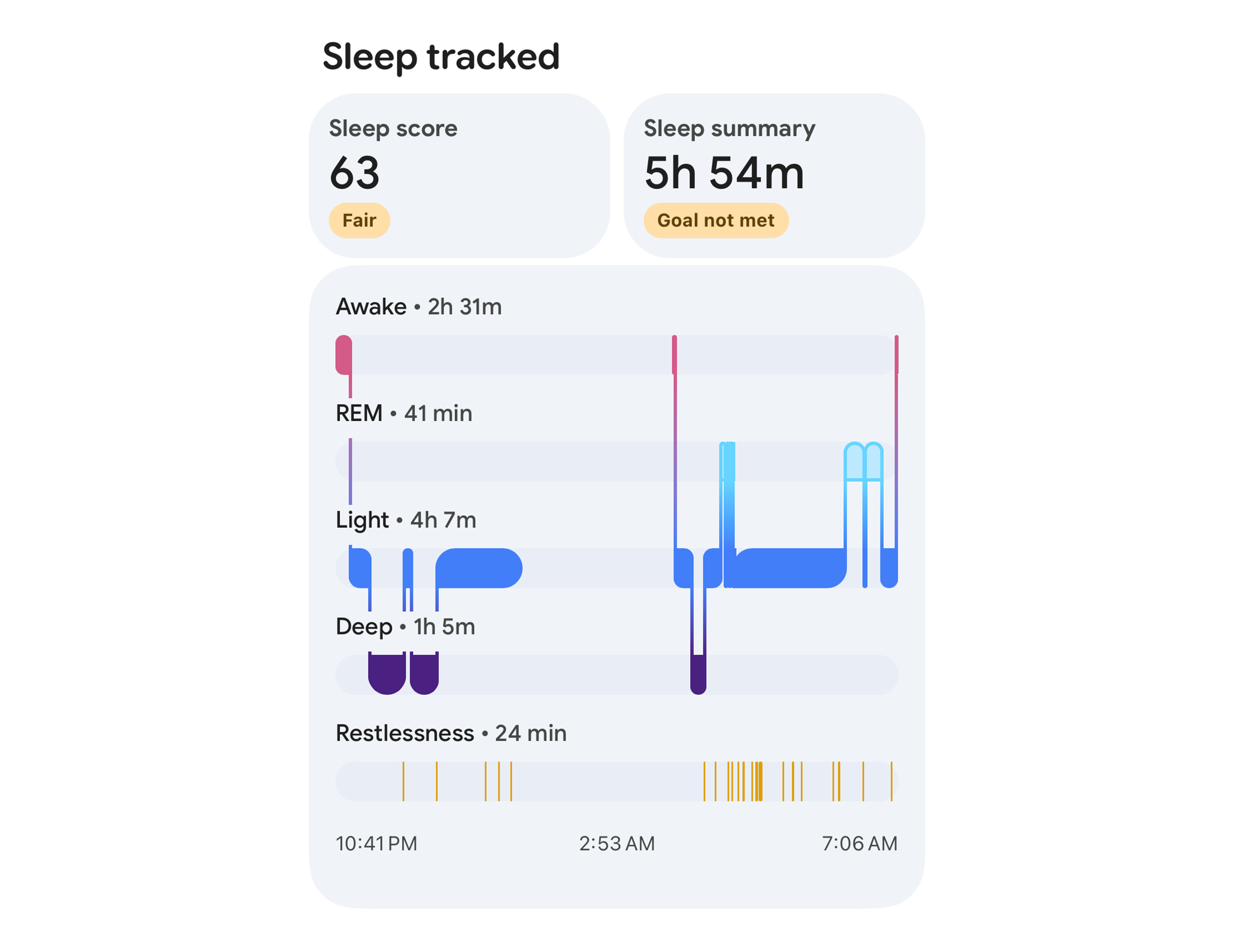
At least at first. When I checked Google Health a little bit later, it had added additional time to my night:

Adjusted Sleep

There’s a lot I don’t like about Google Health, but this goes beyond personal taste. Showing me reliable information when I want it should be the priority for health apps.

Ah Yes, Engagement

In the wake of Twitter dying, I’ve found myself using some combo of Mastodon, Bluesky, and Threads. The first is where all the nerdy folks hang out, and Threads has become more newsy for me. As much as Threads wants you to forget that it is owned by Meta, its true nature sometimes comes out. The most recent example is how it handles message previews.

Here’s a post I went to share with my brother:

Threads post

It’s pretty straightforward — some text and a link with an image preview. You would think that the preview would contain at least some of that information. Well…

Threads Preview

The white gradient obscures most of the content in the preview. Technically it does, but in a way that’s clear that Threads wants you to click through to its app or website. Gross.

Microsoft Killing Office 2019 for Mac⇢

Tim Hardwick at MacRumors:

Microsoft will prevent Office 2019 for Mac owners from editing their documents from July 13, a restriction the company is attributing to the productivity suite’s expiring digital certificate.

The Office 2019 apps affected include Word, Excel, PowerPoint, Outlook, and OneNote. Once the certificate used to confirm the suite’s license expires, these apps will drop into what Microsoft is calling “reduced functionality mode.” In other words, users will still be able to open, view, and print existing documents, but creating, editing and saving documents will be disabled. The same restriction will apply to iPhone and iPad apps that can’t be updated, according to Microsoft.

He goes on:

Microsoft has actually renewed the suite’s certificate, but the fix can only be delivered through a software update. That means users of Microsoft 365 and Office 2021 are in the clear – they’ll receive the update, so neither will be affected. However, Microsoft stopped offering support for Office 2019 on October 10, 2023, and the suite has received no updates since. As such, it won’t be updated to version 16.83, which is the release that includes the renewed certificate.

This is gross and Microsoft should find a way to let these users continue to use the software they purchased.

It’s Not Just About the Price

It’s Computex week, and that means there is a lot of PC news to take in right now.

Nvidia has announced RTX Spark, its Apple silicon competitor for notebooks and small desktops. This puts Nvidia in the same market as Qualcomm building Arm chips for PCs. Here’s Sean Hollister:

“This is the most efficient PC chip ever built,” says Nvidia senior director of product management Mark Aevermann — without sharing so much as a single statistic or chart to back that up.

[…]

Like Apple and Qualcomm’s chips, this Nvidia chip is Arm-based silicon, meaning legacy Windows software made for Intel and AMD’s x86 processors needs to run through an emulation layer to work. That can mean lower performance. But Microsoft has now spent years getting Windows and its Prism emulator ready for Qualcomm and now Nvidia chips, and Nvidia claims its own graphics and AI chops will take the idea further than ever before.

Microsoft, Asus, Dell, HP, MSI, and Lenovo have all committed to building RTX Spark notebooks, but have been light on details. I think most of these will take on the likes of the MacBook Air and MacBook Pro. They’ll come with the same trade-offs as Apple silicon Macs: basically no upgradability, but great battery life, assuming Windows has its act together.

The Windows world is also taking aim at Apple at the low-end, with several OEMs shipping would-be MacBook Neo killers. One such machine is the Dell XPS 13, as covered by Antonio G. Di Benedetto:

Dell is making good on its tease from CES and finally announcing a new XPS 13. The XPS 13 returns as a budget-friendly option, launching in July at a promotional student price of $599 — though that introductory deal only runs until September for back-to-school shopping; it’ll start at $699 for everyone else. The $599 promo exactly matches up with the MacBook Neo’s starting price, but students can actually get Apple’s budget laptop for $100 less. That means Dell has its work cut out proving that the XPS 13 is worth the extra money.

LTT has a roundup of a bunch of these machines, some of which are getting around current RAM pricing by including an empty RAM slot for users to populate themselves, such as the Lenovo Ideapad Slim 5i.

(RIP folks running Windows 11 on 8 GB RAM.)

Much of this coverage misses the biggest point in my mind — the operating system. If I had three $599 laptops in front of me: a Chromebook, a PC, and a MacBook Neo, I’d choose the Neo because I want to run macOS.

If Apple can continue to educate the public about how tightly integrated the Mac is with the iPhone, and why macOS is a superior choice over Windows, the MacBook Neo will continue to be just fine.

Extensive Damage at LC-36⇢

A few days after a New Glenn rocket exploded on the launch pad, the damage left behind is coming to light, as Loren Grush writes at Bloomberg:

Photos of the blast’s aftermath reveal that the accident caused significant damage to the launchpad infrastructure in Cape Canaveral, Florida, destroying a key apparatus used to support and transport the rocket for flights and causing one of two lightning towers to collapse. Other hardware nearby also appeared considerably scorched. The explosion was so destructive that it generated seismic waves.

Rebuilding New Glenn’s sole operational launchpad will likely pose the biggest hurdle to resuming flights. While the company is building a launch site in California, the vast majority of the missions were slated to occur in Florida.

How long it will take to rebuild is anyone’s guess, but even with a billionaire owner, Blue Origin is going to need some time. The before and after photos are pretty rough.

That said, Blue Origin seems hopeful that things won’t be that bad, as Eric Berger reports:

Writing on the social media site X, Blue Origin’s Dave Limp said the company had been able to complete a preliminary survey of the LC-36A launch site.

“Now that we’ve had access to the pad and integration facility, we can share a bit of good news,” Limp said. “The propellant farm, oxygen, liquid hydrogen and LNG tanks are all in good shape. This is good luck because these are very long lead items. The water tower is also good.”

Berger continues:

Limp also confirmed that the company would press ahead with a rebuild of the LC-36A site, which is designed for the 7×2 variant of the New Glenn rocket. One option had been to focus on building a larger pad next door, at LC-36B, capable of supporting the larger 9×4 variant of the rocket (the nine and four, respectively, refer to the number of engines in the first and second stage of the rocket).

Notably, Limp also said Blue Origin had a plan to replace the massive transporter-erector that moves the New Glenn rocket from its nearby integration hangar out to the launch pad. This was damaged beyond repair during the test failure on Thursday, May 28.

Designed in California⇢

Designed in CA

My pals Myke and Jason are launching a new project:

The two of us, Myke Hurley and Jason Snell, have been discussing Apple in depth every week for more than a decade on the Upgrade podcast. We want to go further, creating a podcast series that’s dedicated to telling stories from across all five decades of Apple history. This is a big reach for us, requiring a significant outlay of our time and the time of our audio editor. We have the knowledge and skills—but we need your help to make it happen.

Designed in California will consist of at least 30 episodes dropping over 12 months, looking at a wide range of Apple history, drawing from the best sources available.

Jason Snell at Six Colors:

We’re using Kickstarter for this project because researching and writing these scripts is quite labor-intensive, and I was hesitant to make that time commitment in the hope we would eventually build up enough of an audience to justify the large workload. We’ve set a goal that would allow us to generate thirty 30-to-45-minute episodes over the course of a year, with our first stretch goal to raise that number to a full fifty episodes in a year.

This is going to be very, very good.

The Talk Show: Twins Named John⇢

That feeling when a tech support text turns into a podcast episode:

Stephen Hackett returns to the show to help me make sense of a problem that is hard even to describe, let alone solve, regarding Apple One, family sharing, a separate Media & Purchasing account, and iCloud storage space. Also: what we’re expecting from WWDC 2026.

Blue Origin’s New Glenn Explodes on Pad During a Static Fire Test⇢

Last night, the sky lit up over Florida’s Space Coast as Blue Origin’s big rocket — named New Glenn — exploded during an uncrewed static fire test at Launch Complex 36.

These tests are designed to test the rocket’s fuel system and motors by firing them when the rocket is clamped down to the launchpad. Thankfully, it seems that no one was hurt.

Eric Berger has more at Ars:

The company has launched New Glenn three times, during each of which the first stage performed well. The company had already demonstrated the ability to land the New Glenn first stage, and impressively reused it in April for the first time.

During that third flight, carrying the Blue Bird 7 satellite, an upper stage issue caused the mission to fail. However the company responded rapidly to the in-flight failure and returned to the launch pad in less than two months this week. The first stage for this mission, nicknamed No, It’s Necessary, was making its debut launch.

Prior to this launch attempt Blue Origin had in its inventory two first stages and about six New Glenn upper stages completed, and it was poised to break into a monthly launch cadence. By all accounts, the rocket was viewed as a major success for a company which, for so long, had seemed to plod along. New Glenn’s success catapulted the company to the upper echelon of spaceflight enterprises in the world. That Blue Origin was on the precipice of accelerating further makes this setback all the more painful.

It’ll take some time to learn what happened to this New Glenn rocket, but the impact of its failure may be wide-reaching.

This is a potential setback to NASA, which just this week announced Blue Origin will play a strategic role in its every-changing plans for a lunar return.

This is also a potential setback for United Launch Alliance’s Vulcan rocket, which uses the same BE-4 engines that may be at the center of last night’s disaster.