512 Pixels

Connected #370: MacBook Venti ⇢

This week on Connected:

The guys are joined by One True John to talk about life midway through the Apple silicon transition, how Shortcuts for the Mac is shaping up and how our moms feel about our media appearances.

My thanks to our sponsors:

  • StoryWorth: A meaningful gift to treasure forever. Get $10 off your first purchase. Get started right away with no shipping required.
  • Bombas: Give a pair when you buy a pair, and get 20% off your first purchase when you use this link.
  • Squarespace: Make your next move. Enter offer code CONNECTED at checkout to get 10% off your first purchase.

Kbase Article of the Week: Use High Power Mode on your 16-inch MacBook Pro with M1 Max ⇢

Apple Support:

Your MacBook Pro has multiple energy modes you can switch between. By default, your Mac is set to Automatic mode to balance energy use and performance. Low Power Mode reduces energy use to increase battery life. On the 16-inch MacBook Pro with M1 Max, High Power Mode allows the fans to run at higher speeds. The additional cooling capacity may allow the system to deliver higher performance in very intensive workloads.

You can use High Power Mode to improve performance in graphics-intensive workflows such as color grading 8K ProRes 4444 and 8K DNxHR video. In video editing and 3D applications, you may experience smoother playback and faster exports when High Power Mode is on.

When High Power Mode is on, the fan may run at a higher speed and you may hear additional fan noise. High Power Mode can be used whether your Mac is connected to power or not.

Snell, with Charts ⇢

Jason Snell:

With the closing of the fourth quarter comes the closing of a fiscal year. And while none of us gathered around a HomePod and shouted “Happy New Year!” on midnight of Sept. 26 (the first day of the new fiscal year), as far as Apple is concerned it’s now fiscally 2022.

That means it’s time for the final totals, and an entirely new set of charts based entirely on Apple’s annual performance. This provides a fun opportunity to revisit some charts from about two years ago and look back at where the company has been, while considering where it might go next.

Some of these are just wild.

Sponsor: Rogue Amoeba’s Loopback ⇢

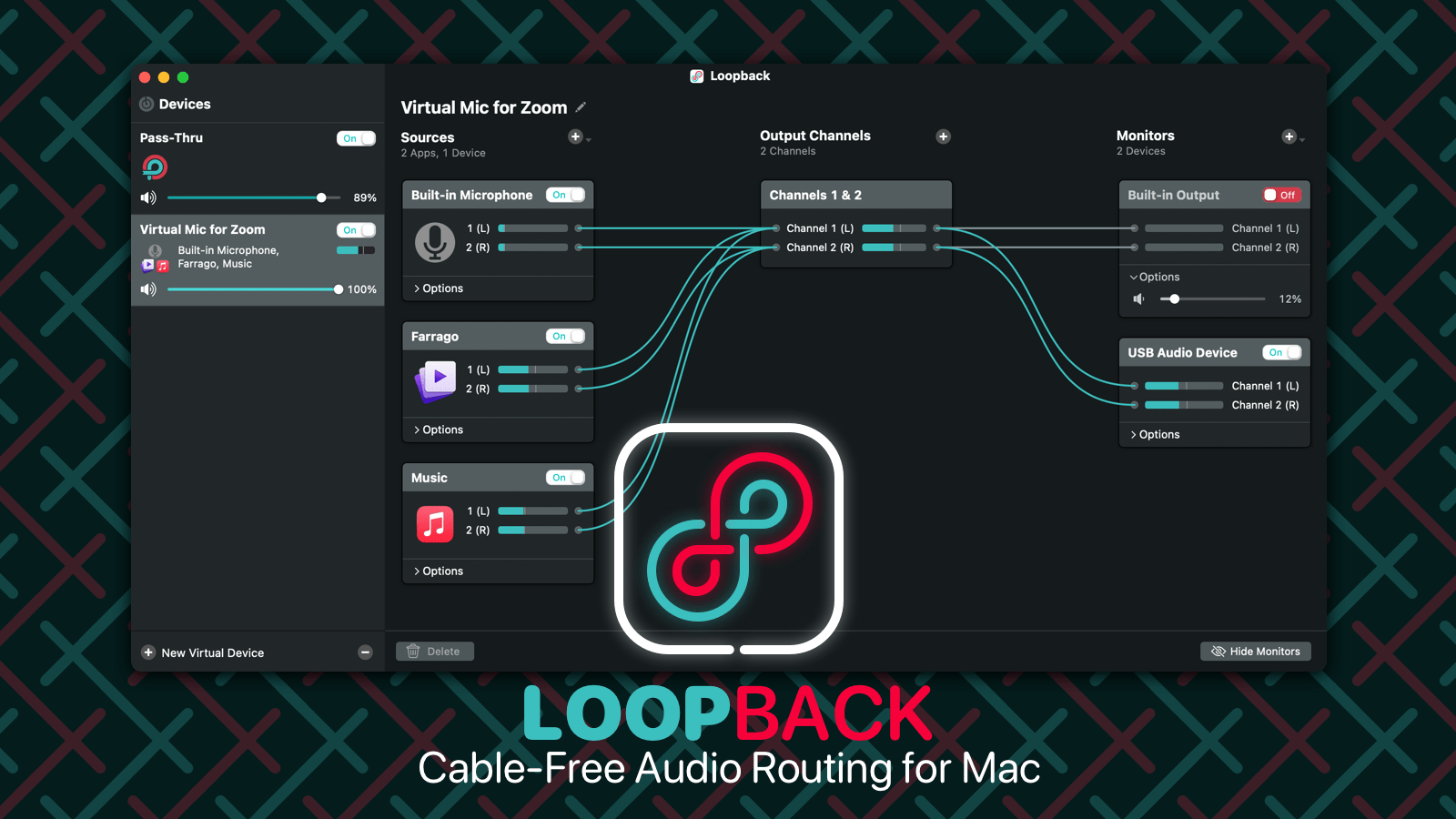
Route audio between applications on your Mac with Loopback! Get the power of a high-end mixing board with no hardware required.

Whether you’re a podcaster, a live performer, a tabletop gamer, or even just someone stuck on too many Zoom calls, Loopback can help you. Need to play a recording into Zoom? Add sound effects into a podcast? Include music in a streamed event? Loopback gives you the power to do just that with just a few clicks.

Loopback creates virtual audio devices, which merge audio from multiple applications and input devices into a single source. These virtual devices appear on your Mac just like a real, physical device, and can be selected for use in any audio app on your Mac. It’s incredibly powerful. It’s also incredibly easy to use.

Check out Loopback today, with a free trial. Better yet, through November 20, 512 Pixels readers can save 21% on anything from Rogue Amoeba, including Loopback. Just use coupon code PIXELSXXI.

Mac Power Users #612: macOS Monterey & MacBook Pro Impressions ⇢

This week, David and I review macOS Monterey and cover the features and changes it brings to the Mac. Then, we give our impressions of the new M1 Pro and M1 Max MacBook Pros.

My thanks to our sponsors:

  • TextExpander from Smile: Get 20% off with this link and type more with less effort! Expand short abbreviations into longer bits of text, even fill-ins, with TextExpander from Smile.
  • Electric: Stop stressing over scattered devices. Get a free pair of Beats Solo3 Wireless Headphones when you schedule a meeting.
  • Capital One: Machine learning at Capital One. What’s in your wallet?
  • Memberful: Best-in-class membership software for independent creators, publishers, educators, podcasters, and more. Get started now, no credit card required.

On the Present — and Possible Future — of the MacBook Air

Joe Rossignol at MacRumors:

Apple today reported Mac revenue of $9.17 billion in the fourth quarter of its 2021 fiscal year, which is an all-time quarterly revenue record for Macs. Apple CEO Tim Cook said there was “strong demand” for the M1 MacBook Air in particular.

Jason Snell’s transcript contains the exact quote from Apple CFO Luca Maestri:

For Mac, we set an all-time revenue record of $9.2 billion, despite supply constraints, driven by strong demand for our M1-powered MacBook Air. In fact, our last five quarters for Mac have been the best five quarters ever for the category. iPad performance was also strong with a September quarter revenue record of $8.3 billion, up 21%, in spite of significant supply constraints, as customer demand for the iPad Pro, also powered by M1, was very strong. For both Mac and iPad, we continue to see a combination of high levels of customer satisfaction and first-time buyers. Around half of the customers purchasing Mac and iPad during the quarter were new to that product. And in the most recent surveys of U.S. Consumers from 451 Research, customer satisfaction was 97% for both Mac and iPad.

Q4 didn’t include sales of the new MacBook Pros, but nevertheless, I think it’s telling that Apple singled out the MacBook Air here. It’s a stellar machine, and I would imagine many of those sales went to kids headed back to school. With rumors of an M1 iMac-like redesign coming, I think the Air will continue to be extremely popular.

So popular, in fact, that I think there’s room for a second model.

Right now, the 13-inch M1 MacBook Pro is the odd machine out, with an old design and a decrepit input device known as a Touch Bar. I believe it’s still for sale only to hold down the price point between the Air and 14-inch MacBook Pro.MacBook Lineup
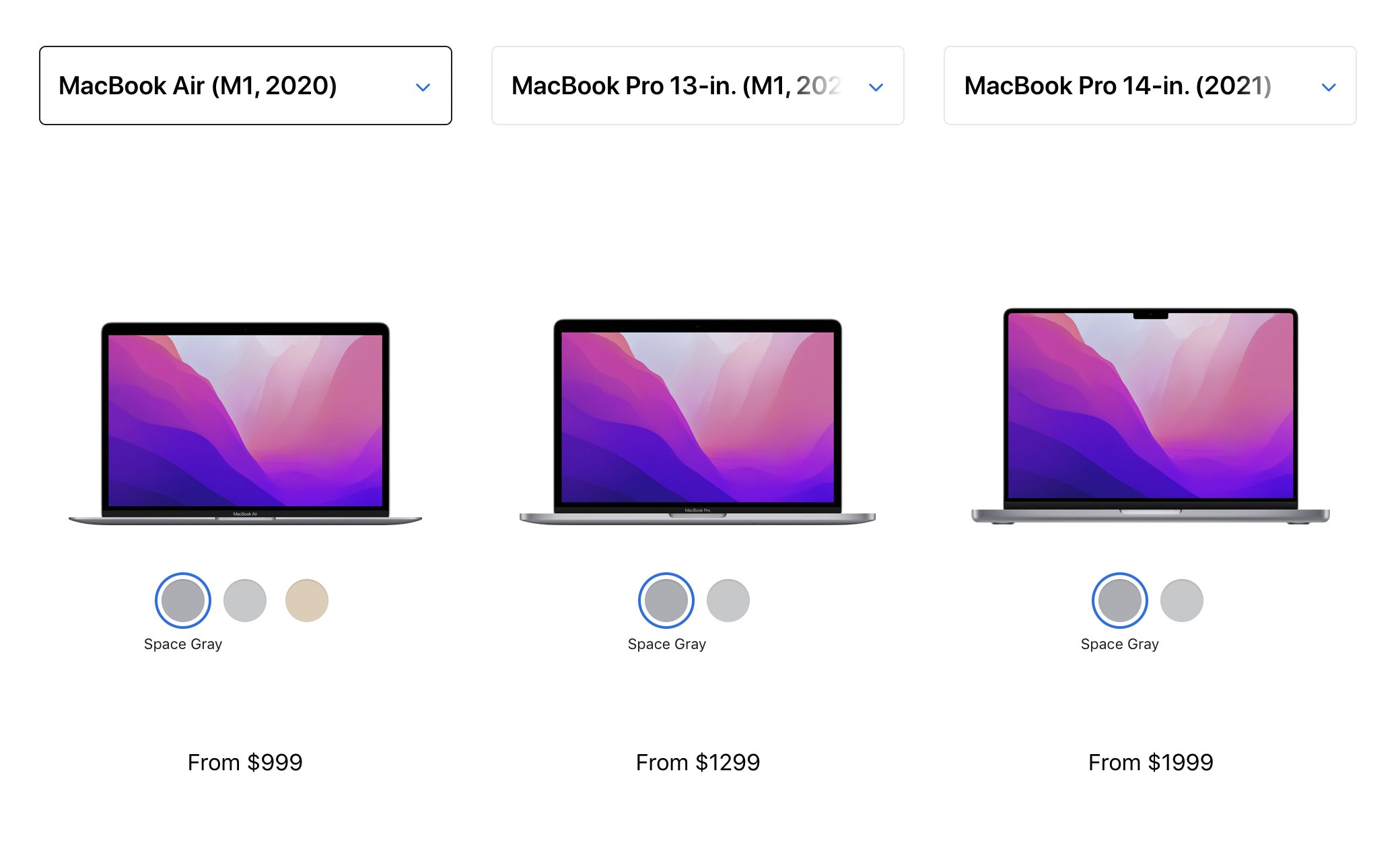
I would like to see Apple replace that 13-inch MacBook Pro with a larger MacBook Air. I could see the lineup looking something like this:

  • 13-inch MacBook Air from $999
  • 15-inch MacBook Air from $1299
  • 14-inch MacBook Pro from $1999
  • 16-inch MacBook Pro from $2499

This would give people who want a larger screen but don’t need the power — or the expense — of the MacBook Pro a new option.

Think of it as a modern-day 14-inch iBook. In January 2002, Apple announced the larger consumer notebook and a lot of people flocked to it. It stuck the right balance between size and price for many, as it took the best-in-class iBook design and scaled it up.1

“The iBook is the best consumer and education notebook on the market and our most popular portable ever,” said Philip Schiller, vice president of Worldwide Product Marketing. “The new iBook line now offers customers the additional choice of a 14-inch display and is more affordable than ever.”

Sounds like something that would just increase the demand for the MacBook Air.


  1. Unfortunately, both the 12 and 14-inch iBook ran at a resolution of 1024 x 768, so the larger display wasn’t … great. I’m sure Apple would not repeat that mistake with a larger MacBook Air. ↩︎

Jason Snell, on Building Cross-Platform Shortcuts ⇢

Mr. Snell:

As I’ve written about before, building Shortcuts is frequently much easier than building similar workflows on macOS using AppleScript and Automator. Now that Shortcuts is on the Mac, there’s no need to replicate shortcuts from iOS using those technologies! Instead, the same shortcut can run on both platforms. Problem solved.

Err… well… okay. Maybe not solved. While you might have rightfully assumed that not everything that works in Shortcuts on the Mac will work in Shortcuts on iOS—AppleScripts, shell scripts, and the like simply don’t exist on that platform—it might surprise you to learn that the reverse is also true. The Mac’s version of the Share menu is not nearly as sophisticated as the one on iOS, and the Share menu is a major launching point for iOS shortcuts. Safari’s automation interface is, similarly, not nearly as friendly on the Mac as on iOS.

But will that stop us? No! This week I’ve converted several of my shortcuts to “universal” versions that run on both macOS and iOS. Here are some tips and tricks that I’ve learned along the way.