512 Pixels

Juno powered by a PowerPC chip⇢

Like many past spacecraft, Jupiter’s new orbiter is powered by a PPC chip:

When you want radiation-hardened CPU designs (to guard against naughty things like cosmic rays flipping bits and zapping traces), you want BAE’s RAD series, and that means you want … PowerPC. Yes, Juno’s brain is a lowly RAD750 running at 200MHz, essentially a beige Power Mac G3 with cojones of pure lead. It has 128MB of the baddest, meanest, toughest DRAM there is and 256MB of flash on board with a system bus providing 100Mbps of instrument bandwidth for pure awesome.

Kbase Article of the Week: Mac OS X 10.2: Kernel Extension (kext) Files May Generate Security Warning⇢

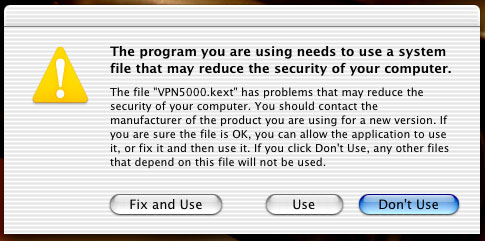
Today, kernel extensions must be signed with a valid Apple developer account to run. That hasn’t always been the case, but even way back in OS X 10.2, Apple was trying to make them more secure:10.2 kernel exensions

Mac OS X 10.2 and later has stricter security checking of kernel extensions. These files should have permissions that restrict any user other than the system software (the “root” user) from making changes to the file. If a kernel extension has less restrictive privileges, it will trigger this alert.

iOS 10 bringing national organ donor registration to iPhone⇢

Apple PR:

Apple and Donate Life America announced today that, for the first time ever, iPhone users will be able to sign up to be an organ, eye and tissue donor right from the Health app with the release of iOS 10. Through a simple sign up process, iPhone users can learn more and take action with just a few taps. All registrations submitted from iPhone are sent directly to the National Donate Life Registry managed by Donate Life America. The ability to quickly and easily become a nationally-registered donor enables people to carry their decision with them wherever they go.

This is great, and another example of Tim Cook’s Apple doing good in the world.

Juno in Jupiter’s orbit⇢

Last night was an exciting one for space fans. Five years after launch, NASA’s Juno spacecraft entered orbit around Jupiter.

That isn’t a simple thing to accomplish. The spacecraft had to slow down enough to be captured by the planet’s gravity to swing around the gas giant. Slow down too much and the orbit would be too wide; miss the mark and the spacecraft could have met an early demise.

Here’s Phil Plat describing that process:

The engine burn was tense. 35 minutes is a long time for a spacecraft burn; after 20 minutes it had slowed Juno enough to be in orbit, but not the correct one. It had to continue for another 15 minutes to put the spacecraft on the correct orbit. It worked essentially perfectly. The burn time was off by just one second. That will have no real effect on the orbit.

Science isn’t starting today, though. Juno is currently in a highly elliptical orbit that will take 53 days to complete. On it’s return pass, the instruments will come on and readings will begin. After it’s second elliptical trip, (named a Perijove pass) there will be a second burn that will allow Juno to circle the gas giant from its north pole to its south every 14 days.

During these orbits, scientists hope to learn about Jupiter’s origins and much more.

This is an exciting time. Jupiter is a very hostile place, and Juno is only the second spacecraft dedicated to studying it. ( Galileo was the first.) Knowing how Jupiter formed and more about it will help unlock the mysteries of not only our solar system, but of the whole universe.

Should be fun.

Today’s Hackintoshes⇢

Way back in 2009, I ran OS X Leopard on a Dell Mini 9 netbook, after screwing around with it on an HP Mini 1000. When I gave up on the project, I think I just assumed Hackintoshes weren’t really a thing anyone cared about.

I’ve seen articles here and there over the last few years about running Mac OS X on non-Apple hardware, but it seems that it’s actually pretty easy to get a Hackintosh up and running. Here’s Mike Rundle:

A few weeks back, I was at a baseball game with a bunch of my wife’s coworkers when I started talking to a developer named Ian who said he just got done building a Hackintosh and it was amazing. To be honest, I hadn’t thought about the Hackintosh community in years, I actually forgot it was still a thing. Ian said the community was now organized around a website called TonyMacx86.com and it had hardware guides, build tutorials, forums, lots of updates, and had been extremely lively in the past 18 months or so as it’s now easier than ever to build a Hackintosh. When he told me how fast his custom Mac was (faster than any iMac and most Mac Pros), and how little it cost (around $1,200–1,300) it struck me as impossible.

The hardware Rundle lists is impressive. His box is a legitimately powerful computer.

Like with my netbooks seven years ago, running OS X on something without an Apple logo on its case comes with problems. Graphics drivers can bring down a system, software updates are the enemy and some services like iMessages are very tricky to get running on non-Apple hardware.

As long in the tooth as most Macs have become, I totally understand why someone may build their own box. $1200 goes a lot farther when it comes to custom parts than a Mac mini. None of this is to mention how much fun tinkering can be.

All that aside, this is a young man’s game. My MacBook Pro may have outdated Intel silicon, but I know that it was all designed to work with the software it runs. That still counts for a lot in my mind.

RSS Sponsor: Festival of Artisanal Software: Serious software, serious savings, this week only⇢

This week, save 25% on your choice of some of the best and most interesting tools for writers, designers, and thinkers. Get great prices, straight from the developers — no bundles, games or gimmicks.

  • Tinderbox: the tool for notes.
  • Storyspace: serious hypertext narrative
  • DEVONthink Pro Office: document management reinvented
  • Nisus Writer Pro: the powerful word processor for OS X.
  • Scrivener: grow your ideas in style.
  • Bookends: the reference manager you’ve been looking for.
  • Aeon Timeline 2: the timeline tool for creative thinking.
  • Taskpaper: make lists and get organized
  • BBEdit: power tool for text
  • TextExpander: type more with less effort
  • Scapple: quickly capture and connect ideas
  • PDFpen: powerful pdf editing
  • WriteRoom: write without distractions
  • HoudahSpot: powerful file search
  • Take Control Books: the answers that you need now.

Summer’s the time for new plans and fresh projects and great new ideas. Whether you’re mapping out your next novel, finishing your dissertation, planning a product, or writing memories for your grandkids, these great tools will help.

These are tools with attitude and style, tools crafted by creators, not focus groups. Tools like Tinderbox, DEVONthink and Scrivener live at the intersection of art and research. These are deep tools, crafted with care and refined by years of study and exploration. Check out SummerFest 2016 now.

My evolving home screen

I’m a creature of habit. This is evident in a lot of areas of my life, but in looking through old screenshots of my iPhone’s home screen:

Home screens

Wallpapers: 2011 | 2013 | 2016

In addition to how hilariously small old iPhones seem compared to my 6S Plus, the thing that jumped out at me the most is how little turnover there is over time in apps and their placement.

For example, OmniFocus, Tweetbot, an RSS client and Instapaper have anchored my bottom row for as long as I can remember. During times of sin, I’ve used Remember the Milk or Todoist, having them take over the “GTD spot” in that row.

My music and my podcast players have always been next to each other, with a weather app has always been on the right. Messages, a calendar app, photos and a camera app have always been at the top, until the Plus forced me to add another row above them.

The three-app Dock is new as of a year ago, when I was talked into it by a podcast. Settings is now a resident of my second screen.

Of course, I can’t post this image without commenting on how the design trends in iOS have changed over the years. That 2011 screenshot is pretty painful now, but there is something charming about iOS 6 there in the middle. All in all, though, I have to say I like the current look the best. There’s plenty of color and personality still, but everything looks a little more grown up.

Juno⇢

On July 4, NASA’s Juno spacecraft will be inserted into orbit around Jupiter, the largest planet in our solar system.

For the first time, scientists will be able to see below the thick clouds that surround the gas giant. The craft is the farthest from Earth a solar-powered spacecraft has been used, and will travel around Jupiter in a polar orbit (as opposed to going around its equator) at 130,000 MPH. It’s orbit is elliptical, and is designed to allow the craft to image the entirety of Jupiter over its lifecycle.

Juno will circle Jupiter 37 times, and then be burned up in the planet’s atmosphere. The spacecraft will execute a close flyby above the planet’s cloud tops every 14 days during its 18 month mission.

The mission’s scientific objectives include learning about the makeup of the planet, its atmosphere and magnetosphere. It is theorized that Jupiter has a dense core, and by studying its gravitational and magnetic fields, it should be possible to learn more about the interior of the gas giant. Likewise the atmosphere and magnetosphere, the area around the planet where charged particles stream to and from the planet, will be studied in detail for the first time up close.

It’s an exciting mission. Jupiter dominates so much of the solar system due to its immense size and gravitational pull, and we really don’t know much about it. Juno should help change that.

iPhone turns nine

iPhone

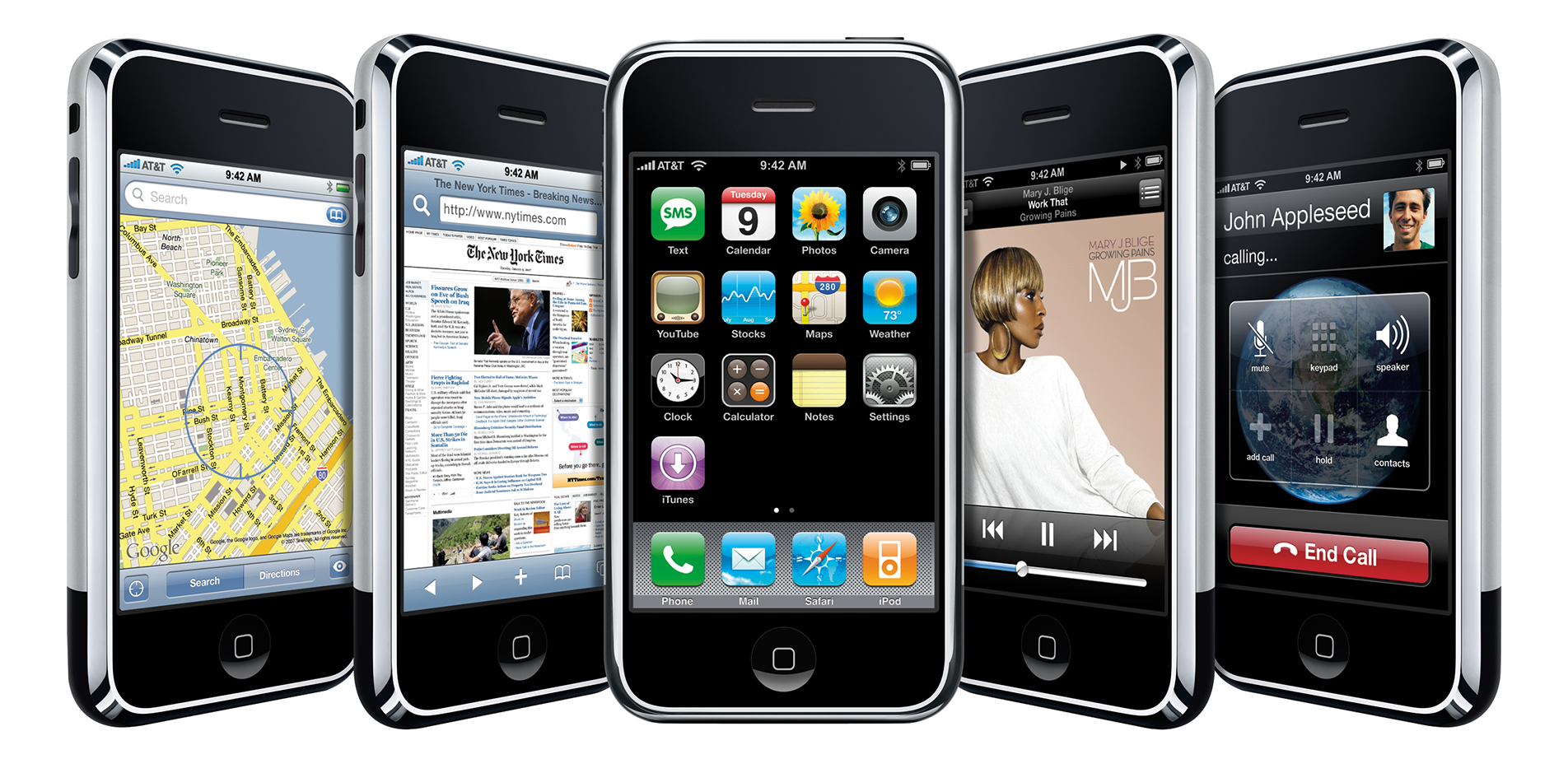
Today marks the 9th anniversary of the iPhone going on sale for the first time. I worked at an Apple Store way back then, and wrote about the launch a few years ago:

We saw them before the rounded the corner. There were hundreds of people, lined up in the Friday afternoon heat. News vans were pulled up to the sidewalk, and the guys who had been camping out for 72 hours sure looked happy. We put up the additional barriers, and I got a bunch of high-fives and questions about the iPhone while heading back around the building.

That night was madness, but what’s really impressive is how much the iPhone has changed our world. Today, almost everyone I know carries a smartphone. We walk around with pocket computers hooked up to the entirety of the Internet. They can shoot amazing photos and take 4K video. I can video chat with my kids and play games on the same device.

It’s only been nine years, but I can’t imagine going back.