512 Pixels

Running a NeXTCube

Rick Fillion:

I’ve wanted a NeXTCube since I first learned what they were, which was well after they stopped being made, and some time after Apple bought NeXT. Last summer, I finally got one as Dan Messing decided he didn’t want to lug his out to Portland in his move. It was a physical machine, but not much more than that. It couldn’t boot. It couldn’t even power on. But hey… it had that awesome little logo on every component, and that was a hell of a start.

I won’t spoil it, but Rick’s Cube is doing a lot more than looking pretty now. I’m so jealous it hurts.

via The Loop

On NYT Executive Exit Packages

Edmund Lee at Bloomberg:

Janet Robinson, the New York Times Co. chief executive officer who was pushed out in December, received an exit package, including stock options and retirement benefits, of $23.7 million.

In the last four years, the company only made $3 million. While I’m not great at math…

512 Pixels: Version 1.5

Here are the recent changes to the site:

  • New footer artwork.
  • Body text set in Adobe Text Pro.
  • RSS sponsorships are now linked items.
  • Site is now responsive — be sure to visit it on an iPhone, or resize your browser. ( PJ is still tinkering with the iPad version.)

A History of Apple’s Server Products — Sans the Xserve, Which was Boring

Apple Workgroup Server
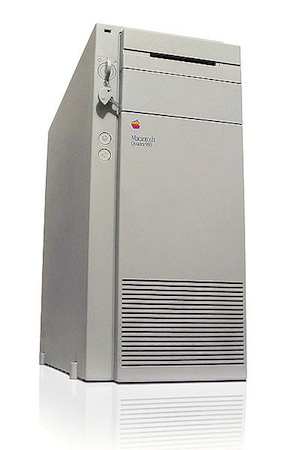
“Apple Workgroup Server” was the name given to machines shipped from Apple from 1995 to 2003.

These machines were based on standard shipping hardware at the time, from the Quadra 950 (known as the Workgroup Server 95) to the full range of PowerMac G4s, dubbed the “Macintosh Server G4.”

Later machines shipped with Mac OS X Server, but the earlier ones ran an Apple-built version of Unix named A/UX.

A/UX: Apple Unix
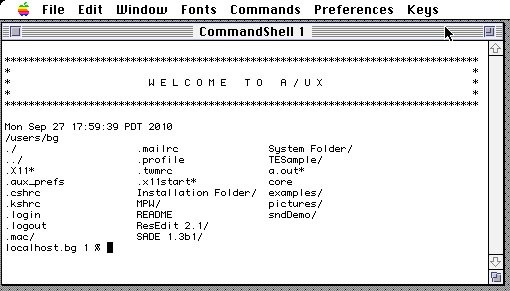
A/UX was Apple’s Unix operating system 1 on which powered several models of servers. It had the following system requirements:

  • 68k Processor with FPU
  • Paged memory management

It ran on the Macintosh II, SE/30, Quadra and Centris series of computers. Based on UNIX System V Release 2.2., Apple developed it from 1988 to 1995, adding sections of BSD and POSIX code to the operating system, and improving on things like the TCP/IP stack.

A/UX looked mostly like System 7, and could even run System 7 applications in emulation. It included a command line interface, and tools to build “hybrid” applications, that could take advantage of Mac OS APIs and Unix tools.

NASA was a large A/UX client, running a server named “Jagubox.” This machine was run by Jim Jagielski, and served as the main source of software for A/UX users.

Jagielski also ran the A/UX FAQ mailing list.

There’s no way to run A/UX on modern hardware.

Apple Network Server
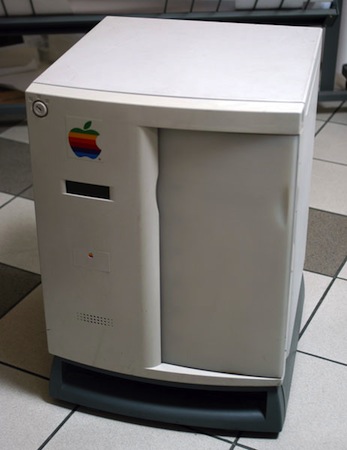
In 1996 and 1997, the company shipped the Apple Network Server. These machines were stand-alone products, not machines based on consumer-level hardware. Apple made three versions of the Network Server. The 500/132, 700/150, and 700/200 sold for US$11,000, US$15,000 and US$19,000, respectively.

Apple used the main logic board out of the Power Macintosh 9500, coupled with six free PCI slots, space for two Ethernet cards, and SCSI RAID support. They were the first Apple machines to ship with native VGA support.

Based on the PowerPC architecture, the ROMs in these three machines forbid it from booting in to Mac OS. Instead, these machines ran IBM AIX, not to be confused with the A/UX found on the earlier Workgroup Servers.

Apple used a custom version named “AIX for Apple Network Servers,” which included AppleShare and support for Apple’s hardware. The main version of AIX was built by IBM, and is still being developed today.

The Xserve

The Xserve is pretty boring, compared to the machines listed above. Maybe another day…


  1. In a weird twist of fate, Apple came back to this years later, when building OS X on top of NextStep. ↩︎

Sponsor: TextExpander →

Thanks to Smile Software for sponsoring the 512 Pixels RSS feed this week. I use TextExpander heavily throughout my day, and can’t say enough good things about it. If you don’t have it running on your Mac, you’re wasting time — its that simple.


Do you type the same things again and again? TextExpander will save you time and keystrokes.

Just assign short abbreviations to your frequently-used snippets of text and TextExpander does the work for you. You can also use one of the included snippet libraries for HTML, CSS, autocorrection, accented words and URL shorteners.

Try it out – there’s a free demo at Smile Software. And you can get 20% off TextExpander through March 31. 2012. Use the coupon code SYN0312 in the Smile store.

Digitizing Life: the Doxie Go

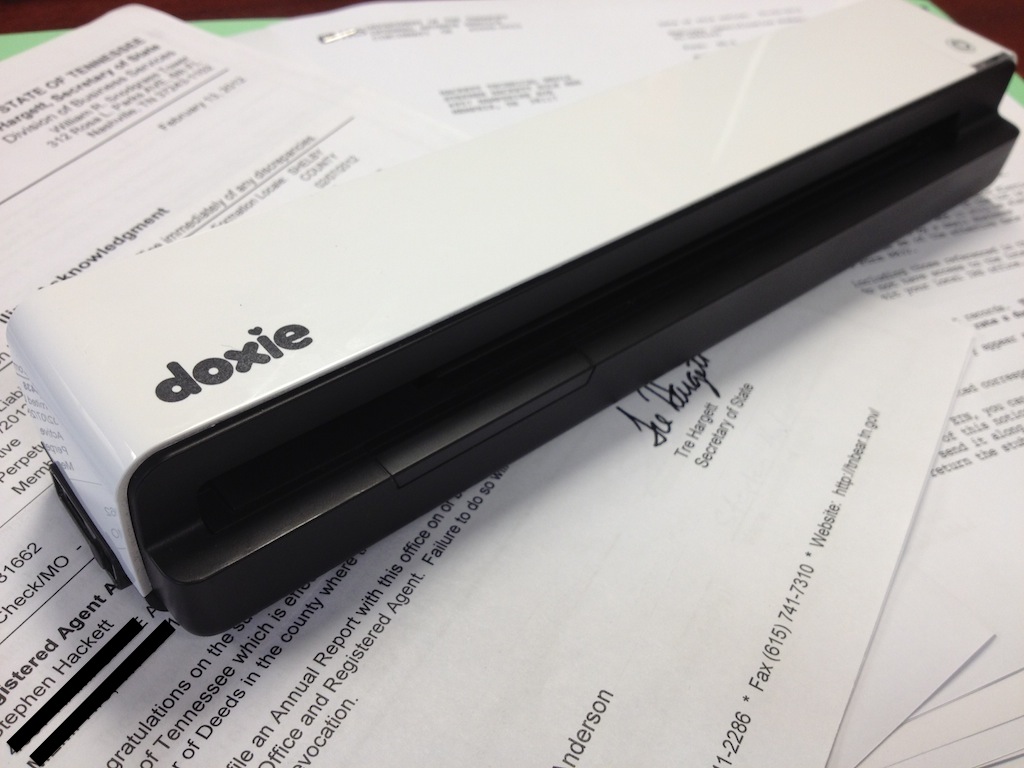
While at Macworld, I ran in to the guys behind the Doxie Go portable scanner. A few weeks later, I had one sitting on my desk from them.

At first, I wasn’t sure how much I’d use the thing. It turns out that not a day goes by without me running something through the machine.

I’m nearing the end of the process in creating an LLC to wrap around the site and some other work I do. It seems that forming an LLC in the state of Tennessee takes roughly one million sheets of paper. Thanks to the Doxie Go, scanning is easy and quick. This device has great battery life, and with the built-in storage, I can scan a bunch of papers and import them all at once.

The software on the Mac will save as a color PDF with OCR support. It’s like magic.

My one gripe is the bag the company ships to hold the Doxie Go while in a backpack, etc. It’s cheap feeling, and seems to be leaving a fine black coating on everything. I can’t imagine that’s good for the scanner, so I’ve been carrying it nestled next to my MacBook Pro in my bag.

Jonathan Ive, on Creating

To the Evening Standard:

What I love about the creative process, and this may sound naive, is this idea that one day there is no idea, and no solution, but then the next day there is an idea. Where you see the most dramatic shift is when you transition from an abstract idea to a slightly more material conversation. But when you make a 3D model, however crude, you bring form to a nebulous idea and everything changes — the entire process shifts. It galvanises and brings focus from a broad group of people. It’s a remarkable process.