
I don’t keep text-based social media apps installed on my phone, but if I did, this would be this one I’d use for Mastodon and Bluesky.
posts
Building Artemis II’s Fault-Tolerant Computer⇢
Logan Kugler, writing in early April:
The computer system aboard the current Artemis II lunar space mission is from a different world that the one from the Apollo era. Apollo astronauts navigated to the lunar surface using a computer with a 1-MHz processor and roughly 4 kilobytes of erasable memory, supported by a larger store of fixed “rope” memory. While it was a marvel of 1960s engineering, the Apollo Guidance Computer’s functional scope was focused and not in the control loop for every system. Critical environmental and power controls were managed through manual or electromechanical means, such as switches and relays.
This month’s Artemis II mission carrying a crew of four around the Moon for the first time in over 50 years is supported by one of the most fault-tolerant computer system built for spaceflight. Unlike Apollo, the Orion capsule’s computing architecture manages nearly all of the vessel’s safety-critical functions, from life support to communication routing.
When a mission is 250,000 miles from Earth, failure is unrecoverable. There are no runways for emergency landings and no technicians to swap out a fried motherboard. Every subsystem must be designed to survive cosmic-ray bit flips, radiation-induced latch-ups, and hardware faults without a single second of downtime.
Clarus Can Walk
With today’s update to its Developer app, Apple released a new sticker of Clarus the Dogcow. I am all for that, but seeing her walk is weird.
As far as I know, this is the first time the Dogcow has even been shown with more than two legs. This feels wrong.
Connected 602: Computer Too Good⇢
Myke compliments Federico, and Stephen has gone down a rabbit hole with Casey Liss leading the way. Also: Apple continues to adjust its Mac lineup as the memory crisis drags on, and the guys have some jobs for John.
Google Fitbit Air⇢
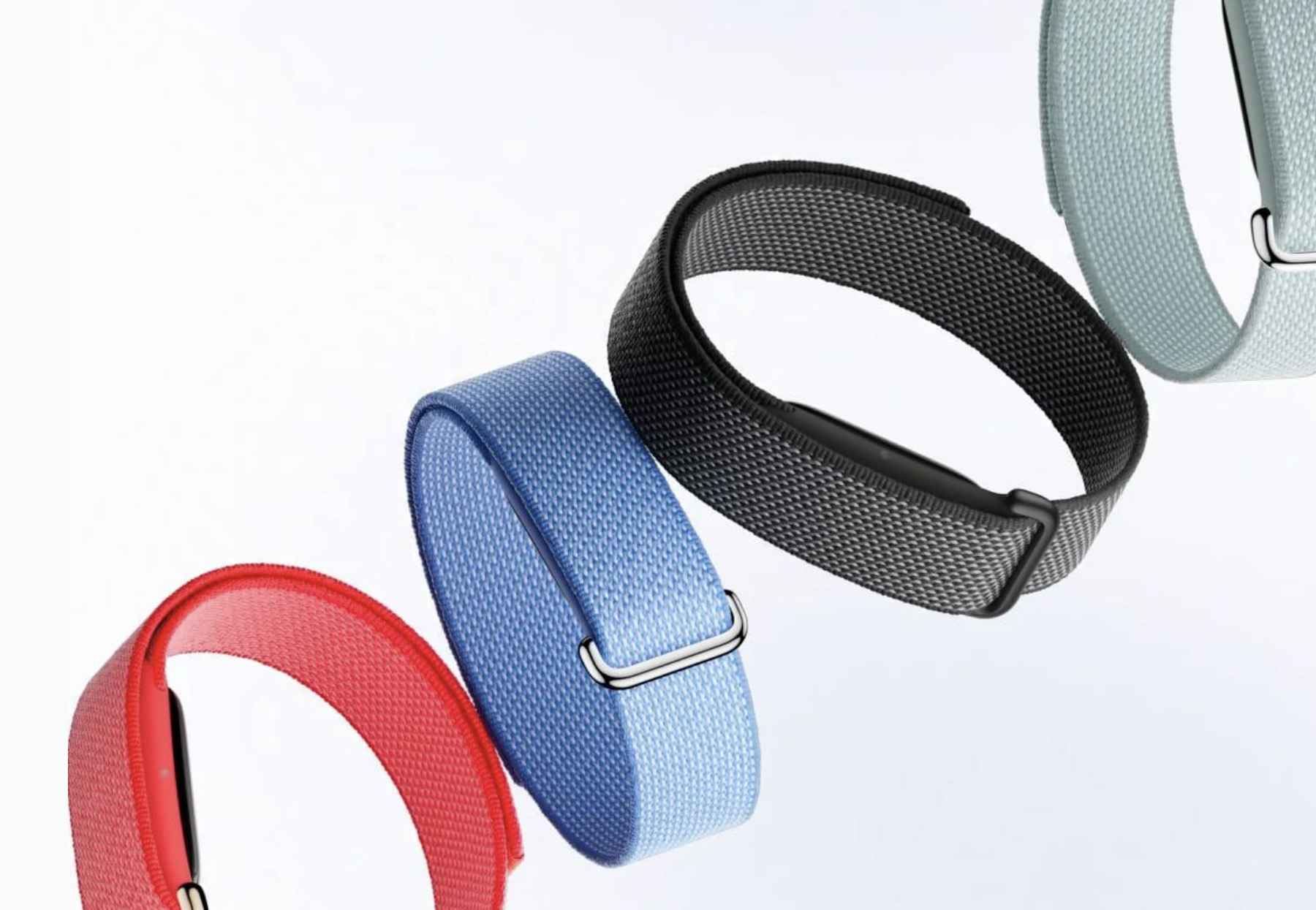
I love the health-tracking features of my Apple Watch ( duh) but there are times that I’d rather wear a watch without Slack or iMessage on it. For years, I’ve clamored for Apple to make a screenless tracker like the Whoop band. It seems like Google beat Apple to the punch with its new Fitbit Air:
Samantha Kelly has more at Bloomberg:
The new device bears a striking resemblance to Whoop’s health tracker, featuring a soft fabric band with a battery and sensor pack underneath. One big difference is the business model: an upfront cost to buy the hardware and an optional $10 per month Google Health subscription. Whoop doesn’t charge for its hardware but instead has an annual subscription fee that begins at $200.
The Fitbit Air may appeal to users seeking a simpler alternative to the Apple Watch — one with fewer distractions and notifications — or a cheaper option than rival health trackers. The popular Oura Ring health tracker, sold by Oura Health Oy, starts at $349, while the cheapest smartwatch from Apple Inc., the SE 3, is $249. Many of Google’s existing Fitbits cost over $100, while its Pixel Watch 4 is $349.
Anthropic Taking Over All Capacity of xAl’s First Memphis Data Center
Some afternoon news from an unsigned xAI press release:
SpaceXAI has signed an agreement with Anthropic to provide access to Colossus 1, one of the world’s largest and fastest-deployed AI supercomputers.
Built from the ground up in record time, Colossus delivers unprecedented scale for AI training, fine-tuning, inference, and high-performance computing workloads. Colossus 1 features over 220,000 NVIDIA GPUs, including dense deployments of H100, H200, and next-generation GB200 accelerators. The cluster delivers extreme parallel performance for large language models, multimodal systems, scientific simulations, and generative AI at frontier scale.
Anthropic plans to use this additional compute to directly improve capacity for Claude Pro and Claude Max subscribers.
Connected #601: I Love Wrists — A Tier List of Tim Cook Quotes⇢
In honor of Tim Cook’s pending retirement, Federico, Myke, and Stephen rank some of his quotes from the last 15 years.
This was quite the trip down memory lane.
The Wonderful World of Artemis II Photos
Hank Green has made something really cool. Called the Artemis II Photo Timeline, it’s an interactive way to scroll through photos from NASA’s recent crewed mission to cislunar space — but pinned to NASA’s official schedule of the mission.
It is also a tribute to publicly available data. Though the timeline includes some videos published to Instagram and YouTube, the vast majority are images from Flickr. NASA usually uploads them with EXIF data intact, and Flickr preserves it. NASA also provided the mission schedule and, even better, has a public API for the position of the Orion spacecraft at any given time. Which means Green was also able to correlate the photos with where they were taken along the craft’s trajectory.
AI Psychosis Reaches the Executive Suite⇢
An NBER study of nearly 6,000 CEOs and CFOs across the US, UK, Germany, and Australia found that roughly 90% of firms reported zero measurable impact on productivity or employment from AI over the past three years.
The average employee AI usage was 1.5 hours per week.
The average CEO AI usage was less than one hour per week.
Meanwhile, their companies are pouring money into the $690 billion AI infrastructure buildout that, according to Sequoia, needs $600 billion in annual revenue to justify itself (but currently generates maybe $50-100 billion).
Only one in five AI investments delivers any measurable ROI. Only one in 50 delivers transformational value. And 95% of enterprise AI pilots fail to escape the lab.
Sam Altman Apologizes to British Columbia Community, Wonders Who Could Have Stopped Such Violence
OpenAI, in a nameless blog post:
Mass shootings, threats against public officials, bombing attempts, and attacks on communities and individuals are an unacceptable and grave reality in today’s world. These incidents are a reminder of how real the threat of violence is—and how quickly violent intent can move from words to action.
People may also bring these moments and feelings into ChatGPT. They may ask questions about the news, try to understand what happened, express fear or anger, or talk about violence in ways that are fictional, historical, political, personal, or potentially dangerous. We work to train ChatGPT to recognize the difference—and to draw lines when a conversation starts to move toward threats, potential harm to others, or real-world planning.
We’re sharing what we do to minimize uses of our services in furtherance of violence or other harm: how our models are trained to respond safely, how our systems detect potential risk of harm, and what actions we take when someone violates our policies. We are constantly improving the steps we take to help protect people and communities, guided by input from psychologists, psychiatrists, civil liberties and law enforcement experts, and others who help us navigate difficult decisions around safety, privacy, and democratized access.
Pedometer++ 8.0⇢
Today, we shipped a huge update to Pedometer++. We have full details over on the Pedometer++ blog, and David has a post up as well:
Today I’m beyond delighted to announce the release of Pedometer++ version 8. I worked with legendary designer Rafa Conde to re-design the appearance and layout of the watchOS app to make it the most capable, yet intuitive, walking app on the App Store.
Pedometer++ has been on the Apple Watch from day one twelve years ago. Over that time I’ve built dozens of designs and features, today’s redesign learns from that journey and arrives at an incredible place.
CHATBOT Act Introduced in Senate⇢
The U.S. Senate Committee on Commerce, Science, and Transportation, in a press release today:
U.S. Senate Commerce Committee Chairman Ted Cruz (R-Texas) and Senators Brian Schatz (D-Hawaii), John Curtis (R-Utah), and Adam Schiff (D-Calif.) today introduced the CHATBOT Act, legislation that would put parents, not Big Tech, in charge of how children and teens interact with AI chatbots.
While AI chatbots can support a child’s learning, research, and creativity, they also pose real risks to minors, including exposure to inappropriate content, language, and addictive features. Some AI companies have even deployed rewards, notifications, and targeted advertising to drive prolonged engagement by adolescent users.
The Children’s Health, Advancement, Trust, Boundaries, and Oversight in Technology Act, or CHATBOT Act, would require AI companies to establish “family accounts” for parents to manage access and usage of AI chatbots by their children. AI chatbots would limit manipulative design features; require parental consent for chatbot usage and parental controls to access and monitor a child’s conversations with a chatbot; and prohibit targeted advertising to children. In addition, the bill would direct further study on potential chatbot-related harms to children and best practices for parents.