CalDigit Announces Thunderbolt 5 Docks⇢

I’ve been using a CalDigit TS4 on my desk for years, allowing me to plug in my entire setup with just one cable going to my MacBook Pro. It has never given me any trouble, and is well worth the price in my book.

Now there’s a set of new docks from CalDigit, using Thunderbolt 5. Here’s a bit from the company’s press release:

The TS5 is a docking station built around pure connectivity. Its 15 ports are packed full of essential ports. The four powerful 80Gb/s Thunderbolt 5 ports allow users to expand and evolve their workflows like never before, and the 120Gb/s Bandwidth Boost feature allows users to connect bandwidth hungry displays with ease.

Continue reading ⇢

Sponsor: Unite 6 Turns Your Favorite Websites into Native Mac Apps⇢

Unite 6 is here — and it’s more than just an upgrade. It’s a new way to bring your favorite websites into your macOS workflow. Whether you’re crafting a minimalist Gmail client, a multi-tab ChatGPT hub, or a lightweight Discord alternative, Unite 6 gives you complete control and a beautifully native experience.

Unite 6

So, what’s new in Unite 6?

  • 🧰 Redesigned Creation Tool: Build apps faster with an intuitive, streamlined setup flow.
  • 💾 App Sharing: For the first time, share Unite apps across Macs with Unite—just send a file.
  • 🧭 Advanced Tab Control: Pin, rename, lock, and isolate tabs like a power user.
  • 🔐 Smart Toolbar & Touch ID: A more secure, distraction-free browsing experience.
  • 💻 Smarter Sidebar Mode: Customize and pin tabs, now with persistent layout options.

Unite doesn’t just wrap a website in a window—it transforms it into a real Mac app with full system integration, global shortcuts, and no bloat.

Continue reading ⇢

Exploring the Original Microsoft Source Code⇢

Bill Gates:

The story of how Microsoft came to be begins with, of all things, a magazine. The January 1975 issue of Popular Electronics featured an Altair 8800 on the cover. The Altair 8800, created by a small electronics company called MITS, was a groundbreaking personal computer kit that promised to bring computing power to hobbyists. When Paul and I saw that cover, we knew two things: the PC revolution was imminent, and we wanted to get in on the ground floor.

Continue reading ⇢

Exploring MacPaint’s Source Code⇢

MacPaint was one of the Mac’s original first-party applications, and was written by Bill Atkinson himself. Jeffrey Starr has published an in-depth look at the application’s source code:

One of two launch applications for the Apple Macintosh in 1984, MacPaint is emblematic of the Macintosh’s early quirky revolutionary branding, focus on ease of use, and appeal to artistic customers. Using the source code, we examine the design and implementation of the application. We find that the buffer management and bucket filling algorithms demonstrate mechanical empathy with the 68k platform and leverage the limitations of the domain as a means to improve performance. We also find positive and negative aspects in the code style and architecture and its pliability for change. Finally, we dispute some claimed novel aspects of the program while also arguing for its significance and impact on the development of digital graphic systems.

Continue reading ⇢

Microsoft Turns 50⇢

Today is Microsoft’s 50th anniversary, as Tom Warren writes:

Founded on April 4th, 1975, Microsoft went on to strike a deal with IBM to provide software for its first PC in 1980. This became the foundation of MS-DOS, which dominated IBM-compatible PCs during the ’80s. Microsoft’s early success in developing software for PCs eventually led to the first version of Windows in 1985 and a dream of a PC on every desk and in every home.

Continue reading ⇢

On the Rumored M6 MacBook Pro⇢

Over the weekend, Mark Gurman reported that the M6-generation of MacBook Pro will bring with it an updated design, complete with a thinner chassis and an OLED display.

David Sparks’ thoughts on this mirror my own:

I’m particularly excited about the prospect of an OLED screen. This technology promises higher brightness, improved contrast ratios, and more vibrant colors, making the types of things folks do on a MacBook Pro even easier.

However, the notion of a thinner design makes me nervous. In my experience, when surveying the needs of MacBook Pro users–especially those in same creative professions–the desire for a slimmer profile rarely tops the list. More commonly, folks want better battery life, enhanced performance, and adequate input/output.

Continue reading ⇢

DEVONthink 4⇢

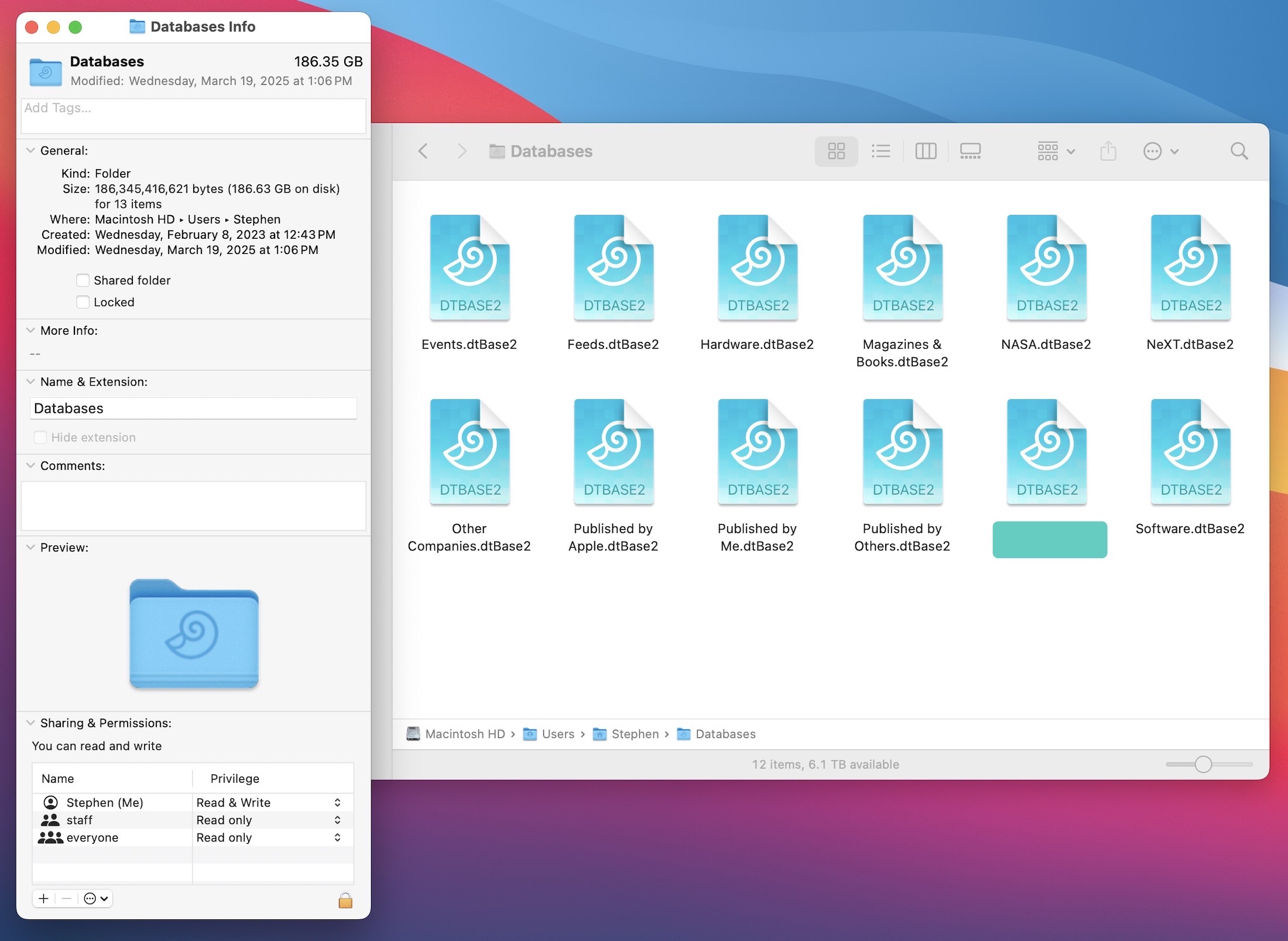
I am a huge DEVONthink fan, as I use it hold and organize my ever-growing library of tech history resources. Here’s a look at my collection of databases:

My DEVONthink databases

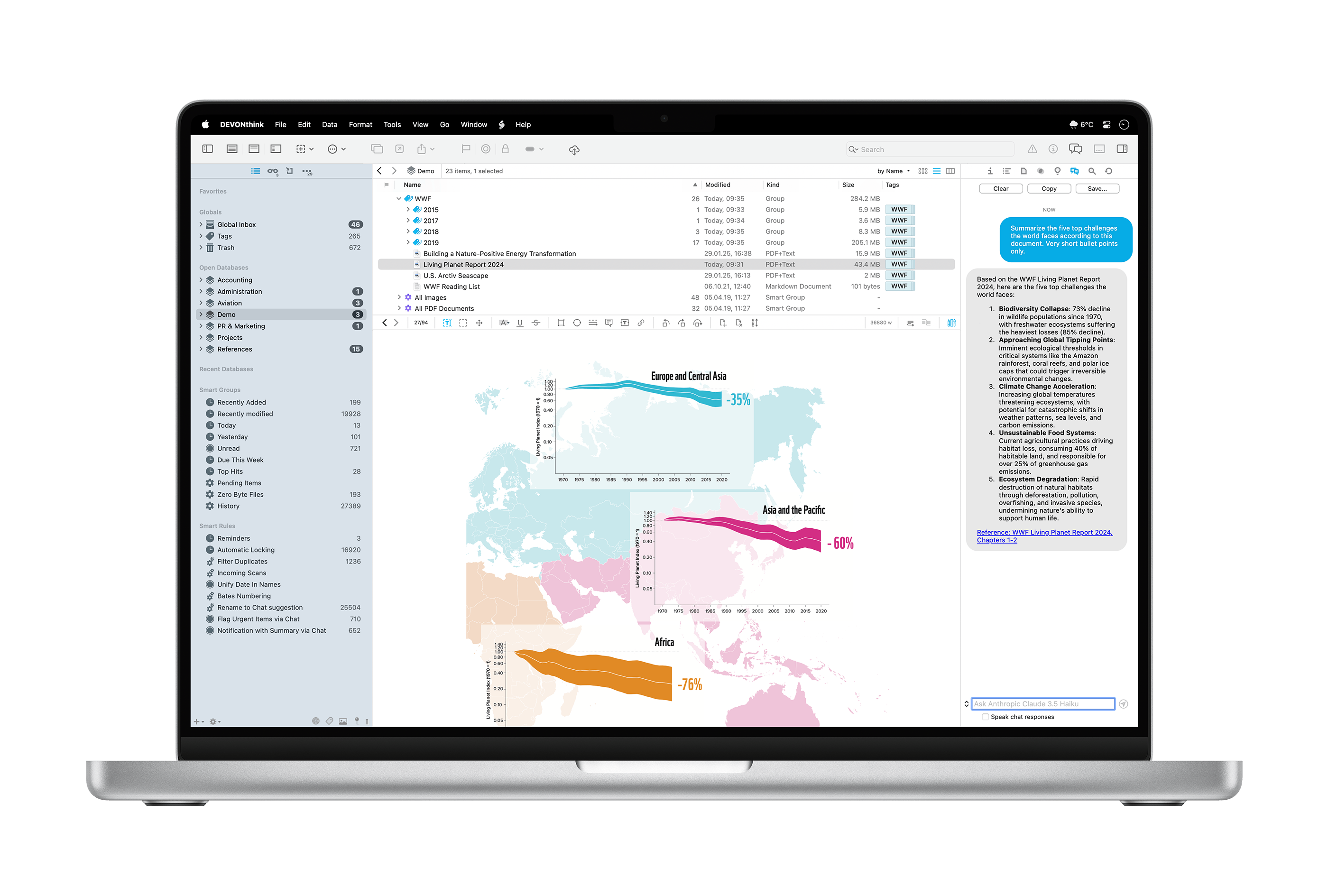
Today, DEVONthink 4 enters public beta 1 with a whole bunch of new features.

DEVONthink 4

DEVONthink 4 includes new tools for managing documents, which is the core use of the application for me, as a huge percentage of the resources I have saved are PDFs and text files. Now, DEVONthink supports versioning, so changes to these files can be undone later. You’ve got full control over how many version are kept, and how much space versioning can take up in your databases.

Continue reading ⇢

A Fresh Coat of Paint

Later this year, 512 Pixels will turn seventeen years old. Over the years, it has had several looks, and today there’s a new one.1Serifs?!

The overall structure of the site is unchanged, but the colors and some of the typefaces are all new. For the first time in a long time, there is no orange used in the design. In its place is #213A49, a dark blue that I love. To go with it is EB Garamond for titles, navigation, and even the site logo.

Continue reading ⇢