This 28-minute video about a family buying a Performa is amazing in every single way. Cancel your plans this evening and enjoy.
For bonus points, check out the Australian version.

This 28-minute video about a family buying a Performa is amazing in every single way. Cancel your plans this evening and enjoy.
For bonus points, check out the Australian version.
Starting in November 1994, Apple transitioned the Performa line to use the PowerPC processor. This took some time and started some eight months after the first Power Macintosh models were announced, but as covered at great length in this series, Performas were all rebadged Macs from other lines, so it was inevitable that they’d get the PowerPC treatment at some point.
With that said, let’s walk through this processor transition through the lens of a bunch of beige Macs. If you want to learn more about why Apple moved to PowerPC, I recommend this excellent article on the subject.
Today Apple launched an online version of its podcast service. Users can search for and listen to shows on the web, and if signed in, they can add shows to their library and “Up Next” queue. Apple Podcasts is late to this party but I’m glad it’s here.
ScreenFloat is your Mac’s screenshot all-rounder. You capture screenshots and recordings with it, and they’ll float above all windows, so you can always reference them. It’s like Picture-in-Picture — just for screengrabs.
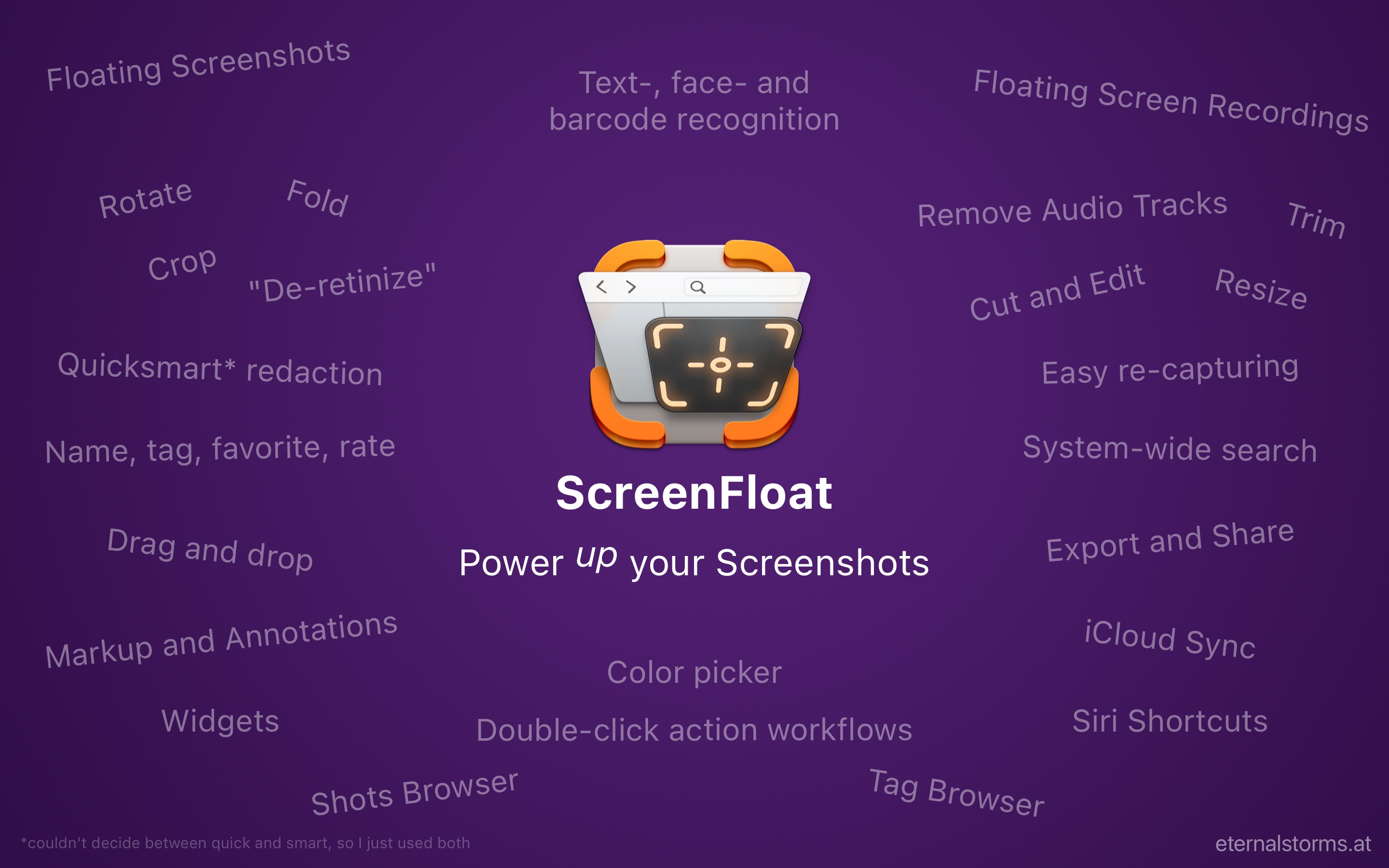
Copy or redact text, barcodes, and faces effortlessly to keep private data private.
Easily share your screenshots via drag and drop, or create shareable and embeddable links hosted on iCloud, ImageKit or Cloudinary. Crop, “fold”, resize, de-retinize, cut, trim and mute your screenshots and recordings, or add markup and annotate them non-destructively.
Apple Intelligence recently entered beta. David and Stephen have spent time with the features currently available on the iPhone, iPad, and Mac. These include writing tools, summarization Mail and Messages, and a new Focus Mode.
Ten years ago, we published the first episodes of five podcasts, and Relay was born. Just a few weeks before, Myke Hurley and I — along with some friends — had wound down our shows on 5by5 and promised we’d be back with something new.
As I wrote at the time, that entire timeframe was a blur of activity. This part of that post really jumps out at me, a full decade later:
In August of 1994, Apple was on the cusp of shipping the first PowerPC Performas. That’s a topic for a future blog post, but just because the 68K machines were getting old doesn’t mean Apple was giving up on them.
Robin Meyerowitz wrote this for MacWEEK at the time:
Breaking from a 2-year-old strategy that limited Performas to major retailers, Apple USA last week said it is expanding distribution of its consumer Mac line to authorized Apple resellers, smaller retail outlets and computer superstores.
As a quick recap, the 600 launched at the top of the Performa range in 1992, as a remix of the Macintosh IIvx. The 200 and 400 both saw updates in 1993, but even after the 500 series was introduced, the 600 remained untouched. That changed in July 1994, when Apple took what had been just two SKUs — the 600 and 600CD — and exploded them into a range of machines:
Each of these machines was based on the Quadra 630, which was the last of its line. It used a new case design that was also used on the Power Macintosh 6200, among other machines. It featured the CD-ROM on the left, next to the floppy disk, which was now at the center of the case. To its right was a stack comprised of an infrared port, volume buttons, and a headphone jack. Its code name was “Show & Tell.”
A while back, my buddy Mark Bramhill — yes that Mark Bramhill — was in town for work. The episode of BirdNote he was working on is now live:
Twice every day, a rapt audience gathers at the Peabody Hotel in Memphis, Tennessee to see six local celebrities: five ducks and the hotel’s head Duckmaster, Kenon Walker, who leads them in “The Duck March.” With John Philip Sousa music playing, the ducks march across a red carpet through the hotel’s lobby to a fountain. The ducks swim about the fountain until the afternoon, when the Duckmaster marches them back to their palace on the roof. People travel from all over to see this surreal local tradition.
This week, Google unveiled the Pixel 9 line, Apple turned its eye toward Patreon, and many anniversaries arrived.
In February 1994, Apple released three new Performa models. Dubbed the Macintosh Performa 575, 577, and 578, these machines were essentially a Quadra 605 in the all-in-one Performa/LC 520 case, bringing the 68LC040 CPU to the all-in-one Performa for the first time.
Here is how the three models compared in some key metrics:
| Model | Memory | HDD Size | Price |
|---|---|---|---|
| 575 | 5 MB | 250 MB | $2,099 |
| 577 | 5 MB | 250 MB | $2,199 |
| 578 | 8 MB | 320 MB | $2,299 |
Each of these models ran at 33 MHz. This was a full 32-bit design, so both the CPU and data path were 32-bit, unlike some previous machines which were slowed down by narrower buses.