On the eMac⇢

Thomas Brand:

To understand the eMac you have to understand Apple’s technology choices in early 2002. The iMac G3 had all but been phased out with a special “education only” model remaining in circulation. The new iMac G4, with its flat panel display, had just been released, but starting at $1,499 it was too expensive for the education market. There were also questions about the new iMac G4’s design. With its delicate display, adjustable neck, and external speakers was it too fragile for classrooms full of children. Many people were worried Apple was moving away from its educational roots, and would have no compatible desktop offering for the Fall 2002 semester.3 The eMac was Apple’s answers to these concerns. Released in April 2002, it brought the power of a G4 processor and the durability of a 17 inch CRT display to the reliable iMac G3 form factor.
Continue reading ⇢

On the Blue and White⇢

Thomas Brand:

Production of the Power Macintosh G3 (Blue & White) was short lived, being replaced by the Power Macintosh G4 less than a year later. It would end up being one of the most stable and long lasting machines Apple ever built, running Mac OS 8.5.1 in 1999 all the way up to Mac OS X 10.4.11 Tiger in 2007. Its innovative El Capitan case would go on to inspire the look of future professional desktop Macs, and the technologies it brought with it like FireWire and the New World ROM would bring Apple into the next decade.

Continue reading ⇢

A History of Apple’s Server Products — Sans the Xserve, Which was Boring

Apple Workgroup Server

“Apple Workgroup Server” was the name given to machines shipped from Apple from 1995 to 2003.

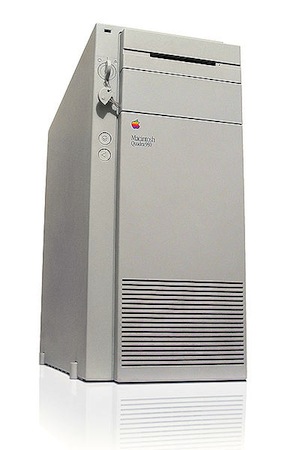
These machines were based on standard shipping hardware at the time, from the Quadra 950 (known as the Workgroup Server 95) to the full range of PowerMac G4s, dubbed the “Macintosh Server G4.”

Later machines shipped with Mac OS X Server, but the earlier ones ran an Apple-built version of Unix named A/UX.

Continue reading ⇢

The Macintosh 128k Turns 28

The computer that started a revolution was announced today, back in 1984:

Here are the specs of the machine:

Essentials:

  • Family: Classic Macs
  • Codename: Macintosh
  • Gestalt ID: 1
  • Minimum OS: 1.0
  • Maximum OS: System 3.2/Finder 5.3
  • Introduced: January 1984
  • Terminated: October 1985

Processor:

  • CPU: Motorola MC68000
  • CPU Speed: 8 MHz
  • FPU: none
  • Bus Speed: 8 MHz
  • Register Width: 32-bit
  • Data Bus Width: 16-bit
  • Address Bus Width: 32-bit
  • ROM: 64 kB
  • Onboard RAM: 128 kB
  • Maximum RAM: 128 kB

Video:

Continue reading ⇢

A Modern Docking Station

James Galbraith at Macword, in his review of Apple’s 27-inch Thunderbolt Display:

For owners of the 2011 MacBook Air, the Thunderbolt Display is a fantastic way to get iMac-like features while still being able to walk away with one of the lightest laptops available. If your Mac has Thunderbolt, FireWire 800, and gigabit ethernet, the case for buying the comparatively inflexible Thunderbolt display is a little less interesting.

This setup is very attractive to me, but it isn’t new. Thomas Brand at Egg Freckles points this out:

Continue reading ⇢

300 Mhz Doesn’t Go As Far As It Once Did

G3s.jpeg

I spent my evening setting up an original Blueberry-colored iBook “Clamshell” G3. You remember this machine, right? It was the very first iBook, introduced in 1999. It has a damn handle, for crying out loud. The photo above is of my machine, leaning up against a “Blue & White” PowerMac G3 I used to have.

Now, I love old tech. I really do. But tonight’s adventure in time travel had a purpose, believe it or not.

Continue reading ⇢

On the Apple Lisa & Macintosh XL

Mac Observer points out that this Saturday is the 25th anniversary of the Macintosh XL/Lisa project being scrapped:

Apple officially discontinued the Macintosh XL, née Lisa, on April 29, 1985, and the last Lisa rolled off the assembly line at the Carrollton, Texas, factory on May 15. Despite its lack of market acceptance during its initial availability, the Lisa now enjoys strong demand among vintage computer collectors on eBay who recognize its importance as the forerunner to the Macintosh.

Continue reading ⇢

12 Inches of PowerBook

In April 2003, Apple announced a new low-end and high-end PowerBook to wrap around the Titanium PowerBook family. The new 12-inch and 17-inch models sported a new, all-aluminum case, silver keys, and faster insides. (The 15-inch PowerBook would remain “Titanium” for several more months. My first Mac was one of those Titaniums.)

The 12-inch model was especially interesting, size wise. Low End Mac, in their Guide to the 12-inch PowerBook:

The Little Al ’Book was the smallest PowerBook ever built (110.6 cubic inches vs. 168.3 for the PowerBook 100 and 169.6 for the 2400c - only the MacBook Air has had a smaller volume), although at 4.6 lb. it was not quite as light as the original PowerBook Duo 210.

Continue reading ⇢