In scrolling through Jean-Louis Gassée’s Intel coverage I just linked to, I came across this from Matt Richman, written back in 2011:
When Apple makes the switch to ARM, they will have total control of their own destiny – just the way they like it.

In scrolling through Jean-Louis Gassée’s Intel coverage I just linked to, I came across this from Matt Richman, written back in 2011:
When Apple makes the switch to ARM, they will have total control of their own destiny – just the way they like it.
To no one’s surprise, WWDC is remaining virtual this year, and will be held from June 7-11:
Free for all developers, WWDC21 will offer unique insight into the future of iOS, iPadOS, macOS, watchOS, and tvOS. Building on the record-breaking participation and learnings from last year’s online conference, WWDC21 is an opportunity for developers to learn about the new technologies, tools, and frameworks they rely on to build innovative and platform-differentiating apps and games. Apple also announced that this year’s Swift Student Challenge, an opportunity for young developers to demonstrate their coding skills by creating a Swift playground, is now accepting submissions.
For months, Software Update on both of my Macs has listed “Final Cut Pro Content v1.0” as ready to install, but trying to run the update doesn’t clear it from the list of available updates. On my Mac Pro, it appears twice which is extra fun:
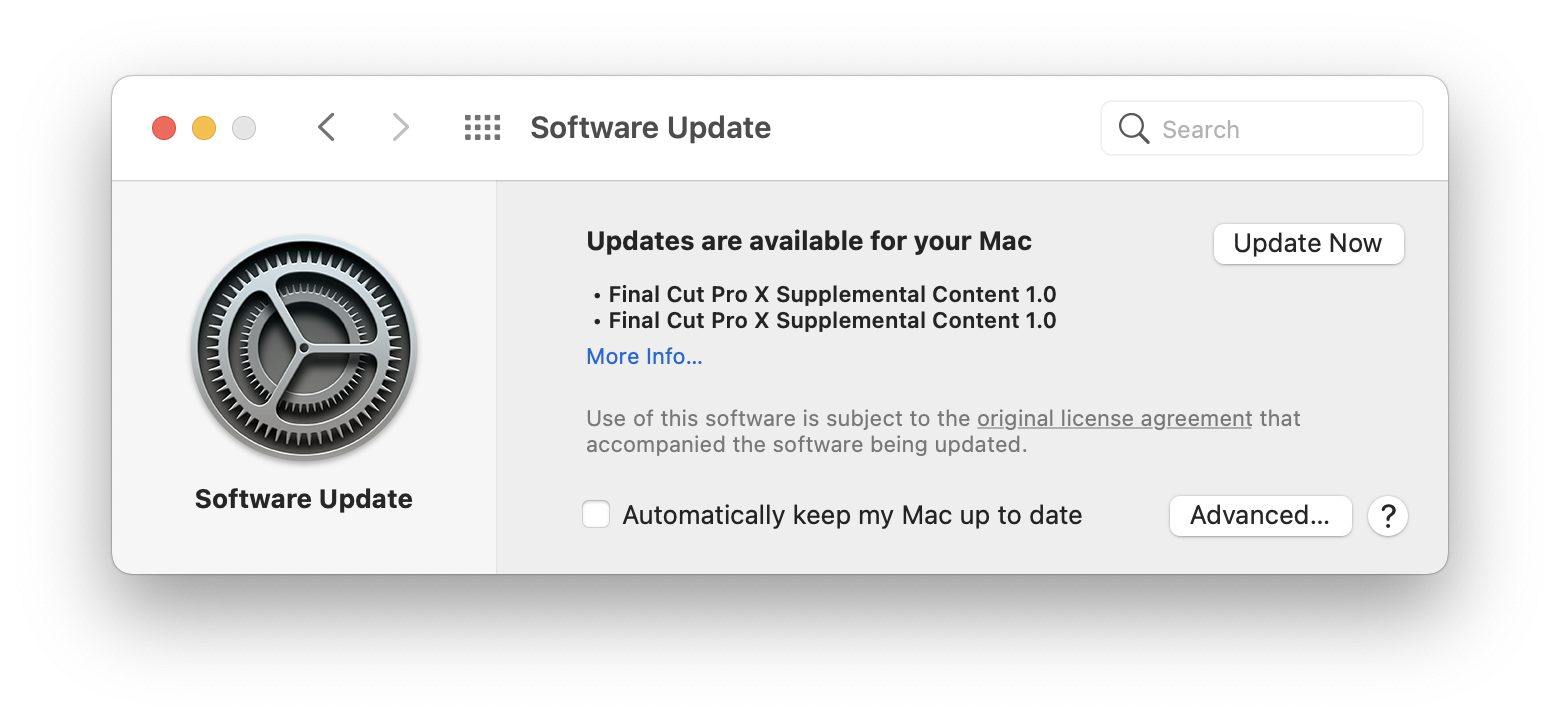
In the past, I would have used the ignore flag for the softwareupdate command to hide these updates and just move on with my life, but in Big Sur, ignore has been removed, which is frustrating in situations like mine.
This past Thursday the US Patent & Trademark Office published two patent application from Apple relating to this topic of recycled aluminum. The first patent is titled “Heat-Treatable Aluminum Alloy made from used Beverage can Scrap; The second is titled “Cosmetic Aluminum Alloys made from Recycled Aluminum Scrap.” While the aluminum that is used in MacBooks is derived from recycled aluminum pop and beer can scrap, the “alloy” to create the MacBook actually contains other recycled metals as both patents describe.
Apple Inc. is considering launching an Apple Watch with a rugged casing aimed at athletes, hikers and others who use the device in more extreme environments, according to people familiar with the matter.
The Cupertino, California-based technology giant has internally discussed introducing such a Watch variation later in 2021 or 2022 at the earliest, said the people, who asked not to be identified discussing private matters.
As someone who has broken an Apple Watch while bike riding, and only really wears one while exercising, I’m all for this.
It’s hard to believe that Mac OS X macOS is two decades old, but it’s true. On March 24, 2001, Apple released the first non-beta version of Mac OS X 10.0:
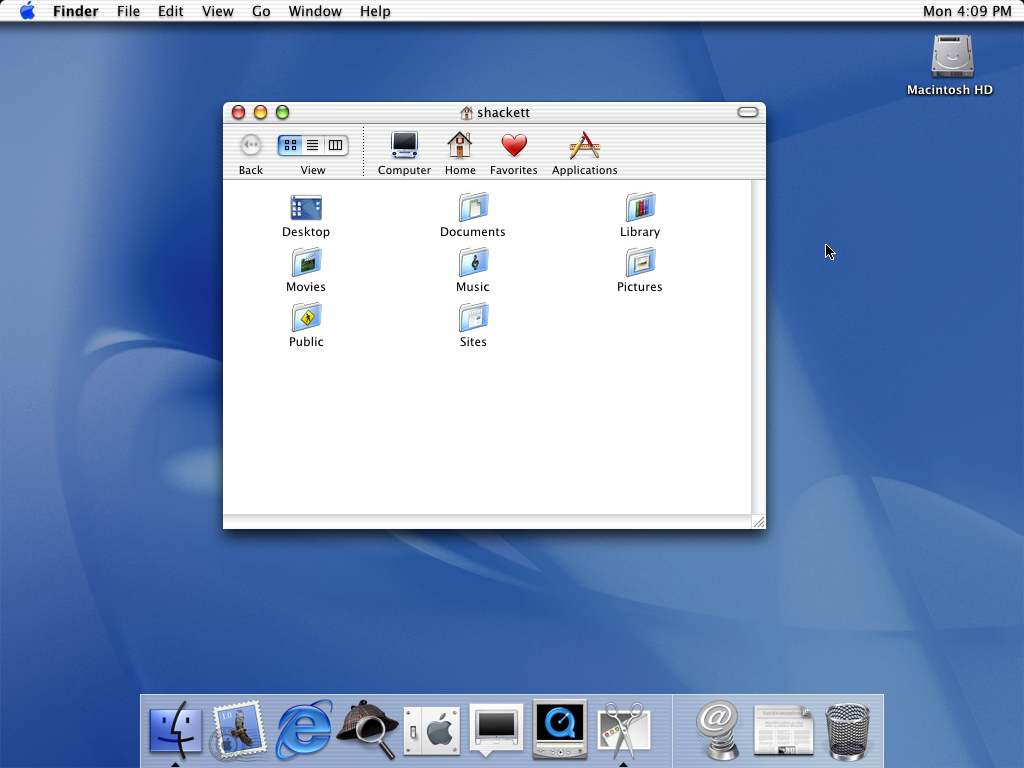
The release followed years of development that took NeXT’s technology and molded it into an operating system for the Mac. That process took longer than Apple had predicted, and included a false start known as Rhapsody. That’s really a story for a different time, but in short, that operating system strategy left classic Mac OS developers without a way forward for their applications that didn’t require rewriting them, and the community soundly rejected the entire thing.
There are a couple of doozies floating around today. The first is a radically different Apple Watch, as reported by MacRumors:
In one application, embodiments of the invention describe a wearable electronic device, such as a smartwatch, including a flexible display panel and flexible display module. In this manner, the display area of the smartwatch is not limited to a rigid watch face area. In an embodiment, a smartwatch includes a flexible display panel that is integrated into a flexible watch band. Accordingly, curvature of the flexible display panel in both the watch face area and band may be adjusted to conform to the wrist size of the user… the display area of the flexible display panel can cover more available space on the watch face area and band of the smartwatch.
Over the last couple of days, Apple has removed the 512 GB and 1 TB SSD options from the 4K iMac configurator. Now, all 21.5-inch iMacs, including the non-Retina entry model come with a 256 GB SSD as standard, and can only be upgraded to a 1 TB Fusion Drive from the factory.
Apple has let the smaller iMac stagnate for a while now, as it didn’t see an update when the 5K models were updated last year. No one should be buying an iMac right now, but especially a 21.5-inch model.
Just two weeks after being discontinued, the iMac Pro has been removed from Apple’s website and is no longer for sale. It was a great computer, but I’m really excited to see what comes next.
…and to add one to my Mac collection in about a decade.
Mark Gurman, writing about new iPad Pros which could come “as early as April:”
The devices will have an updated processor that is on par with the faster M1 chip in the latest MacBook Air, MacBook Pro and Mac mini. Apple designs these processors itself and typically has them made by Taiwan Semiconductor Manufacturing Co. Apple is also looking to include a Mini-LED screen with at least the larger model, which would be brighter and have improved contrast ratios.
The Android-maker said on Tuesday that starting July 1, it is reducing the service fee for Google Play to 15% — down from 30% — for the first $1 million of revenue developers earn using Play billing system each year. The company will levy a 30% cut on every dollar developers generate through Google Play beyond the first $1 million in a year, it said.
Citing its own estimates, Google said 99% of developers that sell goods and services with Play will see a 50% reduction in fees, and that 97% of apps globally do not sell digital goods or pay any service fee.
Matthew Panzarino at TechCrunch reports that the HomePod is joining the great iPod Hi-Fi in the sky:
After 4 years on the market, Apple has discontinued its original HomePod. It says that it will continue to produce and focus on the HomePod mini, introduced last year. The larger HomePod offered a beefier sound space but the mini has been very well received and clearly accomplishes many of the duties that the larger version was tasked with. The sound is super solid (especially for the size) and it offers access to Siri, Apple’s assistant feature.