
The photo with the display, Cube and NeXT laser printer makes my heart sing.
Category: NeXT
NeXT Lives On⇢
Chris Foresman:
Apple announced the acquisition of NeXT on December 20, 1996, noting it wanted NeXT’s object-oriented software development technology and its operating system know-how. As part of the deal, Jobs came back to Apple, eventually taking over as CEO and making the company into the consumer electronics giant it is today. Sixteen years later, several technologies developed or championed by NeXT still survive in OS X and in its mobile cousin, iOS.
Steve Jobs Building NeXT⇢
Like Jim, I hadn’t seen this video, either. It’s a gem.
1997: Apple CEO Gil Amelio Unveils the Yellow Box⇢
At Macworld 1997, Steve Jobs retuned to an Apple stage to walk though the mission: combining NeXT technology and the Mac OS to save the dying computer maker.
1990: Jobs Introduces 68040 NeXT Machines⇢
The display shed ten pounds, and the NeXTCUBE could be configured with a total of 2.88 GB of on-board storage for the 1990s.
‘The Lost Steve Jobs Tapes’
Fast Company has unearthed some lost interview tapes featuring Steve Jobs. There’s a lot of good stuff in this piece. Be sure to check out the highlights page, too.
Why Did NeXT Fail? (Or Did It?)
My mini-series on NeXT Computer: Installment 1: On the Creation of NeXT Installment 2: NeXT: The Hardware Installment 3: NeXT: The Software Installment 4: NeXT: The Apple Purchase Installment 5: Why Did NeXT Fail?
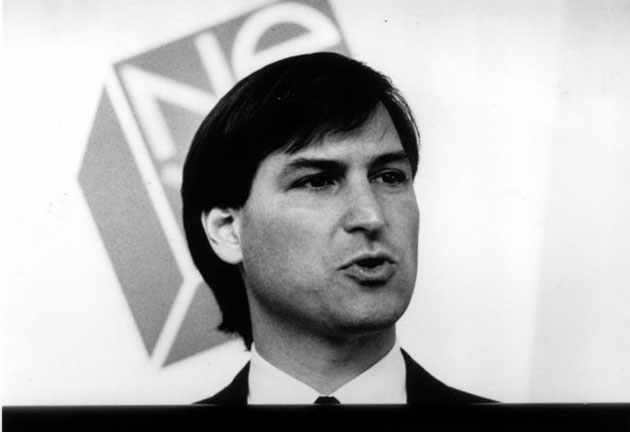
Over the last six months, I’ve been looking at the history of NeXT Computer. In the series, I’ve discussed the hardware, the software and more.
I’ve been avoiding, however, the topic of why the company failed. Or, at the very least, almost failed, as Apple bought them in the late 90s.
Running a NeXTCube
I’ve wanted a NeXTCube since I first learned what they were, which was well after they stopped being made, and some time after Apple bought NeXT. Last summer, I finally got one as Dan Messing decided he didn’t want to lug his out to Portland in his move. It was a physical machine, but not much more than that. It couldn’t boot. It couldn’t even power on. But hey… it had that awesome little logo on every component, and that was a hell of a start.
NeXT: The Apple Purchase
My mini-series on NeXT Computer: Installment 1: On the Creation of NeXT Installment 2: NeXT: The Hardware Installment 3: NeXT: The Software Installment 4: NeXT: The Apple Purchase Installment 5: Why Did NeXT Fail?
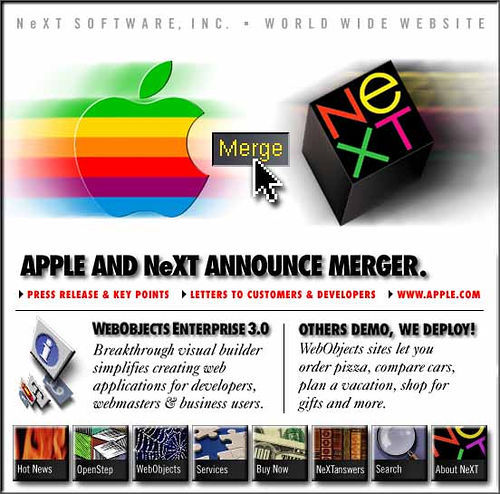
I don’t think the importance of NeXT being purchased by Apple can be overstated.
With a single purchase, Apple gained a stable, mature OS, lots of underpinning technology and Steven P. Jobs.
Apple’s Failure to (Re)Launch
After launching System 7 — and handing it out to clone makers — Apple looked forward to a new Mac OS.
Gerben Wierda’s NeXT Collection
Here’s the description of this amazing Flickr set:
When Steve Jobs left Apple in the eighties, he started NeXT with the plan to create the software innovations Apple did not want to do. Then he found out no computer was available to support those innovations, so NeXT also created stunning and innovative hardware. NeXT was a technological marvel, but not a commercial success for several reasons. But when Apple bought NeXT in 1996 and the NeXT innovators took over parts of Apple from the inside, the result was Mac OS X and all that made that possible, including today’s iPhone, iPod and iPad.
The NeXT App Store
During the NeXT era, there was a product named Electronic AppWrapper:
The Electronic AppWrapper was a valuable source of products and services for NEXTSTEP users. This electronic catalog offered software, hardware, fonts, clip art, technical books, recreational books and more.
One could order products via e-mail, fax, or phone. A corporate purchasing program was available.
I wasn’t aware of this until Jesse Tayler, who worked as an engineer on the project dropped me an email. In it, he wrote:
NeXT: The Software
My mini-series on NeXT Computer: Installment 1: On the Creation of NeXT Installment 2: NeXT: The Hardware Installment 3: NeXT: The Software Installment 4: NeXT: The Apple Purchase Installment 5: Why Did NeXT Fail?
An Introduction to NeXTSTEP
NeXTStep 1 is the operating system built by NeXT to power the company’s line of computer hardware. It is widely regarded to have been ahead of its time, and boasted these features:
- The Mach microkernel
- Display PostScript and a windowing engine
- The Objective-C language and runtime
- An object-oriented application layer, complete with robust development tools
Compared to Mac OS, NeXTStep looked like the future. It had full-color icons2 and modern typography and included technologies like protected memory and multitasking.