512 Pixels

Sponsor: Unite 4 for macOS ⇢

Unite 4 for macOS allows you to turn any website into an app on your Mac. Using a lightweight, WebKit powered browser as a backend, you can easily create isolated, customizable apps from any site.
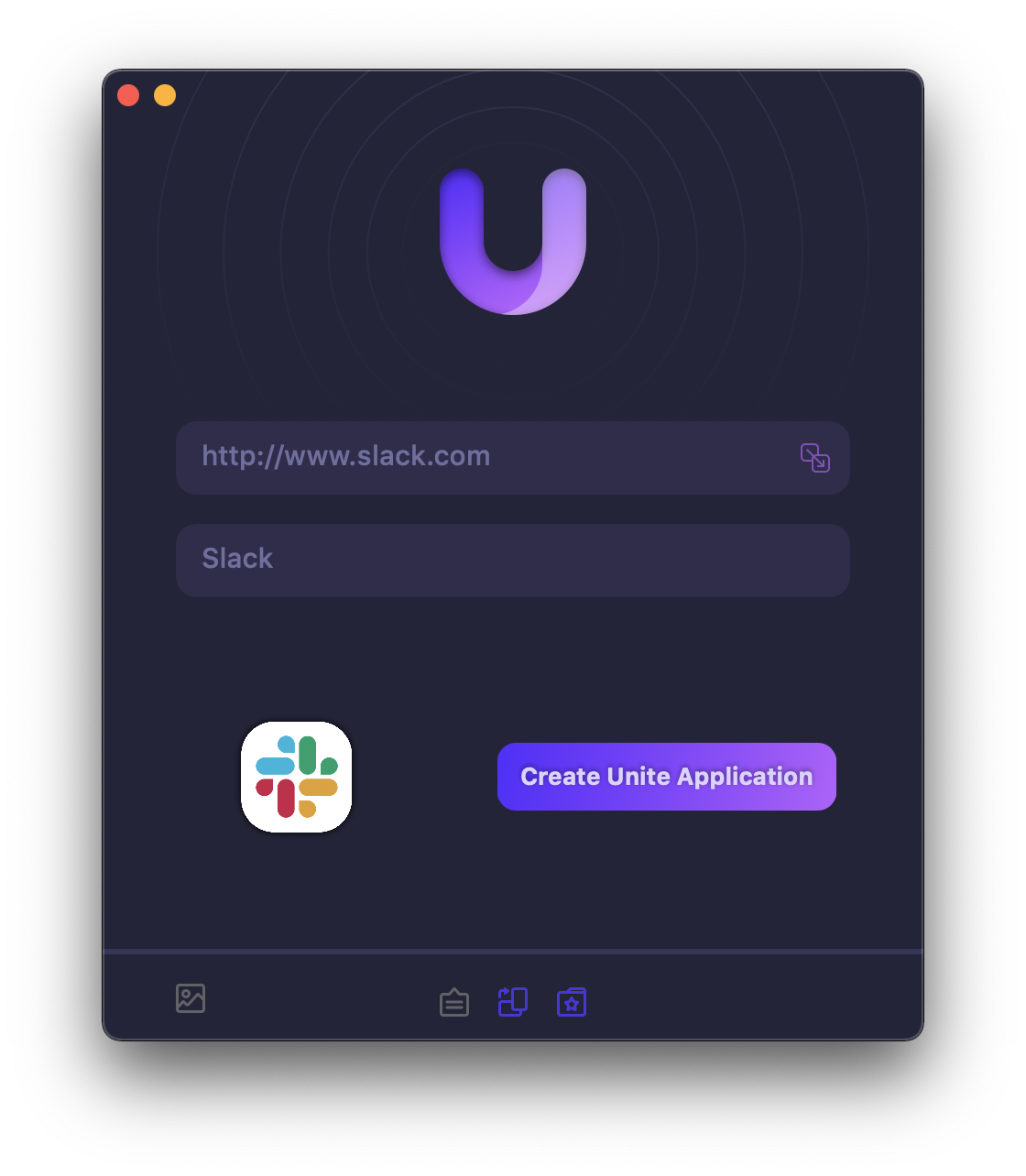
Unite 4 includes dozens of new features, including support for native notifications, new customization options, and much more. Unite apps also serve as a great alternative for resource hogging Electron apps or half-baked Catalyst apps.

Some examples of apps you could create in mere minutes with Unite:

  • A Gmail web client that behaves like a native mail client
  • A status bar app for Apple Music or Overcast
  • An isolated workspace for apps that may track you like Facebook
  • A Google Meet app that works efficiently without using Chrome
  • A fully featured Instagram app that has a resizable window
  • A Robinhood, Figma, or Roam Research app for your desktop

The newly launched Unite 4.2 makes the experience even better, with built-in password management, fully-featured status bar apps, and much more.

512 Pixels readers get 20% off this week when you purchase Unite 4 at bzgapps.com/unite512 or when you use the promo code ‘512Pixels’ at checkout.

You can also try Unite for 14 days absolutely free or use it as part of your subscription if you’re a Setapp subscriber!

Kickstarter Progress Report: November 19

I just packed and labeled the final orders for the Kickstarter! The last set of packages will be taken to the post office Monday morning. It feels great to have reached this point the weekend before Thanksgiving.

(To be fair, there are still 23 of you who have not filled out a shipping survey! If you log in to Kickstarter, you will find a direct message from me with your survey URL!)

I have loved seeing the notes from those of you who have already received yours in the mail. Keep sending them my way!

Alexa in Spaaaaace ⇢

Jennifer Pattison Tuohy, writing at The Verge:

Earlier this summer, on the day Artemis I was originally scheduled to launch, I spent an hour testing out the capabilities of this new deep space voice assistant down on the ground at Kennedy Space Center in Florida.

While this was a demo model (they wouldn’t let me in the spacecraft — I asked), as far as I could tell, it was an exact replica of the one on Orion, even down to the lack of an internet connection.

Back to the Moon ⇢

Yours truly, speaking with Texas Standard earlier today about the Artemis I launch:

After the end of the space shuttle program, we really were kind of stuck in terms of getting a crew to space from American soil. And SpaceX and others are working to supply missions to the International Space Station, but there hasn’t been anything really since Apollo to get us further out into space. And so the SLS rocket, this Artemis 1 mission, is the first big step to put boots back on the moon for the first time in 50 years.

SLS Finally Flies

At 1:47 Eastern time this morning, NASA’s $20+ billion rocket finally left its launch pad:

Launch starts about 3:16:54 into the video.

The SLS rocket and Orion crew capsule have their roots all the way back into the early 2000s, as NASA prepared for a post-shuttle world.1 It’s taken longer — and cost more — than expected, but now NASA has a vehicle capable of returning crew to the moon.

There are a lot of complex issues around this rocket, including the fact that SpaceX is well on its way to building its own vehicle in this class. There is an argument to be made that NASA should focus on science and exploration, and let companies like SpaceX and ULA manage all the launch vehicle hardware, but for today, I’m just glad to see this thing make it off the ground for the first time.

If you want to keep up with how the mission goes, be sure to check out NASA’s Artemis blog. It has its own RSS feed and everything.


  1. In fact, much of the SLS itself is made of recycled and upgraded shuttle hardware. The idea was that by re-using flight-proven hardware designs, the rocket could be built more quickly and for less money. ↩︎

Kbase Article of the Week: Centris 610 and 650: Floating-Point Unit Upgrades ⇢

Apple Support:

You can upgrade the Macintosh Centris 610 or 650 with an FPU, but Apple doesn’t provide or support such an upgrade. You must rely on third-party companies who can remove the 68LC040 from its socket and replace it with a 68RC040. Since Apple doesn’t intend to offer an upgrade, we can’t guarantee that the processor will remain a socketed component.

There aren’t very many compatibility problems with non-FPU systems. While the addition of an FPU allows certain types of applications to execute faster, these applications tend to be more technical in nature. Business applications — such as spreadsheets, databases and word processors — don’t require an FPU to run.

Most applications check to see if there’s an FPU present. If one doesn’t exist, they emulate the floating point instructions in software. There are a few applications that expect or require an FPU. These applications will present problems and we anticipate most software developers will revise these products.

The Centris line is a weird, sad story in Mac history.