512 Pixels

Apple Fitness+ Launching December 14 ⇢

Apple PR:

Apple today announced Fitness+, the first fitness experience built around Apple Watch, is launching Monday, December 14. Apple Fitness+ brings studio-style workouts to iPhone, iPad, and Apple TV, intelligently incorporating workout metrics from Apple Watch for a first-of-its-kind personalized and immersive experience users can complete wherever and whenever is convenient for them. Apple Fitness+ will launch with 10 of the most popular workout types, including High Intensity Interval Training (HIIT), Strength, Yoga, Dance, Core, Cycling, Treadmill (for running and walking), Rowing, and Mindful Cooldown, led by a phenomenal team of trainers whose approach is welcoming to all. The workouts are fueled by inspiring music from today’s top artists designed to keep users motivated from start to finish.

My wife and I gave up our gym membership earlier this year due to COVID, and have built a small workout area in our garage. We are both looking forward to checking this out.

Kbase Article of the Week: Install MPX Modules in Mac Pro ⇢

Apple Support:

Follow these steps to install MPX Modules in your Mac Pro. MPX Modules must be installed in PCIe expansion slots 1 and 3.

Important: Each PCIe slot is rated a maximum of 75 W; Each 6-pin auxiliary (AUX) connector is rated 75 W, and each 8-pin AUX connector is rated 150 W. Only install PCIe modules that specifically state that they are compliant with the industry standard PCIe specification. Use of noncompliant modules may not keep different input power sources separated, resulting in a possible burn hazard, and may damage the computer.

On the Possibilities of the Apple silicon Mac Pro

Mark Gurman and Ian King have a new report out on Bloomberg about Apple’s plans for machines that will have better performance than the first three machines with Apple silicon:

The current M1 chip inherits a mobile-centric design built around four high-performance processing cores to accelerate tasks like video editing and four power-saving cores that can handle less intensive jobs like web browsing. For its next generation chip targeting MacBook Pro and iMac models, Apple is working on designs with as many as 16 power cores and four efficiency cores, the people said.

This makes a lot of sense; the four-port 13-inch MacBook Pro, smaller iMac and a more powerful Mac mini would all be a nice step up from the current M1 Macs.

For the highest-end Macs, the report says Apple is cooking up some truly exciting stuff:

While that component is in development, Apple could choose to first release variations with only eight or 12 of the high-performance cores enabled depending on production, they said. Chipmakers are often forced to offer some models with lower specifications than they originally intended because of problems that emerge during fabrication.

For higher-end desktop computers, planned for later in 2021 and a new half-sized Mac Pro planned to launch by 2022, Apple is testing a chip design with as many as 32 high-performance cores.

I don’t think there’s any surprise in this report in terms of CPU performance; the lowly MacBook Air is already faster than almost every Intel Mac, and as Apple moves up the Mac food chain, things are only going to get even faster.

And at the top, the best Mac I’ve ever owned, the Mac Pro.

In its current form, the Mac Pro offers eight slots of varying speed for expanding the machine with more storage, better GPUs and more.1 However, this is not the first time Gurman has referred to the next-generation Mac Pro as being “half-sized.”

Some people have interpreted this to mean that Apple will offer a cheaper-and-smaller-but-still-expandable desktop for the first time, finally shipping John Siracua’s xMac:

My own personal conception of the xMac does not match-up well with the Mac mini. I’d go so far as to say that my xMac vision is also a lot closer to the original concept of the xMac…except I’ve already established that I’m not sure exactly where or when the xMac idea originated, so never mind.

[…]

Reduced to one sentence, it’s a completely configurable, headless Mac that trades expandability for reduced size and cost.

The xMac may indeed be the side effect of this change, but I think the reason for the Mac Pro’s future smaller form factor may come down to Apple’s GPU strategy. Here are Gurman and King one more time:

For later in 2021 or potentially 2022, Apple is working on pricier graphics upgrades with 64 and 128 dedicated cores aimed at its highest-end machines, the people said. Those graphics chips would be several times faster than the current graphics modules Apple uses from Nvidia and AMD in its Intel-powered hardware.

Many have been assuming the Apple silicon Mac Pro (and maybe other high-end Macs, like the iMac Pro) would ship with discrete GPUs from AMD, but I think that is a wish that is going to go unfulfilled. If Apple can ship GPUs that run circles around what Nvidia and AMD are doing, why would they complicate things by supporting them?

It sure seems that Apple silicon Mac Pro will have fewer expansion slots than the Intel one, which when coupled with this report, I can’t help but wonder if the MPX module has a future. Will the next Mac Pro ship with its GPU directly on the logic board, with slot-based GPUs go away altogether, just leaving slots for other things? Would it be upgradable later via a MPX module? Or will Apple divorce the CPU and GPU for maximum flexibility in a system like this, and just ship a smaller Mac Pro as it won’t need the cooling capacity of the current Intel version?2

The more we see of Apple silicon, the less confident I feel about swappable GPUs in the next-gen Mac Pro.

Whatever comes next, I’m sure some people will be happy and others will be annoyed. But that’s been the case with this machine for years, I suppose.

  1. I’ve been having fun expanding mine, that’s for sure. ↩︎

  2. We can talk about the future of RAM slots another time. ↩︎

Mac Power Users #565: The 2020 Holiday Gift Guide ⇢

This week on Mac Power Users, we hosted our annual holiday gift guide for nerds like us.

I spent some money on the air.

My thanks to our sponsors for helping with that:

  • 1Password: Have you ever forgotten a password? You don’t have to worry about that anymore.
  • Woven: The calendar with the most powerful scheduling tools. Try it free for 21 days.
  • Squarespace: Make your next move. Enter offer code MPU at checkout to get 10% off your first purchase.
  • Sync Up, a OneDrive podcast: Takes you behind the scenes of OneDrive.

On More Power Users, I shared a story about a recent tech favor I did for a friend that went terribly, terribly wrong.

Sponsor: Unite 4 for macOS ⇢

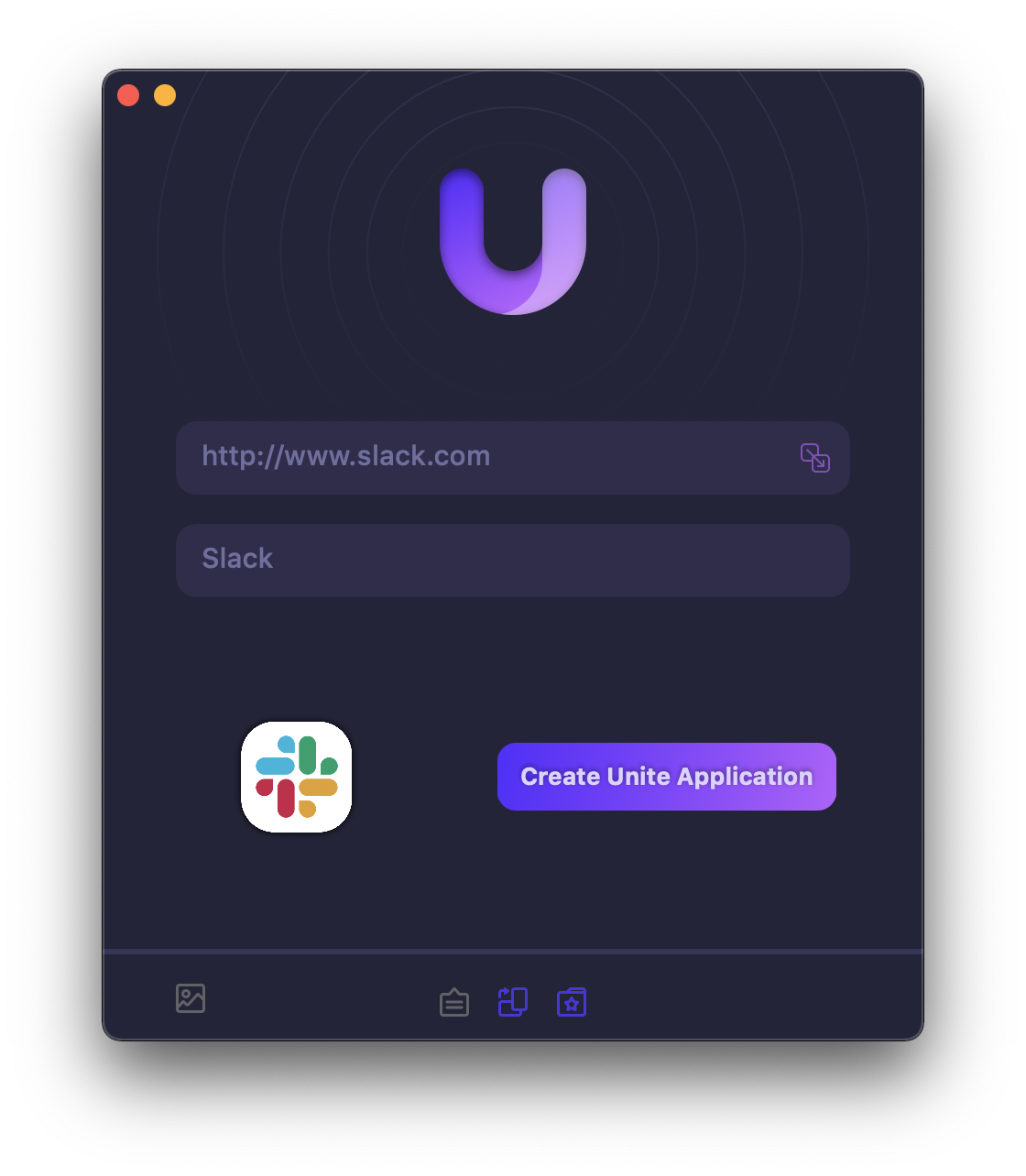
Unite 4 for macOS allows you to turn any website into an app on your Mac. Using a lightweight, WebKit powered browser as a backend, you can easily create isolated, customizable apps from any site.

Unite 4 includes dozens of new features, including support for native notifications, new customization options, and much more. Unite apps also serve as a great alternative for resource hogging Electron apps or half-baked Catalyst apps.

Some examples of apps you could create in mere minutes with Unite:

  • A Gmail web client that behaves like a native mail client.
  • A status bar app for Apple Music or Overcast
  • An isolated workspace for apps that may track you like Facebook
  • A Google Meet app that works efficiently without using Chrome
  • A lightweight and power efficient version of Slack, Discord, or Whatsapp with full notification, mic, and cam support
  • A fully featured Instagram app that has a resizable window, unlike the M1 version.
  • A Robinhood, Figma, or Roam Research app for your desktop.

512 Pixels readers get 20% off this week when you purchase Unite 4 at bzgapps.com/unite512 or when you use the promo code ‘512Pixels’ at checkout.

You can also try Unite for 14 days absolutely free or use it as part of your subscription if you’re a Setapp subscriber!

Connected #323: Artisanal Software Updates ⇢

This week on Connected, Apple is handing out awards, Federico has a new iPhone charger on the way, Myke meant to try an app and Stephen tried reinstalling macOS. Oh, and Salesforce bought Slack.

On a very special Connected Pro, Federico talks about a big change in his household.

My thanks to our sponsors this week:

  • Pingdom: Start monitoring your website performance and availability today, and get instant alerts when an outage occurs or a site transaction fails. Use offer code CONNECTED to get 30% off. Offer expires on January 31, 2021, and can be used only once.
  • StoryWorth: Record your family stories. Get $10 off your first purchase.

Liftoff #138: A Great Acronym, but it’s in Russian ⇢

This time on Liftoff:

The world is mourning the uncontrolled collapse of the Arecibo observatory, even as China’s Chang’e-5 mission is underway to return lunar samples to Earth, which would be a first since the final Apollo mission. Also: an update on the SLS and Orion and a look at what’s going on at Roscosmos.

Lots of ups and downs this week.

My thanks to our sponsor for this episode:

  • Squarespace: Make your next move. Enter offer code LIFTOFF at checkout to get 10% off your first purchase.

AWS Adds Mac Instances, Powered by Intel Mac minis ⇢

Jeff Barr, on the AWS News Blog:

Powered by Mac mini hardware and the AWS Nitro System, you can use Amazon EC2 Mac instances to build, test, package, and sign Xcode applications for the Apple platform including macOS, iOS, iPadOS, tvOS, watchOS, and Safari. The instances feature an 8th generation, 6-core Intel Core i7 (Coffee Lake) processor running at 3.2 GHz, with Turbo Boost up to 4.6 GHz. There’s 32 GiB of memory and access to other AWS services including Amazon Elastic Block Store (EBS), Amazon FSx for Windows File Server, Amazon Simple Storage Service (S3), AWS Systems Manager, and so forth.

Mac instances run macOS 10.14 (Mojave) and 10.15 (Catalina) and can be accessed via command line (SSH) or remote desktop (VNC). The AMIs (Amazon Machine Images) for EC2 Mac instances are EC2-optimized and include the AWS goodies that you would find on other AWS AMIs: An ENA driver, the AWS Command Line Interface (CLI), the CloudWatch Agent, CloudFormation Helper Scripts, support for AWS Systems Manager, and the ec2-user account. You can use these AMIs as-is, or you can install your own packages and create custom AMIs (the homebrew-aws repo contains the additional packages and documentation on how to do this).

The plan on rolling out M1 Mac minis early next year, and while this is neat, I still think what MacStadium offers is a lot more compelling if you need a Mac in the cloud all the time.