
If you hated buttons and loved shiny things in 2009, this iPod shuffle was for you:
512 Pixels
Kbase Article of the Week: PowerBook 100 through PowerBook 5300: Resetting Power Management Unit ⇢
This document describes the PowerBook Power Manager and explains how to reset it. Resetting the power manager also resets the date and time. After the reset, on some PowerBooks, the system clock is set to 00:00 on 1 January 1904.
This document refers to Apple products manufactured before November 1997. Click here for products manufactured after that date.
Naturally, that link is broken, but the Internet Archive grabbed it.
Mac Pro to be Manufactured in Texas ⇢
As part of its commitment to US economic growth, Apple today confirmed that its newly redesigned Mac Pro will be manufactured in Austin, Texas. This latest generation Mac Pro, which was unveiled at Apple’s annual Worldwide Developer Conference in June, will begin production soon at the same Austin facility where Mac Pro has been made since 2013.
The new Mac Pro will include components designed, developed and manufactured by more than a dozen American companies for distribution to US customers. Manufacturers and suppliers across Arizona, Maine, New Mexico, New York, Oregon, Pennsylvania, Texas and Vermont, including Intersil and ON Semiconductor, are providing advanced technology. The US manufacturing of Mac Pro is made possible following a federal product exclusion Apple is receiving for certain necessary components. The value of American-made components in the new Mac Pro is 2.5 times greater than in Apple’s previous generation Mac Pro.
This comes on the heels of Apple requesting tariff relief from the US government. It’s unclear if Mac Pros for customers outside the United States will be manufactured here or not.
The Relay FM St. Jude Podcastathon ⇢
Video of Friday night’s Podcastathon for St. Jude is live now:
I also posted the audio on Relay FM, but video is the far better way to enjoy this if you missed it over the weekend.
Doing this show was the highlight of not only my year, but the last five years of running Relay FM. All of us at Relay are so humbled at the quarter of a million dollars you have helped us raise for the kids at St. Jude.
Danny Thomas believed that no child should die in the dawn of life, and St. Jude won’t stop until that vision is realized. We’ve done a small part to bring that future to life, and it’s amazing to get to do so while talking about new iPhones and throwing plastic balls at Myke Hurley.
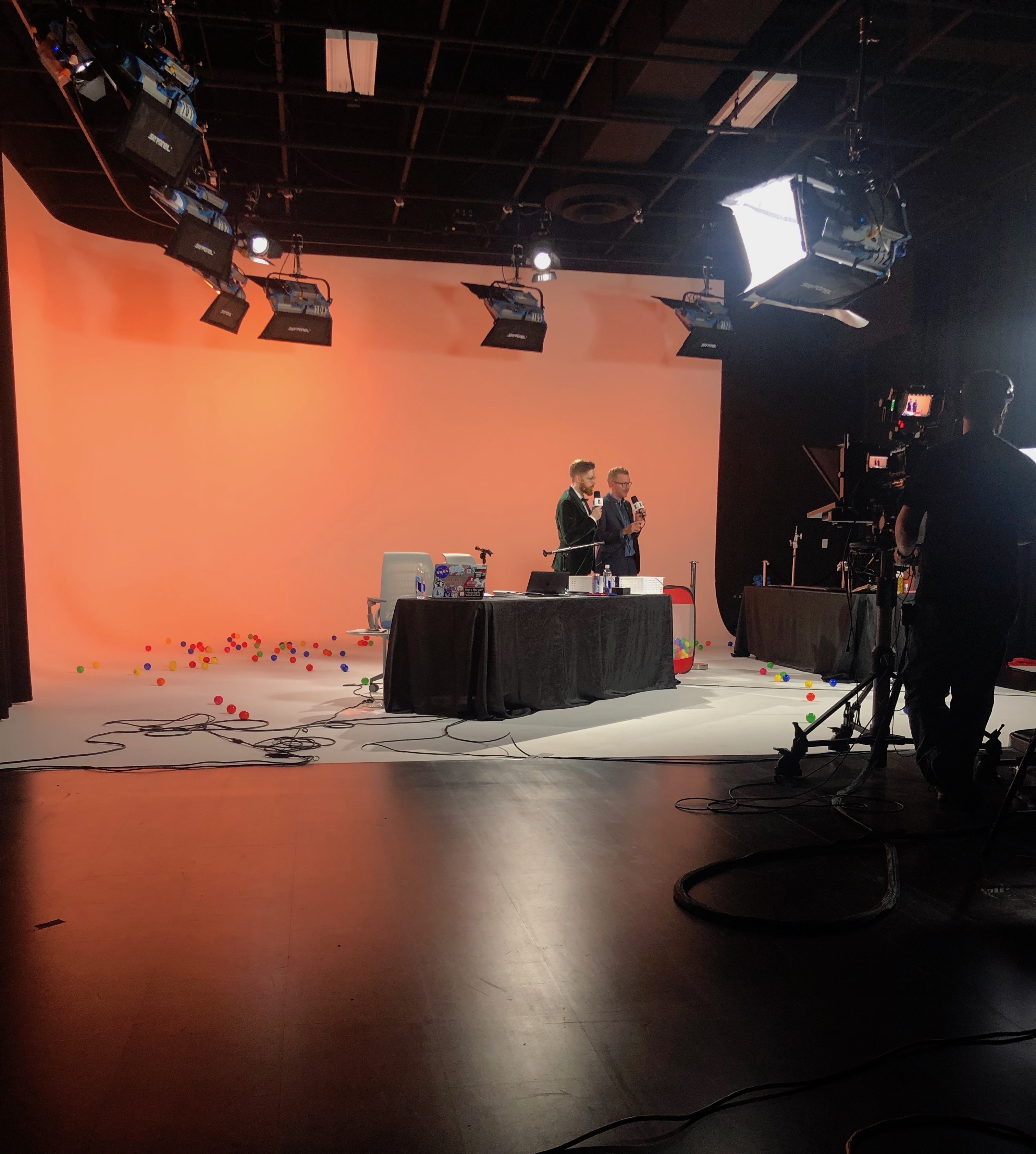
We will be raising money through the end of the month, so if you haven’t donated yet, there is still time.
It has been exactly one month since we announced this campaign live on stage in San Francisco. If you had told me then that we’d be at over $250,000 I would not have believed you, but this nerdy community has blown me away.
Thank you. Even though I talk for a living, I’m speechless.
Mac Power Users #501: iOS 13 and the Shortcuts Field Guide ⇢
iOS 13 is here, and is full of new features. This week, David and Stephen talk about some of their favorites, after talking through the changes Apple has made to Shortcuts.
Shortcuts in iOS 13 is a a true game changer.
- 1Password: Have you ever forgotten a password? You don’t have to worry about that anymore.
- Away: Thoughtful luggage for modern travel. Get $20 off a suitcase with promo code mpu.
- Moo: Custom business printing and design. Save up to 35% until September 24.
- Freshbooks: Online invoicing made easy.
Macintosh Portable Turns 30 ⇢
Hodinkee Reviews the Titanium Apple Watch Series 5 ⇢
From their video, I like the look of the new material a lot more than I thought I would. Looking forward to seeing these in stores on Friday.
Connected #261: You Handed Me a Watermelon ⇢
The Big Tall Italian Boy is gone, but Stephen and Myke are together in person to review the iPhone XS on its way out the door, discuss reviews of the new iPhones and the Apple Watch Series 5. Then, they explore Apple Arcade and share what they’ve been playing.
I’m a little surprised at how much I like Apple Arcade.
My thanks to our sponsors:
- ExpressVPN: High-Speed, Secure & Anonymous VPN Service. Get 3 months free with a 1-year package.
- eero: Get your WiFi fixed as soon as tomorrow! Free overnight shipping.
- Freshbooks: Online invoicing made easy.
Prototype Macintosh Portable ⇢
Sparky’s iOS 13 Shortcuts Field Guide ⇢
David Sparks has a new edition of his Shortcuts Field Guide out:
The new Shortcuts Field guide was shot entirely new with the new Shortcuts for iOS 13. Apple changed a lot and it is all covered in this field guide:
- Over 6 hours of downloadable video tutorials
- New materials for both beginners and advanced users
- New Downloadable Shortcuts
- So much Automation
I spent a chunk of my Friday and Monday going through most of this in prep for the next episode of Mac Power Users, and unsurprisingly, it’s really good. If you want to take a crack at learning what Shortcuts can do, this is the place to start.
Myke & I Play Oregon Trail & Super Munchers ⇢
Last week, Myke and I streamed a couple of games from my childhood as part of our fundraiser for St. Jude:
It was a really fun way to raise several thousand dollars.
Speaking of that… we are well over our original $75,000 goal, but want to keep pushing. Don’t miss our live video Podcastathon on Friday, from 4-10 PM Eastern.
Some of Apple’s Awkward Product Names Over the Years
There’s no way around it, the name “iPhone 11 Pro Max” is a bit of a mouthful. For a company that is so good at marketing, this is far from Apple’s first awkward product name.
Of course, over time these things settle down. I remember groaning at “MacBook Pro” in January 2006 when the PowerBook’s successor was unveiled, but now we don’t think twice about it.
There are some other examples that have come to mind for me:
Apple IIe Enhanced (1985)
Over its 11 year existence, the Apple IIe was on sale longer than any other Apple computer (Mac or otherwise) without a major change.
The IIe Enhanced is one of the few changes to the machine. In March 1985, Apple revved the machine, swapping in the 65C02 processor, clocked at 1.023 MHz. The chip had been found in the smaller IIc, and Apple was hoping to make software support more uniform across the line.
The upgrade also brought updated character and firmware ROMs, making 80-column text far less buggy than before, and opening the door for lowercase letters in Applesoft BASIC.
By appending “Enhanced” to the name, Apple did a good job at signaling that this was just a better Apple IIe, but it seems a bit kludgy today.
In a very non-modern-Apple move, the company sold upgrade kits that let users upgrade — and even re-badge — their Apple IIe machines into Enhances models.
Macintosh SE FDHD (1987)
The SE/30 is one of the most beloved Macs of all time, but its predecessor, the Motorola 68000-powered Macintosh SE received a revision before the famous upgrade to the 68030.
The SE FDHD included support for 1.44 MB floppy drives, up from the 800 KB diskettes SE users were stuck with. Hence “FDHD,” which stood for “Floppy Disk High Density.”
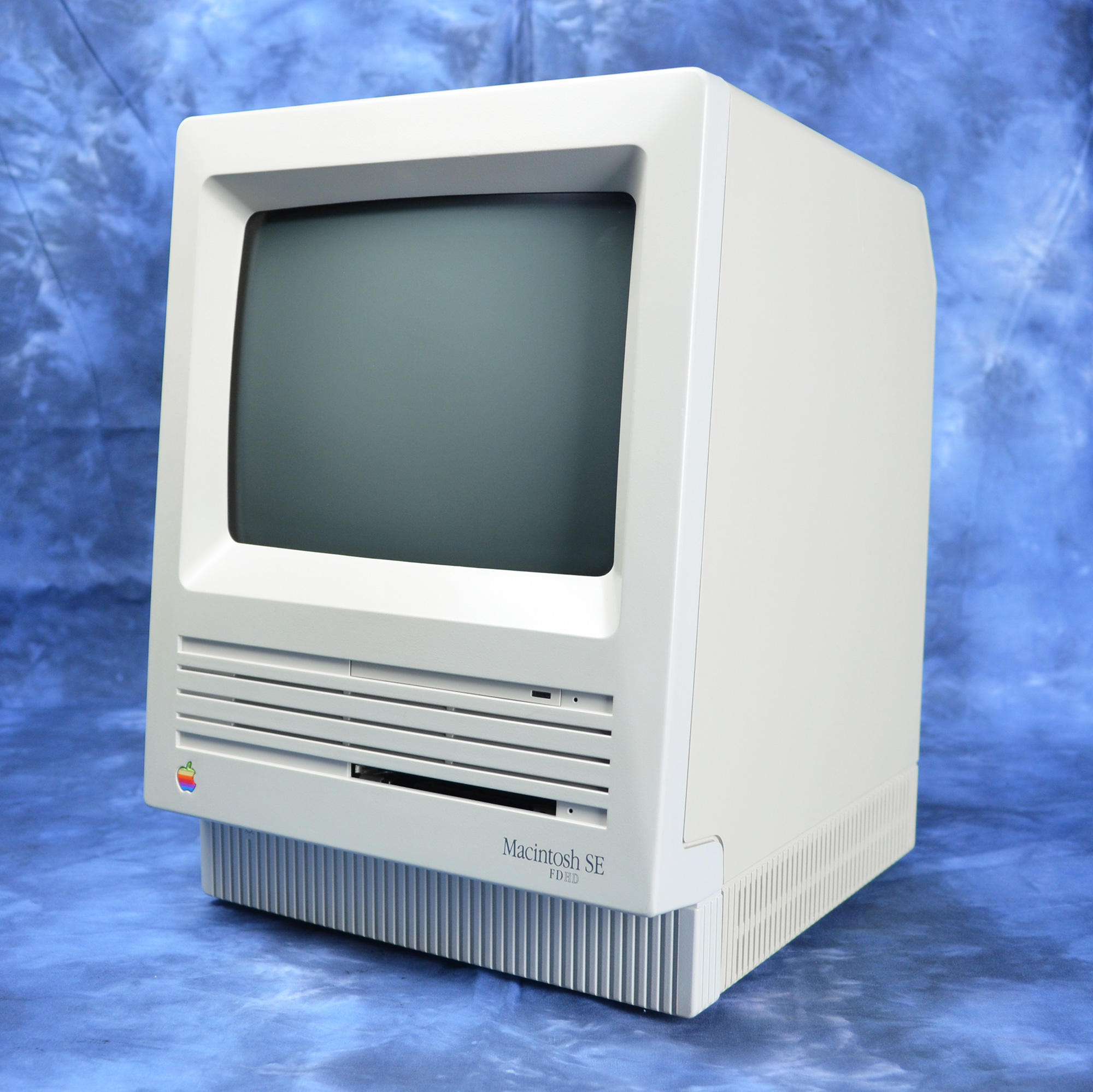 image via Vectronic’s Collections
Siri, heat up some alphabet soup for me.
The Apple OneScanner Line (1991-1997)
In the 90s, Apple had a line of scanners dubbed the “OneScanner” line. Just look at this beast:
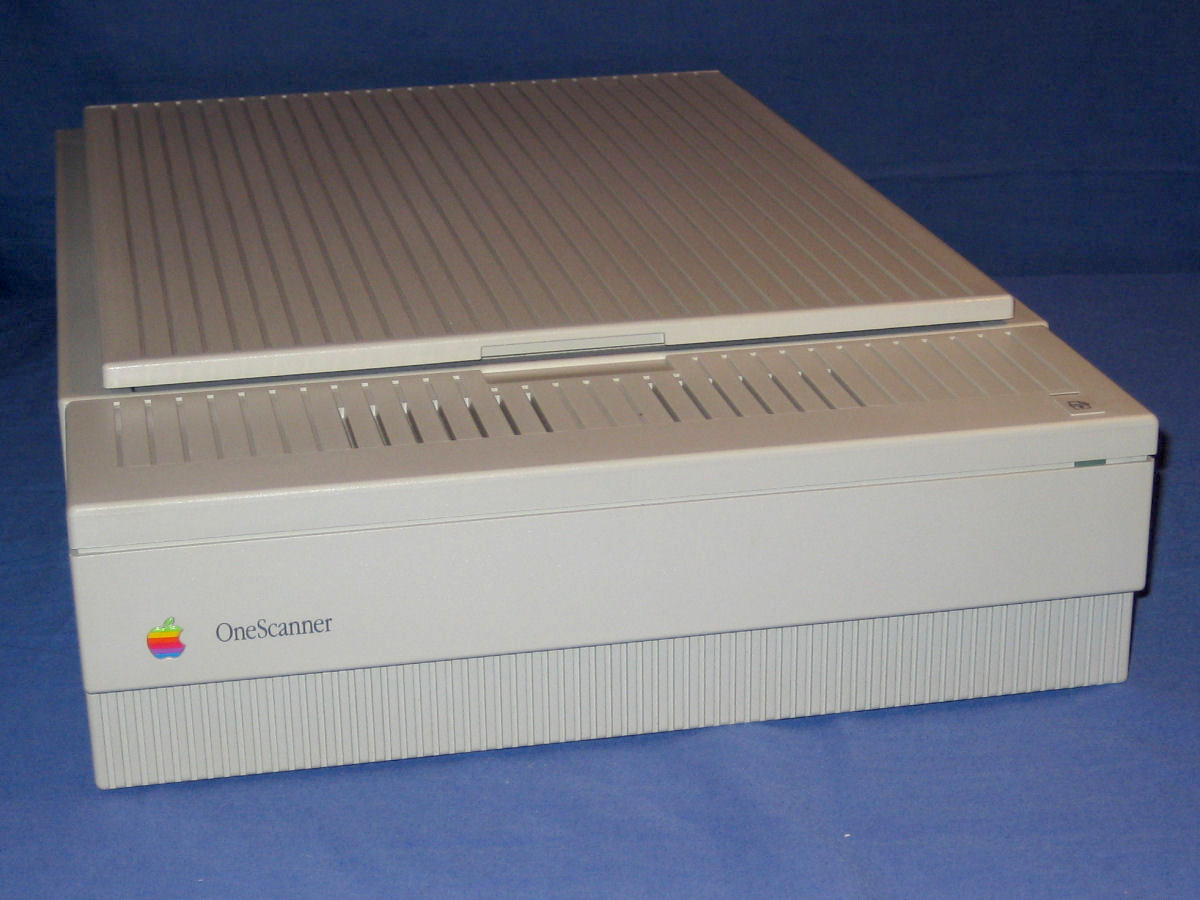 image via Stephen Edmonds
The OneScanner offered 256 levels of grey, with 1995’s OneScanner adding color support. Later models picked up goodies like automatic document feeders and support for higher resolutions, but never a less grandiose name.
Basically Every Performa (1992-1997)
The Performa line was a family of low-cost Macs borrowed from other product lines, made slightly worse, bundled with software and sold in places like Sears and other big-box stores.
The names of these machines are all long and some of them are downright awkward. Check out the full list on Wikipedia for more details, but you can see they got worse over time:
- Performa 200
- Performa 250
- Performa 275
- Performa 400
- Performa 405
- Performa 430
- Performa 450
- Performa 410
- Performa 460
- Performa 466
- Performa 467
- Performa 475
- Performa 476
- Performa 550
- Performa 560
- Performa 575
- Performa 577
- Performa 578
- Performa 580CD
- Performa 588CD
- Performa 600
- Performa 600CD
- Performa 630
- Performa 630CD
- Performa 630CD DOS Compatible
- Performa 631CD
- Performa 635CD
- Performa 636
- Performa 636CD
- Performa 637CD
- Performa 638CD
- Performa 640CD DOS Compatible
- Performa 5200CD
- Performa 5210CD
- Performa 5215CD
- Performa 5220CD
- Performa 5300CD
- Performa 5300CD DE1
- Performa 5320CD
- Performa 6110CD
- Performa 6112CD
- Performa 6115CD
- Performa 6116CD
- Performa 6117CD
- Performa 6118CD
- Performa 6200CD
- Performa 6205CD
- Performa 6210CD
- Performa 6214CD
- Performa 6216CD
- Performa 6218CD
- Performa 6220CD
- Performa 6230CD
- Performa 6260CD
- Performa 6290CD
- Performa 6300CD
- Performa 6310CD
- Performa 6320CD
- Performa 6360
- Performa 6400/180
- Performa 6400/200
- Performa 6400/200 VEE2
- Performa 6410
- Performa 6420
Workgroup Server 95 (1993)
This just sounds like Microsoft product, but it’s not. The Workgroup Server was based on the still-cool-looking Quadra 950, but with a digital tape drive coupled with faster internal SCSI.
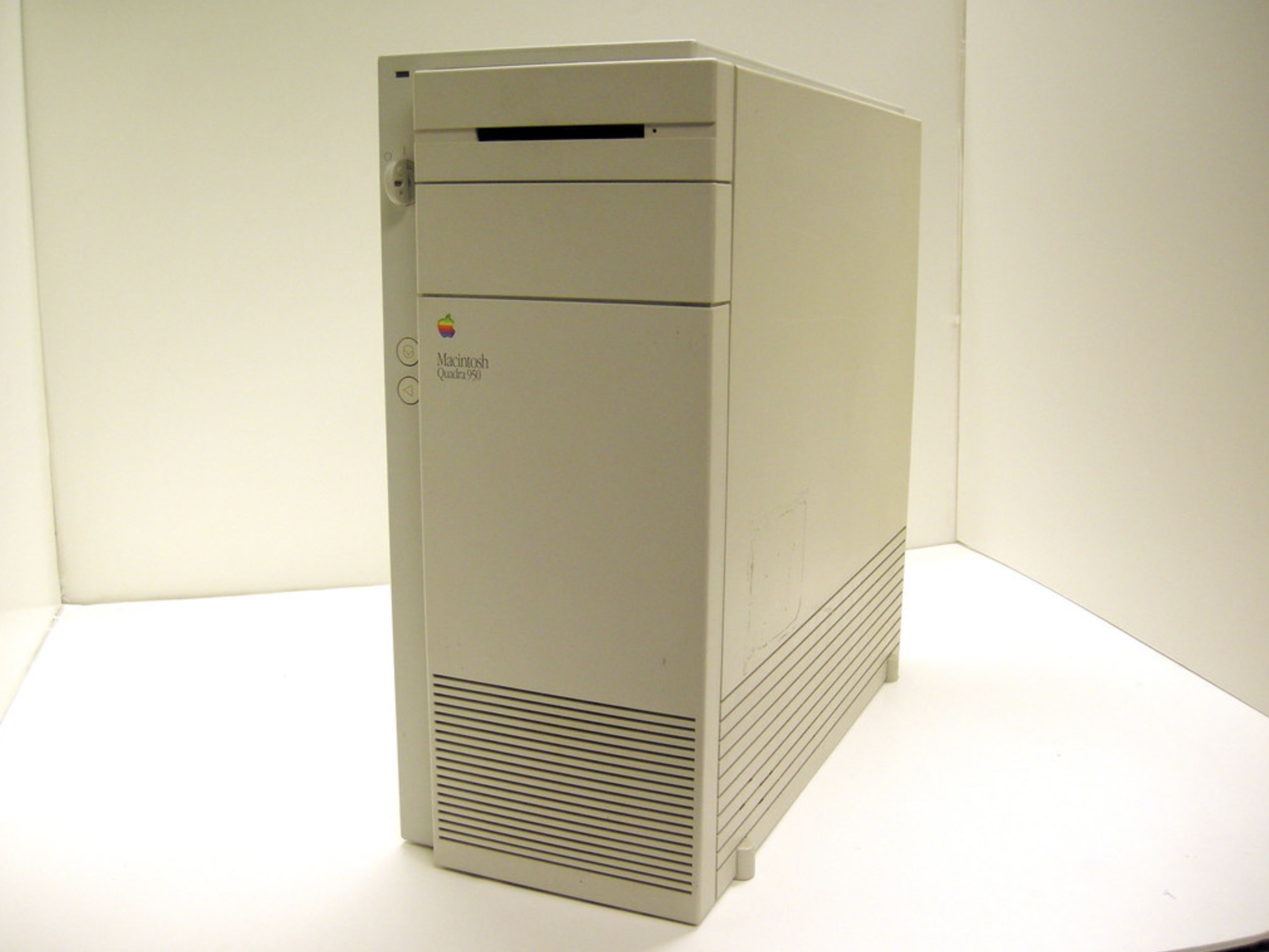 image via Carl Berkeley
The Workgroup Server ran A/UX in addition to Mac OS, which is a story for a different time…
Macintosh LC III+ (1993)
Eschewing the traditional “Plus” spelling found on a couple of Apple II and Mac models,3 the LC III+ used the mathematical symbol, right in its name.
The main difference between this and a regular LC III was a faster 33 M MHz Motorola 68030 CPU, as opposed to the 25 MHz part found in the original machine. An optional Floating Point Unit could be added, and the machine did come wrapped in a slightly nicer case.
Why this wasn’t the LC IV, I’ll never know.
The + symbol would show up again in the summer of 2000 with the iMac DV+.
AppleDesign Products & PowerCD (1993)
The Apple Industrial Design Group was a team within Apple tasked with taking the company’s design back in-house after Apple split with Frog Design, who had worked on the famous “Snow White” design language.
The team’s name was given to several products, including the AppleDesign Powered Speakers in 1993 and AppleDesign Keyboard in 1994, as well as the AppleDesign Powered Speakers II in 1994.
I own a set of the original speakers:
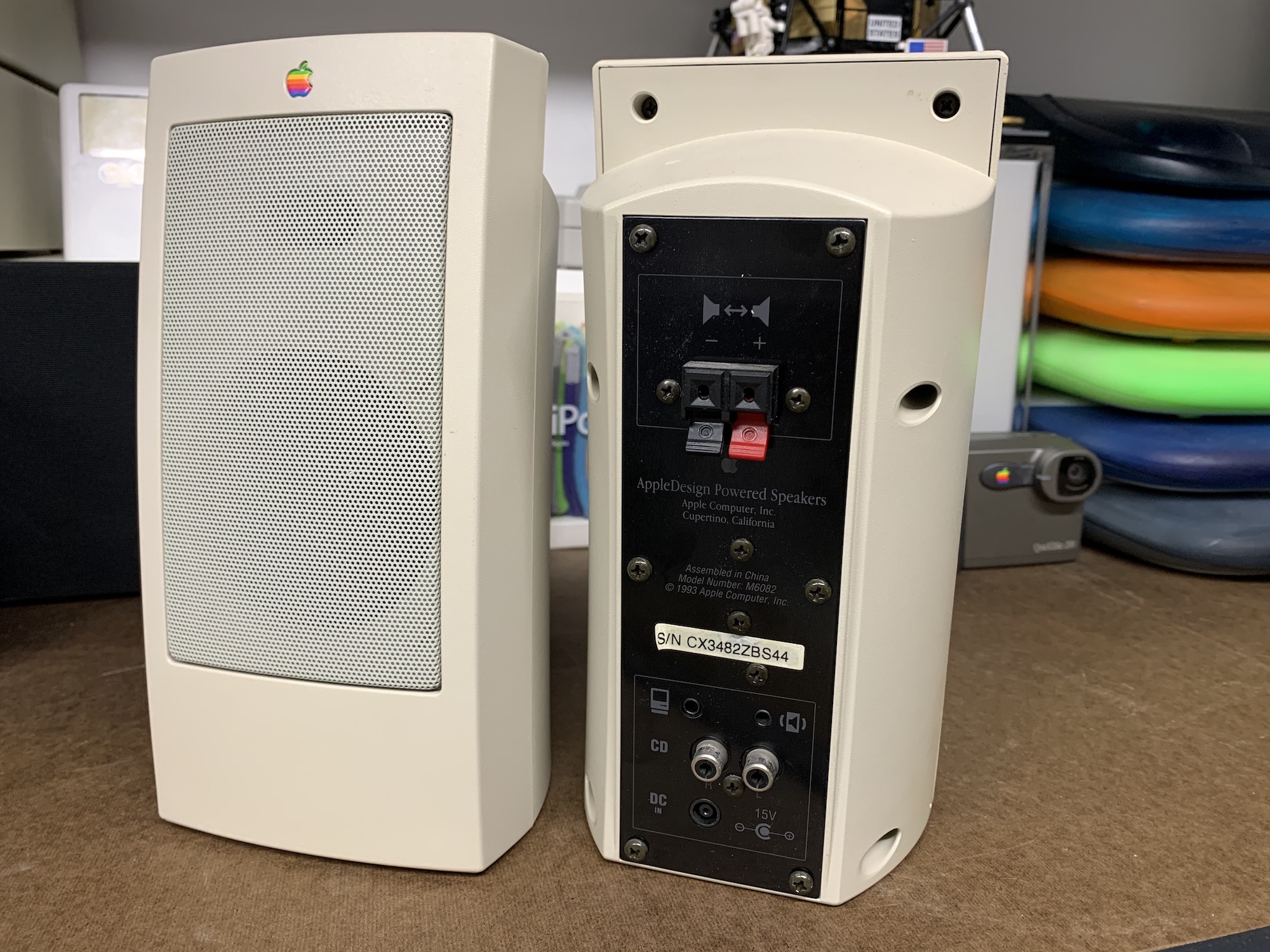
Don’t miss the tiny Macintosh logo on the back.
Related to these speakers is the PowerCD, a redesigned and re-badged desktop CD player by Philips. While I like the name PowerCD, it feels a bit over the top.
PowerBook 500 with PowerPC (1995)
With a name like this, you would think that this notebook was the first to ship with a PowerPC processor, but you’d be wrong. That honor goes to the ill-fated PowerBook 5300.
Instead, the PowerBook 500 with PowerPC was exactly what it sounds like — a PowerBook 500 with a PowerPC chip onboard.
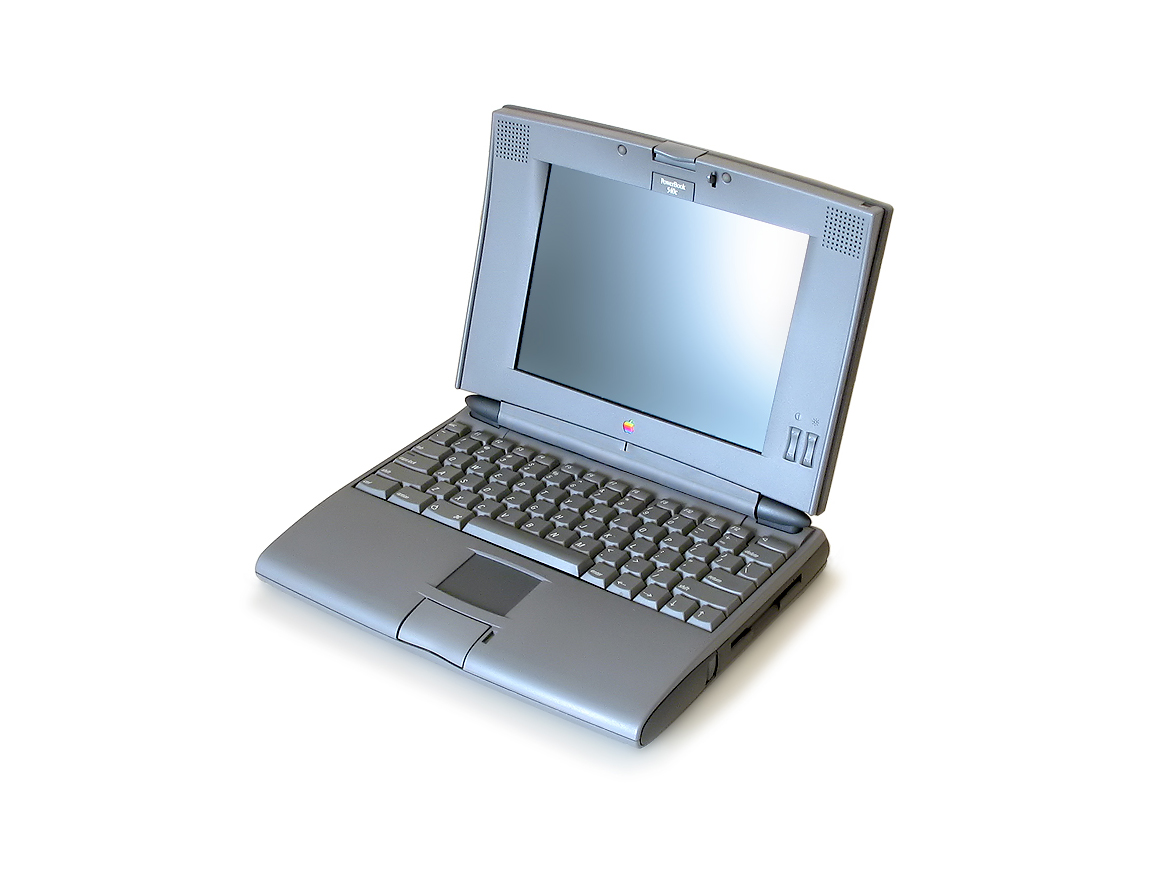 image of a PowerBook 500c via Wikipedia

This machine wasn’t sold for very long, but it’s exact end-of-life date is not known.
QuickTake Video Conferencing Camera 100 (1995)
The QuickTime Video Conferencing Camera came with the short-lived QuickTime Media Conferencing software. This obscure little bit of history is preserved for us by The New York Times:
But if Apple Computer and other industry players are right, this could be the year video conferencing finally lives up to its promise. At an industry trade show in San Francisco last week, Apple announced a new software technology that has the very real potential of driving down the cost of personal video-conferencing equipment, while solving some of the problems that have nagged this talking-heads technology since it first arrived on personal computers a few years ago.
Apple’s new video-conferencing technology is called Quicktime Conferencing, and is one of two extensions that the company plans to make by mid-year to the Quicktime video component of the Apple Macintosh software operating system.
[…]
“It’s not just the next best thing,”’ said Rick Shriner, Vice President of Applecore Technologies, Apple’s technology development unit. “It’s better than being there.”
Mr. Shriner was referring to the fact that Quicktime Conferencing will do more than simply let two computer users view each other’s faces as they speak. Its Shared Window is an on-screen work space in which the two or more users can work on the same document simultaneously, each making notes the other can see, while cutting and pasting from other files. The face-to-face conversation, meanwhile, takes place in a separate window.
I’m sure it worked super well.
PowerBook G3 Series (1998)
Like the PowerBook 500 with PowerPC, this line’s name would indicate it was the first PowerBook with a G3 at its heart, but it wasn’t.
The early days of the PowerBook G3 line are messy, and worth exploring in a future article, but the original G3 PowerBook was pretty much an older PowerBook 3400 with new guts.
The PowerBook G3 Series was actually a range of notebooks, available with 12.1, 13.3 and 14.1-inch displays. They were completely build-to-order, thanks to Apple’s fancy new-at-the-time WebObjects-powered website.
These machines were on sale for four months before Apple killed off the 13-inch model and standardized features across the 12 and 14-inch machines. The smaller of the two then slowly faded away, too.
Best I can tell, this is the only time Apple has used a Mac’s product name to indicate the product is part of a wider family. After this, screen sizes were just a detail on the check-out screen.
iMac DV SE (1999)
For 1999, the humble iMac line was expanded out into a line of Good/Better/Best products, each with their own name. At the top of the line was the iMac DV SE, short for “Special Edition.”4
While not quite the jumble of letters the aforementioned SE FDHD was, I’m not sure how widely understood this was. For most people, it was the Graphite iMac:

Bonus Round: Apple Display Names
Apple’s series of displays have been plagued with some weird names as well. Here are a handful beyond the confusing “Apple Studio Display” line of the early 00s that included both LCDs and CRTs:
- AppleColor Composite Monitor IIe/IIc
- Apple Performa Plus Display
- AppleVision/ColorSync 850AV
-
I had no idea this machine was a thing. ↩︎
-
Not to mention the it-shall-not-ever-be-thought-of-again Apple III Plus. This suffix, of course, came back much later with the iPhone 6 Plus. ↩︎
-
Apple also used this name in the iBook G3 line for a time. ↩︎