512 Pixels

On macOS Mojave

macOS Mojave is here, and can be downloaded directly via the Mac App Store.

Making the Mac More Mac-Like

The release is a bit of a weird one. In some ways, Mojave doubles down on what makes the Mac the Mac, with a lot of new features for those who want more out of the Finder, such as Desktop Stacks, which is a new way to keep things tidy on the Desktop, by arranging them by file type, creation date and more:

Cover Flow is dead; long live Gallery View. Which is pretty close to being the same thing:

Finder also includes a new feature named Quick Actions. You can see them in the bottom right corner of that screenshot. In fact, they are accessible from any preview pane in Finder. Here’s a bit from John Voorhees’ review:

Quick Actions are a new type of system extension for manipulating files from the Finder’s Preview pane or the Touch Bar. Mojave has Quick Actions to Rotate, Markup, Create PDF, and Trim, all of which work great with images. Trim and Rotate also work with certain video files as does Trim with MP4 audio. Third-party apps can add their own Quick Actions, which are available behind a ‘More…’ button next to any built-in Quick Actions. You can create Quick Actions yourself in Automator too.

Third-party applications should be able to offer their own Quick Actions, but not much of that has surfaced yet.

All of this stuff makes the Mac more Mac-like, as opposed to some releases that made it more like iOS.

You can read more on these features in my article over on The Sweet Setup.

Dark Mode

Speaking of iOS, I know a lot of users have clamored for a Dark Mode since the iPhone X shipped with its OLED display. As we now know, iOS 12 did not include any such mode, but the Mac has beat iOS to the punch:

You can check out a whole lot of Dark Mode over in the Aqua Screenshot Library, but it’s easy to see that this the single biggest change to Aqua perhaps ever, including the Great Flattening of Yosemite. While I initially liked Dark Mode, I have cooled on it, and am not using it on my MacBook Pro at this point. It is beautiful, but I wish it offered more contrast in places. It is comprehensive, right up until you browse the web or open an HTML email.

Apple should make it easier for web developers to detect and switch their CSS accordingly. Almost all HTML email is bad and dumb, so I don’t know what Apple can do about that, so your mileage may vary.

iOS Apps Are Coming

Finder improvements and Dark Mode are nerdy, fun features, but the reason Mojave will be remembered is the inclusion of four applications: Home, News, Stocks and Voice Memos.

These are the tip of the spear when it comes to iOS apps arriving on the Mac sometime next year.1

And they … well, they aren’t great. Jason Snell writes:

Every app is a single window. “Windows” generated when you need to set preferences are modal, appear in the center of the existing app window, and can’t be moved—and of course they can’t, because they’re not really Mac windows and these aren’t really Mac apps. They are iOS apps, translated into Mac apps via a method that will be available to non-Apple software developers next year.

This move has major ramifications for the future of Mac software. All iOS apps are developed on macOS, but even veteran iOS developers can find it a difficult transition to writing macOS software. Using Apple’s as-yet-unnamed approach, it should be much easier to bring iOS apps over to enrich the Mac. I like that Apple is testing this approach itself before handing it out to everyone else, because there’s clearly a lot more work to be done—not just in fixing bugs before Mojave ships this fall, but in the next year to make sure that iOS apps translated to the Mac behave properly and work well.

Look no further than the date picker in the Home app to realize how poorly these apps have been translated to the Mac:
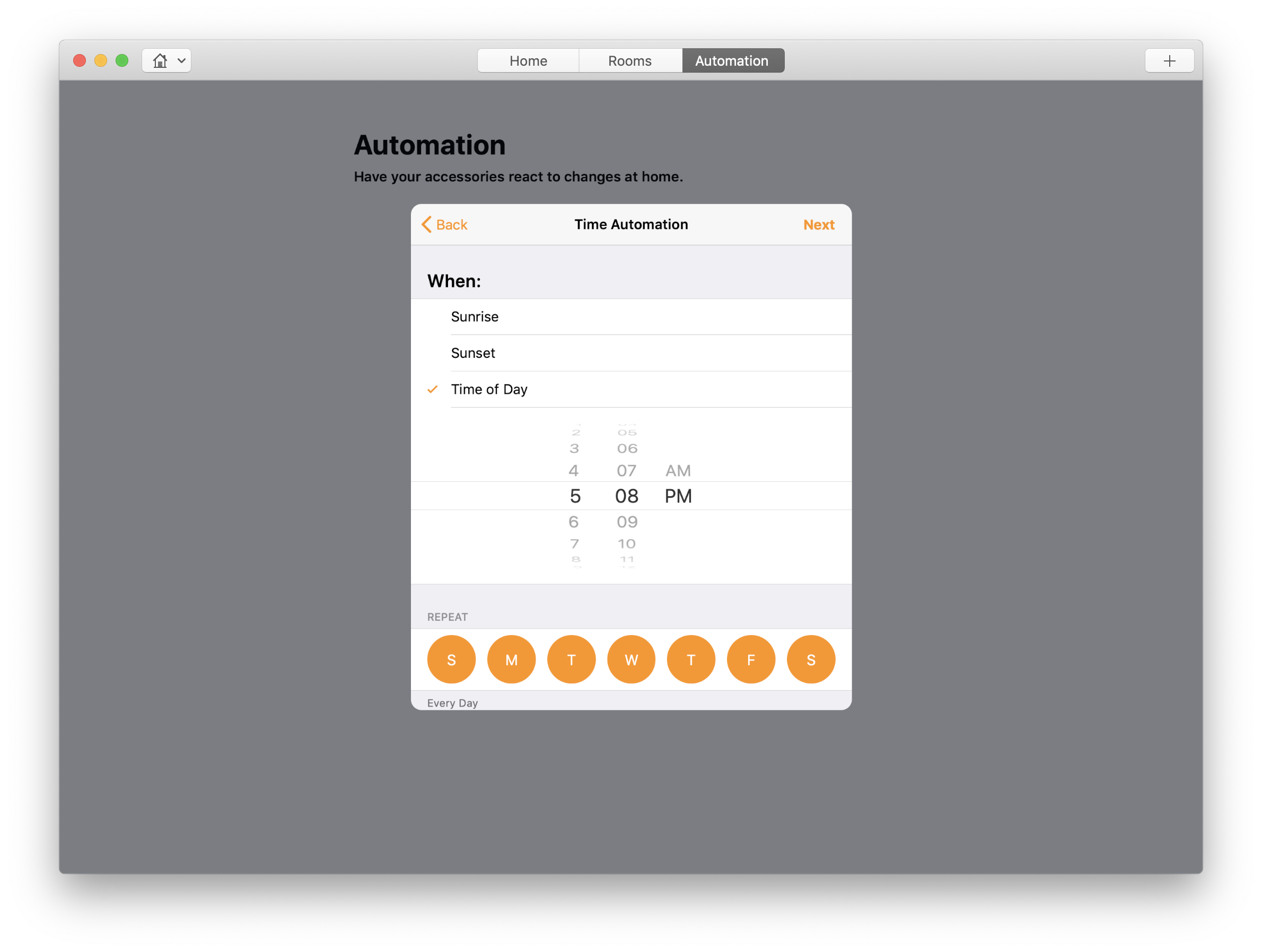
(At least Siri can talk to HomeKit devices now!)

I share Jason’s concerns that these apps are not up to the standard Mac users are used to. I don’t want to see the Mac overrun with apps that feel like janky ports, but that’s all Mojave has to offer. My guts says Apple knows the UI side of these apps needs a lot of work, and I trust the company will continue to work on this before developers get access to it in the next version of macOS.

There is some funny under-the-hood business the company may not be able to solve, though, like the inclusion of what appears to be at least part of an iOS installation at in the /System folder:
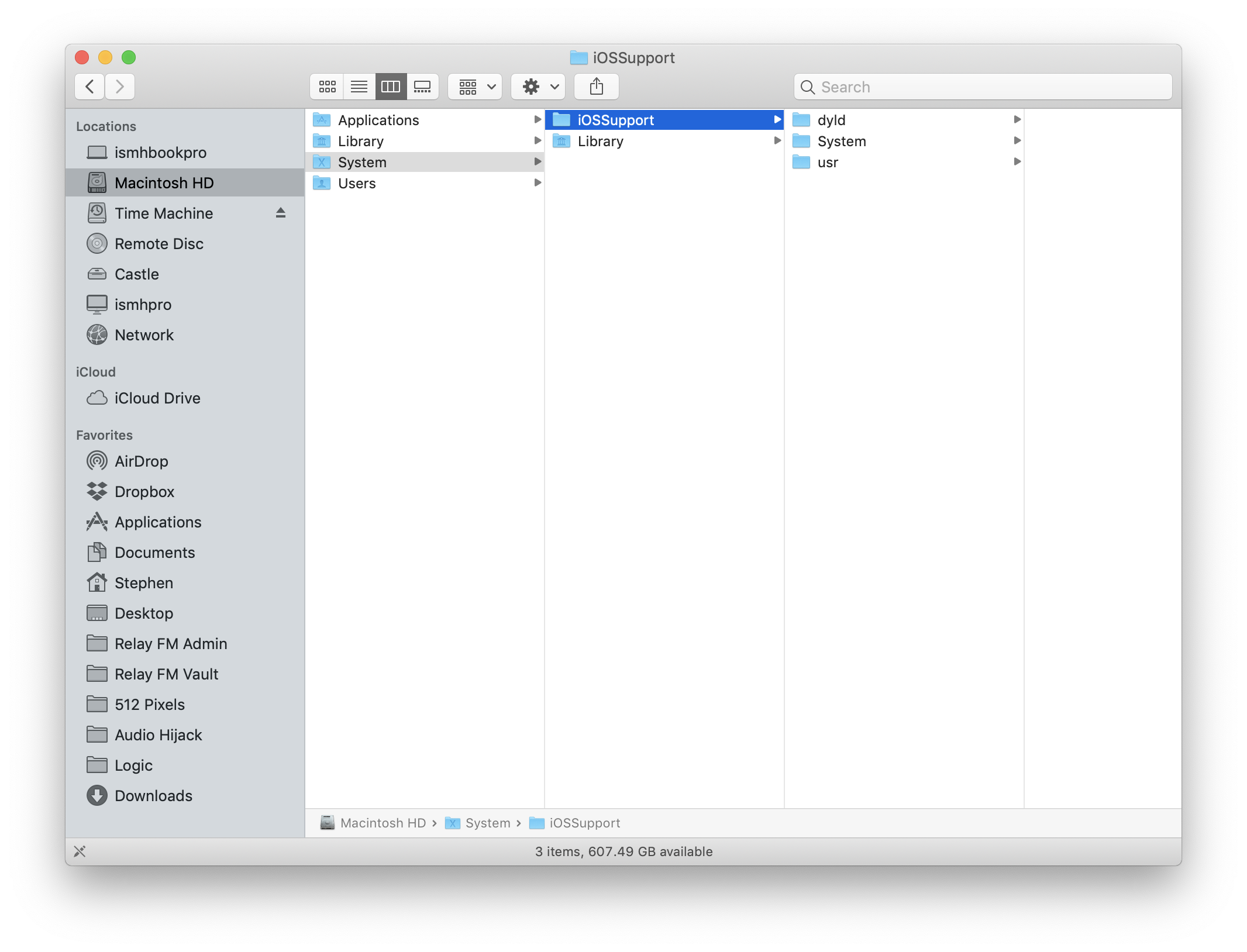
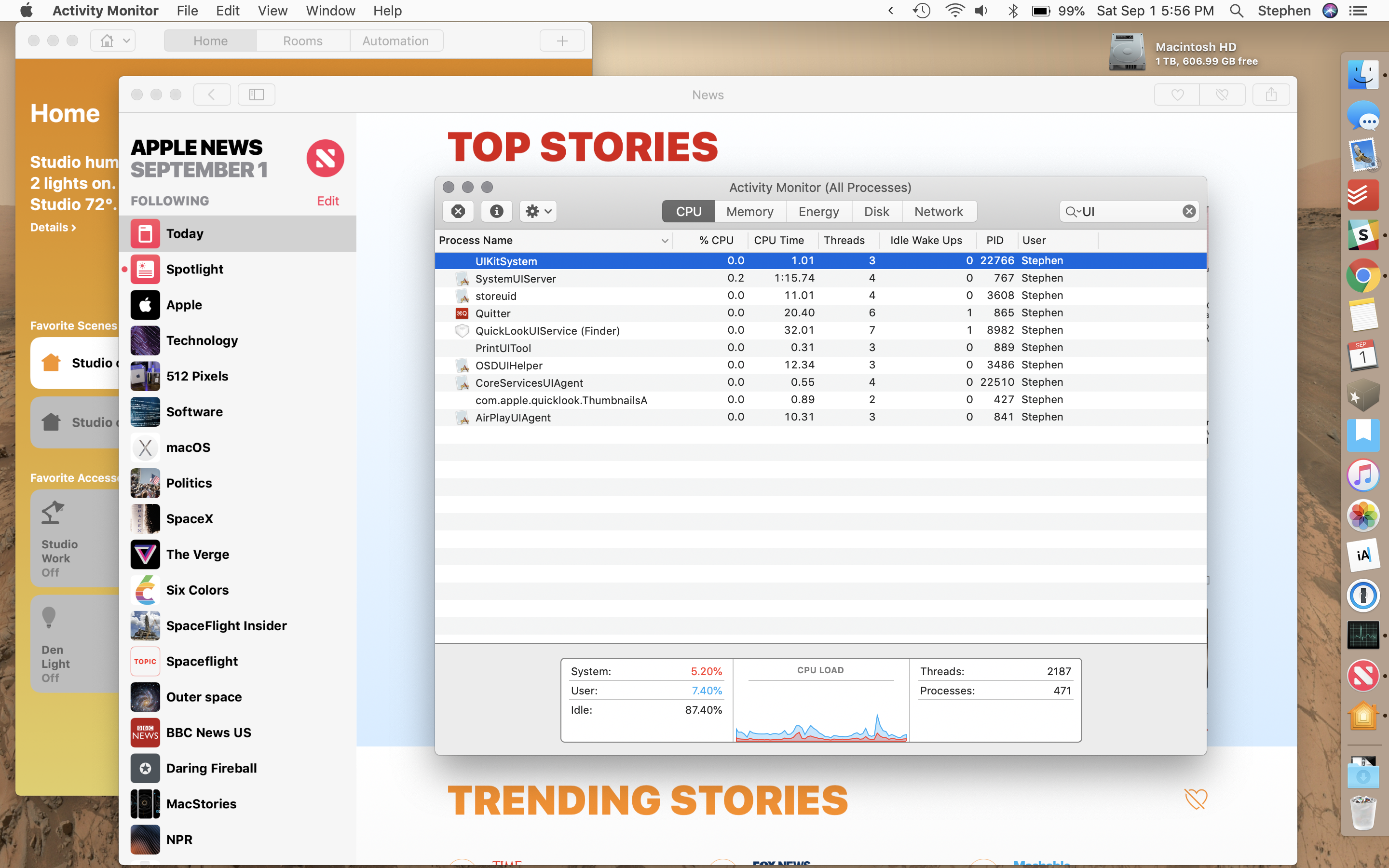
… or the fact that killing the UIKitSystem process brings down all four apps at once:
Conclusion

Don’t let my unease with the current state of Apple’s ported iOS apps leave you with the impression that I don’t like Mojave. I do, and I think it is clear that it is a hugely important macOS release, which is not something we’ve seen in many years. I think it shows Apple’s continued commitment to the Mac, and that excites me.

I’ll feel better once we see where apps like Home and News end up. For now, they are part of a large beta program, and one that I hope sees real improvement before shipping.

Until then, enjoy Dark Mode.


  1. There is some irony that the first macOS release to run iOS apps is the last to run 32-bit apps, and by extension, all Carbon apps. ↩︎

Aqua Screenshot Library 1.1: Lots of macOS Mojave, Lion Goes Retina

I have published two big updates to the Aqua Screenshot Library that I wanted to share.

First, I have published a full set of Mojave screenshots. This page has three galleries. You can check out Mojave in Light Mode and Dark Mode, as you may have expected. The more I use it, the more I think Dark Mode isn’t for me, but more on that later. In the mean time, bask in all this dark glory:

Mojave Dark Mode

That’s not all I’ve done for Mojave, however. You can also see all possible combinations of those modes and the release’s new accent colors at the bottom of the page. This combo may be my least favorite:

Mojave Dark Mode - Yellow Accents

Secondly, the collection of Lion screenshots is now of Retina quality. My thanks to Adam for hooking me up with an original Retina MacBook Pro to capture these images with. Now you can see 10.7’s iCal in all of its glory:

Lion iCal

Yikes.

If you haven’t spent any time on these pages, today’s a great day to start. I’d like to thank Hover for sponsoring it. Head to hover.com/512pixels now​ ​and get 10% off your first domain.

The iPhone 4S: The First Fall iPhone ⇢

Yours truly, over on MacStories:

We are used to a fall release schedule when it comes to iPhones, but that hasn’t always been the case. The first four iPhones came out in the summer, usually after being announced at WWDC.

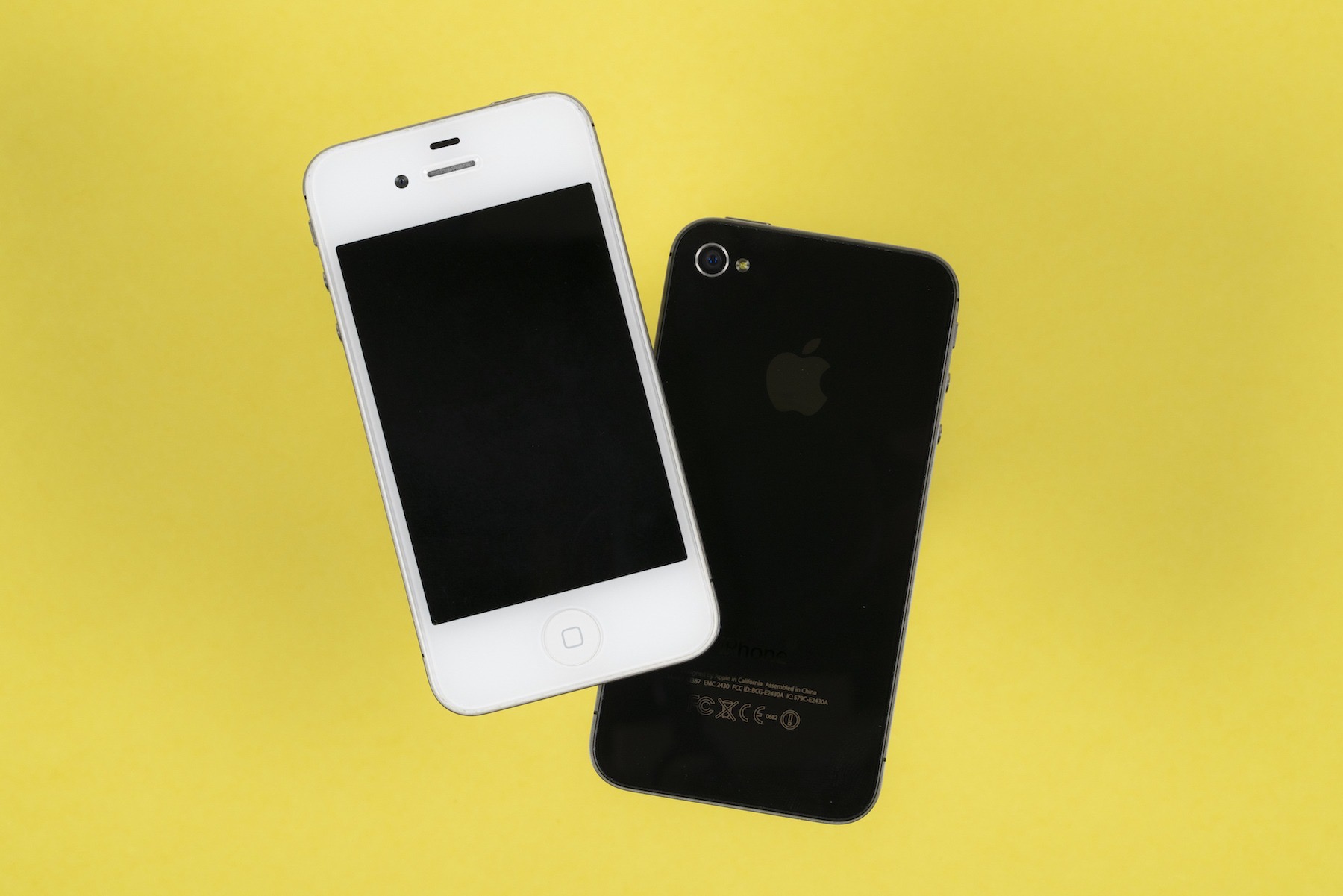
2011’s iPhone 4S changed that for good, and in some ways that phone draws parallels to the new iPhone XS. Both are the second generation of a radical new design, and both boast improved cameras, networking, and battery life. That’s not to mention how Siri is at the heart of the iOS version they both ship with.

Such a good phone.

T2 Data Recovery ⇢

Jordan Kahn has details on how Apple can recover data from a T2-enabled Mac:

Apple notes that the process for data transfer for Macs with the T2 chip will be used when its repair staff are presented with a customer’s machine in need of a logic board repair and when the logic board is “partially functional.” The process also requires that the system can be powered on.

To complete the process, Apple’s repair staff will use a Thunderbolt (USB-C) to Thunderbolt 3 (USB-C) or Thunderbolt 3 (USB-C) to USB-A cable and another host computer as well as an external hard drive where the data will be transferred. From there the machines can be put into DFU mode and the data recovery process can be initiated from within Apple’s internal diagnostics tool.

I really love my iMac Pro and new notebook, but this makes my heart hurt for the days where I could just pop a drive out of a MacBook with three screws.

Connected #210: Cold Feet Apple Blogger ⇢

This week on a jam-packed episode of Connected:

Federico has published his iOS 12 review, and the boys get nerdy talking about Siri Shortcuts and some updated apps before Stephen pontificates about macOS Mojave’s launch.

My thanks to our sponsors this week:

  • Away: Travel smarter with the suitcase that charges your phone. Get $20 off with the code ‘connected’.
  • Pingdom: Start monitoring your websites and servers today. Use offer code CONNECTED to get 30% off.
  • Molekule: The only air purifier that actually destroys pollutants. Use connected for $75 off.

Space Alert ⇢

Marcel Wichmann has made a text adventure game inside Shortcuts. I cannot wait to dig into this.

The St. Jude LIFE Study

One of my favorite things about St. Jude is that hope is built into every conversation, including those about post-treatment life for kids like our son, who has been off of chemotherapy for eight years. This is where the LIFE Study comes in:

Pediatric cancer treatments save lives, but can increase health risks for survivors during adulthood. St. Jude LIFE is an unprecedented research study that brings long-term childhood cancer survivors back to St. Jude for regular health screenings throughout their adult lives.

To date, more than 4,300 participants and 580 controls have undergone comprehensive health evaluations through St. Jude LIFE. We track a wide range of health outcomes, using measures of cardiac, reproductive, neuromuscular, neurocognitive, and psychosocial function, among others.

The unique findings from St. Jude LIFE are helping our survivors learn more about their individual health needs, and providing our researchers with novel insights into the late effects of cancer therapy.

Josiah is entering his first year as a LIFE Study participant, and the program will help us (and him) make better decisions about his healthcare in the future.

It’s an amazing part of an incredible hospital, made possible only with your support.

Hands-on with Multiple HomePod Timers

One thing that has kept the Amazon Echo in our kitchen — and the HomePod in my studio — has been Siri’s lack of multiple timer support. With today’s iOS 12 update, the HomePod now supports multiple timers.

In practice, this works basically the same as it does on the Echo.1 You can ask Siri to set to set multiple timers with custom names, then ask Siri to check in on them or cancel them. I recorded a little back and forth with my HomePod to show you how it works:

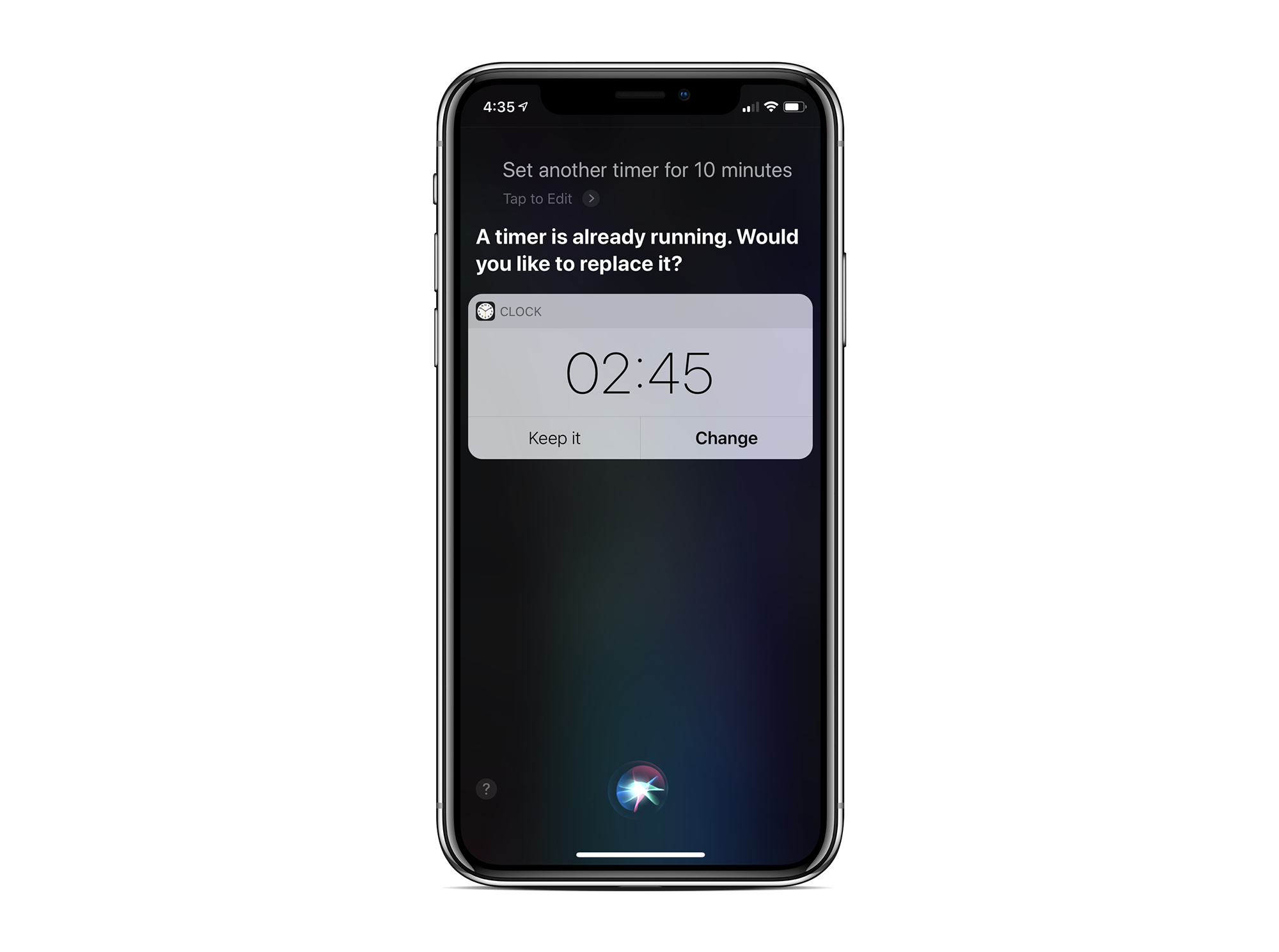
Annoyingly, this support seems to be limited to the HomePod; the iPhone is still unable to set more than one timer. When you ask Siri to create a second timer, it tries to replace the existing one:

Worse than that is the Apple Watch, where the second timer just automatically replaces the first.

Apple really should make this sort of thing consistent across devices.


  1. Sadly, Apple doesn’t give you anywhere in the Home app to visually review your running timers, like Amazon does. ↩︎

Overcast 5 ⇢

The best podcast client for iOS keeps getting better. Marco Arment’s latest updates includes offline, local playback on the watch, in-app search, Siri shortcuts, a refreshed Now Playing screen and more.