Google Announces $4 Billion Investment in AI Data Center in West Memphis, Arkansas

After months of reporting and rumors, Google made its investment in West Memphis official today. Here’s The Daily Memphian’s Dima Amro:

Google’s new data center in West Memphis will cost $4 billion and take 18 to 24 months to complete, officials said Thursday, Oct. 2.

The data center will host cloud and artificial intelligence infrastructure, Ruth Porat, president and chief investment officer of Google, announced during a groundbreaking ceremony at the site in Crittenden County.

“Google is investing in the next generation of AI innovation in Arkansas and across the country,” Porat said. “The upside of AI cannot be unlocked without the energy it requires. That is why Google is building energy capacity that protects affordability for ratepayers and creates jobs that will drive the AI-powered economy.”
Continue reading ⇢

Nick Heer, on Liquid Glass⇢

Nick’s long column on Apple’s new design language is probably the best thing I’ve read on the subject. This line about the glass material switching from light to dark as content scrolls behind it really jumped out at me:

It is Apple’s clever solution to a problem Apple created.

I like a lot about Liquid Glass, but there’s no arguing that there are issues that still need work, and I think Nick is pretty fair about what those are.

Continue reading ⇢

Relay for St. Jude 2025: The Final Week⇢

September is winding down in a couple days, and with it, Childhood Cancer Awareness Month. This year marks our 7th annual fundraiser for St. Jude, and as of this writing, we’re sitting just shy of $640,000 raised this year, which is incredible. I know it’s rough out there right now, which makes this number all the more meaningful to me this year.

But there’s still time to give! We’re going to shut down the campaign a week from today, on October 6th. We’ve learned that some employee-matching gifts take a little extra time to clear, so if you’re working with your employer on having them match a gift, now’s the time to follow up! This is a great way to see your money do even more good in the world.

Continue reading ⇢

Sponsor: DEVONthink: Store, Organize, and Work the Smart Way⇢

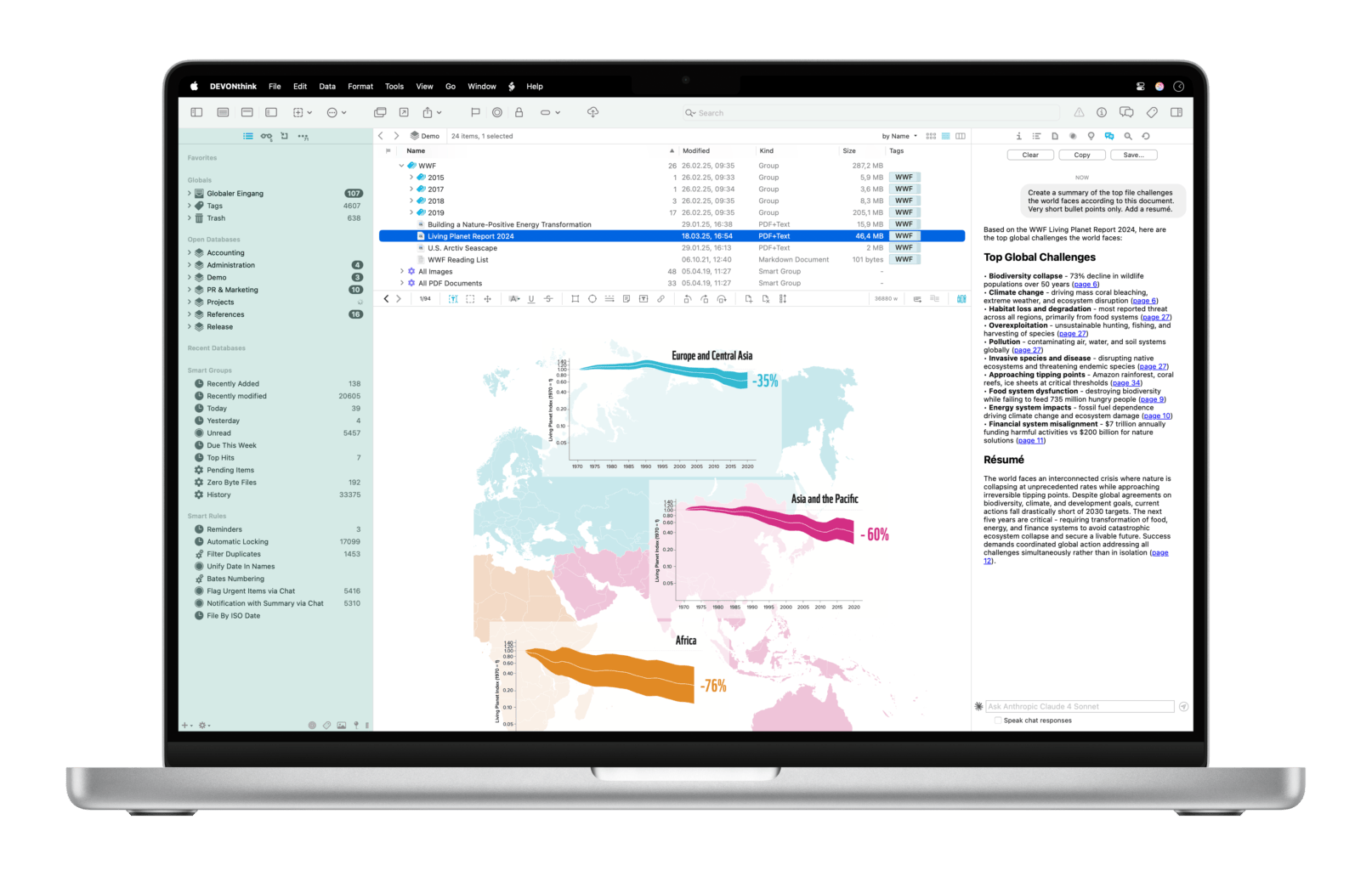
We’re all dealing with more information than ever, and it’s becoming increasingly complex. You need bulletproof financial documents for audits, collaborative tools for your team, and AI that can actually help.

DEVONthink 4DEVONthink 4.0 Copernicus 1 is here, and it’s designed to work with you, not against you. Its AI integration is incredibly useful — it can analyze your documents, write summaries, suggest tags, and you can even create AI-based automations for specific tasks.

Continue reading ⇢

Mr. Liss Goes to Memphis⇢

For the second year in a row, Casey Liss joined us for the Podcastathon. He just published an amazing piece about the show and his time at St. Jude:

This was my fourth time in Memphis; it’s staring to feel — to a degree — like a home away from home. Having been on campus several times now, not a ton about St. Jude surprises me. I’ve known for many years that St. Jude is dedicated wholly and completely to curing childhood cancer. ALSAC — St. Jude’s fundraising arm — is dedicated wholly and completely to funding that mission.

What struck me this year — as I toured the Domino’s Village, as I worked with the incredible team at ALSAC, as I spoke with people on the far periphery of the Podcastathon — is that everyone gives a crap. Top-to-bottom. Inside-and-out. They really give a crap. About everything they touch.

This really crystallized in me as I toured Domino’s Village. Domino’s Village is longer-term housing right on campus at St. Jude. It gives patients and their families a home base for their time in Memphis. And it isn’t just one-bedroom apartments. Cancer affects an entire family, not just the patient. Often, that means patients, caregivers, and even siblings are making Memphis their home, for months at a time. Domino’s Village has two- and three-bedroom apartments for exactly this reason. They’re beautiful, and nicely furnished.

But it doesn’t end there.

Continue reading ⇢

My Interview with Coding in Public⇢

Chris Pennington over at Coding in Public has been running a community fundraiser with Relay for St. Jude for a few years, and yesterday, we sat down to talk about my St. Jude story, and how the hospital is serving sick kids — and their families — around the world.

Speaking for our St. Jude fundraiser, we have passed $540,000 raised this year, and there are several days to go! I would love to have you join us in giving families facing childhood cancer more tomorrows.

Continue reading ⇢

Federal Goverment Partners with xAI

Amrith Ramkumar at The Wall Street Journal ( Apple News), writing about a new partnership between the Trump administration and his on-again, off-again bestie Elon Musk:

Under the agreement with the General Services Administration, which oversees technology procurement for the federal government, agencies will get access to models such as Grok 4 and a new fast version called Grok 4 Fast for a nominal fee of 42 cents, the GSA said in a news release Thursday.

The deal follows similar arrangements with Alphabet’s Google; the ChatGPT maker, OpenAI; and Anthropic, a model developer that has clashed with the White House. The arrangement means the government is now working with the four U.S. companies making the most-advanced AI systems. OpenAI and Anthropic agreed to provide their models for $1, while Google is charging 47 cents. Musk likes the number 42 because it is a reference to “The Hitchhiker’s Guide to the Galaxy,” the sci-fi novel.

Continue reading ⇢

The A19 Pro⇢

Jason Snell, writing at Six Colors:

One of the first things I did when I got the new iPhones into Six Colors global HQ was to get the iPhone 17 Pro Max up and running and run Geekbench 6. (I know there are a lot of Geekbench scores out there, but I like to run my own, just because.) Because I’m curious about the pace of Apple silicon innovation.

The A19 Pro chip in the iPhone 17 Pro is presumably using the next generation of CPU and GPU cores that will also appear later this year or early next year in the M5 processor, as well. So it’s not just a view into how the chips have progressed for the iPhone, but also an indication about where gains will be made in the next generation of Macs.

Continue reading ⇢

‘Benjamin Button Reviews macOS’⇢

Rakhim Davletkali has written a delightful blog post, reviewing macOS releases in reverse:

Apple’s first desktop operating system was Tahoe. Like any first version, it had a lot of issues. Users and critics flooded the web with negative reviews. While mostly stable under the hood, the outer shell — the visual user interface — was jarringly bad. Without much experience in desktop UX, Apple’s first OS looked like a Fisher-Price toy: heavily rounded corners, mismatched colors, inconsistent details and very low information density. Obviously, the tool was designed mostly for kids or perhaps light users or elderly people.

Credit where credit is due: Apple had listened to their users and the next version - macOS Sequoia — shipped with lots of fixes. Border radius was heavily reduced, transparent glass-like panels replaced by less transparent ones, buttons made more serious and less toyish. Most system icons made more serious, too, with focus on more detail. Overall, it seemed like the 2nd version was a giant leap from infancy to teenage years.

Continue reading ⇢