What does the death of Transmit mean for pro apps on the iPad? Should Apple make a laptop that runs iOS? Does Myke understand how hypothetical questions work?
My thanks to our sponsors:

What does the death of Transmit mean for pro apps on the iPad? Should Apple make a laptop that runs iOS? Does Myke understand how hypothetical questions work?
My thanks to our sponsors:
I found the map to Dongletown:
Learn about the adapters and cables that you can use to connect an external display or projector to your Mac.
I disagree with the company’s use of “Vintage,” but they didn’t ask me.
Jason Snell, after outlining a bunch of problems with the original MacBook Air:
And yet my affection for the MacBook Air was legitimate! It was so much thinner and lighter than any laptop I’d used before. It felt like the future. And the truth is, this is the biggest legacy of the MacBook Air: It predicted the future of laptops and then brought that future into being. It created an entire category for PC laptops, Ultrabooks, which was loosely defined as “PC laptops kind of like the MacBook Air.”
Every new Apple notebook — and many products from other companies — owe a lot to the original MacBook Air, as I write this month over on MacStories:
Today, all of our notebooks are thin and light. We’ve traded our optical drives in for a series of dongles and our spinning hard drives for fast, silent SSDs.
It wasn’t always like this. Once upon a time, notebooks had optical drives and a full array of ports, complemented by features like removable batteries.
A decade ago, we entered the current era of notebook design when Steve Jobs pulled the future out of an envelope.
Over on the TenFourFox blog, Spectre’s impact on the G3, G4 and G5 families of processors has been documented.
Spoiler alert: The G3 and early G4s are resistant to the exploit.
Your Apple Watch measures your heart rate every 4 minutes during the day. With CardioBot, you can easily understand the data captured by the Apple Watch so you can improve your lifestyle and discover notable patterns.
My thanks to CardioBot for sponsoring 512 Pixels this week. Go check it out in the App Store; I’m a big fan.
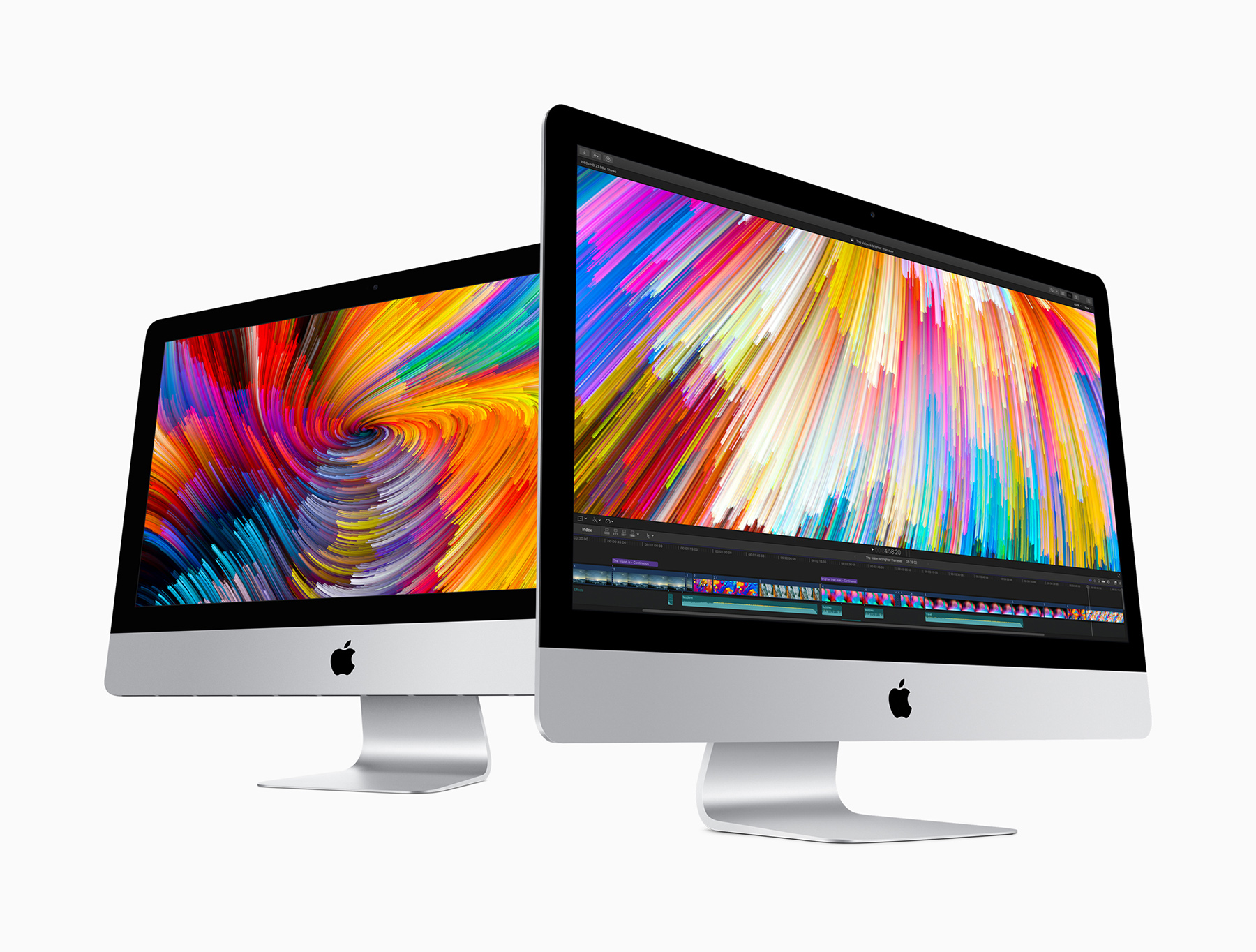
When the original iMac went on sale, it was undoubtedly a consumer product. Some professional Mac users mocked the colorful design and lack of legacy ports, unaware that their beloved Power Mac would soon follow in the iMac’s USB-shaped footsteps.
The iMac G4 was also a consumer machine, but it creeped into the workplace slowly, thanks to its incredible design.
The iMac G5 brought the mighty PowerPC G5 CPU to Apple’s all-in-one, which now sported the design we recognize today, with the computer tucked behind the screen. This machine, and the plastic-clad Intel iMacs that followed it got more powerful and more capable over time.
Joel Spolsky, on Facebook and Twitter:
Both Twitter and Facebook’s selfish algorithms, optimized solely for increasing the number of hours I spend on their services, are kind of destroying civil society at the same time. Researchers also discovered that the algorithms served to divide up the world into partisan groups. So even though I was following hundreds of people on social networks, I noticed that the political pieces which I saw were nevertheless directionally aligned with my own political beliefs. But to be honest they were much… shriller. Every day the Twitter told me about something that The Other Side did that was Outrageous and Awful (or, at least, this was reported), and everyone was screeching in sync and self-organizing in a lynch mob, and I would have to click LIKE or RETWEET just to feel like I had done something about it, but I hadn’t actually done anything about it. I had just slacktivated.
What is the lesson? The lesson here is that when you design software, you create the future.
If you’re designing software for a social network, the decision to limit message lengths, or the decision to use ML to maximize engagement, will have vast social impact which is often very hard to predict.
As software developers and designers, we have a responsibility to the world to think these things through carefully and design software that makes the world better, or, at least, no worse than it started out. And when our inventions spin out of control, we have a responsibility to understand why and to try to fix them.
Miriam Kramer at Mashable uninstalled the Facebook app from her iPhone:
The initial desire to delete started with Facebook vacuuming up so much space and battery life on my (admittedly old) iPhone 6. But it quickly became clear that my actual, non-battery, capital-L Life was also better off not having Facebook a thumbtap away.
I don’t miss it. I don’t miss the weird sensation of unnecessary updates from ex-boyfriends and other assorted once-familiars. I don’t miss having my train time hijacked by being caught up in the political fights (or the rage-inducing comments that followed them).
I also don’t feel like I’m missing out on any kind of news at all, because let’s be honest, Facebook’s days of providing news of actual use are long behind it.
Alex Barinka at Bloomberg is reporting that Dropbox has filed confidentially for IPO. Unlike other tech companies that have filed in the recent past — ahem, Snap — Dropbox has sales over $1 billion a year. It will be interesting to watch this one.
Over on iMore, I walked through my decision to buy an iMac Pro, and why the 2017 i7 iMac wasn’t the right machine for me.