
Tekserve was an Apple dealer and service center dating back to long before the Apple Store. They have recently closed, and their Mac collection is up for auction. I won’t be bidding due to the price, but there’s some nice stuff in there.
Category: Apple History
23 Years of Newton⇢
I missed this link the other day, but this week marks 23 years since Apple introduced the Newton.
On the iPod Classic⇢
Lindsay Zoladz at The Ringer, writing about the post-production life of Apple’s last music player with a spinning disk:
Who would fork over up to $1,000 (or more; a factory-sealed seventh gen is listed for $1699 on eBay right now) for an old, obsolete MP3 player except a stick-in-the-mud Luddite, resistant to our inevitable progress toward a cloud-based future? I’m not sure. But I think these people were onto something.
On the Titanium PowerBook⇢
This month on iMore, I wrote about the Titanium PowerBook:
Since their inception, Apple’s PowerBooks had been encased in various shades of gray and black plastics. Some were smaller than others, and they looked good for the time, but by the time 2001 rolled around, it was time for a change.
The iMac and iBook G3s were colorful machines, and even the PowerMac was clad in plastic. The PowerBook G4, however, would be a totally different beast.
What makes a Mac a Mac?
Editor’s Note: This is a guest post written by my buddy Thomas Brand.
What makes a Mac a Mac? Is it a computer made by Apple? Does it need to run the Mac OS? For a Mac to be a Mac does its hardware, does its design sit heads above the rest?
iPad, iPhone, and even the Newton are all computers made by Apple. But none of them are Macs.
The Macintosh clones from PowerComputing, Motorola, Umax, and every closet Hackintosh all run Mac OS. But none of them are Macs.
The iSight Camera
As announced at WWDC 2003, OS X Panther included iChat AV, an updated version of Apple’s AIM client that brought video and audio conferencing capabilities to the Mac. It was all done automatically; users didn’t even need to know if their Buddies had a microphone or camera hooked up to their computer. All that was required was a FireWire camera or USB microphone and DSL or better for video.
Steve Jobs then announced that the company had a companion product for iChat AV: the iSight Camera.
Obsolete⇢
Steven Sandhoff linked to this video in relation to software rot:
It’s a deep, sobering reflection on the life cycle of technology and products from Steve Jobs in 1994.
Software Rot
As hard as it is to preserve vintage computer hardware, software is even harder.
If an iBook’s hard drive implodes, I can knock out the repair myself.
I have a bunch of old Apple hardware. Most of it still works, but if my Macintosh SE blows a capacitor, I can (more than likely) have it repaired by someone more skilled than I am.
If one of my old notebooks has screen failure, the problem may prove too difficult or expensive to repair. Spare parts are harder and harder to come by as time goes on.
7 Notebook Reviews in 6 Minutes
In 2001, Steve Jobs showed off the Titanium PowerBook, which radically redesigned and modernized the company’s notebook lineup. It’s impact can still be felt today. To better understand its importance, I spent time with seven notebooks this weekend that were on sale over the last 16 years or so.
I used several of these machines over the years, except for those crazy 17-inch ones. It was fun to revisit them.
Jobs’ most colorful keynote moments⇢
Famously, Steve Jobs could really get mad when out of the public eye. On stage he was generally quite genial, but from time to time Steve really would get visibly mad on stage. A few times it was quite memorable.
I’d add this video of Steve’s Q&A at WWDC 1997 in which he rips into Apple and talks about the death of things like OpenDoc.
iPhone turns nine
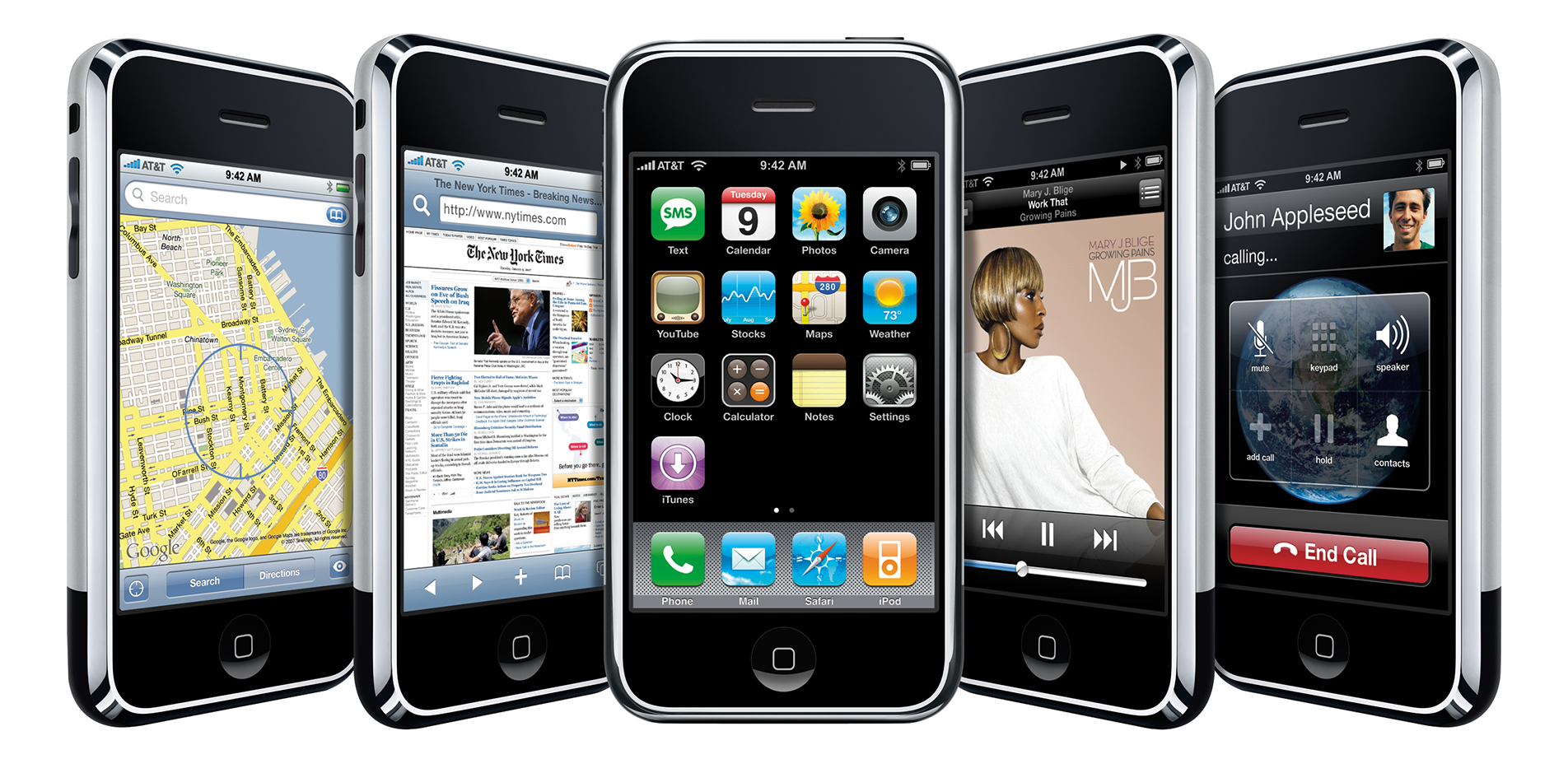
Today marks the 9th anniversary of the iPhone going on sale for the first time. I worked at an Apple Store way back then, and wrote about the launch a few years ago:
We saw them before the rounded the corner. There were hundreds of people, lined up in the Friday afternoon heat. News vans were pulled up to the sidewalk, and the guys who had been camping out for 72 hours sure looked happy. We put up the additional barriers, and I got a bunch of high-fives and questions about the iPhone while heading back around the building.
The Apple I/O death chart⇢
Nilay Patel and Frank Bi at The Verge:
One of the most strongly-held arguments about Apple removing the headphone jack is that Apple has historically been first to drop a legacy technology, sometimes even before the rest of the industry is ready. Apple’s vertical integration, passionate userbase, and scale (both historically small and now immensely huge) allow it to push big changes in a way that few other companies can pull off. The floppy, SCSI, optical drives, VGA — all killed by Apple years before vanishing from the rest of the industry.