7 Notebook Reviews in 6 Minutes

In 2001, Steve Jobs showed off the Titanium PowerBook, which radically redesigned and modernized the company’s notebook lineup. It’s impact can still be felt today. To better understand its importance, I spent time with seven notebooks this weekend that were on sale over the last 16 years or so.

I used several of these machines over the years, except for those crazy 17-inch ones. It was fun to revisit them.
Continue reading ⇢

iPhone turns nine

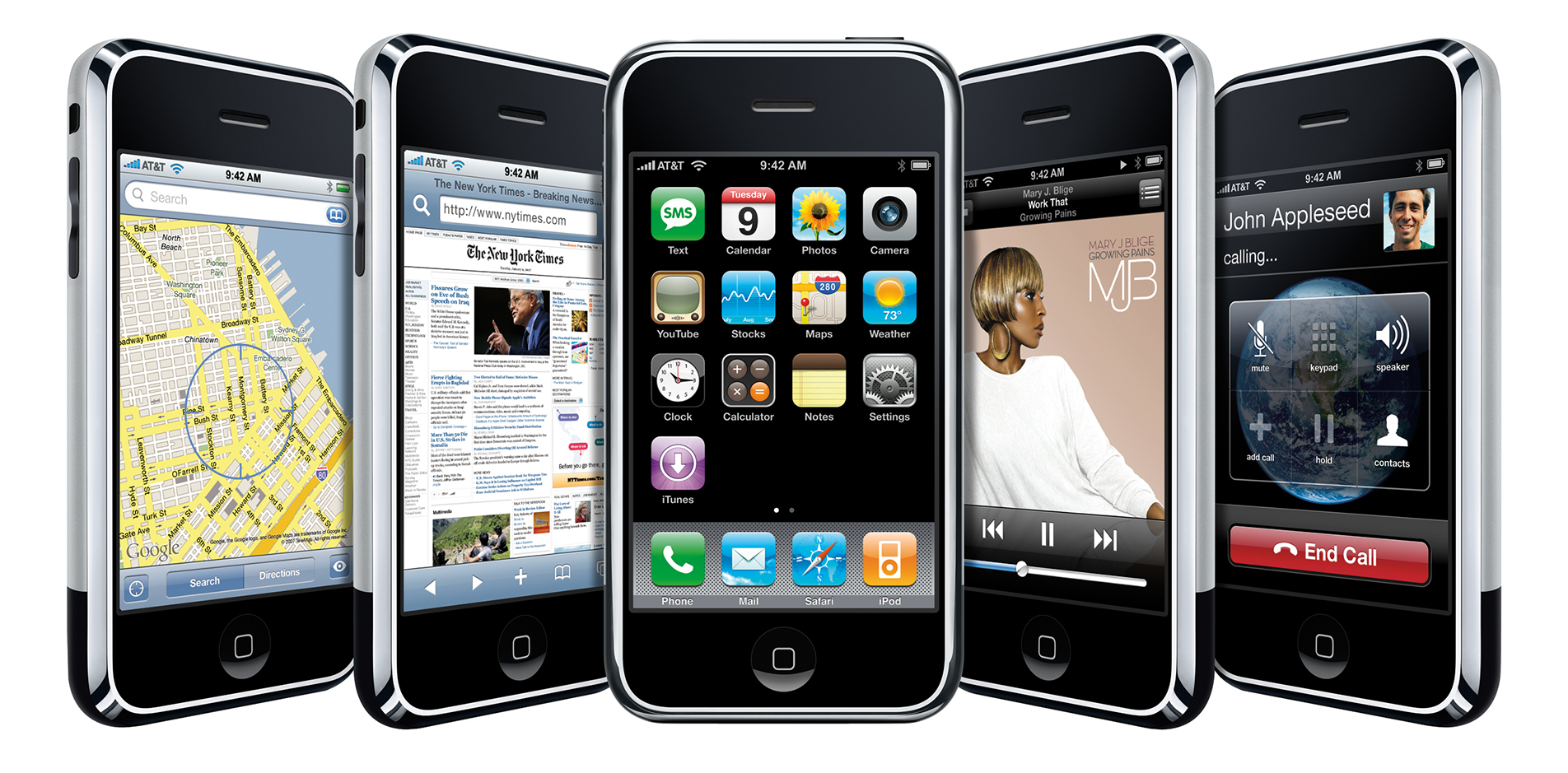
iPhone

Today marks the 9th anniversary of the iPhone going on sale for the first time. I worked at an Apple Store way back then, and wrote about the launch a few years ago:

We saw them before the rounded the corner. There were hundreds of people, lined up in the Friday afternoon heat. News vans were pulled up to the sidewalk, and the guys who had been camping out for 72 hours sure looked happy. We put up the additional barriers, and I got a bunch of high-fives and questions about the iPhone while heading back around the building.

Continue reading ⇢

The Apple I/O death chart⇢

Nilay Patel and Frank Bi at The Verge:

One of the most strongly-held arguments about Apple removing the headphone jack is that Apple has historically been first to drop a legacy technology, sometimes even before the rest of the industry is ready. Apple’s vertical integration, passionate userbase, and scale (both historically small and now immensely huge) allow it to push big changes in a way that few other companies can pull off. The floppy, SCSI, optical drives, VGA — all killed by Apple years before vanishing from the rest of the industry.

Continue reading ⇢

Early 2001: The iMac G3 Goes Psychedelic

At Macworld Tokyo 2001, Steve “Business Suit” Jobs showed off what would be the last two new iMac G3 designs: Blue Dalmatian and Flower Power.

Blue DalmatianFlower Power

Like Sage and Ruby before them, Blue Dalmatian and Flower Power were used for just one generation of iMac: the Early 2001 models.

According to Jobs, the new cases took 18 months to develop. They weren’t “colors,” but rather patterns molded “right into the plastic.” While some companies may have just used a decal, Apple wanted something special with these machines.

Continue reading ⇢

History of ‘Mac OS’

Yesterday, OS X got renamed macOS to better match its mobile and TV-bound cousins. While I can get behind everything matching, lots of people have been rolling their eyes a little bit at the lowercase m.

The reason is a pretty good one. Before the days of Aqua and the Dock, the Mac operating system was named “Mac OS.” Some may think that name comes from the very beginning of the Macintosh, but it doesn’t.

Continue reading ⇢

Summer 2000: Splintering the iMac G3 Line

On July 19, 2000, Steve Jobs took the stage at Macworld New York. In this keynote, he unveiled updated PowerMac G4s, the G4 Cube and updated iMacs.

Jobs walked through the history of the iMac. Every nine months or so, Apple had revised the iMac, and the time had come to do it once again.

This marked the iMac’s second birthday. In the two years since the first machine shipped, Apple had sold 3.7 million iMacs. Jobs boasted that an iMac sold at a rate of 211 an hour, or one every 18 seconds.

Continue reading ⇢

October 1999: iMac, iMac DV, iMac DV Special Edition

Nine months after announcing the Five Flavors, Steve Jobs took the stage to rev the iMac G3s again.

These new iMacs all had three main new features: a slot-loading optical drive, Airport capability and a tweaked case that allowed for fanless operation.

Jobs opened the iMac pitch with the optical drive. Gone was the tray-loading drive, replaced with a slot-loading drive. This may seem odd now, but according to Walter Isaacson, it was important to Jobs. Here’s a story from the time leading up to the original iMac’s 1998 launch:

Continue reading ⇢