The ROKR E1

Think back to 2005. All of us were running around with fresh installs of OS X 10.4 on our PowerBooks and iMac G4s and G5s while anticipating the company’s move to Intel-based processors.

In September 2005, Apple announced the iPod nano and their alliance with Cingular Wireless and Motorola, which produced the ROKR E1. The ROKR E1 was the first phone that was supported by iTunes — users could copy 100 tracks from their computers to the device, just like an iPod. The weird thing? Apple announced it on the same day that announced the iPod nano. While the iPod news made the headlines, the ROKR E1 grabbed a fair share of attention.
Continue reading ⇢

Another Microsoft "Me Too" Moment

ZDNet:

Microsoft is planning to open the first of its planned retail stores next to existing Apple stores this fall.

Kevin Turner, Microsoft’s Chief Operating Officer, told partners the news during his Worldwide Partner Conference keynote on July 15. A number of attendees tweeted Turner’s words immediately.

Microsoft officials announced in February that Microsoft was planning to open retail stores but have offered few details since that time as to what the stores would look like or when they’d open. I did hear from some Softies that the stores wouldn’t be clones of Apple’s, and that they’d be more showcases than actual retail outlets.

Continue reading ⇢

B-Sides Now on iTunes Store

Macworld :

But back in the day, when monstrous thunder lizards roamed the earth and music came on vinyl disks and a CD was something you talked to your banker about, B-Sides were very much a part of the musical experience. In those hoary times, when you wanted the latest hit single, you bought a 45-rpm record. Side A contained the hit that was skyrocketing up the charts, while Side B contained a second song—sometimes a song of equal or greater value, occasionally another cut off the same album—that gave you another side of the recording artist.

Continue reading ⇢

Even More on Eric Schmidt

Reuters:

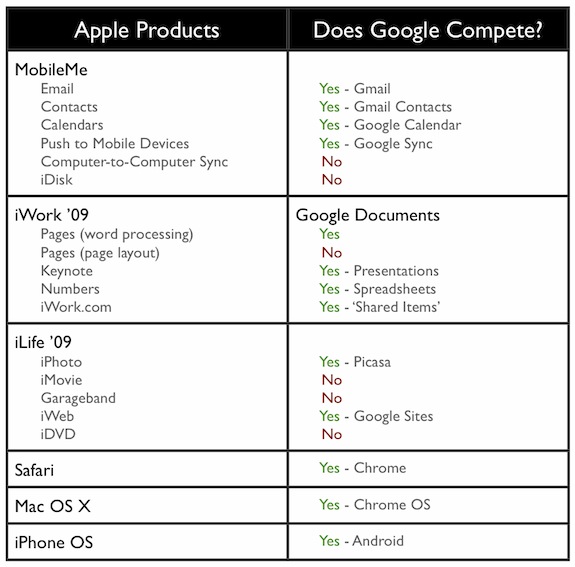
Because Google’s new Chrome OS would compete with Apple’s own computer software, Schmidt said on Thursday he would talk to the Mac computer maker about whether he should recuse himself from Apple’s board.

“I’ll talk to the Apple people. At the moment, there’s no issue,” Schmidt told reporters at a Sun Valley media and technology conference organized by boutique investment bank Allen & Co.

While Google and Apple compete directly or indirectly in a number of areas – the most obvious being the smartphone market – Google’s announcement this week that it will launch an operating system raised more questions about the relationship between their boards.

Continue reading ⇢

OS 9 Gets New Browser

OS 9—killed off several years ago— has been almost forgotten. But almost.

Enter Classilla, a project to get a modern port of Mozilla’s browser running on OS 9:

Classilla is bringing back web browser support to your classic Macintosh – built on WaMCoM, a port of Mozilla to classic Macintosh systems, using the same technology underpinning the popular Firefox browser. It’s completely free and it’s open source, and it’s standards-compliant. Use it without cost or restriction; or, if you’ve got the skills, hack it and make it your own. Classilla brings your wonderful old Power Macintoshes back to life and back online.

Continue reading ⇢

More on Eric Schmidt

From an open letter written by CNET’s Tom Krazit:

When Google announced plans to develop Android, a smartphone operating system that competes with Apple’s iPhone OS for consumer and developer attention, you said you would recuse yourself from any discussions about the iPhone during meetings of Apple’s board. You reiterated that stance in May after reports emerged that the Federal Trade Commission had raised an eyebrow at your presence on both boards, and when asked if you recuse yourself from any other topics at Apple meetings, you answered, “Not that I recall.”

Continue reading ⇢

App Store One Year Old

It’s true.

I can hardly believe it’s only been a year. In that short time, developers have gone from writing web apps—basically web pages formatted to better-fit the iPhone’s screen—to full blow, cocoa-based applications. And the applications are good. Sure, they’re some crappy apps out there, but I am surprised weekly by something that appears in the catalogue that suddenly changes how I go about my day. And as time goes on, the apps keep getting better.

Continue reading ⇢