In a stunning break with tradition, Connected tackles the multi-iPad lifestyle and photo management in this week’s episode.
My thanks to TextExpander for sponsoring this week’s episode.

In a stunning break with tradition, Connected tackles the multi-iPad lifestyle and photo management in this week’s episode.
My thanks to TextExpander for sponsoring this week’s episode.
Every OS X update or upgrade has a version number and build number, which helps you to know whether OS X is up to date on your Mac.
This article is fun because it goes all the way back to Mac OS X 10.0.
Editor’s Note: This is a guest post written by my buddy Thomas Brand.
What makes a Mac a Mac? Is it a computer made by Apple? Does it need to run the Mac OS? For a Mac to be a Mac does its hardware, does its design sit heads above the rest?
iPad, iPhone, and even the Newton are all computers made by Apple. But none of them are Macs.
The Macintosh clones from PowerComputing, Motorola, Umax, and every closet Hackintosh all run Mac OS. But none of them are Macs.
Back in November 1996, when Apple was doomed, and its hardware wasn’t much better than the average PC. Apple introduced a different kind of computer, the Power Macintosh 4400. It wasn’t a Mac, it was a Macintosh clone made by Apple. And it was a piece of junk.
The Power Macintosh 4400 was easily identifiable, as its floppy disk drive was located on the left side of the case. It is the only southpaw Power Macintosh in existence.
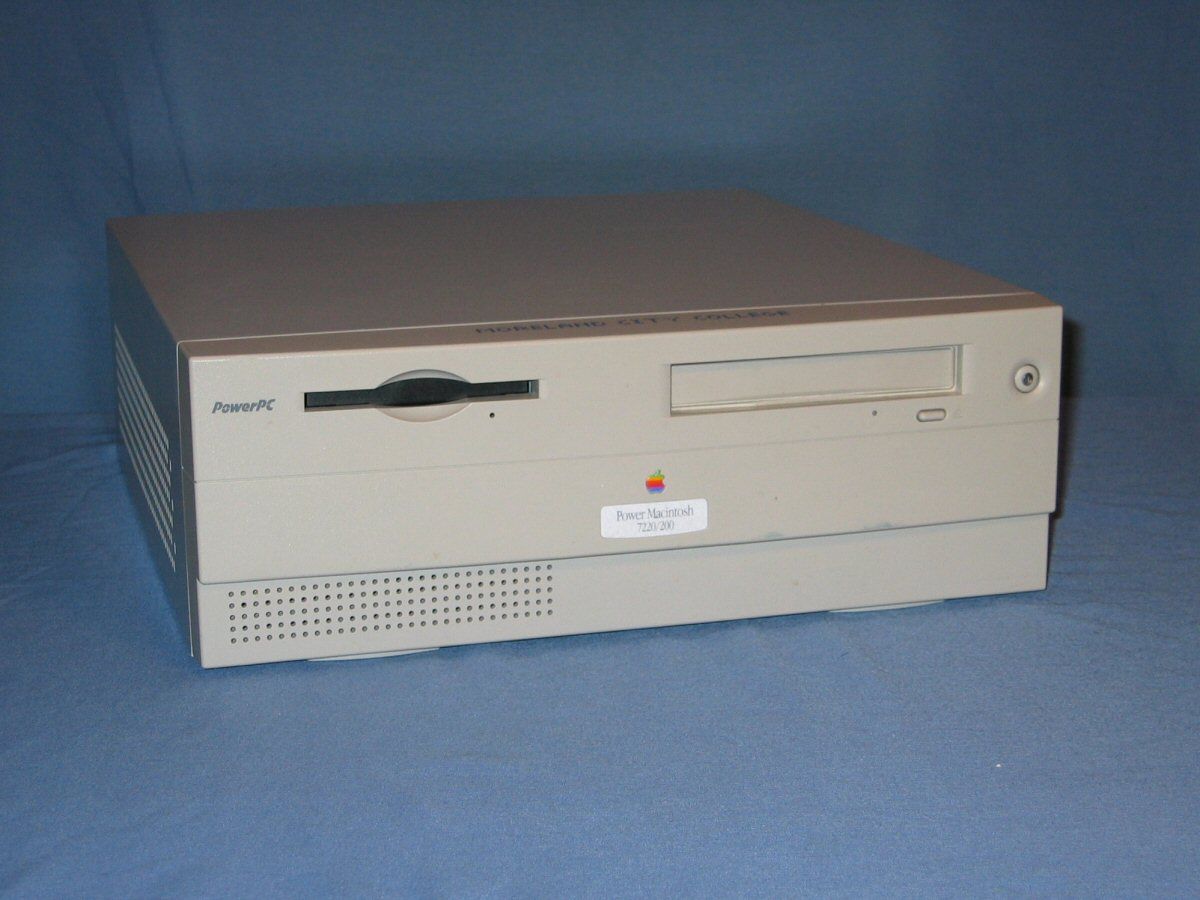
The second of only two early Apple computers to ship in a metal case; everything about the Power Macintosh 4400 felt cheap. Everything was sharp around the edges.
Stamped out of pressed steel to save money, its case was secured with screws instead of using clever little latches like its peers. The Power Macintosh 4400 looked so much like a PC it is hard to believe it was Designed by Apple in California.
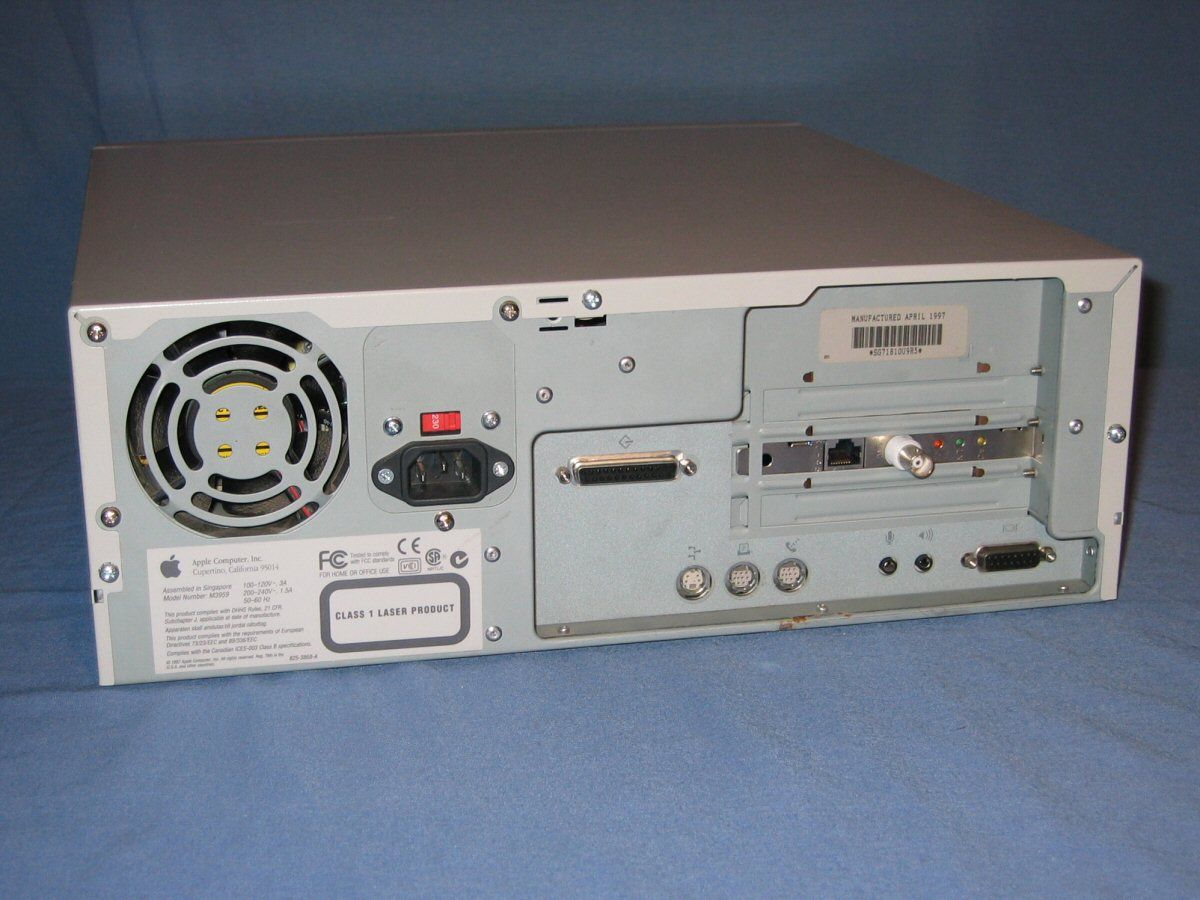
Built from inexpensive PC parts, the Power Macintosh 4400 didn’t look much better on the inside. It used a slow IDE hard drive when most of Apple’s computers were using SCSI. It shipped with a cheap PC compatible ATX power supply. Its modified Tanzania motherboard was the reference design used on popular Macintosh clones. And yes — by way of an optional 166 MHz Cyrix CPU — it could even run Windows.
Not meant to be upgraded, the Power Macintosh 4400’s 160/200 MHz CPU was soldered to the motherboard. Its expandability was limited to three PCI slots, with one taken up by the Ethernet card. RAM maxed out at 160 MBs, and there was only room for a single 2 GB hard drive. In a word it was “slow,” barely matching the performance of Macs half its clock speed.
The Power Macintosh 4400 ran System Software 7.5.3 through Mac OS 9.1. Just don’t install System Software 7.5.5. It won’t boot.
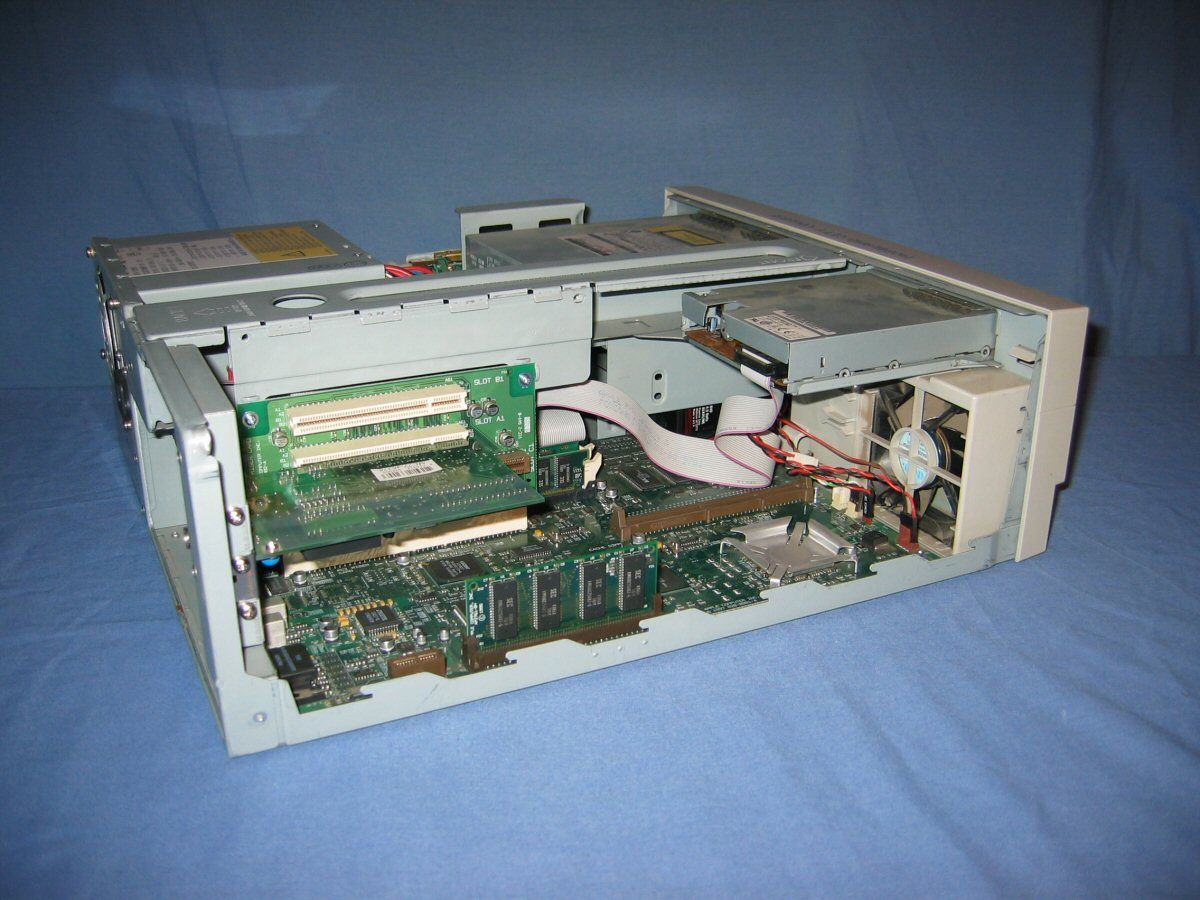
MacWeek called it “a strange bird,” probably because the Power Macintosh 4400 was full of quirks all its own. Like the fact it won’t turn on without a charge from its 4.5 V PRAM battery. Or that RAM slot #1 only supports 32 MBs of single-bank memory, while RAM slot #2 and #3 support up to 64 MBs each. The Power Macintosh 4400 required expensive 3.3 V EDO memory, back when every other Apple computer worked with cheaper 5 V DIMMs.
Here’s Eric Schwarz on the machine’s place in the line up:
The 4400 was Apple’s attempt at making a cheap Mac. With a price tag around $1700, it certainly wasn’t cheap by today’s standards (a fascinating sidenote: for $150 more, you could have gotten a vastly superior Power Macintosh 6400.).
I think that sums it up nicely.
Photo credit: Stephen Edmonds.
Jonathan Shieber at TechCrunch:
According to reports that are starting to trickle in, Yahoo’s board has accepted the terms of the Verizon offer we reported last week.
The core assets of the company that started life in Jerry Yang and David Filo’s 1994 Stanford dorm room as “Jerry and David’s Guide to the World Wide Web” — and at one point was one of the highest valued properties on the internet — will now join another former high-flyer of the internet’s earliest days, Aol (full disclosure: the owner of TechCrunch), in the Verizon stable.
Like with its Aol purchase, I doubt Verizon’s long term plan here, but I’m far more worried thinking about Yahoo employees who will probably be let go as a result of the transition.
Update: It’s official.
I’ve been meaning to learn about how working with color is changing now that the iMac with 5k Retina display and 9.7-inch iPad Pro ship with DCI-P3 panels. Thankfully, this week’s episode of Presentable is about just that topic. I learned a lot, but never felt overwhelmed.
NOAA’s DSCOVR satellite’s EPIC camera captured its first imagery of Earth on July 6, 2015. Since then, it has delivered thousands of images of our world, including the moon’s shadow being cast on Earth during a solar eclipse.
Ezra Klein, Editor-in-Chief at Vox:
Donald Trump is not a man who should be president. This is not an ideological judgment. This is not something I would say about Mitt Romney or Marco Rubio. This is not a disagreement over Donald Trump’s tax plan or his climate policies. This is about Trump’s character, his temperament, his impulsiveness, his basic decency.
The newest episode of Ungeniused is admittedly a little dark:
History is full of people tragically killed by their own inventions. This episode is full of their stories.
There’s something painfully ironic about all of these accounts, which span many decades and several professions.
Don’t miss the B-Side, in which Myke and I really struggle with some of the names in the episode.
As announced at WWDC 2003, OS X Panther included iChat AV, an updated version of Apple’s AIM client that brought video and audio conferencing capabilities to the Mac. It was all done automatically; users didn’t even need to know if their Buddies had a microphone or camera hooked up to their computer. All that was required was a FireWire camera or USB microphone and DSL or better for video.
Steve Jobs then announced that the company had a companion product for iChat AV: the iSight Camera.
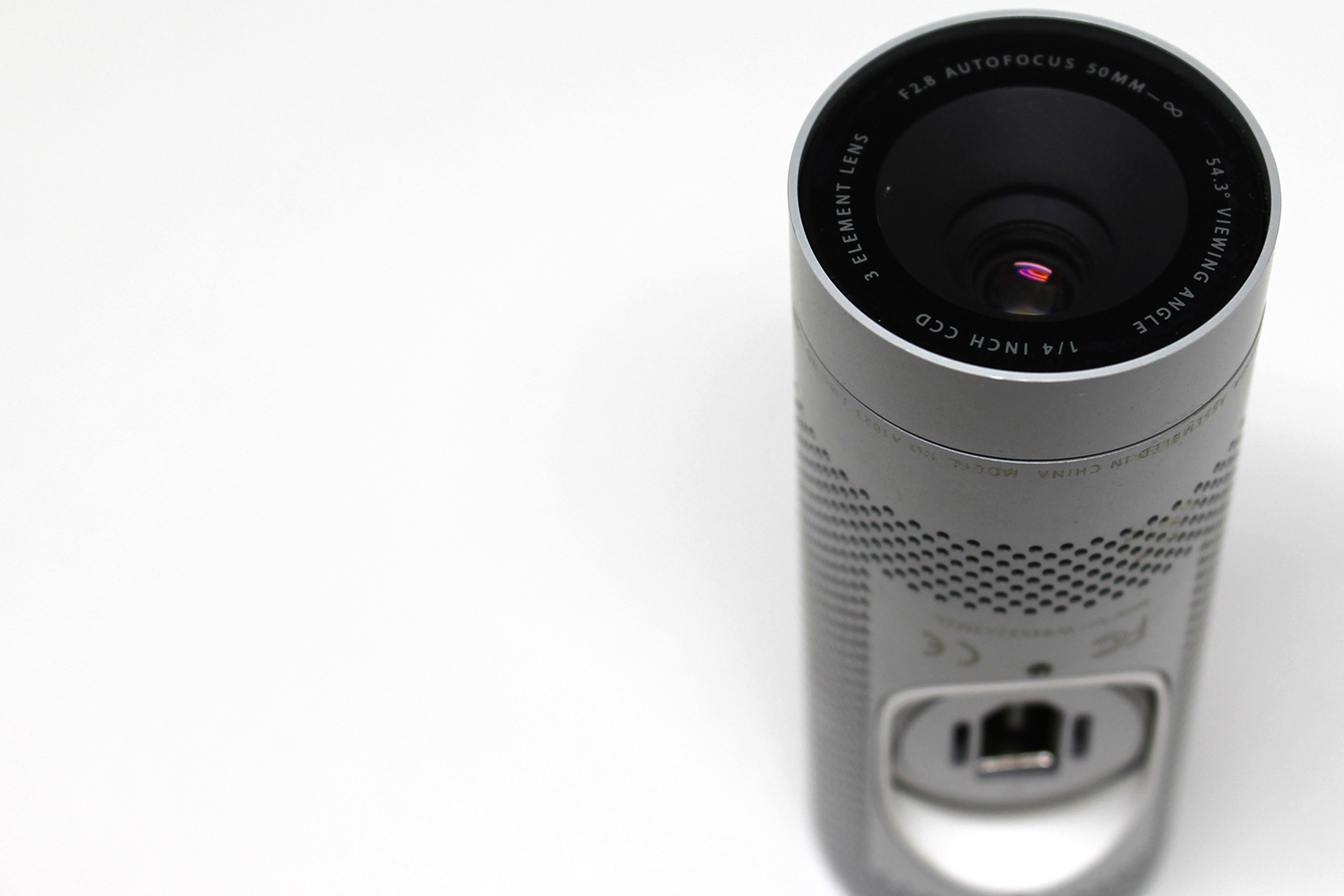
Dubbed the “eyes and ears” of iChat AV, here are the specs of the iSight camera:
The camera used a single FireWire cable for power and data.
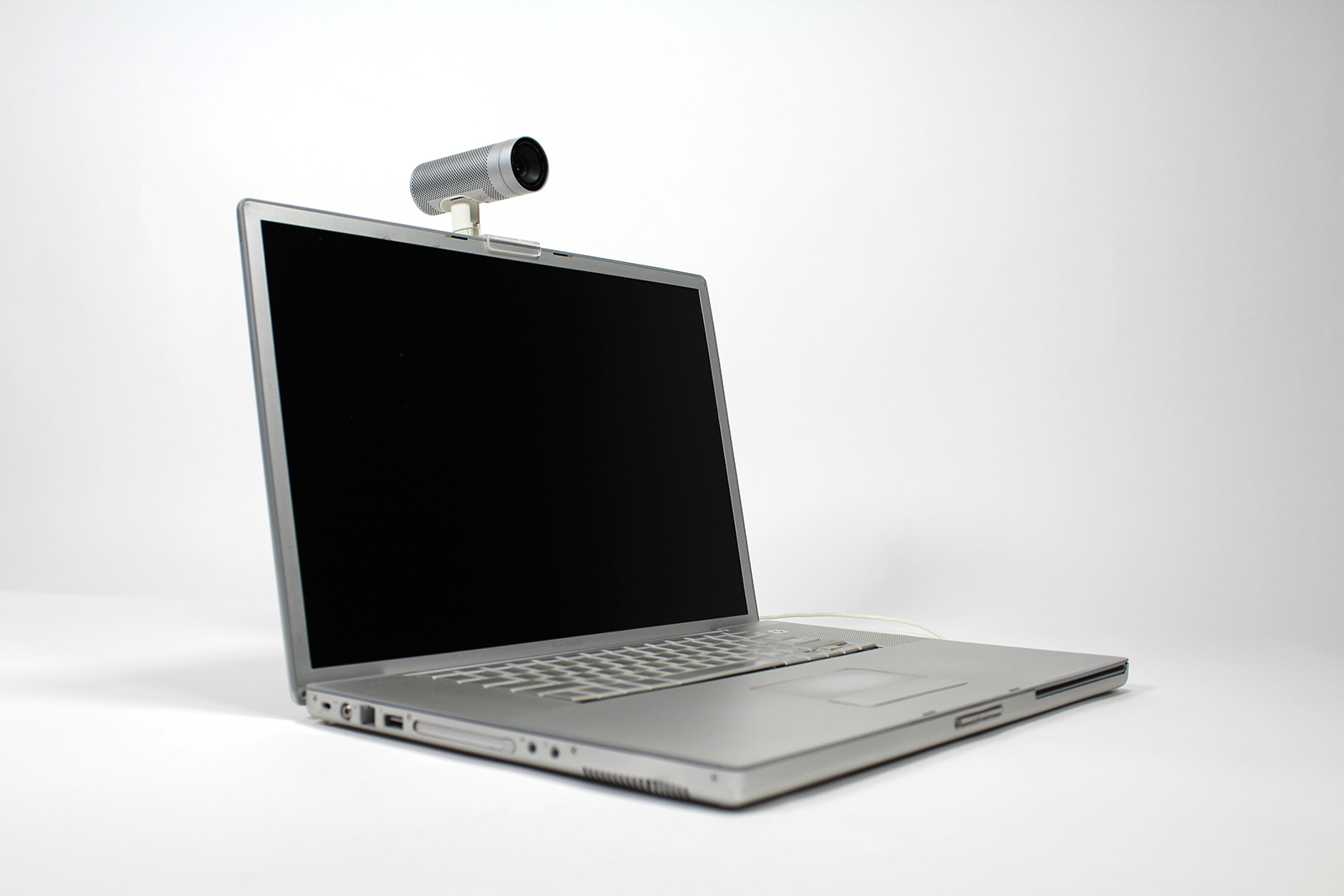
Unlike the other FireWire cameras on the market, the iSight was designed to sit up high, off of the desk. This was to help avoid those awkward low-angle shots that make everyone look bad.
Today, of course, the iSight camera is built-in to every display Apple sales, from the MacBook to the Thunderbolt Display 27-inch iMac. That wasn’t the case in 2003, but Apple wanted the camera to be mounted as close to eye-level as possible.
To do this, the iSight came with several attachments:
(A later revision would add a magnetic mount to attach to the top of the aluminum Cinema Displays.)
The camera hardware itself is just stunning. Made of aluminum, I still think it looks good today. It included an integrated lens shutter that you could twist shut with just a touch, and — just like today — had a green LED that would come on when the device was in use.
The iSight sold for $149,1 and was on the market until December 2006, by which time most new Macs all had built-in cameras.
While watching Jobs demo this for the first time, I couldn’t help but think about the first iPhone phone call or FaceTime demo. I think Jobs (and Apple) are really passionate about how people communicate. Hearing someone’s voice or seeing their face is much more intimate than passing text back and forth.
Unless you were in the room for the announcement, in which case yours was free. ↩︎
A new episode of Liftoff is here:
This fortnight, we catch up with New Horizons, Dawn and Mars 2020.
There’s lots of fun stuff going on with spacecraft across our Solar System. Come get caught up.
My thanks to our sponsor, Luminos.
On the centennial episode of Connected, the crew covers #TicciMentee program applications, checks out Scrivener for iOS and considers iOS 10’s widgets and privacy features.
I’m super pumped to be linking to episode 100 of our podcast.
Myke, Federico and I put our first show out way back in June 2013. It had a different name then — and was on 5by5 — but ever since that first episode, making this podcast each week with two of my good friends has been a highlight in my work.
A large part of that is the amazing feedback we get from our listeners.1 Your emails, tweets, post cards and fan art are always appreciated. Thanks for tuning in each week, and here’s to many, many more episodes.
If you don’t listen, go fix that. ↩︎
Steven Sandhoff linked to this video in relation to software rot:
It’s a deep, sobering reflection on the life cycle of technology and products from Steve Jobs in 1994.