Limits Coming to Apple Intelligence and Siri AI for Those Without iCloud+⇢

Apple Support, via MacRumors:

Starting with the 2027 software releases, Siri AI and Apple Intelligence features are available for free for users with a supported device set to a supported language. Some features rely on powerful server models and have limits where increased access is available with eligible iCloud+ plans, starting with the 27.3 release. These include, but aren’t limited to, features in these categories:

  • Siri AI

  • Images: Intelligent Photo Editing Tools including Clean Up, Extend, and Spatial Reframing, and Image Playground

  • Workflows and automation: AFM Cloud and Cloud Pro models in Shortcuts

  • Third-party apps using Apple Foundation Models in Private Cloud Compute

Apple implements daily usage limits on these feature categories and other features to ensure a high-quality, reliable experience for everyone. Limits may vary by feature category, request complexity, system demand, system policies, and other factors.

Continue reading ⇢

macOS 27.3 Bringing New Privacy and Full Disk Access Controls⇢

Chance Miller at 9to5Mac:

In macOS 27.2, “Device Control and Data Access” is a unified toggle in System Settings, where Apple says that apps with that level of access can “view and send email, edit contacts and photos, monitor your keyboard, track websites, record your screen, control any app on your Mac, and more.”

In macOS 27.3, Apple is splitting “Device Control and Data Access” into two categories:

  • Accessibility: Intended specifically for assistive technologies, with permissions handled through an entitlement process.
  • System and App Protection Override: A new category for apps that need to bypass certain macOS protections to control other apps or perform automated tasks.

For the latter, users will be able to specify which apps an automation tool can access rather than granting it unrestricted control. For instance, you could give an app access to the Mail app, but not Messages.

macOS 27.3 also adds an option for users to require an app to request permission every time it needs access, rather than granting it access indefinitely.

Continue reading ⇢

Sponsor: Magic Lasso Adblock: Effortlessly Block Ads on Your iPhone, iPad, Mac, and Apple TV⇢

Do you want an all-in-one solution to block ads, trackers, and annoyances across all your Apple devices?

Then download Magic Lasso Adblock – the ad blocker designed for you.

With Magic Lasso Adblock you can effortlessly block ads on your iPhone, iPad, Mac, and Apple TV.
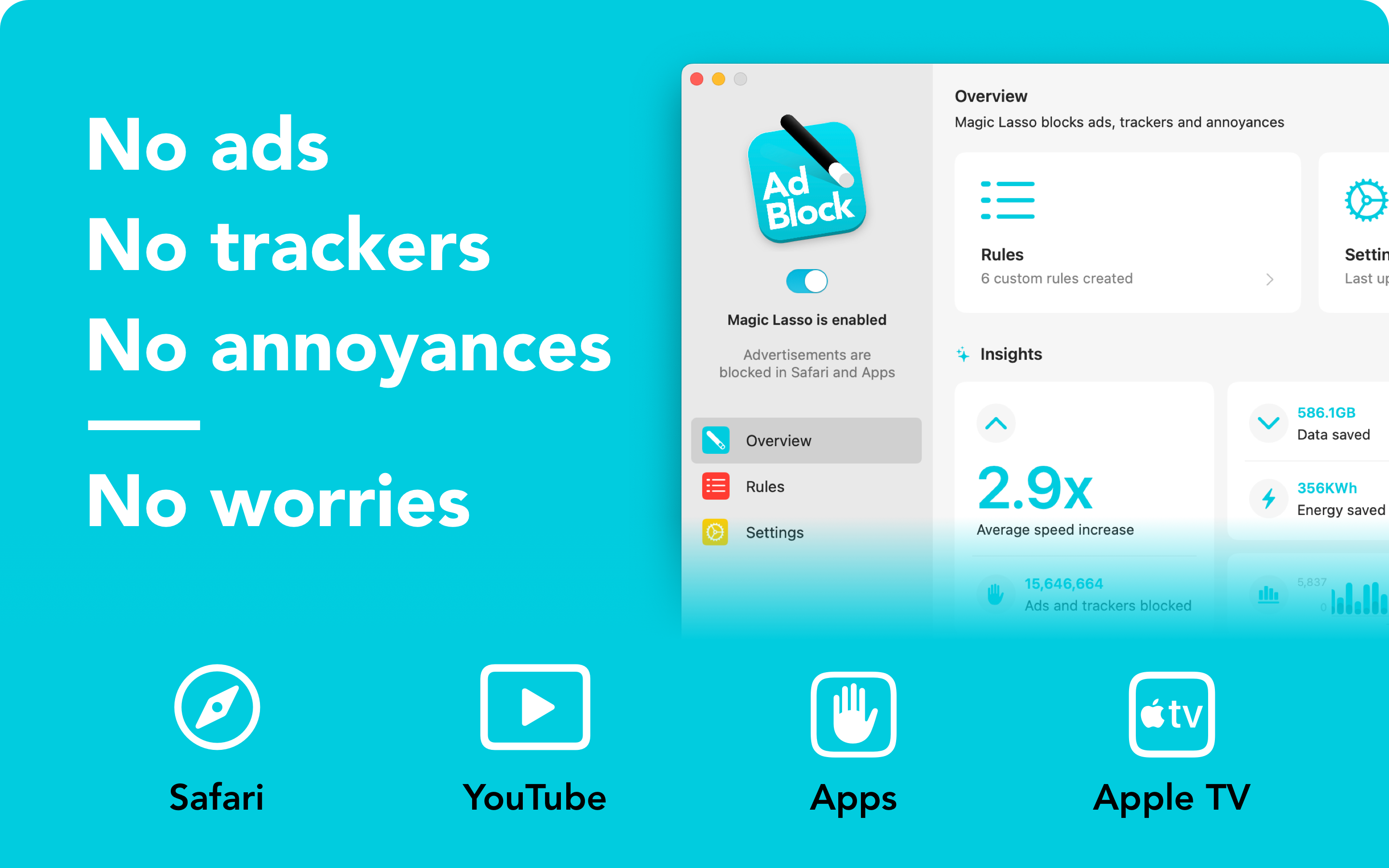
Magic Lasso

Magic Lasso is a single, native app that includes everything you need:

  • Safari Ad Blocking – Browse 2.0x faster In Safari by blocking all ads, with no annoying distractions or pop-ups
  • YouTube Ad Blocking – Block all YouTube ads in Safari, including all video ads, banner ads, search ads, plus many more
  • App Ad Blocking – Block ads and trackers across the news, social media, and game apps on your device, including other browsers such as Chrome and Firefox
  • Apple TV Ad Blocking – Watch your favorite TV shows with fewer interruptions and protect your privacy from in-app ad tracking with Magic Lasso on your Apple TV

Best of all, with Magic Lasso Adblock, all ad blocking is done directly on your device, using a fast, efficient Swift-based architecture that follows our strict zero data collection policy.

Continue reading ⇢

Chemical Spill Reported at xAI Site in Southaven, MS⇢

Hannah Kozlowski, Action News 5:

A chemical spill at an xAI facility in Southaven reached a nearby drainage ditch Saturday, prompting a response from state environmental officials.

The Mississippi Department of Environmental Quality said approximately 5,000 to 6,000 gallons of propylene glycol spilled from a tank at the facility.

Crews installed berms upstream and downstream to contain the release, according to MDEQ. A contractor has been on-site since approximately 10 a.m. Saturday, Nov. 14, using vacuum trucks to recover the material.

Continue reading ⇢

Nodes⇢

My thanks to Nodes for sponsoring 512 Pixels this week. If you’re like me — and I bet you are — then you care about how your software both works and looks. Nodes is a Markdown editor for the Mac that hits both of those marks. It supports everything you would expect, as well as things like LaTeX.

Best of all, Nodes is completely native, works entirely offline without accounts, and does not require a subscription. Those things are not as common as they should be.

Continue reading ⇢

Impressions from the Apple Store: The MacBook Pro with PROLED XDR Display

I dropped by my local Apple Store yesterday to spend some time with the new MacBook Pro.

I currently use a 14-inch MacBook Pro with an M4 Max. It is a completely fantastic machine. The screen is far more capable than any of my work requires, and the size is just perfect.

It seems that the new MacBook Pro improves on both of these things.

For years, any time Apple released an updated display, it would talk about how close the pixels seemed to the surface of the glass. Just think back to the last pre-laminated display you used on a regular basis, then look at something more modern. It’s hard to believe that there used to be a physical air gap between the display and the cover glass on Apple’s products.

Continue reading ⇢

The Power and Legacy of Virginia Tech’s Mac-Based Supercomputers

When we think about data centers today, we often picture rows of GPU-packed racks run by companies like Microsoft, Google, Amazon, and Meta, and used by AI labs such as OpenAI and Anthropic. Much of that hardware does one of two jobs: training new models or running finished ones to answer requests from millions of people around the world.

A supercomputer is built from many of the same parts but for a different purpose. It is typically owned by a government lab or university and designed for scientific simulation, such as modeling climate, nuclear physics, or new materials. That work demands high-precision math and very fast communication between processors. Rather than serving the masses, a supercomputer is shared among researchers, whose large jobs wait in a queue and run according to a schedule.

Continue reading ⇢