
Apple has just about always offered iOS apps on the App Store, separate from what apps come bundled on its devices from the factory.
Sometimes, these apps get promoted to being part of the iOS image, like Podcasts and iBooks have. Once stuck hanging out on the App Store, they now ship on the iPhone and iPad by default.
A lot of other apps weren’t luck enough to get that lifeline, and have since been removed from the App Store. Let’s take a look at a few examples.
Category: Apple History
The iPhone 4S: The First Fall iPhone⇢
Yours truly, over on MacStories:
We are used to a fall release schedule when it comes to iPhones, but that hasn’t always been the case. The first four iPhones came out in the summer, usually after being announced at WWDC.
2011’s iPhone 4S changed that for good, and in some ways that phone draws parallels to the new iPhone XS. Both are the second generation of a radical new design, and both boast improved cameras, networking, and battery life. That’s not to mention how Siri is at the heart of the iOS version they both ship with.
Infinite Loop Oral History⇢
Twenty-five years ago, the computer revolution’s marquee company was in decline. Back then, it was just settling into shiny new headquarters, a campus of six buildings that formed a different kind of ring. Called Infinite Loop, the name is a reference to a well-known programming error—code that gets stuck in an endless repetition—though no one seems to kn ow who applied it. Infinite Loop was the place where Apple’s leaders and engineers pulled off a historic turnaround, and it will always be the source of stories and legends—many of them untold. Until now.
On Aperture’s History⇢
Yours truly, writing at MacStories:
iLife was brilliant because it was approachable. Programs like iTunes, iPhoto, iMovie, iDVD, and GarageBand were so simple that anyone could just open them from the Dock and get started creating.
Of course, not everyone’s needs were met by the iLife applications. iMovie users could upgrade to Final Cut, while Logic was there waiting for GarageBand users. And for those needing more than what iPhoto could provide, Apple offered Aperture.
Introducing the Aqua Screenshot Library⇢
I’m really glad to be announcing a project that started at the end of last year. I have worked my way through every major release of macOS since the Mac OS X Public Beta and catalogued them in an extensive collection of screenshots.
Currently, the library includes 1,502 images. That’s 1.6 GB worth of screenshots.

These images came from the OS, running on actual hardware; I didn’t use virtual machines at any point. I ran up to 10.2 on an original Power Mac G4, while a Mirror Drive Doors G4 took care of 10.3, 10.4 and 10.5. I used a 2010 Mac mini for Snow Leopard and Lion, then a couple different 15-inch Retina MacBook Pros to round out the rest.
(I switched to a Retina machine as soon as I could. The 2012 Retina MacBook Pro will run Lion, but the one I borrowed from a friend for the project could only run Mountain Lion. I would like to re-capture my Lion images at Retina quality in the future. Sadly, original Retina MacBook Pros are a little too pricey on eBay currently.)
25 Years Ago, Apple Introduced the Newton
I’ve rounded up some links to mark the occasion:
- Gizmodo, on the history of the Newton
- Specs of the original Newton MessagePad and some additional notes
- “What is Newton?” ad
- “Intelligence by Newton” ad
- A little bit on Defying Gravity, which is the book when it comes to the Newton
- Einstein, the Newton emulator
- Thomas Brand’s guide to the Newton line
- Love Notes to Newton, a new documentary on the device and its fans
Happy birthday, Green Machine.
Love Notes to Newton⇢
Noah Leon’s documentary on the Newton and the community that still surrounds it is out, and it’s very good. I watched it over the weekend and deeply enjoyed it.
iPhone 3G: 10 Years Later⇢
July 2008 was a very busy time for Apple. In addition to the App Store and MobileMe, Apple launched the iPhone 3G.
iJustine and MKBHD Unbox an Original iBook⇢
The World’s Largest Collection of Rare Apple Prototypes⇢
Hap Plain has amassed one of the largest private collections of rare and unreleased Apple prototypes. His collection of more than 250 prototypes includes iPhones, iPads, Macs and pretty much everything in between. He has even turned his hobby into a thriving eBay business, selling one of his rare prototypes for more than $16,000. But this isn’t about the money for Hap. He only sells prototypes if he owns multiple copies, and he uses the money to buy more rare pieces to add to his collection.
10 Years of App Store Changes⇢
Yours truly, writing at MacStories:
The App Store, Steve Jobs said, would put large and small developers on an even playing field, and would put their apps in front of every iPhone user on the planet.
Ten years later, this idea has completely changed our world. To mark the occasion, I walked through every version of the iOS App Store over the last decade.
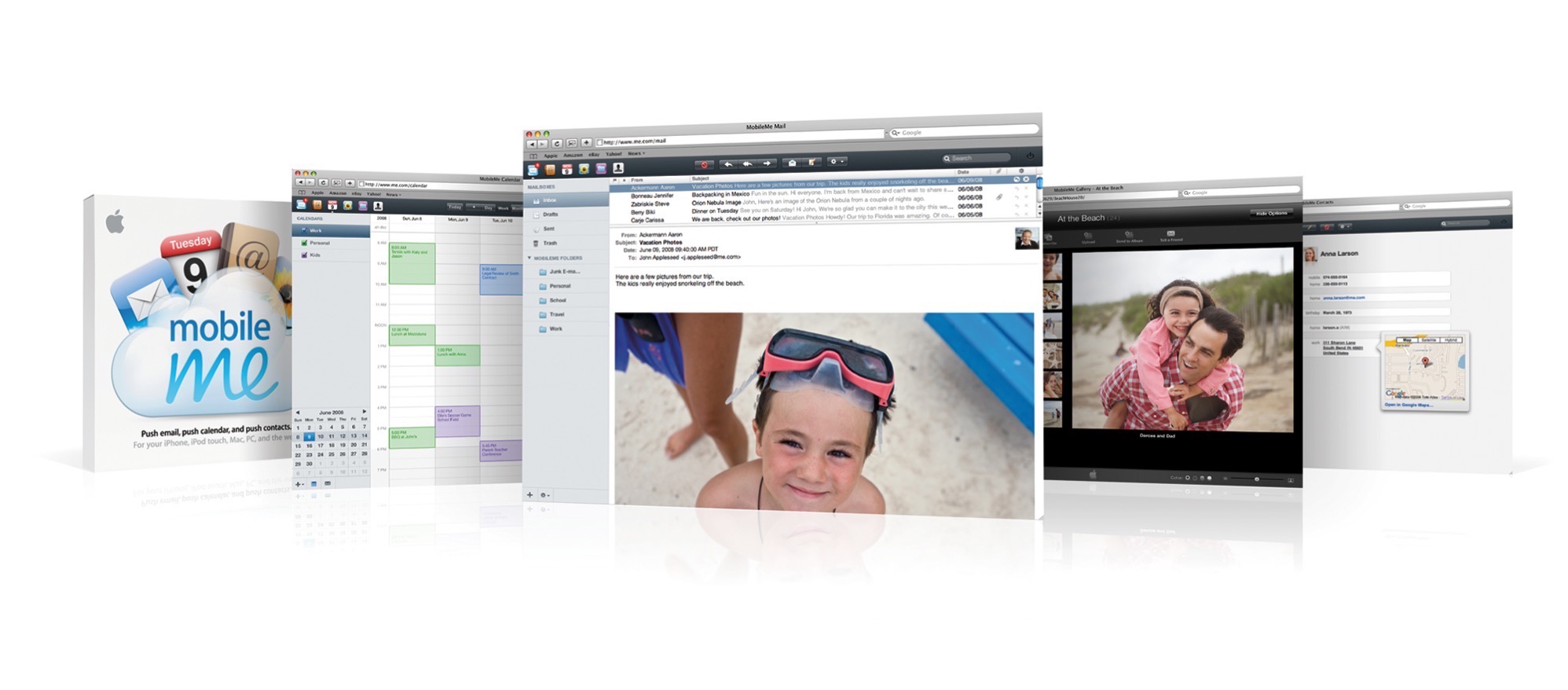
MobileMe’s Legacy
This week marks the 10th anniversary of MobileMe,1 Apple’s third attempt at a cloud service designed for consumers.2 The service has a pretty rough reputation, but to understand why, we need to talk about the product itself and what went wrong.
Exchange for the Rest of Us
At WWDC 2008, Phil Schiller showed MobileMe to the world for the first time.
The pitch was rather simple. MobileMe was “Exchange - for the rest of us.”