Every major version of Mac OS X macOS has come with a new default wallpaper.
I have collected them all here, in glorious 5K resolution. I owe a huge thank you to the mysterious @forgottentowel for upscaling many of these for modern screens.
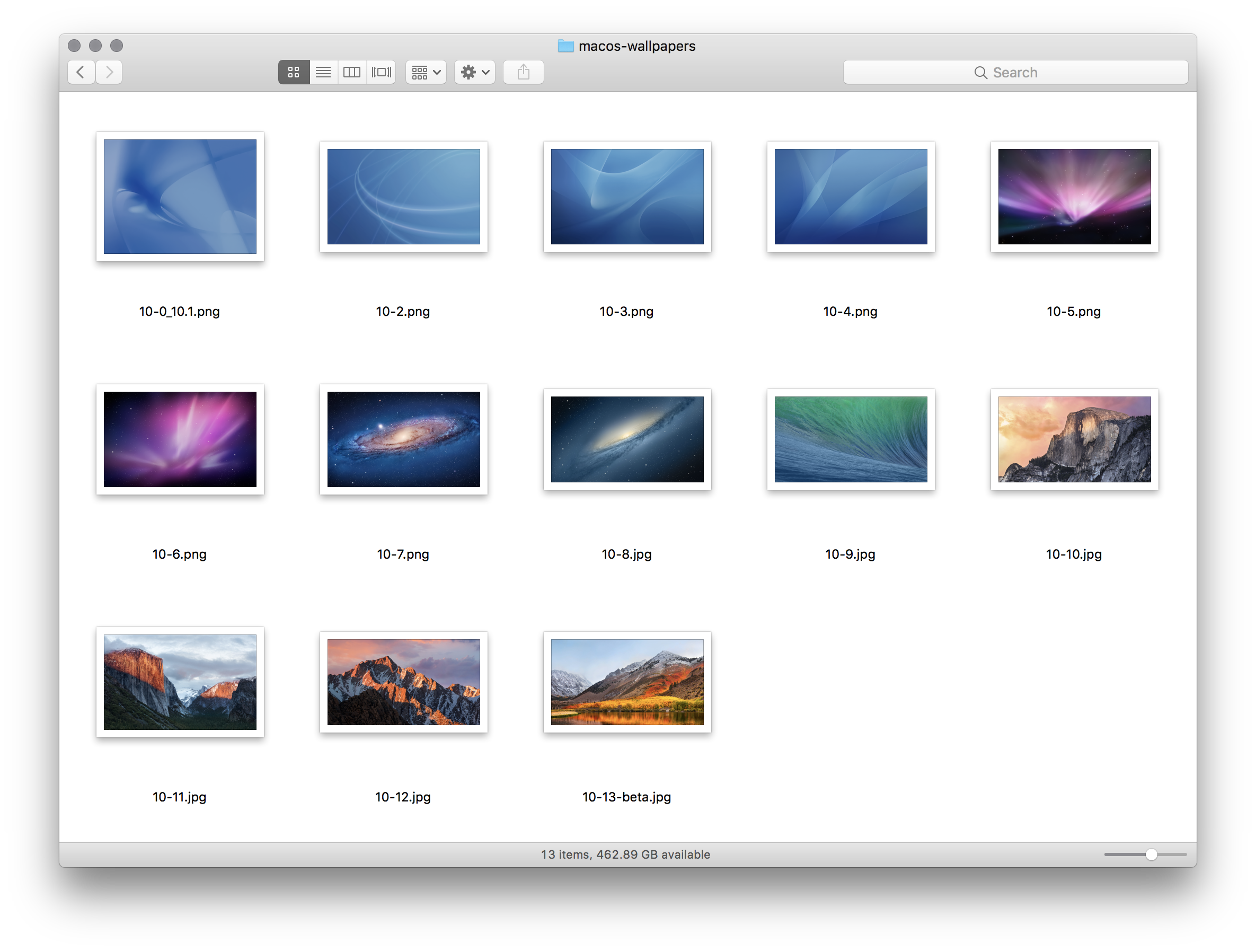

Every major version of Mac OS X macOS has come with a new default wallpaper.
I have collected them all here, in glorious 5K resolution. I owe a huge thank you to the mysterious @forgottentowel for upscaling many of these for modern screens.
There are a lot of colorful Macs. Look no further than the original iMacs and iBooks if you need a little more than brushed aluminum in your life.
These machines are all great, but there’s one Mac that puts them to shame when it comes to being colorful.
Say hello to the JLPGA PowerBook 170:


There were only 500 of these made to commemorate the 1992 JLPGA golf tournament in Japan. The guts are a run-of-the-mill PowerBook 170, 1 but the case is truly special. The blue body is completed with a white lid and base. The battery doors are red, as are the screen adjustment sliders. The hinges are bright yellow; rounding things out are the green feet.
John Timmer at Ars Technica has rerun the site’s original review of the first iPhone SDK, way back in 2008. It’s wild to see how basic it seems now.
This week marks a full decade since the original iPhone launched. I wrote about it back in January, on the anniversary of Steve Jobs’ incredible keynote.
There’s already a bunch of great stuff on the web about the anniversary. Throughout the week, I’m going to round up some of it here.
The Computer History Museum has posted a two-hour interview with Avie Tevanian, the principle designer of the Mach kernel, and Apple’s former Chief Software Technology Officer.
Richard Moss, writing at Ars Technica, has published a lovely article about FireWire. I learned a bunch of stuff reading it.
In my MacStories column this month, I dusted off my iPod Hi-Fi:
While I don’t use mine day-to-day, I do break it out sometimes, and the thing still sounds great, 11 years after it was introduced.
The HomePod is set to take the Hi-Fi’s legacy and extend it in our age of voice assistants and cloud-connected devices. It trades an iPod dock for Apple Music, and an IR remote for Siri.
Two different stories caught my attention as I spent some time today catching up from a week at WWDC:
Jeff Rule built a replica of a long-lost Apple prototype from the early 1990s. The work done in this prototype led to the 20th Anniversary Mac, and Rule’s work really brings the concept back to life in an amazing way.
Chris Larkin has put a project together to build a tiny Apple II, complete with emulation. Tested published a video of the model and what goes into making one. It’s pretty incredible the Apple II can be emulate on such cheap hardware these days.
Editor’s Note: This is a guest post by James Thomson, the indie iOS and Mac developer behind apps like PCalc and DragThing. He has a long history with Apple, and was recently sharing some old photos on Twitter. I badgered him into sharing some more with me here.

I visited Infinite Loop for the first time around twenty years ago, and decided to properly document my visit. All these photos were all taken on my trusty film camera, and the negatives scanned some years later. They were promptly forgotten about until now.

The view from outside of Infinite Loop building 1. It looks pretty much the same today, with the exception of the six colour Apple logo. Steve’s office was at the top right. At this point Infinite Loop had only been open for four years.

The Icon Garden, featuring Clarus the Dogcow who was the mascot of the Developer Technical Support group, and appeared in the print dialog. One day, Steve got rid of the icon garden in the middle of the night and everybody was very sad.
I knew that name was familiar.
Brendan Shanks has put together a wonderful look back at WWDC 1997.
Recently, I linked to (and backed) an Indiegogo project named Love Notes to Newton.
It’s by a filmmaker named Noah Leon. Here’s his pitch:
Newton was the first mass-produced touchscreen handheld computer made by Apple. It only lasted a few years on the market (1993 to 1998), but that wasn’t because it sucked! A large community of people still love Newton, and this film is an homage to the little device(s) by the people who still remember and even still use one.
I spent some time with Noah to talk about his work and this project. Our interview is below.